Entrevista y fotos en directo: Clara Rico Barraza / Foto de portada John-McMurtrie
Reload Festival 2026, Alemania
Castellano
Después de seis años escribiendo, reescribiendo y buscando las canciones adecuadas, Airbourne por fin están llevando sus nuevos temas a los escenarios. Su sexto álbum de estudio, Airbourne, no es simplemente el primer disco nuevo de la banda desde Boneshaker: según Joel y Ryan O’Keeffe, es un intento de condensar la esencia de todo lo que han vivido durante las últimas dos décadas. Grabado en parte en plena naturaleza australiana, rodeados de tormentas, serpientes, arañas y constantes cortes de electricidad, y terminado en el estudio de Melbourne donde registraron su primer EP, el álbum parece reflejar la propia historia de Airbourne: caótico, visceral, implacable y profundamente arraigado en el rock and roll. Nos reunimos con Joel y Ryan O’Keeffe en el Reload Festival para hablar del nuevo disco, de la influencia que Lemmy sigue teniendo sobre ellos, de volver a sus raíces y de por qué, después de 20 años, Airbourne siguen estando mucho más interesados en hacer un gran álbum que en perseguir un hit.
Después de varios años girando con vuestro último disco, ¿cómo se siente volver a los escenarios con canciones nuevas y un nuevo álbum a punto de salir?
Ryan O’Keeffe: Es genial. El disco ha sido recibido realmente bien. Estamos muy contentos. Parece que a todo el mundo le están encantando las canciones nuevas. También es genial volver al escenario y tocar material nuevo. Durante bastante tiempo estuvimos tocando prácticamente las mismas canciones.
Joel O’Keeffe: Sí, estuvimos tocando el mismo set durante muchísimo tiempo. Pero es emocionante cuando vuelves y tienes una canción nueva que tocar, o un par de canciones nuevas.
Simplemente volver a algo que os encanta, ¿no?
Joel: Sí. Y también estás nervioso porque no sabes si a la gente le va a gustar el disco. Es bastante parecido a lo que comentabas antes de tu vuelta a las entrevistas. También estás nervioso cuando vas a tocar una canción nueva en directo. Aprenderlas siempre es difícil porque hay muchísimas cosas pasando al mismo tiempo. No son como las canciones antiguas, que conocemos perfectamente. Y puedes cagarla fácilmente. Puedes olvidarte de una letra o de cualquier cosa. Pasa.
Quiero que demos un paso atrás al modo en que anunciasteis el nuevo álbum y, especialmente, a la carta que escribisteis a Lemmy. Me pareció una manera muy personal de anunciar un disco. Quería profundizar un poco en aquel consejo que os dio: «Escribid canciones para vuestros roadies, porque son quienes más las van a escuchar». ¿Cómo os impactó ese consejo en aquel momento? ¿Qué pensabais de lo que estabais haciendo cuando os lo dijo?
Joel: Siempre hemos seguido su consejo. A veces te pierdes por el camino. Te pierdes cuando estás haciendo lo que haces. Puedes empezar a dudar. Piensas: «Joder, ¿esta canción es buena?». O empiezas a preguntarte: «¿A alguien le sigue gustando esta banda?». No lo sabes. Es lo que pasa cuando llevas mucho tiempo encerrado en tu propia banda. Pero entonces pensamos en Lemmy y en toda la inspiración que nos dio.
Nos decía que mientras permaneciéramos juntos y siguiéramos tocando rock and roll, todo estaría bien. Y hay una cosa que dijo que nunca he olvidado. Dijo que uno de los mejores amaneceres que verás en tu vida es cuando el sol aparece por encima del salpicadero de tu primer autobús de gira. Hay muchos momentos así. Pensamos: «Joder, Lemmy creía en nosotros cuando no éramos nadie» y sacamos motivación de eso. Para hacer un disco como este, después de todo este viaje, tienes que llevar a Lemmy en la cabeza diciéndote: «Vamos, chicos».
Con todo este planteamiento, y con seis años trabajados en este disco. ¿Y por qué sentisteis que este era el momento de llamar al disco simplemente Airbourne?
Ryan: Soy Géminis y soy batería, así que me gusta que las cosas tengan un principio y un final. Ya son veinte años. Ni 18, ni 19, ni 21. Veinte años. Cuando haces tu primer disco tienes todo lo que estabas haciendo antes, cuando eras un niño. Después llevas encima los 20 años de recorrer el camino del rock and roll y todo lo que hemos hecho durante ese tiempo. Y entonces te alejas. El mundo se va a la mierda, llega esta puta pandemia y te sientas a analizar la situación. Y dices: «Vale, vamos a hacerlo. Podemos hacerlo. Tenemos que cavar muy hondo. Tenemos que encontrar lo mejor de lo mejor». Las mejores letras. «¿Qué tienes en el móvil? Yo tengo esto». «¿Qué tienes de riffs?». «Tengo esto». Y entonces Vick Wright apareció y nos recordó algo en lo que habíamos trabajado en 2012. Nos dijo: «¿Os acordáis de aquello? Era increíble. Vamos a trabajar en ello». Y nos pusimos a trabajar en «Sky High.»
Joel: «Sky High» es anterior a eso.
Ryan: Sí, probablemente sea incluso anterior a 2003.
Joel: Seguramente se remonta a los años 90.
Ryan: Cuando cogí las baquetas por primera vez, «Sky High» fue una de las primeras cosas que tocamos. Así que este disco encapsula a Airbourne en una sola esencia. Por eso se llama Airbourne. Si tienes amigos que nunca han escuchado a la banda, este es el disco que me gustaría darles. Decirles: «Si no conoces a Airbourne, escucha este disco de principio a fin y tendrás una idea de lo que somos».
Tras leer sobre vuestro proceso de creación, diría que fue de lo más intenso. Me dejó alucinada la cantidad de situaciones increíbles a las que tuvisteis que enfrentaros mientras escribíais el disco.
Ryan: Huracanes, tifones… estaba pasando de todo. Fue una locura. Árboles cayendo… Además, tenemos imágenes de todo. Estuvimos grabando todo con cámaras.
Me interesa especialmente la parte en la que compartisteis en vuestra carta a Lemmy que estabais dando de comer a las gallinas. ¿Qué demonios era eso?
Joel: Sí, yo daba de comer a las gallinas, a los cerdos y a las cabras. También tenían cabras. ¡Era bastante divertido!
Y además había serpientes, arañas…
Ryan: ¡Sí! Había una Sydney funnel-web, una de las arañas más peligrosas de Australia. De hecho, tengo un vídeo jugando con ella con una baqueta y la araña saltaba hacia mí.
Joel: Era una Sydney funnel-web macho. Estaba deambulando porque estaba en época de apareamiento y era enorme. Un macho especialmente grande. La llamaban «Big Boy».
Ryan: Teníamos una hoguera junto al estudio. Algunos días yo hacía las baterías y, cuando los demás estaban trabajando en las guitarras y las voces, me sentaba allí junto al fuego. Una noche vi una sombra moverse por el suelo. Pensé: «Eso ha sido raro». Saqué el móvil, encendí la linterna y allí estaba: una puta Sydney funnel-web. Son arañas tan peligrosas como parecen. Y todas las noches pasaba algo. Brett y yo ni siquiera podíamos entrar en la casa porque había serpientes por ahí.
Joel: ¿Te acuerdas de la serpiente que había en la ventana de Fraser? Era una pitón enorme, gorda, enrollada en la ventana.
Ryan: Estaba presionando contra el cristal, incluso lo estaba doblando. Y estaba justo encima de nuestra habitación.
Joel: Y también tuvimos serpientes venenosas.
Ryan: Sí. Había una king brown a unos tres metros. Y lo peor es que no salen corriendo cuando te acercas. La king brown te persigue.
¿Cómo seguís vivos? Es Australia, ya lo sé, estáis acostumbrados, pero suena a un nivel extremo de caos. Y, en medio de todo eso, también tuvisteis un huracán.
Joel: Sí. El huracán golpeó el estudio. Se caían árboles. Uno estuvo a punto de caer sobre el autobús donde vivía Streaty. Él estaba dentro, tocando el bajo e intentando aprender la siguiente canción, y de repente un árbol empezó a caer hacia el autobús. Hay imágenes en Instagram de él saliendo del autobús bajo la lluvia y diciendo: «¿Habéis visto eso?». Casi lo mata. Todo el mundo estaba gritando: «¡Alejaos de las ventanas!». Y la electricidad se iba constantemente mientras hacíamos el disco.
En medio de todo ese caos seguías con el disco.
Joel: En medio de todo ese caos, sí. Pero eso también es divertido, ¿no? Si alguien te dijera: «¿Quieres hacer un disco de rock and roll durante un huracán?». Es algo completamente alucinante. Tuvimos que luchar contra los elementos, pero eso hizo que el proceso fuera especial. Si sabíamos que se acercaba un huracán o una tormenta, sabíamos que se iría la electricidad y que todo se inundaría. Y si se iba la luz, podía quemar los circuitos de la máquina de cinta. Así que teníamos que asegurarnos de apagarla antes de que se fuera la electricidad. Veías los árboles moverse y pensabas: «Joder, bajad la cinta. ¡Ya viene!». Era como si un monstruo gigantesco estuviera subiendo por la montaña.
Ryan: Uno de los mejores momentos fue precisamente durante una de esas tormentas. La tormenta acababa de pasar, pero todos seguíamos un poco alterados. Y Brian Howes, el productor, apareció con una idea. «Chicos, chicos, chicos. Tengo una idea. Here She Comes!» Fuera estaba pasando de todo. Había una tormenta de la hostia. Y él estaba ahí diciendo: «¿Qué os parece? ¿Qué os parece?». Y nosotros: «Sí, sí. Buena idea».
Joel: Y simplemente seguimos trabajando, incluso cuando básicamente el mundo se estaba cayendo a nuestro alrededor.
Iba a preguntaros cómo conseguís crear canciones nuevas que representen a toda la banda en medio de semejante caos, pero literalmente os golpeó la inspiración en la cara.
Ryan: Sí. Exactamente. Si grabas un álbum en la residencia de estudiantes de un instituto o quizá en un hospital, puede hacerse aburrido. Pero si lo grabas en la jungla, con todo saliendo mal… Ahí es donde aparece la magia. Es precisamente cuando nada funciona.
Joel: La jungla cobró vida.
Después de tantos años haciendo música, ¿cómo conseguís diferenciar qué canción puede convertirse en un éxito, cuál merece entrar en el disco y cuál todavía no está suficientemente desarrollada?
Ryan: Realmente no buscamos éxitos.
Joel: Buscamos un viaje. Buscamos una canción que forme parte de un viaje dentro del álbum. Es algo que sentimos. Recuerdo que Rob Halford habló una vez de las canciones de Judas Priest y dijo que eran como una mini movie. Nunca lo he olvidado. Me gusta mucho esa idea. Cuando escuchas una canción y está completamente mezclada, tienes un paisaje sonoro enorme y sientes que estás dentro de una película. Bon Scott escribía letras así. Brian Johnson también.
Piensa en «Shot Down in Flames»: «Out on the town, looking for a woman, gonna give me luck». Puedes seguir el viaje. Puedes imaginarte allí, junto a la máquina de discos. Y entonces ella te manda a la mierda y todo termina en llamas. Puedes ver a Bon haciendo eso y meterte dentro de la película. Las letras pueden ser tan buenas que te permiten hacer eso. Siempre me han gustado ese tipo de canciones. Así que intentas hacer lo mejor posible para que la canción se convierta en esa película sonora.
Ryan: Nosotros también somos muy de álbumes. El álbum es una obra en sí misma. Es como una película.
Ryan: Exacto. Recuerdo que a mediados de los 90 había una especie de regla con los BPM. Yo ya no utilizo tanto claquetas, pero sé cómo funciona. 120 BPM. Ese era el número. Si hacías una canción a 120 BPM, entraba en la radio. Así de simple. Algunas bandas llenaban todo el disco de canciones a 120 BPM para ver qué canción funcionaba, como si estuvieran probando cebos para ver cuál mordía. Nosotros queremos ir de aquí a aquí, después aquí y después aquí, porque queremos que el álbum sea un viaje. No queremos que alguien lo ponga, escuche dos canciones y se vaya a hacer otra cosa. Especialmente si compras el vinilo, invitas a tus amigos, tomáis unas copas… Quieres escuchar el álbum entero.
Me encanta poder hablar con artistas que están tan profundamente involucrados en el proceso de composición. Y voy a meterme un poco en el tema de la IA. La manera en que describís vuestro proceso creativo está tan integrada en vosotros… Actualmente Spotify, Amazon, las plataformas musicales e incluso YouTube están llenos de canciones generadas por IA. ¿Cuál es vuestra posición al respecto?
Ryan: El mundo puede hacer lo que quiera, pero Joel y yo llevamos haciendo lo que queremos hacer desde que éramos niños y eso no ha cambiado. Incluso antes de que existiera la IA, nosotros ya hacíamos esto y vamos a seguir haciéndolo de la manera que siempre lo hemos hecho.
Joel: Pensando en cuando éramos niños, todos mis informes escolares decían cosas como: «Joel tiene problemas para escuchar». «Joel no presta atención en clase». «Joel llega tarde». «Joel no ha hecho los deberes».
Ryan: Yo suspendí prácticamente todo.
Joel: Cuando decides que tienes algo que quieres hacer… A mí me encanta el rock and roll. Crecí escuchando rock and roll. Y pensé: «Voy a hacer rock and roll». Tenemos una canción que se llama «Hungry». Habla de cuando empezó la banda y una de las primeras frases es: «School is nothing but a waste of time». Es algo que realmente pienso. No estoy criticando a todos los profesores. Creo que necesitamos profesores en este planeta, pero creo que quien escribe los planes de estudios es un imbécil.
Ryan: Deberían renovarlos completamente.
Joel: Los profesores son estupendos, pero lo que tienen que enseñar está jodido. No tiene sentido. No está conectado con la realidad. Si un niño quiere tocar rock, debería poder ir a una escuela de rock. Yo me sentía solo en el colegio. Estaban todos los demás jugando al fútbol y yo quería tocar la guitarra. Los niños no deberían sentirse así. Deberían poder ir a una escuela de rock y sentir que forman parte de algo.
Ryan: A mí me enseñaron en el colegio que no debía dedicarme a la música, que tenía que aprender matemáticas e inglés. Las matemáticas y el inglés ahora las hace esto [señala el teléfono] La música no. Así que el hecho de que Joel y yo siguiéramos nuestro instinto significa que hicimos lo correcto. Fuimos en contra de los consejos que nos decían: «Estáis golpeándoos la cabeza contra una pared intentando hacer vuestra cosa de metal».
Joel: Nosotros volvíamos a casa después del colegio o los fines de semana y teníamos un vídeo de una gira de Judas Priest. Era la gira Fuel for Life. Conseguimos aquella cinta en la tienda de vídeos de Henna Street, que era la tienda de vídeos local de Warrnambool. Y veíamos aquella cinta una y otra vez. Había un momento en «You’ve Got Another Thing Comin'» en el que la canción se descomponía y hacían aquel breakdown. De ahí salió «Runnin’ Wild». Estábamos tocando aquel breakdown una y otra vez y de ahí salió la canción. Y nada de lo que te enseñan en el colegio te va a enseñar eso. Ni siquiera en clase de música. En clase de música te van a poner a tocar Greensleeves con la flauta.
Joel: Exacto, ya lo sabes. Todos hemos estado ahí. Y además están cerrando salas de conciertos en todo el mundo. Las salas pequeñas donde las bandas aprenden a tocar y desarrollan su oficio. Todo eso está amenazado. Pero la pasión por el rock and roll…
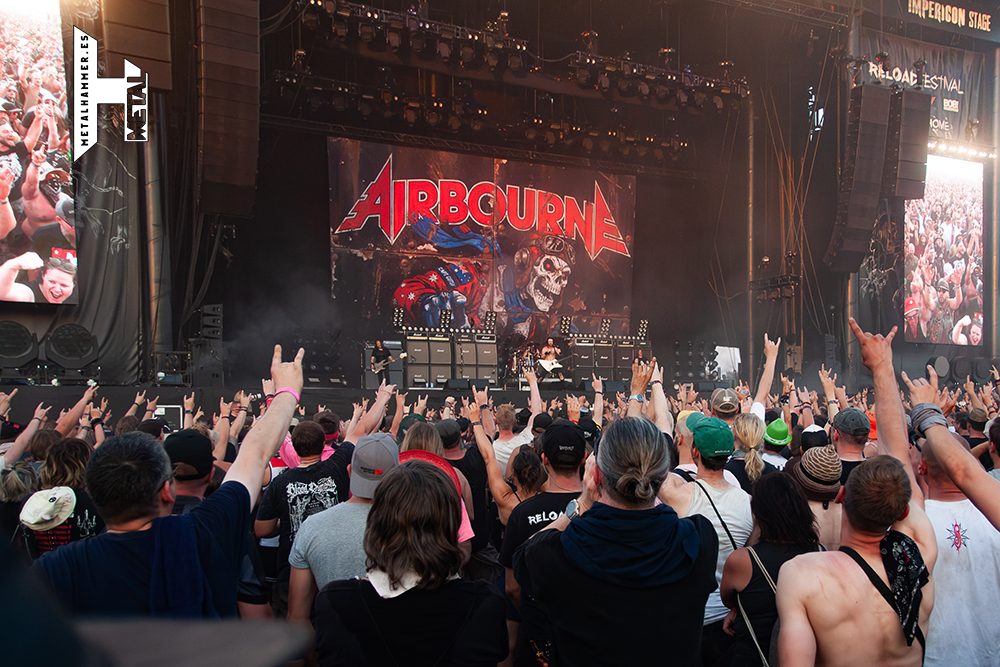
Sigue viva. Ya lo habéis visto con todos los niños y jóvenes en el Reload Festival.
Joel: Sí. Están viniendo. Hay muchísimos. Nunca habíamos visto algo así en nuestros 20 años tocando. Nunca habíamos visto tantos chavales.
¿Cómo os hace sentir que este nuevo disco pueda ser uno de los primeros contactos que una nueva generación tenga con Airbourne?
Joel: Creo que es genial. Creo que llega en el momento perfecto.
Ryan: Estoy personalmente muy orgulloso. Creo que hemos hecho un disco realmente bueno, y lo digo sin problema. Creo que hemos hecho un buen trabajo también para esos chavales, para que puedan tener su momento de rock and roll. Espero que empiecen sus propias bandas de la misma manera que nosotros empezamos. Porque los profesores que te enseñan no van a acompañarte durante toda la vida. Cuando terminas el colegio, estás solo. Así que tienes que confiar en ti mismo y en lo que quieres hacer con tu vida. Si no, puedes quedarte perdido.
Joel: Es como el océano. Cuando vienen las olas y estás dentro del agua, quizá estás a la altura de la cintura y después bajas hasta las rodillas. Es muy difícil correr dentro del agua. En esta analogía, el agua es toda la mierda de la IA, toda la mierda que hay en el mundo, los límites de decibelios, el cierre de salas… Todo lo que está en contra del rock and roll es el agua. Y es muy difícil correr dentro del agua. Así que queríamos asegurarnos de que corríamos tan rápido como pudiéramos contra todo eso. Queríamos llevar este disco a las personas que lo quieren. A los chavales que lo quieren, a padres e hijos, a quien sea. Así que corrimos tan rápido como pudimos a través de toda esa mierda para conseguir que el disco llegara hasta vosotros.
¿Qué os llevó de nuevo a Hothouse Studios después de 20 años de trayectoria?
Joel: ¡Hothouse! ¡Hothouse Studios! Recuerdo que nuestro primer EP se hizo allí.
Ryan: ¡Nuestro primer EP! Así que ahora se cumplen unos 20 años. Creo que fuimos allí en 2005 y grabamos “Ready to Rock” con Craig Harnath. Seis discos después, el mismo estudio. La misma mesa. El mismo sonido.
¿Y cómo fue volver allí y reconectar con quienes erais la primera vez que estuvisteis en el estudio?
Ryan: Fue probablemente lo mejor de todo este disco. Fue muy especial porque volvieron personas que habían formado parte de la historia de Airbourne. Vick Wright, Mike Fraser, Brian Howes… Y después tuvimos algunas incorporaciones, como Mutt Lange y Bryan Adams. Teníamos un equipo. Un equipo increíble.
Joel: Lo que acabas de decir sobre volver a quiénes éramos y recuperar parte de aquella inspiración… La primera vez que estuvimos en Hothouse yo estaba muy nervioso. Nunca había estado en un estudio. Me dejé el culo tocando los solos y haciendo todas esas cosas. Y ahora, después de tantos años, sigo sin ser un guitarrista especialmente avanzado.
Ryan: Yo sigo tocando el mismo ritmo de batería que tocaba con 24 años.
Joel: Yo sigo intentando tocar la misma escala pentatónica. [se ríen] Pero Hothouse tiene algo especial. Para nosotros, y supongo que para cualquier banda que grabe allí, es un lugar ligeramente intimidante. Estás pasando por aquella vieja mesa de Neve. Craig ha visto pasar por allí a todas las bandas de Melbourne, de Sydney… Incluso estuvo Oasis allí en algún momento. Jet también. Han pasado bandas enormes por ese estudio. Y cuando estás grabando y dicen: «Vale, pulsa el gran botón rojo. Vamos a grabar», tocas como si tu vida dependiera de ello. Hothouse todavía tiene eso. Saca lo mejor de ti. Cuando estábamos grabando los solos para este disco, pensaba en la primera vez que estuvimos allí. Y pensaba: «Joder, se siente exactamente igual». Me metía completamente en la guitarra. Quería hacerlo lo mejor posible. Sudaba con los solos. Y si Craig estaba contento, pensaba: «Sí. Lo tenemos».
Necesito ir terminando o me van a echar. Pero quiero una recomendación sencilla para los fans españoles: ¿cuál es vuestra canción favorita del álbum? ¿Por cuál deberían empezar?
Joel: Escucha el disco. En serio. Simplemente dale al play. Es una obra completa.
Es un viaje.
Joel: Es un viaje. Por eso es un disco homónimo. No pudimos elegir una canción.
Ryan: Ponlo de principio a fin. Si tienes un coche, escúchalo en el coche.
Dura unos 50 minutos, ¿no?
Joel: Más o menos.
Ryan: En Australia tenemos tiendas de alcohol con servicio drive-through.
Joel: Cuanto más bebes, mejor sonamos. [risas]
Ryan: Pero no bebas y conduzcas.
Joel: ¿Sabes qué? Reúne a tus colegas. Quedad todos juntos. Saxon decía: «Denim and leather brought us together» [«El denim y el cuero nos unieron»]. Y hay una frase en Alive After Death que dice: «Rise and remember, they never die» [«Levántate y recuerda: ellos nunca mueren»].
Cuando hacemos rock juntos, cuando nos reunimos con nuestros amigos, con nuestras chaquetas de denim y cuero, ellos siguen vivos. Mantenemos viva toda esa historia. Así que reúne a tus colegas, monta una fiesta para escuchar el disco, escuchadlo juntos. Subidlo a redes, decidnos hola y nosotros lo compartiremos. Y simplemente… dadle al rock!
English
AIRBOURNE: “We’re not really looking for hits; we’re looking for a journey”
Interview by Clara Rico Barraza
Reload Festival 2026, Germany
After six years of writing, rewriting and searching for the right songs, Airbourne are finally bringing their new material to the stage. Their sixth studio album, Airbourne, is not simply the band’s first new record since Boneshaker: according to Joel and Ryan O’Keeffe, it is an attempt to condense the essence of everything they have experienced over the past two decades. Recorded partly in the Australian wilderness, surrounded by storms, snakes, spiders and constant power cuts, and finished at the Melbourne studio where they recorded their first EP, the album seems to reflect Airbourne’s own history: chaotic, visceral, relentless and deeply rooted in rock and roll. We met Joel and Ryan O’Keeffe at Reload Festival to talk about the new record, the influence Lemmy still has on them, returning to their roots and why, after 20 years, Airbourne remain far more interested in making a great album than chasing a hit.
After several years of touring with your last album, how does it feel to be back on stage with new songs and a new record about to come out?
Ryan O’Keeffe: It’s great. The record has been received really well. We’re really chuffed. Everyone seems to be loving the new songs. It’s also great to be back on stage and playing new material. For quite a while we were playing pretty much the same songs.
Joel O’Keeffe: Yeah, we played the same set for so long. But it’s exciting when you get back and have a new song to play, or a couple of new songs.
Simply getting back to something you love, right?
Joel: Yeah. And you’re also nervous because you don’t know if people are going to like the record. It’s quite similar to what you were saying earlier about coming back to interviews. You’re also nervous when you’re going to play a new song live. Learning them is always hard because there’s so much going on at the same time. They’re not like the older songs that we know really well. And you can fuck it up easily. You can forget lyrics or whatever. It happens.
I want to take a step back to the way you announced the new album and, especially, the letter you wrote to Lemmy. I thought it was a very personal way of announcing a record. I wanted to dig a little deeper into that advice he gave you: “Write songs for your roadies because they’re the ones who are going to hear them the most.” How did that advice hit you at the time? What did you think about what you were doing when he told you that?
Joel: We’ve always followed his advice. Sometimes you get lost along the way. You get lost when you’re doing the thing that you’re doing. You can start to doubt. You think, “Fuck, is this song any good?” Or you start wondering, “Does anyone even like this band anymore?” You don’t know. That’s what happens when you’ve been locked away in your own band for so long. But then we think about Lemmy and all the inspiration he gave us. He told us that as long as we stayed together and kept playing rock and roll, everything would be alright.
And there’s one thing he said that I’ve never forgotten. He said one of the best sunrises you’ll ever see in your life is when the sun comes up over the dashboard of your first tour bus. There are a lot of moments like that. We think, “Fuck, Lemmy believed in us when we were nobody,” and we draw motivation from that. To make a record like this, after that whole journey, you’ve got to have Lemmy in your head going, “Come on, boys.”
With all of that in mind, and with six years invested in this record, why did you feel this was the right moment to simply call the album Airbourne?
Ryan: I’m a Gemini and I’m a drummer, so I like things to have a beginning and an end. It’s been 20 years. Not 18, not 19, not 21. Twenty years. When you make your first record, you’ve got everything you were doing before that, when you were kids. Then you’ve got 20 years of going through the journey of rock and roll and everything we’ve done during that time. And then you go away. The world turns to shit, this fucking pandemic happens and you sit back and assess the situation. And you go, “Right, let’s do it. We can do it. We’ve got to dig deep. We’ve got to find the best of the best.”
The best lyrics. “What have you got on your phone? I’ve got this.” “What have you got riff-wise?” “I’ve got this.” Then Vick Wright came in and reminded us of something we’d worked on in 2012. He said, “Remember that thing? That was amazing. Let’s work on that.” And we started working on Sky High.
Joel: Sky High is even older than that.
Ryan: Yeah, it’s probably even older than 2003.
Joel: It probably goes back to the ’90s.
Ryan: When I first picked up sticks, Sky High was one of the first things we ever played. So this record encapsulates Airbourne in one essence. That’s why it’s called Airbourne.
If you’ve got friends who have never heard the band, this is the record I’d like to give them. Say, “If you don’t know Airbourne, listen to this record from start to finish and you’ll get a feel for what we’re about.”
Reading about your creative process, I’d say it was an incredibly intense one. I was amazed by the number of crazy situations you had to deal with while making the record.
Ryan: Hurricanes, typhoons… everything was happening. It was crazy. Trees falling down… We’ve actually got footage of everything, too. We were filming everything with cameras.
I’m particularly interested in the part you mentioned in your letter to Lemmy about feeding the chickens. What the hell was that about?
Joel: Yeah, I fed the chickens, the pigs and the goats. They had goats as well. It was pretty funny!
And there were snakes, spiders…
Ryan: Yeah! There was a Sydney funnel-web, one of the most dangerous spiders in Australia. I actually have a video of me playing with it with a drumstick, and the spider was jumping at me.
Joel: It was a male Sydney funnel-web. It was wandering around because it was mating season, and it was huge. A particularly large male. They called it “Big Boy”.
Ryan: We had a fire pit next to the studio. Some days I’d do drums and, when the others were working on guitars and vocals, I’d sit there by the fire. One night I saw a shadow moving across the ground. I thought, “That was weird.” I got my phone out, turned the torch on and there it was: a fucking Sydney funnel-web. They’re as dangerous as they look. And every night something would happen. Brett and I couldn’t even get into the house because there were snakes around.
Joel: Do you remember the snake on Fraser’s window? It was a massive, fat python curled up on the window.
Ryan: It was pushing against the glass, actually bending it. And it was right above our room.
Joel: We also had poisonous snakes.
Ryan: Yeah. There was a king brown about three metres away. And the worst thing is, they don’t run away when you get near them. A king brown will chase you.
How are you even still alive? It’s Australia, I know you’re used to it, but it sounds like an extreme level of chaos. And in the middle of all that, you also had a hurricane.
Joel: Yeah. The hurricane hit the studio. Trees were falling down. One almost fell on the bus where Streaty was living. He was inside, playing bass and trying to learn the next song, and suddenly this tree started coming down towards the bus. There’s footage on Instagram of him coming out of the bus in the rain saying, “Did you fucking see that?” It nearly killed him. Everyone was screaming, “Get away from the windows!” And the power was constantly going out while we were making the record.
In the middle of all that chaos, you just kept working on the record.
Joel: In the middle of all that chaos, yeah. But that’s fun too, right? If someone said, “Do you want to make a rock and roll record during a hurricane?” That’s fucking amazing. We had to battle the elements, but that made the process special. If we knew a hurricane or a storm was coming, we knew the power was going to go out and everything would flood. And if the power went out, it could fry the circuits in the tape machine. So we had to make sure we turned it off before the power went out. You’d see the trees moving and think, “Fuck, get the tape down. It’s coming!” It was like this massive monster was coming up over the mountain.
Ryan: One of the best moments was actually during one of those storms. The storm had just passed, but we were all still a bit freaked out. And Brian Howes, the producer, came in with an idea. “Guys, guys, guys. I’ve got an idea. Here She Comes!” There was fucking chaos happening outside. There was a massive storm. And he was standing there going, “What do you think? What do you think?” And we were like, “Yeah, yeah. Good idea.”
Joel: And we just kept working, even when basically the world was falling down around us.
I was going to ask you how you manage to create new songs that represent the whole band in the middle of that kind of chaos, but you were literally hit in the face by inspiration.
Ryan: Yeah. Exactly. If you record an album in a high-school dormitory or maybe a hospital, it can get boring. But if you record it in the jungle, with everything going wrong… that’s where the magic happens. It’s precisely when nothing works.
Joel: The jungle came alive.
After so many years making music, how do you differentiate between a song that could become a hit, one that deserves to make the record and one that isn’t developed enough yet?
Ryan: We don’t really go for hits.
Joel: We go for a journey. We go for a song that’s part of a journey within the album. It’s a feel thing. I remember Rob Halford once talking about Judas Priest songs and saying they were like a mini movie. I’ve never forgotten that. I really like that idea. When you listen to a song and it’s fully mixed, you have this massive soundscape and it feels like you’re inside a movie. Bon Scott wrote lyrics like that. Brian Johnson did too. Think about Shot Down in Flames: “Out on the town, looking for a woman, gonna give me luck.” You can follow the journey. You can imagine yourself there, standing over the jukebox. And then she tells you to fuck off and everything ends in flames. You can see Bon doing it and put yourself inside the movie. Lyrics can be so good that they allow you to do that. I’ve always liked those kinds of songs. So you try your best to make the song into that sound movie.
Ryan: We’re also very much about albums. The album is a piece of work in itself. It’s like a movie.
Ryan: Exactly. I remember back in the mid-’90s there was this kind of BPM rule. I don’t use click tracks as much anymore, but I know how it works. 120 BPM. That was the number. If you made a song at 120 BPM, it got on the radio. Simple as that. Some bands would fill an entire record with 120 BPM songs just to see which one worked, like they were putting bait out there to see which one would bite.
What we like is going from here to here, then here and then here, because we want the album to be a journey. We don’t want somebody to put it on, listen to two songs and then go and do something else. Especially if you buy the vinyl, have your mates around, have a few drinks… You want to listen to the whole album.
I love talking to artists who are so deeply involved in the songwriting process. And I’m going to get into AI for a moment. The way you describe your creative process is so deeply integrated into who you are… These days Spotify, Amazon, music platforms and even YouTube are filled with AI-generated songs. What’s your position on that?
Ryan: The world can do what the world wants to do, but Joel and I have been doing what we want to do since we were kids, and that hasn’t changed. Even before AI existed, we were doing this, and we’re going to keep doing it the way we’ve always done it.
Joel: Thinking back to when we were kids, all my school reports said things like, “Joel has trouble listening.” “Joel won’t pay attention in class.” “Joel’s late.” “Joel didn’t do his homework.”
Ryan: I failed pretty much everything.
Joel: When you decide that there’s something you want to do… I love rock and roll. I grew up loving rock and roll. And I thought, “I’m going to do rock and roll.” We have a song called Hungry. It’s about when the band started, and one of the first lines is, “School is nothing but a waste of time.” That’s something I genuinely believe. I’m not having a go at all teachers. I think we need teachers on this planet. But I think whoever writes the school curriculum is a fuckwit.
Ryan: They’re going to have to completely revamp it.
Joel: Teachers are great, but what they have to teach is fucked. It doesn’t make sense. It’s not connected to reality. If a kid wants to play rock, they should be able to go to a rock school. I was alone at school. Everyone else was playing football and I wanted to play guitar. Kids shouldn’t feel like that. They should be able to go to a rock school and feel like they’re part of something.
Ryan: I was taught at school that I shouldn’t play music, that I should learn maths and English. Maths and English are done by this now. [points at his phone] Music isn’t. So the fact that Joel and I followed our instincts means we did the right thing. We went against the advice that told us, “You’re just banging your heads against a brick wall trying to do your metal thing.”
Joel: We used to come home from school or on the weekends and we had a video of a Judas Priest tour. It was the Fuel for Life tour. We got that tape from the Henna Street video store, which was the local video store in Warrnambool. And we watched that tape over and over again. There was a moment in You’ve Got Another Thing Comin’ where the song breaks down and they do that breakdown. That’s where Runnin’ Wild came from. We were jamming that breakdown over and over again and that’s where the song came from. Nothing you’re taught at school is going to teach you that. Not even music class.
In music class they’ll make you play Greensleeves on the flute.
Joel: Exactly. You’ve been there, done that. We’ve all been there. And they’re also shutting down venues all over the world. The small venues where bands learn to play and develop their craft. All of that is under threat. But the passion for rock and roll…
It’s still alive. You’ve seen it with all the kids and young people here at Reload Festival.
Joel: Yeah. They’re coming. There are so many of them. We’ve never seen anything like this in our 20 years of playing. We’ve never seen this many kids.
How does it make you feel knowing that this new record could be one of the first experiences a new generation has with Airbourne?
Joel: I think it’s great. I think it’s perfect timing.
Ryan: I’m personally really proud. I think we’ve made a really good record, and I have no problem saying that. I think we’ve done a good job for those kids as well, so they can have their rock and roll moment. Hopefully they start their own bands the same way we started. Because the teachers who teach you aren’t going to be with you for the rest of your life. Once you leave school, you’re on your own. So you’ve got to back yourself and back what you want to do with your life. Otherwise, you can be left in the lurch.
Joel: It’s like the ocean. When the waves come in and you’re in the water, maybe you’re waist-deep and then you drop down to your knees. It’s very hard to run through the water. In this analogy, the water is all the AI shit, all the bullshit in the world, decibel limits, venues being shut down… Everything that’s against rock and roll is the water. And it’s very hard to run through water. So we wanted to make sure we ran as fast as we could against all that. We wanted to get this record to the people who want it. The kids who want it, fathers and sons, whoever. So we ran as hard as we could through all that bullshit to get the record to you.
What brought you back to Hothouse Studios after 20 years of your career?
Joel: Hothouse! Hothouse Studios! I remember our first EP was done there.
Ryan: Our first EP! So it’s now about the 20-year mark. I think we went there in 2005 and made Ready to Rock with Craig Harnath. Six albums later, same studio. Same desk. Same sound.
And what was it like going back there and reconnecting with who you were the first time you were in that studio?
Ryan: It was probably the best part of the whole record. It was really special because people who had been part of the Airbourne journey came back. Vick Wright, Mike Fraser, Brian Howes… And then we had some additions, like Mutt Lange and Bryan Adams. We had a team. An incredible team.
Joel: What you just said about getting back to who we were and finding some of that inspiration again… The first time we were at Hothouse I was so nervous. I’d never been in a studio before. I played my ass off on the solos and all that stuff. And now, after all these years, I’m still not a particularly advanced guitarist.
Ryan: I’m still playing the same drum beat I played when I was 24.
Joel: I’m still trying to play the same fucking pentatonic scale. [laughs] But Hothouse has something special. For us, and I guess for any band recording there, it’s a slightly intimidating place. You’re going through that old Neve desk. Craig has seen every Melbourne band, every Sydney band… Oasis were there at some point. Jet too. Huge bands have gone through that studio. And when you’re recording and they say, “Right, hit the big red button. We’re going to record,” you play like your life depends on it. Hothouse still has that. It brings out the best in you.
When we were recording the solos for this record, I was thinking about the first time we were there. And I was thinking, “Fuck, it feels exactly the same.” I’d get completely into the guitar. I wanted to do my best. I was sweating through the solos. And if Craig was happy, I’d think, “Yep. We’ve got it.”
I need to wrap it up or they’re going to kick me out. But I want one simple recommendation for the Spanish fans: what’s your favourite song on the album? Which one should they start with?
Joel: Listen to the record. Seriously. Just hit play. It’s a complete piece of work.
It’s a journey.
Joel: It’s a journey. That’s why it’s self-titled. We couldn’t pick one song.
Ryan: Put it on from start to finish. If you’ve got a car, listen to it in the car. It’s about 50 minutes, isn’t it?
Joel: Something like that.
Ryan: In Australia we have drive-through bottle shops.
Joel: The more you drink, the better we sound. [laughs]
Ryan: But don’t drink and drive.
Joel: You know what? Get your mates over. Get together with your friends. Saxon said, “Denim and leather brought us together.” And there’s a line in Alive After Death that says, “Rise and remember, they never die.” When we rock together, when we get together with our friends, with our denim and leather jackets, they’re still alive. We keep that whole history alive.
So get your mates together, have a listening party, listen to the record together. Put it on social media, say g’day and we’ll share it. And just… rock out!