Castellano
Azure, reinvención creativa y el oficio detrás del instrumento
Entrevista: Jose Cardona
Después de años canalizando su faceta más pesada a través de Manic Abraxas y construyendo instrumentos en Seger Guitars, Dallas Seger ha abierto una puerta creativa muy diferente con David Caress. El álbum debut del proyecto, Azure, publicado de manera independiente el 9 de octubre, sustituye la agresividad metálica por el post-punk, la new wave y las texturas atmosféricas de guitarra, sin perder una profunda sensación de tensión e introspección. En esta conversación, Seger habla de su creciente distanciamiento de la música heavy contemporánea, de la influencia de Maine en Azure, de la disciplina de poner el instrumento al servicio de la canción y de la particular relación entre su trabajo como músico y como luthier. También mira hacia la próxima etapa de David Caress, incluida la posibilidad de llevar el proyecto a los escenarios.
Ya tenías una identidad musical consolidada a través de Manic Abraxas, pero decidiste crear David Caress como un proyecto completamente independiente. ¿Qué te permitió expresar esta nueva identidad que habría sido imposible —o quizá poco honesto— publicar bajo el nombre de Manic Abraxas?
Dallas Seger: Es difícil decir si se debe a mi perspectiva o al propio metal, pero no he conectado demasiado con la música heavy desde que publicamos Skinformation. Desde que era joven, uno de los grandes atractivos de la música de culto era su espíritu subversivo y rebelde. Yo diría que hoy el aficionado medio a la música heavy está, en realidad, bastante alineado con lo establecido y tiene una mentalidad de seguidor.
Con Azure te alejas del territorio más pesado asociado a tus trabajos anteriores y te adentras en el post-punk, la new wave y una música de guitarras más atmosférica. ¿Este cambio tuvo que ver principalmente con escapar de la pesadez o con descubrir una forma diferente de crear intensidad emocional sin depender de la distorsión y la agresividad?
Con la música heavy estás muy limitado en cuanto a expresión y rango. Quería crear una música más emocional que pudiera disfrutar un público más amplio. En esencia, quería participar en una tradición mucho más antigua de hacer música. Después de desencantarme del metal, David Caress era lo más subversivo que se me podía ocurrir.
En Azure existe un fuerte contraste entre calidez y frialdad, belleza y aislamiento, nostalgia y algo claramente contemporáneo. ¿Cuánto de esa dualidad procede de tu entorno en Maine y hasta qué punto el paisaje y el lugar se convirtieron conscientemente en parte de la identidad sonora del álbum?
Maine es un lugar extraño; inevitablemente va a ejercer una influencia magnética sobre cualquier iniciativa creativa. Para mí es evidente que el lugar donde se creó el álbum dejó su huella.
Mencionaste que Maine deja inevitablemente una huella en el trabajo creativo. ¿Puedes darnos un ejemplo más concreto de cómo el paisaje, el aislamiento, las estaciones o la atmósfera de Maine dieron forma a alguna canción, arreglo o detalle sonoro específico de Azure?
Es una buena pregunta. Ojalá pudiera darte ejemplos concretos, pero simplemente está integrado en la música; forma parte de ella y estoy agradecido por eso. Creo que otras personas podrán reconocerlo en las canciones.
Escribiste, interpretaste y grabaste prácticamente todo el álbum por tu cuenta. Cuando no hay una banda completa en la sala cuestionando o redirigiendo una idea, ¿cómo sabes cuándo confiar en tu primer instinto y cuándo convertirte en tu propio crítico? ¿Trabajar de esta manera te reveló algo sobre ti como compositor que antes no habías reconocido?
Hice lo mejor que pude por mi cuenta y consulté a mis amigos para recibir opiniones. La mayor parte de esos comentarios tenían que ver con las transiciones: notas de enlace, fills de batería, etc.
Steve Austin mezcló y masterizó Azure, y su trayectoria está muy asociada a músicas extremadamente intensas y abrasivas. ¿Qué aportó alguien con su oído particular a un disco mucho más construido alrededor de la atmósfera, el espacio y la sutileza? ¿Escuchó en estas canciones cosas que tú inicialmente no habías percibido?
La experiencia de Steve no se limita a la música heavy. Puede destacar grabando y mezclando cualquier género, así que sabía que haría un gran trabajo con el álbum de David Caress. Sé que disfrutó trabajando en él y yo siempre me divierto creando con Steve.
La guitarra sigue siendo central en David Caress, pero a menudo funciona a través de la textura, el color y la atmósfera en lugar de un virtuosismo evidente. Como luthier profesional, ¿construir instrumentos ha cambiado tu manera de entender cuál debe ser la función de una guitarra dentro de una canción?
David Caress no es el lugar para alardes técnicos ni virtuosismo. El instrumento tiene que estar al servicio de la canción. Como constructor, mi trabajo consiste en adaptar la guitarra al músico. Entonces queda libre, sin nada que lo distraiga, y la guitarra se convierte en una extensión de su cuerpo.
Describiste la guitarra como algo que debería convertirse en una extensión del cuerpo del músico. ¿Hubo alguna guitarra en particular que construyeras o modificaras tú mismo y que resultara especialmente importante durante la grabación de Azure? En caso afirmativo, ¿qué cualidades de ese instrumento hicieron que fuera adecuado para este disco?
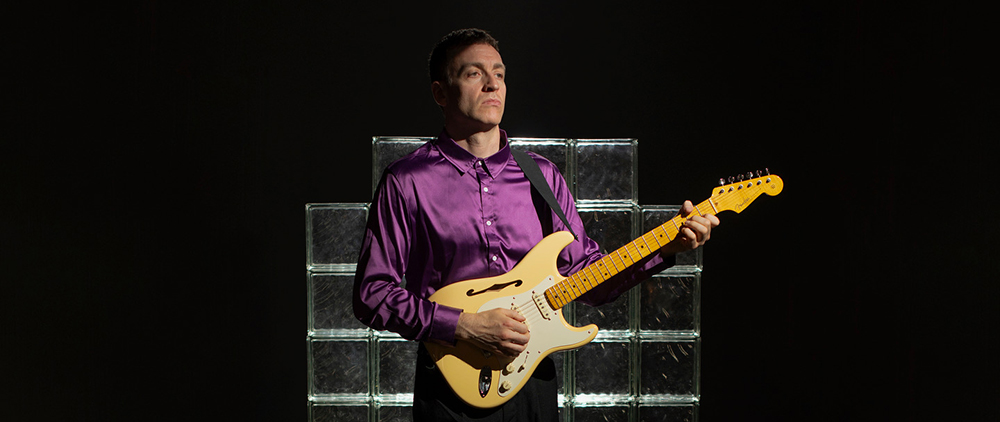
En realidad, me propuse deliberadamente no utilizar ninguna guitarra Seger para DC. La mayor parte de lo que se escucha es mi Strat y un poco de una 335.
Sin embargo, al final hice una concesión: el bajo del álbum sí es un Seger, porque no estaba satisfecho con el sonido que estaba obteniendo de los otros bajos.
En Seger Guitars partes de la madera en bruto y tomas decisiones fundamentales sobre construcción, escala, tacto del mástil y respuesta física del instrumento. Cuando compones, ¿alguna vez piensas en la dirección contraria, comenzando por el carácter físico de una guitarra concreta y dejando que el propio instrumento sugiera qué tipo de música debería surgir de él?
Sigo construyendo guitarras por diversión. Las utilizo para experimentar con ideas o para dar vida a alguna idea que haya imaginado.
Un luthier tiene que traducir con frecuencia un lenguaje muy subjetivo del músico —palabras como oscuro, cálido, agresivo, abierto o reactivo— en algo físico que realmente pueda construirse. ¿Esa experiencia te ha hecho mejor a la hora de traducir emociones igualmente abstractas en arreglos, tonos de guitarra y decisiones de producción cuando escribes tu propia música?
Sí, creo que manejo bastante bien ese lenguaje. Tengo que ofrecer a mis clientes lo que esperan. Una de las cosas que me encantan de las guitarras es que existen muchísimos elementos intangibles.
Existe una paradoja interesante en ser a la vez constructor de guitarras y artista de grabación: tienes razones prácticamente ilimitadas para obsesionarte con los instrumentos y el sonido, pero en algún momento el equipo debe desaparecer y el oyente simplemente tiene que sentir la canción. ¿Cómo reconoces el punto en el que la búsqueda del sonido «perfecto» empieza a interferir con la verdad emocional de la música?
No pienso demasiado en el tono; simplemente cobra vida. Cuando llegas a cierto nivel como músico, vas a sonar bien y vas a tener tu propia voz. Más allá de algo de ecualización o efectos durante el proceso de mezcla, simplemente soy yo tocando la guitarra.
David Caress ya ha establecido un mundo musical muy diferente al de Manic Abraxas, mientras que Seger Guitars representa otra parte importante de tu vida creativa. Mirando hacia el futuro, ¿ves estas tres identidades permaneciendo deliberadamente separadas o el músico, el compositor de música más pesada y el luthier podrían terminar influyéndose mutuamente de maneras que ni siquiera tú puedes prever todavía?
Me resulta difícil decirlo. Simplemente siento la necesidad de crear y compartir determinadas cosas; nunca lo cuestiono.
Has dicho que simplemente sientes la necesidad de crear y que rara vez cuestionas ese impulso. Ahora que David Caress te ha llevado a un mundo musical muy diferente al de Manic Abraxas, ¿hacer Azure ha cambiado lo que imaginas que podría ser tu futuro como músico o prefieres deliberadamente no definir hacia dónde debería dirigirse este proyecto?
Sin duda estoy abierto a más posibilidades. Me entusiasma trabajar en la próxima tanda de material de DC y me gustaría tocar en directo, aunque en este momento todavía no sé exactamente cómo sería.
English
DAVID CARESS / Dallas Seger
Azure, creative reinvention and the craft behind the instrument
Interview: Jose Cardona
After years of channeling his heavier side through Manic Abraxas and building instruments at Seger Guitars, Dallas Seger has opened a very different creative door with David Caress. The project’s debut album, Azure, released independently on October 9, trades metallic aggression for post-punk, new wave and atmospheric guitar textures, without losing a profound sense of tension and introspection. In this conversation, Seger discusses his growing distance from contemporary heavy music, the influence of Maine on Azure, the discipline of putting the instrument at the service of the song, and the particular relationship between his work as a musician and as a luthier. He also looks ahead to the next stage of DAVID CARESS, including the possibility of bringing the project to the stage.
You already had an established musical identity through Manic Abraxas, yet you chose to create David Caress as a completely separate project. What did this new identity allow you to express that you felt would have been impossible—or perhaps dishonest—to release under the Manic Abraxas name?
Dallas Seger: It’s hard to say whether it’s my perspective or metal itself, but I haven’t really resonated with heavy music since we put out Skinformation. Since I was young, a big selling point of cult music was the subversive, rebellious spirit. I’d argue your average heavy music fans today are, in fact, very establishment, with a follower mindset.
With Azure, you move away from the heavier territory associated with your previous work and into post-punk, new wave and more atmospheric guitar music. Was this change primarily about escaping heaviness, or about discovering a different way of creating emotional weight without relying on distortion and aggression?
With heavy music, you’re very limited with expression and range. I wanted to create more emotional music that could be enjoyed by a broader audience. In essence, I wanted to partake in a much older tradition of making music. After being turned off from metal, David Caress is the most subversive thing I could think of.
There is a strong sense of contrast throughout Azure: warmth and coldness, beauty and isolation, nostalgia and something distinctly contemporary. How much of that duality comes from your surroundings in Maine, and how consciously did landscape and place become part of the album’s sonic identity?
Maine is a strange place; it’s going to magnetically affect creative endeavors. To me, it’s plain that the place where the album was created left a fingerprint.
You mentioned that Maine inevitably leaves a fingerprint on creative work. Can you give us a more concrete example of how the landscape, isolation, seasons, or atmosphere of Maine shaped a specific song, arrangement, or sonic detail on Azure?
That’s a good question. I wish I could give specific examples, but it’s just baked in. It’s a part of it, and I’m thankful. I think others will recognize that in the songs.
You wrote, performed and recorded almost the entire album yourself. When there is no full band in the room challenging or redirecting an idea, how do you know when to trust your first instinct and when to become your own critic? Did working this way reveal anything about yourself as a songwriter that you had not recognized before?
I did the best I could on my own and consulted my friends for feedback. Most of this feedback had to do with transitions—leading tones, drum fills, etc.
Steve Austin mixed and mastered Azure, and his history is closely associated with some extremely intense and abrasive music. What did someone with his particular ears bring to a record built much more around atmosphere, space and subtlety, and did he hear things in these songs that you initially did not?
Steve’s expertise isn’t limited to heavy music. He can excel at recording and mixing any genre, so I knew he’d do a great job on the David Caress album. I know he enjoyed working on it, and I always have fun creating with Steve.
The guitar remains central to David Caress, but it often functions through texture, color and atmosphere rather than obvious virtuosity. As a professional luthier, has building instruments changed the way you think about what a guitar is supposed to do inside a song?
David Caress is not the place for fancy chops or virtuosity. The instrument must serve the song. As a maker, it’s my job to tailor-fit the guitar to the player. Then they’re free, with nothing to distract them, making the guitar an extension of their body.
You described the guitar as something that should become an extension of the player’s body. Was there a particular guitar that you built or modified yourself that became especially important during the recording of Azure? If so, what qualities of that instrument made it right for this record?
Actually, I made it a point not to use any Seger guitars for DC. Most of what you hear is my Strat and a little bit of a 335.
I did end up making a compromise, though: the bass guitar on the album is a Seger because I wasn’t happy with the sound I was getting from the other basses.
At Seger Guitars, you begin with raw wood and make fundamental decisions about construction, scale, neck feel and the physical response of an instrument. When you compose, do you ever think in the opposite direction—starting with the physical character of a particular guitar and allowing the instrument itself to suggest what kind of music should come from it?
I still make guitars for fun. I use these to experiment with ideas or bring an idea to life that I’ve imagined.
A luthier often has to translate a musician’s very subjective language—words like dark, warm, aggressive, open or responsive—into something physical that can actually be built. Has that experience made you better at translating equally abstract emotions into arrangements, guitar tones and production choices when you write your own music?
Yeah, I feel pretty fluent in that. I have to deliver what my customers expect. One of the things I love about guitars is there are so many intangibles.
There is an interesting paradox in being both a guitar builder and a recording artist: you have almost unlimited reasons to obsess over instruments and tone, yet eventually the gear has to disappear and the listener should simply feel the song. How do you recognize the point where the search for the “perfect” sound begins to interfere with the emotional truth of the music?
I don’t give much thought to tone; it just comes to life. Once you’re at a certain level of playing, you’ll sound good and have your own voice. Other than some EQ or effects during the mixing process, it’s simply me playing guitar.
David Caress has now established a musical world that is very different from Manic Abraxas, while Seger Guitars represents another major part of your creative life. Looking forward, do you see these three identities remaining deliberately separate, or could the musician, the heavier songwriter and the luthier eventually begin influencing one another in ways that even you cannot predict yet?
It’s hard for me to say. I just feel compelled to create and share certain things—I never question it.
You said that you simply feel compelled to create and rarely question that impulse. Now that David Caress has taken you into a musical world very different from Manic Abraxas, has making Azure changed what you imagine your future as a musician could look like, or do you deliberately avoid defining where this project should go next?
I’m open to more possibilities, for sure. I’m excited to work on the next round of DC material, and I’d like to play live, although I don’t know what that looks like at the moment.