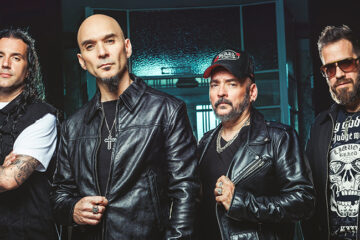
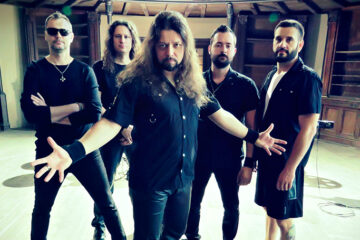
Iniciamos esta entrevista tan especial en medio de una noche cerrada de los últimos días de septiembre, en Burgos, España, más si cabe en Ucrania debido a la diferencia horaria. Al otro lado de la pantalla, tras establecer conexión por la aplicación de videollamada, nos espera nuestro amigo Ditmar Kumarberg, cantante y frontman de 1914, banda ucraniana de Metal extremo con más de 10 años de trayectoria y con 4 álbumes publicados (Eschatology Of War en 2015, The Blind Leading The Blind en 2018, Where Fear And Weapons Meet en 2021 y el reciente Viribus Unitis de 2025), además de numerosos singles, videoclips y EPs que han visto la luz desde la creación del grupo en 2014. En primer lugar, agradezco su presencia a Ditmar en esta noche en la que puedo anticipar será muy especial para ambos. El frontman ucraniano, de aspecto imponente, pues su rostro, presidido por unos ojos azules de mirada intensa y una barba poblada, es fiel reflejo de un hombre curtido por el paso de los años y, como profundizaremos en lo sucesivo, por su capacidad de superación personal y, también, por los dramáticos acontecimientos bélicos que llevan asolando su país durante largos años.
Por Daniel Ortega / Photo: Sofiia Ruda
Castellano
Daniel Ortega (DO): Buenas noches, Ditmar. Bienvenido en nombre de todo el equipo de Metal Hammer Spain. Es todo un honor contar contigo hoy para esta entrevista donde hablaremos de Metal e Historia.
Ditmar Kumarberg (DK): Hola Daniel -me saluda y esboza una amplia sonrisa para romper esa imagen de tipo duro que me sorprendió al poco de iniciar la comunicación.
Ditmar… Quiero confesarte que soy un gran apasionado de la Historia y, en particular, de todo lo relacionado con los grandes conflictos bélicos del siglo XX, tal es así que he llegado a publicar varias obras relacionadas con dicha temática.
¿Eres escritor? ¿Has publicado obras sobre esa época? ¡Increíble! ¡Muy bien!
Bueno, Ditmar, nada que reseñar al respecto… Hoy tú eres el protagonista absoluto, pues estamos aquí para hablar de música e Historia, pero, en particular, de ti y de tu banda 1914. Ya lo creo… Hablaremos mucho de Historia en esta entrevista. Es más, cuando Metal Hammer Spain me propuso charlar contigo, dije… ¡Oh, sí! ¡Fantástico! ¡Será todo un placer charlar con Ditmar, además de músico, un gran estudioso de la Historia Militar del siglo XX! Así que, Ditmar, ante ti tienes a un gran fan de la banda y, también, un verdadero apasionado de la Historia.
¡Grandioso! Seguro que va a ser una entrevista genial -afirma a la vez que dibuja una amplia sonrisa, mayor si cabe que la anterior, pues percibo en él la inmensa alegría que produce encontrarse con alguien que comparte similares gustos culturales.
Lo primero de todo, Ditmar, ¿cómo podrías presentarte a nuestros amigos de Metal Hammer Spain? ¿Quién es Ditmar Kumarberg? ¿Por qué tu gran interés por la Historia?
Mi primera formación fue como abogado y, después, me formé como psicoterapeuta… Pero mi relación con la Historia viene de mi pasado ya que he sido durante 20 años “arqueólogo de guerra”, es decir, junto con otras personas me he dedicado a localizar cuerpos de soldados caídos durante guerras pasadas en lugares donde tuvieron ocasión terribles batallas. Los identificamos, los enterramos en cementerios y tratamos de localizar a sus familiares.

Wow, Ditmar. Es un trabajo increíble el que realizas como arqueólogo de guerra. Conozco de primera mano el intenso trabajo de campo que supone, lo duro que puede llegar a ser estar en contacto con los restos mortales de caídos durante las guerras y lo meticuloso de vuestra labor.
Ya lo creo… Sí, imagínate, hemos encontrado cuerpos de soldados aún con sus barbas, completamente vestidos, con sus armas y todo eso.
En serio, Ditmar… Enhorabuena por tu trabajo en esa faceta que tienes como arqueólogo de guerra. Implica tener muchos conocimientos de Historia Militar y a fe puedo asegurar que eso tiene una más que evidente repercusión en las letras que escribes para 1914.
Muchas gracias, Daniel -asiente con una mirada repleta de agradecimiento.
Si volvemos la mirada al pasado, en concreto al año 2014, Ditmar y un grupo de músicos ucranianos deciden formar la banda. ¿Dónde surgió el proyecto y dónde tenéis vuestro “cuartel general”?
El proyecto surgió en mi ciudad natal, Lviv, denominada Lemberg en alemán, y que está ubicada en una región llamada Galizia, no la Galicia de España, ¿eh? -bromea-. Nosotros estamos en Ucrania, en esa histórica región de Galizia, cerca de los Cárpatos. Bien, aquí, en Lviv, tenemos un pequeño estudio de grabación y local de ensayo.
Recuerdo la primera vez que escuché vuestra música, debo confesar que quedé totalmente fascinado, pues siempre que escucho una banda de Metal cuyas canciones versan sobre temas históricos, automáticamente centro mi atención en ella. Creo que ese tipo de bandas son realmente especiales… ¿Crees que hablar de guerra e Historia en la música Metal puede ser interesante para el público?
En mi caso, como psicoterapeuta, me interesa mucho el comportamiento humano. La guerra, en definitiva, forma parte de la naturaleza humana. Es la forma más cruel y estúpida de relación entre seres humanos. Si profundizamos en el comportamiento de ciertas especies de primates, podemos comprobar que, a su escala, ellos también se pueden llegar a comportar de forma muy violenta. Por ello, el ser humano no es ajeno a la guerra, forma parte de nuestra historia y, tristemente, algunos de los mayores avances de la humanidad se han logrado en tiempos de guerra, como en el ámbito de la medicina, armamento, tecnología de microondas, etc.
Un enfoque muy interesante, Ditmar…
Así es… Los seres humanos pueden reaccionar de formas muy dispares bajo las mismas circunstancias. Por ejemplo, en la guerra, algunas personas pueden ser auténticos héroes, mientras que otros, por su parte, pueden ser cobardes o unos completos estúpidos. ¿Por qué los seres humanos, con unas vidas tan breves, unos 75 años de media, tratamos de matarnos entre nosotros? Tenemos un planeta fascinante, podemos viajar, crear una familia, estudiar y aprender en muchas disciplinas… Pero no, nos comportamos como primates y decidimos matarnos. Escogemos la guerra. No entiendo cómo podemos llegar a ser tan estúpidos en ciertas ocasiones.
Comparto plenamente tu abordaje del ser humano. Como estudioso de los grandes conflictos bélicos del siglo XX, después de leer cientos de testimonios de veteranos que participaron en las guerras, uno llega a esa misma conclusión. No tenemos remedio… La época de la Gran Guerra (1ª Guerra Mundial), entre 1914 y 1918, tampoco fue una excepción…
Soy un gran entusiasta de ese periodo histórico, de la 1ª Guerra Mundial, porque crecí en una familia en la que mi bisabuelo sirvió en el Ejército Austrohúngaro, fue condecorado como un héroe con, entre otras, la medalla al valor de su Ejército. Aquí, en Galizia, al igual que en numerosas localidades de, por poner un ejemplo, Bélgica, tenemos monumentos a nuestros caídos en la Gran Guerra, los tenemos muy presentes. Tras el colapso del Imperio Ruso durante la contienda mundial y la desintegración del Imperio Austrohúngaro después de la 1ª Guerra Mundial, Ucrania ganó su independencia y, entre otras cuestiones, se creó nuestro Ejército nacional.
Recuerdo que cuando por primera vez leí las letras de las canciones de 1914, vi las portadas de los discos y reparé en la forma de vestir de los músicos que posan para las fotografías de los libretos, dije… ¡Wow! Esta gente sí que sabe de Historia… ¡Si hasta figuran en las fotos vestidos de soldados del Imperio Austrohúngaro! Creo que es una gran forma de enseñar Historia a los nuevos aficionados al Metal… Pero también para los más veteranos. ¡Lo hacéis genial! ¡Conseguís una atmósfera fascinante en cada disco!
Muchas gracias por tus palabras, Daniel -sonríe a la vez que asiente con la cabeza.
¿Cómo definirías el estilo musical de 1914?
Lo definiría como una mezcla de estilos. No somos 100% Death Metal, Black Metal o Doom Metal. Unimos elementos de varios géneros, con grandes influencias de bandas como Bolt Thrower, Carcass, Paradise Lost, Cemetery, My Dying Bride… Estilos muy distintos, sí, pero intentamos hacer algo diferente a la vez. Podríamos etiquetarlo como un “Blackened Death”.

Me encanta esa etiqueta, Ditmar, creo que es muy acertada. Efectivamente es un mix de géneros muy interesante el que puede apreciarse en cada álbum de 1914. Por cierto, ahora que abordamos esta mezcla de estilos, hay que decir que para llegar a este punto habéis trabajado muy duro desde hace años… En 2014, coincidiendo con el 100º aniversario del inicio de la Gran Guerra, dio comienzo otra gran historia… La del grupo de Metal extremo bautizado con el nombre de 1914. ¿Cómo recuerdas aquella primera etapa del grupo?
Antes de 1914, participé en varios proyectos musicales, de varios estilos, donde también abordé en las letras temas de Historia… Pero no recibí demasiadas críticas positivas porque, por ejemplo, en una de las actuaciones con un grupo que tocábamos Hardcore Punk, el público no entendía muy bien por qué se hablaba de Historia en las letras de los temas que tocábamos en directo. Veía las caras del público… Parecía como si se preguntasen… ¿Pero de qué coño hablan estos tíos? Más adelante lo intenté con otro proyecto de Noise Metal. En las canciones también hablé sobre la Gran Guerra, pero, en esta ocasión, las críticas fueron algo más positivas. ¡Bien, lo logré! – exclama Ditmar a la vez que hace algunos aspavientos cómicos, fiel reflejo de su sentido del humor.
Tuve la intuición, mientras hablábamos, que los inicios no fueron sencillos. Pero, Ditmar, seguro que a partir de ese momento las cosas empezaron a salir un poco mejor para un gran entusiasta de la Historia como eres tú…
Claro, soy una persona fascinada con el comportamiento humano, especialmente en aquella época de la 1ª Guerra Mundial. Por ello, en aquel momento, necesitaba crear un proyecto más grande y más sólido para divulgar la Historia… Recuerdo que 2014 fue muy especial para mí, pero en particular para el proyecto de mi grupo 1914, porque aquel año, además de ser el centenario del inicio de la 1ª Guerra Mundial, coincidió con el ataque del Ejército ruso a nuestra nación. Ya sabes a lo que me refiero… En mi cabeza, de algún modo, surgió el firme propósito de completar mi misión en la vida, que no es otra que la de divulgar el sufrimiento de las personas durante las guerras, pero en particular en la época de 1914 a 1918, la Gran Guerra.
Puedo asegurarte, Ditmar, que capté ese mensaje al leer todas las letras de los discos que habéis grabado. Comparto contigo esa visión del sufrimiento humano en esas circunstancias tan terribles. Desde el punto de vista de dos verdaderos aficionados a la Historia y de la música Metal… ¿Podríamos afirmar que la música puede ser un vehículo para hacer llegar al público, más joven en especial, lo que vivieron aquellas personas durante la Gran Guerra?
Por supuesto. Es por ello por lo que hago todo esto. Actualmente, los chavales apenas leen libros. Aunque sí es cierto que leen algunos clásicos de la literatura universal de vez en cuando… Suelen esquivar los libros de Historia, las memorias, etc., o aquellos que puedan ser un tanto complejos, como algunos escritos por Umberto Eco. Es así, los esquivan a la mínima que presentan cierta complejidad. Pero, en el caso de la música, puedes enfocarlo de otra forma. La música provoca emociones en las personas, reaccionamos de forma inmediata, y, si te gusta mucho, investigas por tu cuenta el contenido de las letras, acudes a Internet, a algún libro incluso, para conocer más detalles del episodio en concreto del que se habla.
Esa es la magia, Ditmar… Despertar el interés del público en temas de Historia a través de la música.
¡Esa es mi misión! Yo presento mi música y, en las letras, doy algunas pistas sobre un acontecimiento histórico y marco la dirección para investigar sobre ello, ampliar conocimientos y, en definitiva, crecer como persona. Me encanta saber que la música puede tener ese efecto positivo en las personas, el aprendizaje voluntario y ameno a través de las canciones, porque, en el colegio y en la Universidad, ya sabes, aprendemos por obligación, a veces de forma muy aburrida.
Totalmente de acuerdo contigo, Ditmar, aprender mientras uno se divierte, es mil veces mejor y siempre recordarás esa información asimilada. Por ejemplo, un detalle muy curioso y que me encantó ver en vuestros libretos… Cada miembro de la banda lleva un rango militar delante del apellido de cada uno… ¡Es fantástico! En tu caso, Ditmar, figuras como Oberleutnant (teniente) Kumarberg. Una forma muy elegante de presentarte ante el público, ¿no te parece?
¡Exacto! Imagínate un tío que no tenga ni idea de este tema… Si le pica la curiosidad, acudirá a Internet y tecleará… “Oberleutnant”… Y, ajá, en el acto tiene mucha información a su alcance para conocer los distintos rangos de un ejército.
Y vosotros vestidos de uniforme en las fotografías del libreto… Una idea brillante para, de un modo muy visual, acercar al público la forma en que vestían los soldados de aquella época. Mis felicitaciones por ello, es algo muy ilustrativo y que reclama la atención en el acto a los que nos gusta la Historia, pero seguro que la de algún fan más que, a lo mejor, puede empezar a aprender desde ese mismo instante algo sobre la Gran Guerra.
Daniel, ¿sabes qué? Confieso que eres la primera persona que me entrevista que repara en el detalle de que nosotros, los músicos, vestimos el uniforme del Ejército del Imperio Austrohúngaro de aquella época -celebra con una amplia sonrisa a la vez que asiente en un claro gesto de complicidad entre ambos-. Mira… Los chicos de nuestra discográfica, Napalm Records, ubicados en Austria, ni siquiera ellos se percataron de este detalle del uniforme -añade y suelta una sonora carcajada-. Es más, alguno me preguntó… ¿Vais vestidos de alemanes? -pregunta, encogido de hombros, justo antes de llevarse una mano a la frente en un gesto cómico.
Pero, Ditmar, además del uniforme, posáis con más material… ¿Alguna pista para nuestros lectores?
Sí, por supuesto. En las fotografías aparecemos con mucho material original de la época, como botas, blusas, etc. ¡Incluso en nuestras actuaciones llevo alguna prenda puesta encima! ¡El soporte de mi micrófono es un fusil de la Gran Guerra!
Espero que nuestros lectores sepan apreciar la gran labora de divulgación que realizáis en la banda. ¡Madre mía, es increíble! ¡Eso sí que es una inmersión total en la Historia!
¡Ya lo creo!

Bueno, Ditmar, ha llegado la hora de hablar de vuestro reciente trabajo, Viribus Unitis, publicado en 2025. Me gustaría destacar el gran trabajo realizado en este disco desde la propia portada… La figura de la Muerte, con su guadaña, en lo alto de una montaña… Estamos en la Primera Guerra Mundial, pero lejos de los campos de batalla más habituales en Europa… En este caso… ¡Viajamos al frente oriental de la Gran Guerra! ¡Muy poca gente habla de ese frente! Por ejemplo, el célebre mariscal de campo alemán Erwin Rommel fue condecorado con la “Pour le Mérite” en el frente italiano, también, lejos de Verdún, el Somme y otros escenarios tan conocidos. Me da la impresión, Ditmar, que para este álbum tenías muchas ideas y bastantes canciones en la recámara como para hacer un álbum doble, pero únicamente habéis incluido 8, más 1 intro y 1 outro… ¿Ando en lo cierto?
Así es, Daniel. Había mucho material… Empezamos el disco con una intro “War In”, con un himno, porque Galizia, como sabes, formaba parte del Imperio Austrohúngaro, y ese himno es parte de nuestra Historia, más si cabe al haber tenido a algunos de nuestros antepasados combatiendo en la Gran Guerra. En Europa, por norma general, casi nadie sabe qué ocurrió en el Frente Oriental durante la 1ª Guerra Mundial. Nada de nada, cero. A alguno, tal vez… Pero a la mayoría únicamente le suenan batallas como Verdún, Somme o Passchendaele, todas acontecidas en el Frente Occidental.
Totalmente de acuerdo, Ditmar. Hay muy pocas personas que se interesen en profundizar, dentro del contexto de la Gran Guerra, en lo acontecido en el Frente Oriental… ¡Y eso que allí se produjeron hechos de gran trascendencia para la guerra!
Exacto. Por ejemplo, aquí, en Ucrania, tuvo lugar una de las mayores batallas del conflicto bélico. La Operación de Invierno de los Cárpatos de 1915… ¡Con un resultado de más de 2 millones de bajas entre los ejércitos enfrentados! Otro suceso fue, por ejemplo, la Ofensiva Brusilov, con un resultado de alrededor 1,5 millones de bajas. ¡Una verdadera locura! ¿Te puedes imaginar qué locura fue aquello? Cuando estamos trabajando allí, sobre el terreno, como arqueólogo bélico… Seguimos encontrando una gran cantidad de restos humanos y de material de guerra cada vez que visitamos estos escenarios relacionados con la Gran Guerra. Pero, ya se sabe, el Frente Occidental siempre ha sido más popular y famoso entre el público generalista… Y el Frente Occidental, con batallas igualmente brutales y con mayores números de bajas, apenas reclama la atención de nadie.
Es una gran reflexión la que acabas de exponer. Siempre me he preguntado… ¿Por qué todo el mundo conoce “Salvar al soldado Ryan” y la Operación Overlord iniciada en Junio de 1944 durante la Segunda Guerra Mundial y casi nadie la Operación Bagration también iniciada en Junio de 1944? -lanzo mi interrogante al tiempo que veo cómo Ditmar asiente con la cabeza y efectúa unos inconfundibles gestos con sus manos que destilan total conformidad con mis palabras.
Claro, eso es, son los “Trademark Events”, los sucesos que todo el mundo conoce y esas personas sin mayores conocimientos hablan de todo esto como si fueran verdaderos expertos… ¡Pero del Frente Oriental no tienen ni idea!
Por ejemplo, Ditmar, en vuestro disco profundizáis mucho en el Frente Oriental, pero, en este caso, en la Gran Guerra (1914-1918). Me encanta la canción de vuestro reciente álbum titulada “The Südtirol Offensive”. Se recoge a la perfección la brutalidad de la lucha en regiones tan remotas como en lo alto de cordilleras, con un frío espantoso, donde los soldados tenían que subir piezas de artillería a lo alto de las montañas.
Sí, efectivamente… Imagínate, como un turista, alcanzar lo alto de una montaña… ¡Acabas fatigado! ¡Imagínate en aquella época subir a rastras un cañón a la cima de una cordillera y preparar allí una posición defensiva! ¡Una locura!
¿Sabes una cosa, Ditmar? Me encantan particularmente las intros que habéis incluido en algunas canciones. En ellas se puede apreciar a soldados italianos hablando, de pronto se escuchan disparos, los ecos de la batalla… Ya sabes, la gente, de ese modo, puede tener una experiencia inmersiva en una de aquellas batallas de la Gran Guerra.
Muchas gracias, Daniel. Sí, esa es mi intención, que quienes escuchen el CD puedan meterse de lleno, a través de la música, en lo que pudo ser alguna de aquellas batallas tan cruentas del Frente Oriental.
Como músico, Ditmar, llevas muchos años en activo… ¿Cómo compaginas tu actividad laboral con la grabación de discos, los ensayos, las giras y todo lo que implica el mundo de la música?
En la actualidad, los ucranianos lo tenemos muy complicado para salir del país con todo el asunto de la guerra, hay muchas restricciones al respecto, por eso ahora no realizamos conciertos más allá de nuestras fronteras, al menos no tanto como nos gustaría hacerlo. Pero sí, cuando hacemos giras, hay que tener en cuenta que todos los miembros de la banda tenemos nuestros empleos y andamos bastante ocupados con ello, pero de algún modo nos organizamos para dar el máximo en nuestra faceta musical.
Créeme Ditmar, de verdad, que todo el público que os seguimos agradecemos mucho vuestro esfuerzo en el ámbito de la música y os damos la enhorabuena por todos y cada uno de vuestros discos. ¡Son increíbles! Gracias a ellos, aprendemos algo de Historia en cada canción. En “Viribus Unitis” se incluye una trilogía de temas pertenecientes al año 1918 y que versan sobre los heridos de guerra, los prisioneros y, en el último de ellos, sobre el deber de evadirse en caso de caer en manos del enemigo. Te felicito en especial por el relativo a los heridos de guerra…
Hace años leí muchos testimonios de soldados ucranianos que estuvieron internados en campos de prisioneros italianos. Encontré mucho material (correspondencia, memorias, etc.) en archivos históricos de Austria, en particular en Viena. Cartas que redactaban aquellos hombres para, después, enviarlas a sus casas. En ellas explicaban cómo habían sido heridos, si les habían tenido que amputar un brazo o una pierna, la pérdida de amigos y camaradas… Un tema realmente duro. Con todo ello comprendes que la guerra no es solamente heroísmo, patriotismo o propaganda… Va más allá de todo eso. Un pequeño fragmento de metralla, de apenas unos centímetros, puede segar tu vida en un instante. Crees que eres el centro del universo y, de repente, una bomba explota cerca de ti y todo se acaba, mueres en el acto o quedas convertido en papilla.
Como investigador de temas históricos, puedo asegurar que este tipo de investigaciones de alto nivel pueden llegar a pasar factura a nivel personal… ¿Te ha afectado de alguna manera leer tanto sobre estos temas?
Sí, por supuesto. Ya sabes… Todos estos testimonios, cuando los lees, automáticamente te meten de lleno en la piel de uno de aquellos soldados. Sientes el sufrimiento, te golpea la tristeza, es duro de verdad cuando tratas de ponerte en su lugar. Imaginas cómo podrías reaccionar en una situación como la que ellos tuvieron que experimentar. Luego está también lo relativo a las enfermedades, de las pésimas condiciones sanitarias en los hospitales de la época, sin antibióticos ni nada de eso. ¡Nada que ver con los actuales! Cualquier persona herida, con una pequeña infección que se extendiese sin recibir tratamiento, podía acabar en la tumba en cuestión de horas o pocos días.
En la actualidad, en el panorama musical del Metal, hay ciertas bandas un tanto “mainstream” que también escriben de Historia… Pero, ¿tal vez de una forma muy genérica y sin llegar al nivel de detalle que merecen las batallas o los personajes históricos de los que hablan en sus letras?
Para mí, efectivamente, es música muy genérica y las letras son también muy genéricas. Parece que abren la Wikipedia, cogen algo de información por aquí y por allá, para, después, combinarlo todo en el Chat GPT… Y el resultado es una letra muy genérica con cosas muy típicas sobre Historia.
Estoy totalmente de acuerdo contigo, Ditmar, es una verdadera pena que la Historia se trate de una forma tan superficial, sin el rigor que merece. Pero bueno, dejemos ese tema de lado y volvamos a centrarnos en una gran banda que sí sabe componer buenos temas y con unas letras muy elaboradas… ¡1914! Ditmar, hay un tema, casi al final del disco, que se titula “The Home Where I Died”… Un título que me ha llamado mucho la atención por el mensaje tan duro que contiene… ¿Qué puedes decirnos de esta canción?
La historia detrás de este tema es la siguiente… Un soldado sobrevive al cautiverio, logra escapar del campo de prisioneros italianos y logra llegar a Austria. Allí, ya en Viena, localiza a su familia. Al concluir la Gran Guerra, los polacos atacaron territorio ucraniano, en la que aquí denominamos guerra polaco-ucraniana. Este soldado lee los periódicos y se da cuenta del estallido de este nuevo conflicto… ¡Después de la 1ª Guerra Mundial, otra guerra más! Las tropas polacas han invadido Galizia, por lo que se necesitan a todos los hombres disponibles para defender nuestro territorio. Él, inmediatamente, se las ingenia para ir hasta Galizia y formar parte del UGA – Ukranian Galizian Army, para combatir en el frente. Por desgracia, este soldado fallece en el último día de la ofensiva. Figúrate… Sobrevivió a la Primera Guerra Mundial… Pero tuvo la desgracia de fallecer en una guerra local. Fue enterrado en una tumba con una simple leyenda sobra la misma que rezaba: “Soldado desconocido”.
Una historia muy impactante. Sin duda lo es… Ditmar, vuestro nuevo disco, Viribus Unitis, concluye con una outro titulada “War Out (The End?)”. Un título muy esclarecedor por todo lo que hemos tratado a lo largo de esta entrevista.
Sí, esta outro significa mucho para nosotros. “War Out” es un himno que habla sobre la independencia de Ucrania, de nuestro país y de nuestro deseo de vivir con este sentimiento tan fuerte que tenemos de independencia.
Sin duda una forma muy interesante y con mucho significado de concluir un álbum tan potente como es “Viribus Unitis”… Bien, Ditmar, estamos ya fuera de tiempo, no quisiera entretenerte mucho más… Pero tengo unas últimas preguntas para ti. Aquí, en España, 1914 tiene muchos seguidores y nos encanta vuestra música. ¿Habrá nuevos discos de la banda que hablen sobre Historia?
Sí, por supuesto que los habrá -afirma con una gran sonrisa.
¿Visitaréis España en alguna ocasión en el futuro?
Ojalá. Sí, lo deseo de verdad. Espero que pronto podamos volver a hacer nuevas giras más allá de nuestras fronteras.
Ditmar, mi última pregunta… Hay muchas personas que, con todos los problemas que tienen que afrontar a diario, algunos de ellos realmente graves, la música es su único refugio. Imagínate que alguna de esas personas escucha uno de los discos de 1914 para ver algo de luz al final día… ¿Cuál sería tu mensaje para ellos?
Permanece vivo hoy, porque el mañana nunca llega…
Una gran frase realmente inspiradora, Ditmar. Muchísimas gracias por tu tiempo, tu música y tu amabilidad.
Muchas gracias a ti, Daniel. Hasta pronto.
La imagen de Ditmar, un hombre de imponente presencia, se desvanece en el monitor una vez que concluimos la videollamada. Sin duda, una persona con un bagaje musical a sus espaldas, además de una creatividad y una pasión por la Historia que son dignos de alabanza.
Deseo, estimado lector, que esta entrevista haya resultado de tu agrado, pues esta conversación con Ditmar Kumarberg, frontman de 1914, nos ha permitido entrever el inmenso trabajo de documentación histórica, además del buen hacer musical de cada integrante de la banda, que hay detrás de cada disco que han publicado.
1914 merece ocupar un papel mucho más destacado del que ya ocupan en el mundo del Metal extremo. Su mensaje, su calidad musical y su cercanía con el público son una fórmula del gran éxito que, espero, no tarden en cosechar.
¡Gracias Ditmar!
¡Gracias 1914!
English
We begin this very special interview on a dark night in late September, in Burgos, Spain, though it is even later in Ukraine due to the time difference. On the other side of the screen, after connecting through a video call, our friend Ditmar Kumarberg awaits us. He is the vocalist and frontman of 1914, the Ukrainian extreme metal band with over ten years of history and four studio albums to their name (Eschatology of War in 2015, The Blind Leading the Blind in 2018, Where Fear and Weapons Meet in 2021, and the recent Viribus Unitis in 2025), along with numerous singles, music videos, and EPs released since the band’s formation in 2014. First of all, I want to thank Ditmar for joining us tonight, in what I can already tell will be a very special conversation for both of us. The Ukrainian frontman cuts an imposing figure—his face, framed by piercing blue eyes and a thick beard, is the faithful reflection of a man hardened by the passing of years and, as we’ll explore further, by his capacity for personal resilience and by the dramatic war events that have afflicted his country for so many years.
By Daniel Ortega / Photo: Sofiia Ruda
Daniel Ortega: Good evening, Ditmar. On behalf of the entire team at Metal Hammer Spain, welcome. It’s truly an honor to have you here today for this interview, where we’ll be talking about Metal and History.
Ditmar Kumarberg: Hello, Daniel —he greets me with a broad smile that immediately breaks the tough-guy image I had in mind when we first started talking.
Ditmar… I want to confess that I’m a huge fan of History, especially everything related to the great military conflicts of the 20th century. In fact, I’ve even published several works on that very subject.
You’re a writer? You’ve published works about that era? That’s amazing! Very nice!
Well, Ditmar, nothing worth mentioning compared to you… Today, you’re the absolute star here. We’re here to talk about music and History —but more specifically, about you and your band, 1914. And yes, we’ll definitely talk a lot about History in this interview. In fact, when Metal Hammer Spain suggested that I talk with you, I said, “Oh, yes! Fantastic! It’ll be a pleasure to chat with Ditmar —not only a musician, but also a true scholar of 20th-century Military History!” So, Ditmar, in front of you you’ve got not only a big fan of the band but also a real history enthusiast.
That’s great! I’m sure it’s going to be a wonderful interview —he says, smiling even more broadly than before, and I can clearly sense the joy of meeting someone who shares his cultural passions.
First of all, Ditmar, how would you introduce yourself to our friends at Metal Hammer Spain? Who is Ditmar Kumarberg? Why this deep interest in History?
My first degree was in law, and later I trained as a psychotherapist… But my relationship with History comes from my past, since I spent 20 years working as a “war archaeologist.” That means that, together with others, I’ve dedicated myself to locating the bodies of soldiers who fell in past wars, in places where terrible battles once took place. We identify them, bury them in cemeteries, and try to locate their families.
Wow, Ditmar. That’s an incredible job you do as a war archaeologist. I know firsthand how demanding that kind of fieldwork can be, how hard it must be to deal with the remains of those who fell in battle, and how meticulous your work needs to be.
Absolutely… Yes, imagine this, we’ve found soldiers’ bodies still with their beards, fully dressed, with their weapons and everything.
Seriously, Ditmar… Congratulations on that part of your work as a war archaeologist. It clearly requires a deep knowledge of military history, and I can definitely say that this has a strong influence on the lyrics you write for 1914.
Thank you very much, Daniel —he nods with a grateful look.
Looking back to 2014, that’s when you and a group of Ukrainian musicians decided to form the band. Where did the project originate, and where’s your “headquarters” located?
The project started in my hometown, Lviv, called Lemberg in German, which is located in a region known as Galizia. Not the Galicia in Spain, though! —he jokes—. We’re in Ukraine, in that historic region of Galizia, near the Carpathian Mountains. Here in Lviv, we have a small recording studio and rehearsal space.
I remember the first time I heard your music, I must confess I was completely fascinated. Whenever I come across a Metal band whose songs deal with historical themes, they instantly catch my attention. I think bands like that are truly special. Do you think that talking about war and history through Metal music can be engaging for the audience?
In my case, as a psychotherapist, I’m deeply interested in human behavior. War, ultimately, is part of human nature. It’s the cruelest and most foolish way of relating to one another. If we look closely at the behavior of certain primate species, we can see that, on their own scale, they too can act very violently. That’s why humans are not strangers to war, it’s part of our history. And sadly, some of humanity’s greatest advances have come during wartime: in medicine, weaponry, microwave technology, and so on.
A very interesting perspective, Ditmar…
Exactly… Human beings can react in completely different ways under the same circumstances. For example, in war, some people may become true heroes, while others may turn out to be cowards, or complete fools. Why do human beings, with such short lives, an average of about 75 years, try to kill one another? We have a fascinating planet; we can travel, build families, study, and learn in so many fields… And yet, we behave like primates and choose to kill each other. We choose war. I just can’t understand how we can be so stupid at times.
I completely share your view of human nature. As someone who studies the great military conflicts of the 20th century, after reading hundreds of veterans’ testimonies from those wars, one reaches the same conclusion. There’s no cure for us… The era of the Great War (World War I), between 1914 and 1918, was no exception either.
I’m a huge enthusiast of that historical period, the First World War, because I grew up in a family where my great-grandfather served in the Austro-Hungarian Army. He was decorated as a hero and received, among others, the Medal for Valor of his army. Here in Galizia, as in many towns across, for example, Belgium— we have monuments to our fallen soldiers from the Great War. They are very present in our memory. After the collapse of the Russian Empire during the world conflict and the disintegration of the Austro-Hungarian Empire after World War I, Ukraine gained its independence, and among other things, our national army was created.
I remember that when I first read the lyrics of 1914’s songs, saw the album covers, and noticed the way the band members were dressed in the booklet photos, I thought, “Wow! These guys really know their History!” You even appear in the photos dressed as Austro-Hungarian soldiers! I think it’s a fantastic way to teach History to new Metal fans, and even to the veterans. You do an amazing job! You create a fascinating atmosphere with every album!
Thank you very much for your words, Daniel —he smiles and nods appreciatively.
How would you define 1914’s musical style?
I’d define it as a mix of styles. We’re not 100% Death Metal, Black Metal, or Doom Metal. We blend elements from various genres, with major influences from bands like Bolt Thrower, Carcass, Paradise Lost, Cemetery, My Dying Bride… Very different styles, yes —but we try to make something unique out of them. You could label it as “Blackened Death.”
I love that label, Ditmar, I think it fits perfectly. It’s definitely a very interesting blend of genres that can be appreciated in each 1914 album. By the way, since we’re talking about this combination of styles, it’s worth mentioning that getting to this point has taken you years of hard work. In 2014, coinciding with the 100th anniversary of the outbreak of the Great War, another great story began, that of the extreme Metal band named 1914. How do you remember those early days of the group?
Before 1914, I took part in several musical projects of different styles, where I also included historical themes in the lyrics… But I didn’t receive much positive feedback. For instance, in one of my bands, we played Hardcore Punk, the audience didn’t really understand why we were singing about History. I could see their faces… It was as if they were wondering, “What the hell are these guys talking about?” Later, I tried again with another project, Noise Metal this time, and I also wrote songs about the Great War. That time, the reviews were a bit more positive. “Alright, I did it!” —Ditmar exclaims, making a few comic gestures that perfectly reflect his sense of humor.
I had the feeling, as we talked, that the beginnings weren’t easy. But, Ditmar, I’m sure that from that point on, things started to go much better for a passionate history enthusiast like you.
Absolutely. I’m someone fascinated by human behavior, especially during the period of World War I. That’s why, at that time, I felt the need to create a bigger and more solid project to spread historical awareness. I remember that 2014 was a very special year for me, and particularly for the 1914 project, because that year, besides being the centenary of the start of the First World War, also coincided with the Russian army’s attack on our nation. You know what I mean… In my mind, a clear purpose began to take shape: to fulfill my life’s mission —to tell the story of human suffering during wars, and especially during the period from 1914 to 1918, the Great War.
I can assure you, Ditmar, that I got that message when I read the lyrics of all your albums. I share your view of human suffering under such terrible circumstances. From the perspective of two true fans of both History and Metal music, could we say that music can serve as a vehicle to help the public, especially younger audiences, understand what people went through during the Great War?
Of course. That’s exactly why I do all this. Nowadays, young people hardly read books. Sure, they might pick up a few classics from world literature now and then… but they tend to avoid history books, memoirs, and so on —or any works that might be a bit complex, like some written by Umberto Eco. That’s how it is —they shy away the moment something seems too difficult. But with music, you can approach it differently. Music evokes emotion in people —we react instantly. And if someone really likes what they hear, they start digging into the lyrics, researching on the Internet, maybe even picking up a book, to learn more about the specific historical episode the song talks about.
That’s the magic of it, Ditmar… Awakening people’s interest in History through music.
That’s my mission! I present my music, and through the lyrics, I give a few clues about a historical event, pointing the listener in the direction to investigate, to learn more, and ultimately, to grow as a person. I love knowing that music can have that positive effect on people, learning voluntarily and in an enjoyable way through songs, because, you know, in school and at university, we usually learn out of obligation, and it can be very boring at times.
I completely agree with you, Ditmar. Learning while having fun is a thousand times better —and you always remember what you learn that way. For example, something I found really curious and loved seeing in your album booklets… Each band member has a military rank in front of their surname —that’s fantastic! In your case, Ditmar, you appear as Oberleutnant (Lieutenant) Kumarberg. It’s a very elegant way to present yourselves to the audience, don’t you think?
Exactly! Imagine someone who has no idea about this subject… If they get curious, they’ll go online and type “Oberleutnant”… and boom! Right away, they’ll have access to lots of information about the different ranks in an army.
And you guys appear dressed in uniform in the booklet photos… A brilliant idea! It’s such a visual way to show the audience how soldiers dressed back then. My congratulations on that, it’s very illustrative and immediately grabs the attention of those of us who love History. And I’m sure it’ll also catch the eye of some fans who might start learning something about the Great War right there and then.
Daniel, you know what? I have to confess, you’re the first person interviewing me who’s actually noticed that we musicians wear the uniform of the Austro-Hungarian Army from that era, he says with a broad smile, nodding in clear complicity. Look… even the folks from our label, Napalm Records, who are based in Austria, didn’t notice that detail about the uniform, he adds with a loud laugh. In fact, one of them even asked me, “Are you dressed as Germans?”, he says, shrugging and playfully putting a hand to his forehead in mock disbelief.
But Ditmar, besides the uniform, you also pose with other gear… Any clues for our readers?
Yes, of course. In the photos, we appear with lots of original items from that period —boots, tunics, and so on. I even wear some of those pieces on stage! And the stand for my microphone? It’s actually a rifle from the Great War!
I really hope our readers appreciate the amazing historical work your band does. My goodness, it’s incredible! That’s what I call total immersion in History!
Absolutely!
Well, Ditmar, it’s time to talk about your most recent work, Viribus Unitis, released in 2025. I’d like to highlight the amazing job you’ve done with this album, starting with the cover itself. The figure of Death, holding her scythe, standing atop a mountain… We’re in the First World War, but far from the usual European battlefields. This time… we travel to the Eastern Front of the Great War! Very few people ever talk about that front! For example, the famous German field marshal Erwin Rommel was awarded the Pour le Mérite on the Italian front, also far from Verdun, the Somme, and other well-known places. I get the impression, Ditmar, that for this album you had a lot of ideas and quite a few songs ready, enough, perhaps, for a double album, but you ended up including only eight tracks, plus an intro and an outro… Am I right?
That’s right, Daniel. There was a lot of material… We begin the album with an intro, “War In”, featuring a hymn —because Galicia, as you know, was part of the Austro-Hungarian Empire, and that anthem is part of our history, especially since some of our ancestors fought in the Great War. In Europe, generally speaking, almost no one knows what happened on the Eastern Front during World War I. Nothing at all, zero. Maybe a few people… but most have only heard of battles like Verdun, the Somme, or Passchendaele, all of which took place on the Western Front.
I completely agree, Ditmar. Very few people take the time to look deeper into what happened on the Eastern Front within the broader context of the Great War, and yet, that’s where some truly crucial events took place!
Exactly. For instance, here in Ukraine, one of the largest battles of the entire conflict took place, the Carpathian Winter Offensive of 1915, which resulted in more than two million casualties among the opposing armies! Another major event was the Brusilov Offensive, which caused around 1.5 million casualties. Absolute madness! Can you even imagine what that must have been like? When we work there on-site as war archaeologists, we still find large numbers of human remains and war materials every time we visit these places connected to the Great War. But, as you know, the Western Front has always been more popular and well-known to the general public… Meanwhile, the Eastern Front, even with battles just as brutal and with enormous casualty numbers, hardly gets anyone’s attention.
That’s a great reflection, Ditmar. I’ve always wondered… why does everyone know Saving Private Ryan and Operation Overlord, which began in June 1944 during World War II, but hardly anyone knows about Operation Bagration, which also started in June 1944?, I throw out the question while noticing Ditmar nodding in agreement, making unmistakable hand gestures that clearly show his total accord with my words.
Exactly, that’s it, those are the “Trademark Events,” the ones everyone knows about. And then you have people with little actual knowledge talking about them as if they were real experts… but when it comes to the Eastern Front, they have absolutely no idea!
For example, Ditmar, on your new album you really dive deep into the Eastern Front, but this time, into the Great War (1914–1918). I particularly love the song “The Südtirol Offensive.” It perfectly captures the brutality of the fighting in such remote regions, high up in the mountains, in freezing conditions, where soldiers had to haul artillery pieces up to the mountaintops.
Yes, exactly… Just imagine climbing to the top of a mountain as a tourist, you’d end up exhausted! Now imagine doing that back then, dragging a cannon up to a mountain ridge and setting up a defensive position there! Pure madness!
You know what, Ditmar? I especially love the intros you’ve included in some of the songs. You can hear Italian soldiers talking, then suddenly gunfire, echoes of battle… It gives listeners a truly immersive experience, as if they were right there in one of those Great War battles.
Thank you very much, Daniel. Yes, that’s exactly my intention, that those who listen to the CD can fully immerse themselves, through the music, in what one of those brutal battles on the Eastern Front might have been like.
As a musician, Ditmar, you’ve been active for many years… How do you balance your professional work with recording albums, rehearsals, tours, and everything that the world of music involves?
Right now, for us Ukrainians, it’s very difficult to leave the country because of the war, there are many restrictions in place. That’s why we’re currently not performing concerts beyond our borders, at least not as much as we’d like to. But yes, when we do go on tour, we have to keep in mind that all the band members have regular jobs, and we’re all quite busy with them. Still, somehow, we manage to organize ourselves to give our best in our musical work.
Believe me, Ditmar, all of us, your audience, truly appreciate your effort and dedication to music. Congratulations on each and every one of your albums, they’re incredible! Through them, we learn a bit of History with every song. In Viribus Unitis, there’s a trilogy of tracks from the year 1918 that deal with the wounded, prisoners of war, and, in the last one, the duty to escape if captured by the enemy. I want to especially congratulate you for the one about the wounded soldiers…
Years ago, I read many testimonies from Ukrainian soldiers who were held in Italian prisoner-of-war camps. I found a lot of material, letters, memoirs, and so on, in historical archives in Austria, particularly in Vienna. Letters those men wrote to send home, explaining how they had been wounded, whether they’d had an arm or a leg amputated, the loss of friends and comrades… It’s a really harsh subject. Reading all that makes you understand that war is not only about heroism, patriotism, or propaganda, it goes far beyond all that. A small piece of shrapnel, just a few centimeters long, can take your life in an instant. You think you’re the center of the universe, and suddenly a bomb explodes near you, and that’s it. You die on the spot, or you’re left mangled beyond recognition.
As a researcher of historical subjects, I can say that this kind of high-level investigation can take a personal toll… Has reading so much about these topics affected you in any way?
Yes, of course. You know… when you read all those testimonies, you immediately find yourself stepping into the skin of one of those soldiers. You feel their suffering, the sadness hits you hard. It’s really tough when you try to put yourself in their place. You imagine how you might react in a situation like the one they had to endure. Then there’s also the issue of diseases, the terrible sanitary conditions in hospitals at the time, without antibiotics or anything like that. Nothing like what we have today! Any wounded person, with a small infection that spread without treatment, could end up in the grave within hours or just a few days.
Nowadays, in the Metal scene, there are some somewhat “mainstream” bands that also write about History… But perhaps in a very generic way, without reaching the level of detail that the battles or historical figures they write about truly deserve?
Exactly. To me, it’s very generic music, and the lyrics are just as generic. It’s like they open Wikipedia, grab some bits of information from here and there, and then mix it all together with ChatGPT… and the result is a very generic lyric with the most typical clichés about History.
I completely agree with you, Ditmar. It’s a real shame that History is treated in such a superficial way, without the rigor it deserves. But anyway, let’s leave that aside and get back to focusing on a great band that does know how to write excellent songs with truly thoughtful lyrics —1914! Ditmar, there’s one track, near the end of the album, titled “The Home Where I Died.” The title really caught my attention because of the powerful, tragic message behind it. What can you tell us about that song?
The story behind that track is this… A soldier survives captivity —he escapes from an Italian prisoner-of-war camp and makes it back to Austria. Once there, in Vienna, he finds his family. When the Great War ends, the Poles attack Ukrainian territory, what we call here the Polish–Ukrainian War. This soldier reads the newspapers and realizes that a new conflict has broken out… After World War I, yet another war! Polish troops have invaded Galicia, so every available man is needed to defend our land. He immediately finds a way to reach Galicia and joins the UGA, the Ukrainian Galician Army, to fight on the front lines. Sadly, this soldier dies on the very last day of the offensive. Imagine that… He survived the First World War, only to die in a local war. He was buried in a grave marked with a simple inscription: “Unknown Soldier.”
A very powerful story. It truly is… Ditmar, your new album, Viribus Unitis, ends with an outro titled “War Out (The End?)”. A very revealing title, considering everything we’ve talked about throughout this interview.
Yes, this outro means a lot to us. “War Out” is a hymn that speaks about Ukraine’s independence —about our country and our deep, unbreakable desire to live with this strong feeling of freedom and independence.
Without a doubt, it’s a very meaningful and fitting way to close such a powerful album like Viribus Unitis. Well, Ditmar, our time is almost up, I don’t want to keep you much longer… but I have a few final questions for you. Here in Spain, 1914 has many fans, and we love your music. Will there be new albums from the band dealing with History?
Yes, of course there will be —he says with a big smile.
Do you think you’ll visit Spain at some point in the future?
I hope so. Yes, I truly do. I really hope that soon we’ll be able to tour again beyond our borders.
Ditmar, my last question… There are many people who, with all the problems they face every day, some of them truly serious, find that music is their only refuge. Imagine that one of those people listens to a 1914 album to find a little light at the end of the day… What would your message to them be?
DK: Stay alive today, because tomorrow never comes…
A truly inspiring phrase, Ditmar. Thank you so much for your time, your music, and your kindness.
Thank you, Daniel. See you soon.
The image of Ditmar,a man of imposing presence, fades from the screen as we end our video call. Without a doubt, he is someone with a strong musical background, remarkable creativity, and a passion for History that deserves the highest praise.
Dear reader, I hope you’ve enjoyed this interview, as this conversation with Ditmar Kumarberg, frontman of 1914, has allowed us to glimpse the immense amount of historical research, along with the musical craftsmanship of every member of the band, that lies behind each of their albums.
1914 deserves to hold an even more prominent place than they already have in the world of extreme Metal. Their message, musical quality, and closeness to their audience form a formula for great success, one that, I hope, will come very soon.
Thank you, Ditmar!
Thank you, 1914!