Castellano
Festival: L’Boulevard 2026
Lugar: Casablanca, Marruecos. — Del 17 al 20 de septiembre de 2026
Texto y fotos: Quim Brugada
Hace dos ediciones iniciamos, aprovechando nuestra presencia en Casablanca para cubrir L’Boulevard, un análisis en profundidad de la escena Metal Marroquí, mediante conversaciones y entrevistas con diferentes bandas, promotores, staff del festival y demás agentes protagonistas del estado actual de nuestra música en este país africano.
Con la edición del año pasado ya prácticamente completamos este trabajo, quedando ciertos flecos por observar; algunos los hemos podido completar, algún otro, como el estado de la industria discográfica nacional de Marruecos, no, pero también este hecho permite sacar algunas conclusiones.
Un año más y “Inchallah” queden muchos aun por delante, tuvimos el privilegio de ser invitados por la organización al mejor festival de Marruecos y puede que de todo el norte de África: L’Boulevard.
El festival de cuatro días, absolutamente transversal que cubre estilos tan variados como Rap/Hip Hop (jueves), Fusión (viernes), Metal (sábado) y Jornada de clausura el Domingo que se aprovecha para mostrar músicas locales y africanas. Todo un compendio de buena música que llegaba este año a su edición número 24, la mejor de las que he visto hasta la fecha.
Más de 75.000 personas han pasado por el estadio R.U.C. Casablanca en estos cuatro días, llegándose el jueves y el sábado a más de 25.000 asistentes diarios, un rotundo éxito para un festival que ha ido creciendo con los años hasta convertirse en una referencia en Marruecos.
Como siempre, además, una organización absolutamente perfecta, atenta a las necesidades de toda la parroquia, tanto de prensa como músicos y público en general y una combinación de luz y sonido que ya les gustaría tener a muchos festivales europeos.
A pesar de todo, la situación geopolítica internacional se ha hecho presente este año, como nota negativa, en forma de censura, por decirlo de forma suave. En la zona del Souk el jueves se instaló un stand de apoyo al pueblo palestino y de condena a las políticas de Israel y EEUU que, con una rapidez asombrosa, la policía invitó a cerrar. La organización, evidentemente, se vio obligada a cumplir con la exigencia gubernamental y desmontarla para evitar ulteriores situaciones no deseadas.
También ha habido algunas voces, minoritarias, por cierto, que reflejaban cierta preocupación por las agresiones sexuales que pueden acaecer en un evento de acceso libre a toda la población. Hay que decir, en este aspecto, que la protección policial del recinto es muy completa, pudiéndose ver muchas personas uniformadas alrededor del campo de rugby, con numerosos perros amaestrados que sirven, tanto de disuasión en caso de algún conflicto, como de ayuda a los agentes si fuera necesario.
Evidentemente, pueden darse este tipo de abusos, pero no en mayor medida que en cualquier otra concentración masiva de personas en cualquier país del mundo y la solución propuesta por estas voces minoritarias (hacer pagar entrada) no resolvería el problema, en caso de producirse mientras que si sería un gran inconveniente para que la mayoría del público interesado (a todas luces muy joven y sin medios económicos suficientes) pudiera acceder al recinto y disfrutar del evento.
En mi opinión resulta mucho más efectivo el punto lila (aunque en este país no puede llamársele de esta forma) que hay instalado en la zona del Souk, bien visible, por cierto, donde cualquiera que tenga un problema de esta índole puede acudir y denunciar el hecho.
Esto, de todas formas, no empaña el rotundo éxito del festival en todos sus aspectos, de los que hablaremos en este reportaje a continuación mientras, simultáneamente, completamos el análisis de la escena marroquí del Metal.
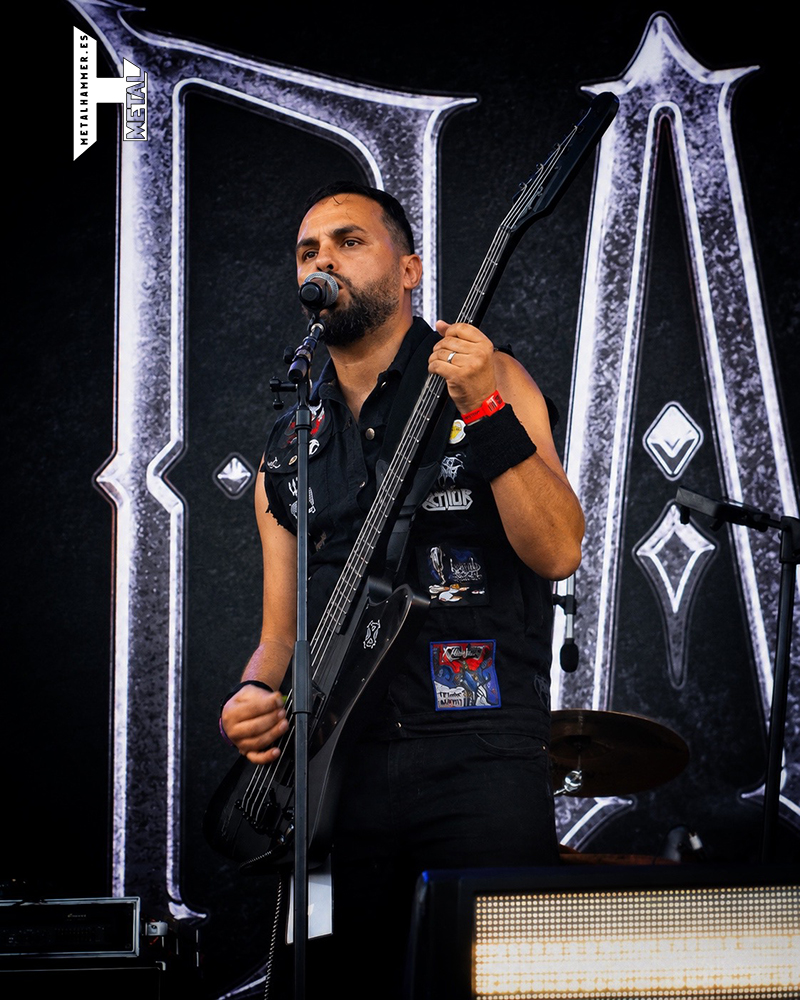
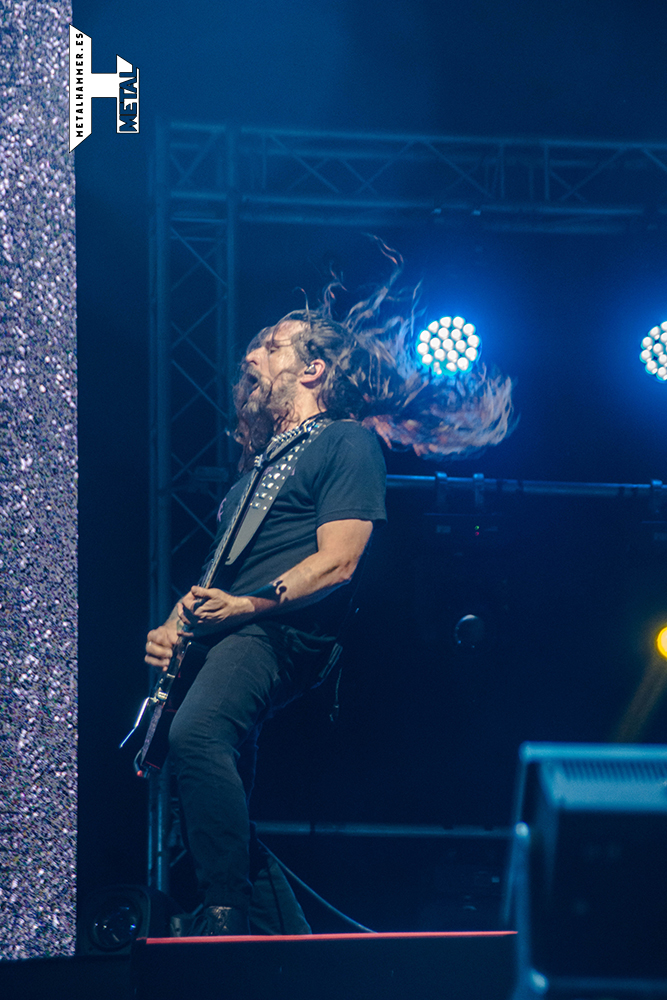
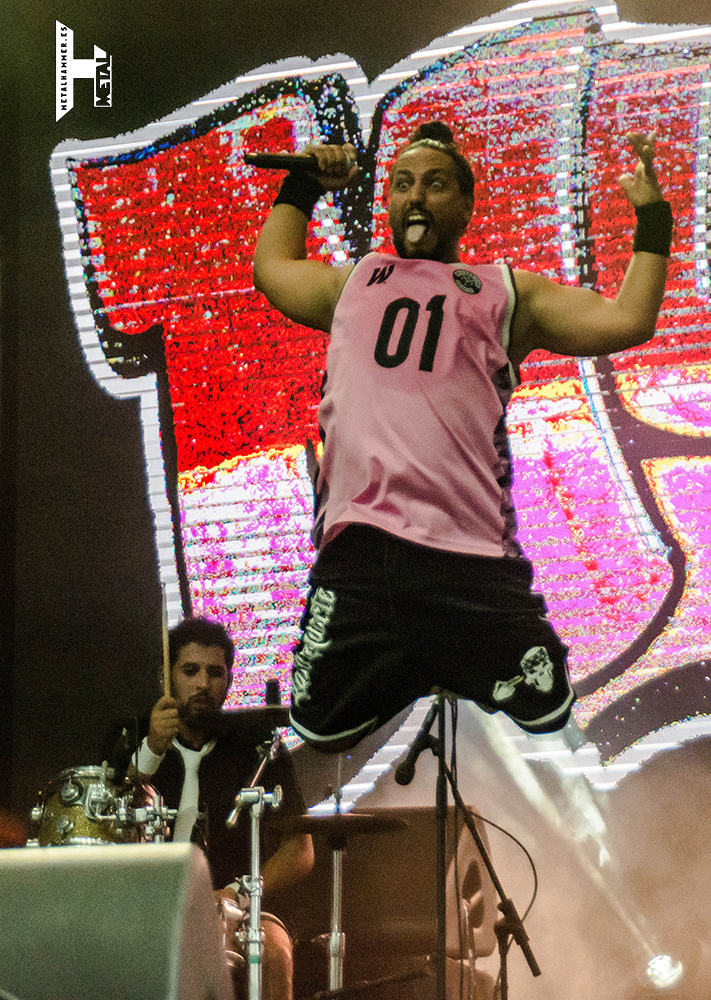
INICIATIVAS PARALELAS DEL FESTIVAL
Y es que L’Boulevard es uno de los puntos fundamentales para hacer crecer, visibilizar y promocionar la escena marroquí y no solo la relativa al metal y sino también la de Rap/Hip Hop y la de Fusion por las que tanto sensibilidad muestran también.
La gratuidad de la entrada al festival es algo fundamental para este objetivo, el hecho que cualquier persona, de cualquier estatus social y en cualquier situación económica particular pueda acceder al recinto y disfrutar de su música favorita, sea cual sea, teniendo además la posibilidad de asistir a conciertos de bandas (como Sepultura, por ejemplo) que serían imposibles de ver sin un evento de estas características ya, de por sí, es suficiente razón para ensalzar la labor de la organización; si, además, tenemos en cuenta todo el esmero que se pone en hacer de estos cuatro días una oportunidad de poder disfrutar, no solo de la música sino de muchas otras actividades que detallamos a continuación, se completa una oferta transversal para expandir la cultura en todas sus facetas.
Las actividades relacionadas son las siguientes:
El Circo Colokolo que tiene un prominente espacio, desde hace años, donde practicar sus ejercicios a disposición de todo el que quiera hacerlo.
La escuela de Danza Liquid Bridge que ofrece su programa gratuitamente durante dos horas al día, antes del inicio de los conciertos para que la gente pueda aprender esta disciplina artística.
La fanfarria Remork & Karkaba que estuvo presente el domingo a partir de las 17 hora mostrando su propuesta de danzas y música Gnawa por el recinto del R.U.C. Rugby.
Las actividades paralelas organizadas por la Asociación EAC Boulevard, como las visitas pedagógicas y el acceso al centro Le Boultek, verdadero núcleo de la actividad de esta asociación.
El Souk L’Boulevard (mercadillo del festival) que ofrece, como hemos podido ver en los reels que se han ido publicando en las redes sociales de Metal Hammer, múltiples actividades, este año con más de 30 stands entre los que hay 7 actividades, 17 asociaciones y colectivos presentes, 4 artistas exponiendo su obra, 13 stands de merchandasing junto a una interesante oferta cultural que, habitualmente, no es fácil de encontrar porque el día a día de tus actividades te absorbe completamente.
Quizás la novedad más importante de este año fue el perfecto funcionamiento del video juego colectivo que ya se inició el año anterior en una fase muy experimental. Se trata de una propuesta que se activa en las pantallas gigantes del festival a partir de las 16:00 horas y mientras se está procediendo a los cambios de escenario (tiempos mínimos, hay que decir, dada la rapidez con que se llevan a cabo) en la que, con una app de teléfono móvil gratuita, todos los asistentes pueden controlar su particular visión del juego y hacer moshpits, Wall of Death o desarrollo de conciertos personalizados que van ejecutando a su gusto. Sin duda una gran iniciativa que ayuda a completar la oferta cultural.
TREMPLIN COMPETITION
Pero, sin duda, el punto más interesante del apoyo a la escena es el concurso de bandas que se organiza cada año con motivo del festival y que es el verdadero escaparate para mostrar al mundo las capacidades y calidad de las bandas locales.
Durante los tres primeros días de evento tiene lugar la competición, el jueves los artistas de Rap/Hip Hop, el viernes los de Fusión y el sábado los de Metal.
El jueves se convoca a 7 artista de Rap que disponen de 15 minutos para mostrar su talento y su propuesta al público y convencer al jurado que merecen el sustancioso premio que ofrece la organización. El viernes es el turno de 4 bandas de Fusión con el mismo objetivo y 20 minutos de tiempo y el sábado les toca a 4 bandas de Metal ofrecer su propuesta con idéntico espacio de tiempo en el escenario (20 minutos).
En primavera de cada año se abre un periodo de inscripción y calificación de las bandas que permite escoger los 15 candidatos a ganar el concurso. Hay que decir y eso no es un punto favorable a las bandas de Metal, que para esta edición optaron a su participación más de 100 raperos o bandas de rap, más de 70 bandas de Fusión y menos de 10 bandas de Metal. Evidentemente lo reducido de la escena no ayuda a aumentar estos números, pero, por lo que pudimos ir oyendo de las diferentes personas implicadas de una u otra manera en el concurso, hay cierto rechazo entre las bandas del estilo por esta competición y, probablemente, vistos los resultados, no les faltan ciertos motivos, pero esto lo contaremos más adelante.
El premio para los dos primeros clasificados es bastante suculento, tal como expusimos en el primer reportaje de la serie en 2024 que podéis leer aquí https://metalhammer.es/la-escena-metal-marroqui-lboulevard/ pues tiene un incentivo económico incrementado este año, de 15.000 y 10.000 Dirhams (1.500 y 1.000 euros), grabación de un disco, algo de muy difícil acceso en este país, y toda una serie de talleres de formación que contribuyen, a lo largo de un año, a aumentar su calidad como bandas, junto a la posibilidad de ser invitados a tocar en el festival en la siguiente edición.
Aparte de todas estas oportunidades en caso de resultar ganadores, quizás lo más importante es poder mostrar tu música ante miles de personas en un país donde resulta muy complicado hacer conciertos y, mucho más, tener mucha audiencia en los mismos.
Como novedad, este año no se esperó a la entrega de premios del domingo para anunciar a los ganadores de cada categoría. Se hizo el mismo día entre las actuaciones de las bandas invitadas. Probablemente este punto sea el que menos me convence dado que se pierde la magia del momento de la entrega de premios con el subidón de adrenalina que supone enterarte un minuto antes de la victoria de tu banda. De todas formas, esto no empaña el gran resultado de este concurso y el gran apoyo que supone para la promoción de los artistas locales.
EL FESTIVAL
Entramos en la crónica del festival propiamente dicha, teniendo en cuenta que, como medio especializado en Metal, Metal Hammer hará especial incidencia en la jornada del sábado, pasando un poco por encima de los otros días que, si bien tienen un gran interés musical, corresponde a otro tipo de medios más que al nuestro.
JUEVES, DÍA DEL RAP/HIP HOP
Como cada año, el inicio de actividad de L’Boulevard tiene lugar el jueves con el ya tradicional día del Rap, uno de los estilos que más pasiones despiertan en Marruecos y más este año que se contaba con un impresionante cartel para los amantes del estilo.
Desde primera hora de la tarde, con la abertura de puertas, se podía percibir la expectación que había causado el dicho cartel pues el flujo de personas entrando al estadio era inacabable, hasta llegar a un aforo total de entre 25.000 y 30.000 personas que le daban al recinto un aspecto de “lleno hasta la bandera”
Después de poder pasear por el Souk y disfrutar de las múltiples propuestas allí agrupadas, se iniciaba la sesión de Warm-up a cargo de Mikebeatz 23 a las 16:45 a la que seguía puntualmente a las 17:20 el inicio del Tremplin del día.
Las bandas o artistas en competición en esta división eran: Funk Clan, Dgueulasse Gold y Yuzy procedentes de Salé, Shinohidden desde Berkane, Koga llegado desde Oujda/Ahfir y Browny Original y Strong & Qweta, artistas locales de Casablanca.
Los siete gozaron de sus 15 minutos en escena para convencer al jurado que los votara y lo hicieron francamente bien (teniendo en cuenta lo poco que se de este estilo musical tampoco mi valoración es muy fiable) resultando ganadores Shinohidden con el primer puesto y Browny Original con el segundo.
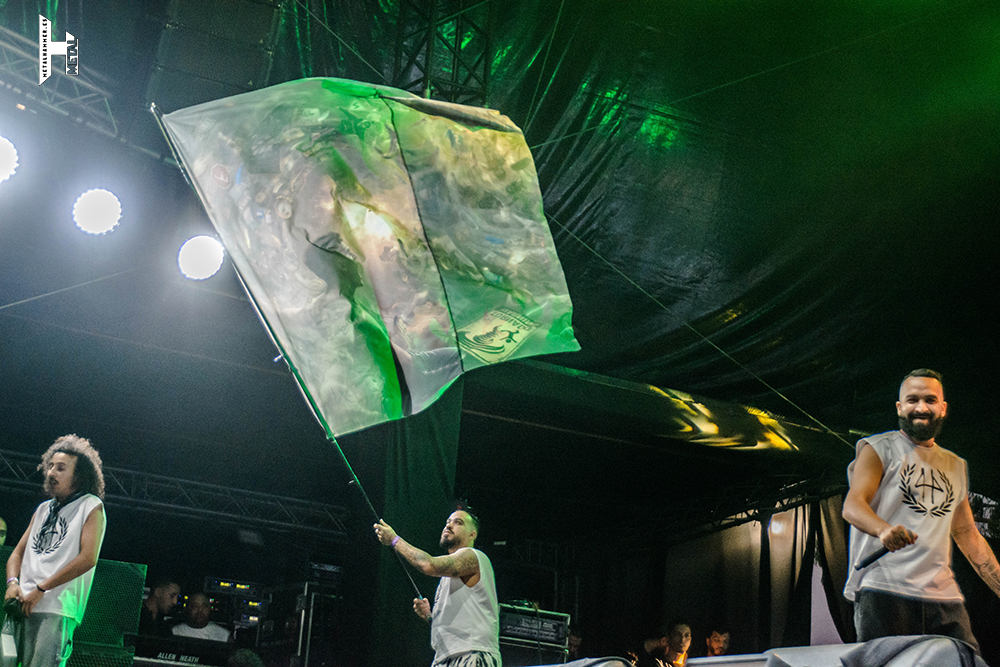
Cerrado el concurso era el momento de las actuaciones de los artistas invitados que, en general habían levantado una gran expectación. Se trataba de Bo9al, artista insignia de la nueva generación de raperos marroquíes, e francés DJ Fly, que convierte una sesión de música enlatada en todo un espectáculo, el también local Figoshin que ha encabezado la renovación y la modernización del rap marroquí en los últimos 15 años y un cabeza de cartel absolutamente espectacular, principal motivo de la gran expectación generada este día entre los fans, el marroquí Dizzy Dros que, con solo dos álbumes se ha convertido en el principal renovador del rap local, redefiniendo el estilo con su música en la que incluye elementos cinemáticos y de ambiente y absoluta estrella, no ya en Marruecos sino a nivel mundial con algunos videos en youtube con más de 100 millones de visionados, que se dice pronto pero que tiene un valor incalculable.
Un éxito rotundo el del día inicial de L’Boulevard que se me antoja difícil de superar en el futuro.
VIERNES, DÍA DE LA FUSION
El Segundo día fue, probablemente, el más flojo del festival en cuanto a la asistencia de público, aunque no en el aspecto musical pues las propuestas eran muy interesantes en su mayoría, sin descartar que el resultado no fuera el esperado, al menos desde mi punto de vista, en algunos casos.
A las 17:40 horas se iniciaba el Tremplin del día con la participación de cuatro bandas emergentes de estilos fusión que dejaron unas excelentes sensaciones en el que narra estos hechos.
ARINASS
La banda encargada de abrir fuego en el concurso llegaba desde Fez con una propuesta, mezcla de música Gnawa, Aïta y Chaabi, con inflluencias de Reaggae, Rock y Musicas del mundo.
Quizás algo estáticos en el escenario, fruto del nerviosismo del momento, el juego de la voz principal masculina junto a las dos coristas femeninas probablemente sea la característica más destacada de su música, junto a la impecable percusión y los toques eléctricos y rockeros mezclados con los aromas más étnicos y tradicionales.
Fue un buen inicio de tarde que prometía una continuación, cuanto menos, interesante.
OXOR
Llegado desde Marrakesh este artista ofrece una mezcla de Pop, Afro, Rithm & Blues y Músicas tradicionales marroquíes con unas composiciones hibridas que se mueven entre el Afro-Gnawa y el Neo-Chaabi.
Quizás con menos músicos de los que serían deseables en el escenario (guitarra, batería y voz unicamente) iniciaron la que, a mi entender, fue la menos atractiva de las propuestas del concurso del día. Tirando casi al 90% de música pregrabada, todos situados en la parte derecha del escenario dejando un inmenso hueco a la izquierda y rosas rojas en los micros fueron los que más interactuaron con el público, quizás demasiado, lo que les restó tiempo para su música y los juegos vocales entre cantante y coristas fue también bastante destacado.
Se entretuvieron entre canciones arrojando rosas al público (no llegó ninguna pues todas se quedaron en el enorme foso que habilita el festival) lo que hizo que, a falta de 30 segundos para el final de sus 20 minutos de rigor, iniciaran su último tema, excediéndose largamente de tiempo.
Al final su show fue bastante plano y con demasiada música secuenciada y pregrabada que, supongo, les restó posibilidades de victoria.
METROTUNE
Desde Settat y Casablanca, tuvimos ocasión de disfrutar de una extraordinaria propuesta de un nivel musical absolutamente maravilloso. Metrotune desarrolla una fusión de música marroquí actual entre Salsa, Rock y Gnawa, con una onda setentera más que destacable.
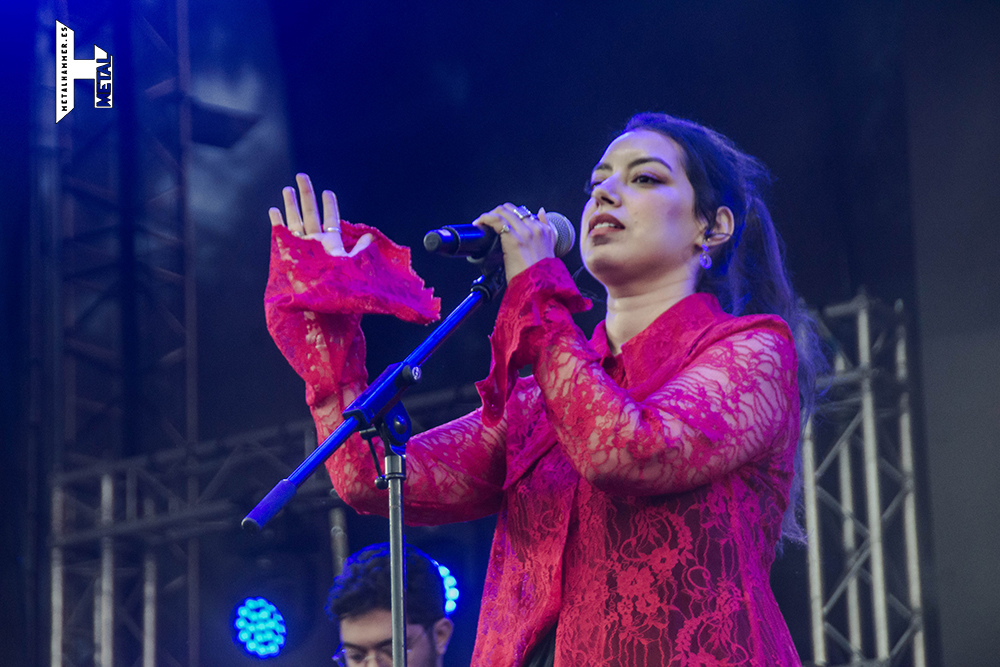
Iniciaron con un tema de casi 9 minutos de largo con una extensa Intro instrumental con toques de Rock Progresivo, Metal y Rock que precedió a la irrupción en el escenario de su cantante femenina, ataviada con un espectacular traje rojo y con una calidad vocal extraordinaria.
Letras en inglés sobre una música con un perfecto desarrollo técnico, omnipresencia de los teclados, muy al estilo del Rock Sinfónico de los 70, muchos aromas de Funk, así como también de Jazz y Blues en una propuesta arrolladora que, por si sola, merecía el primer premio.
No dejaron ninguna duda al respecto y se postularon como el más firme candidato a la victoria final.
IGHOULIDEN BAND
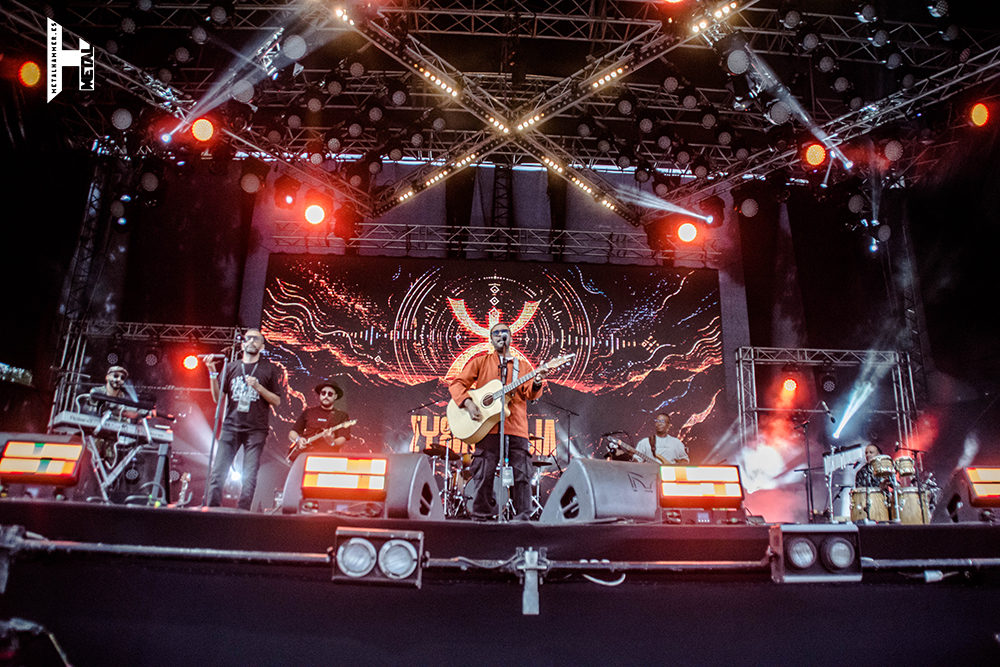
La última de las bandas en competición llegaba desde Agadir y es ya muy veterana en la escena pues llevan en activo desde 2008 haciendo una particular fusión de Amazigh, Tazenzart con ritmos Ahwach sobre unas bases provenientes del Reaggae, Jazz, Funk, Blues y Rock.
Con letras en Dariya desarrollaron una propuesta muy melódica, eléctrica y solvente con mucha percusión y ritmos cambiantes en todo momento.
Dieron un buen concierto, pero quizás cabía esperar algo más de unos músicos con tanta experiencia acumulada.
Al final, la banda ganadora, como no podía ser de otra manera fue Metrotune, obteniendo el segundo galardón Arinass. Nada que objetar a la decisión del jurado una vez vistas las evoluciones de todas las bandas en las tablas.
Finalizado el Tremplin era el momento de las bandas invitadas, las tres de Marruecos, Rhita Nattah con una propuesta alternativa de Afro Soul, Bab L’Bluz y su música de Rock Psicodélico con fusión de música marroquí y miembros franceses y locales y el cabeza de cartel del día, Issam Kamal & Mazagan, inventores de la fusión Chaabi Groove donde los cantos populares se mezclan con instrumentos y música rock y funk con texturas electrónicas que le dan una gama de matices muy interesante.
Vistos los tres conciertos a mí quizás se me antojaron excesivamente planos, desprovistos de alicientes más allá de la propia fusión de estilos, cosa que quizás también notó el público presente el cual, ni de lejos se vio tan motivado como los otros días.
En definitiva y desde mi punto de vista, en este día resultó mucho más atractivo el Tremplin que el resto de actuaciones, siendo, eso sí, todas de muy buen nivel.
SÁBADO, DÍA DEL METAL
El sábado siempre es el día más grande de L’Boulevard, no hay que olvidar que el festival se inició como un evento exclusivo de metal en una pequeña sala de Casablanca y después fue creciendo, progresando, ampliándose y abriéndose a otras músicas.
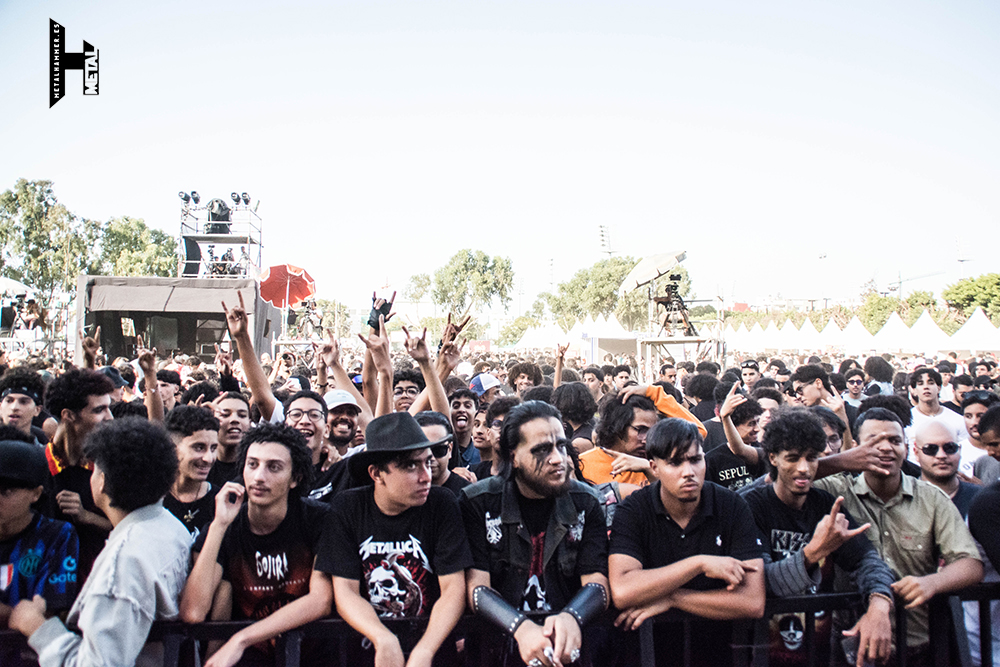
Este año, con la presencia de Sepultura como cabeza de cartel en su gira de 40 aniversario, anunciada como la última de su carrera, que volvía 16 años después de su única presencia en Marruecos, se preveía aun más grande de lo que es habitualmente, pero la presencia de Dizzy Dros el jueves empañó un poco esta suposición. Aunque el recinto presentaba una estupenda entrada de más de 25.000 personas, no se llegó a superar el aforo del día del Rap. De todas formas fue un gran éxito que procedemos a relatar incluyendo las entrevistas que, como cada año, hicimos a todas las bandas y que nos ayudan a conocer un poco más sus interioridades y sus objetivos.
La tarde se inició, como es habitual a las 17:00 horas con el pistoletazo de salida del Tremplin.
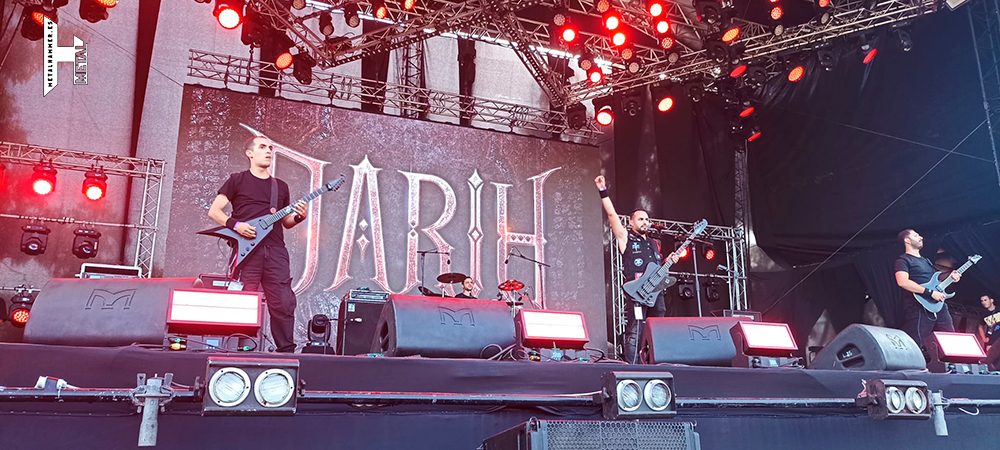
DARIH
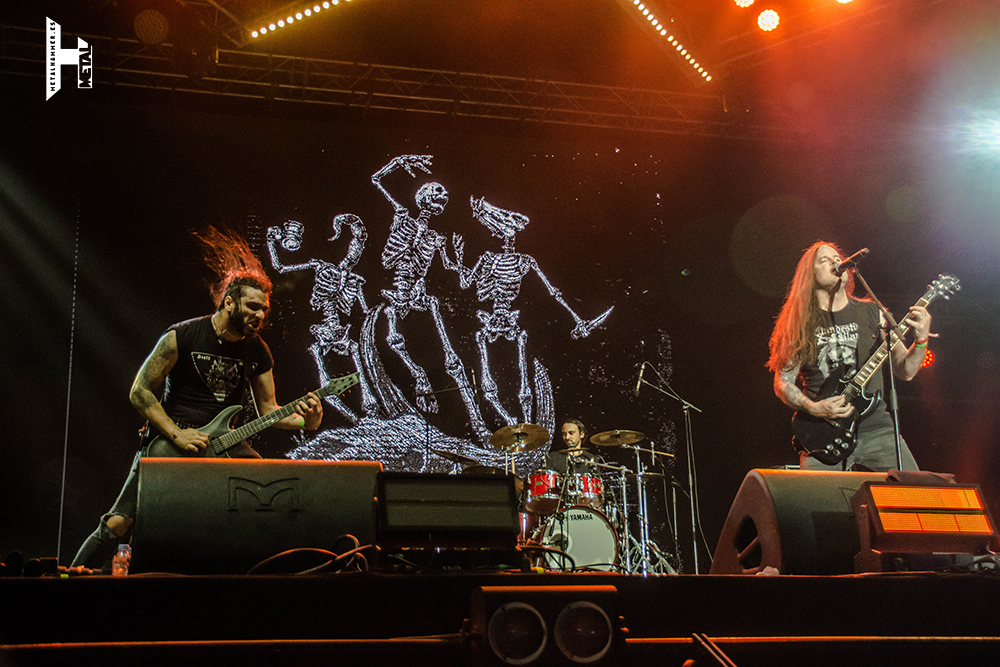
Con exquisita puntualidad entró en escena la banda local Darih, un grupo que la organización clasificaba de Black Metal pero que, visto su concierto, para nada se ubican en este estilo sino más bien en una mezcla muy bien hecha de death, thrash y toques de progresivo, si bien sus atmosferas si podrían entrar en el terreno propiamente Black. La banda busca su inspiración lírica en la historia, el colonialismo y las leyendas marroquíes, lo cual se agradece pues son una fuente de conocimiento de la vida y tradiciones locales.
Tras unos inicios dubitativos con las sirenas de su tema más conocido “1907”, canción que narra el bombardeo de la flota francesa que arrasó Casablanca hasta los cimientos y dio inicio a la época más dura y siniestra del colonialismo, empezaban su show interpretando los dos primeros temas con bastantes vacilaciones y cierta inseguridad, aunque a partir del tercero fueron in crescendo hasta terminar con un enorme Wall of Death y con la total aceptación del público. Sin duda un buen concierto, aunque, no entraron en mi dupla de favoritos a la victoria, ciertamente, se quedaron muy cerca.
En la siguiente entrevista conoceremos un poco mejor a la banda y nos contarán su forma de concebir la música.
ANORA
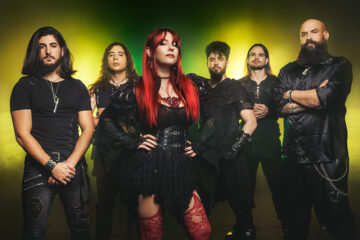
Llegada desde Kenitra, la propuesta de esta banda podría situarse entre el grunge, el alternativo y el metal melódico.
Formados en 2024 su propuesta a mi me resultó la menos interesante de la tarde, siempre por gustos personales, evidentemente, con toda la banda situada a la izquierda del escenario, dejando vacío el lado derecho, lo cual creaba una descompensación más que evidente, sorprendió mucho que, en un festival donde el sonido es absolutamente perfecto, ellos no consiguieran la nitidez suficiente para poder escucharlos adecuadamente, con constantes acoples y dificultades de sincronización.
Probablemente esto afectó gravemente a su rendimiento sobre las tablas, junto al nerviosismo más que evidente de sus miembros y no pudimos ver el auténtico potencial de la banda que, estoy absolutamente seguro, lo tiene de sobra.
Dieron un show bastante plano, con composiciones quizás menos elaboradas de lo que sería recomendable, pero con una gran actitud, poniendo toda la carne en el asador y mostrando un gran interés en convencer y demostrar todo su potencial.
La banda tiene mucho tiempo por delante para crecer y demostrar que pueden llegar muy lejos y, seguramente, tendrán otras ocasiones para lucirse y rendir a un mejor nivel.
Seguiremos con interés su carrera a partir de ahora para confirmar las buenas sensaciones que nos dejaron en esta ocasión.
En la siguiente entrevista los conoceremos un poco mejor.
LIXIVIA
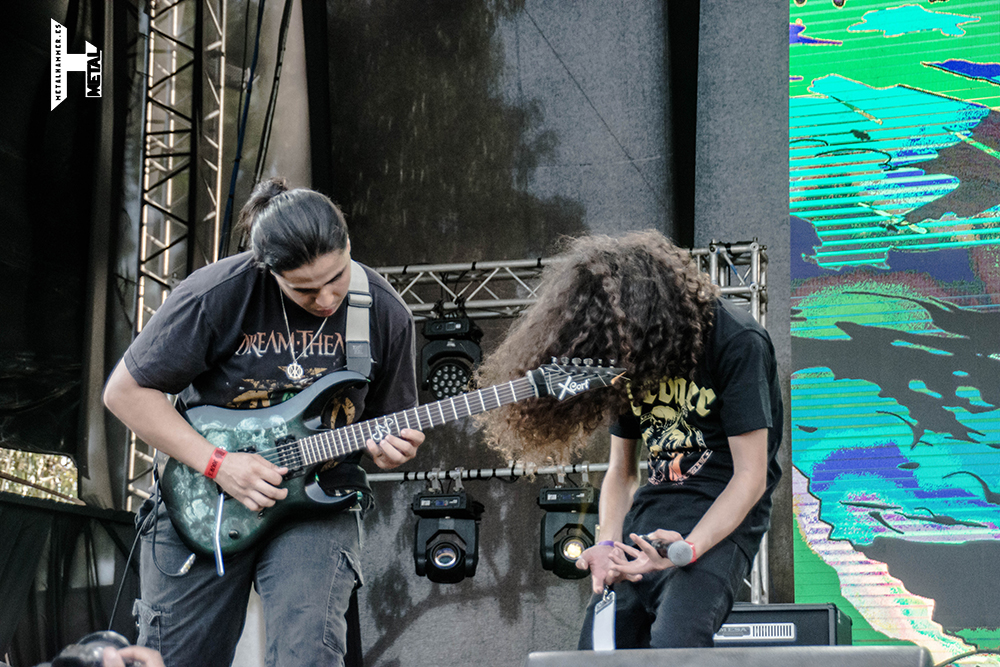
La tercera banda en competición proviene de Salé y está formada por miembros muy jóvenes (prácticamente ninguno excede de la veintena corta en edad) y desarrollan un Thrash Crossover absolutamente arrollador.
También formados, como los dos anteriores, en 2024 iniciaron el concierto con un largo solo de guitarra, perfecto técnicamente, con más tintes de metal progresivo que de Thrash por lo que nos desubicaron un poco, pero a partir de ahí caña de la buena, thrash old school en estado puro, con una puesta en escena impecable, outfits hechos de camisetas y gorras de sus grupos referentes, una agresividad digna de las mejores bandas del estilo y una ejecución que rozó la perfección.
El concierto fue subiendo en intensidad y en potencia, incluido un más que aceptable solo de batería y, con la banda, el público siguió el mismo camino, aumentando los moshpits en tamaño y velocidad de giro hasta la extenuación de la joven audiencia.
En el último tema de su set tuvieron un incidente técnico con el bajo que no permitió oírlo en toda la canción, pese a que 5 personas del staff del festival saltaron al escenario y se desvivieron por solucionar el problema, desafortunadamente sin conseguirlo. Esto, de todas formas, no empañó en absoluto lo que fue una actuación de antología.
Como ya pasó el año pasado con Manic Attack, pusieron absolutamente patas arriba el recinto y presentaron una firme candidatura a la victoria. No creo que nadie albergara ninguna duda que el premio iba a ser para ellos, cualquier otro resultado hubiera resultado absolutamente injusto.
En la entrevista que reproducimos a continuación conoceremos más a fondo a la banda y también a sus referentes y sus inquietudes.
2MIN AWAY
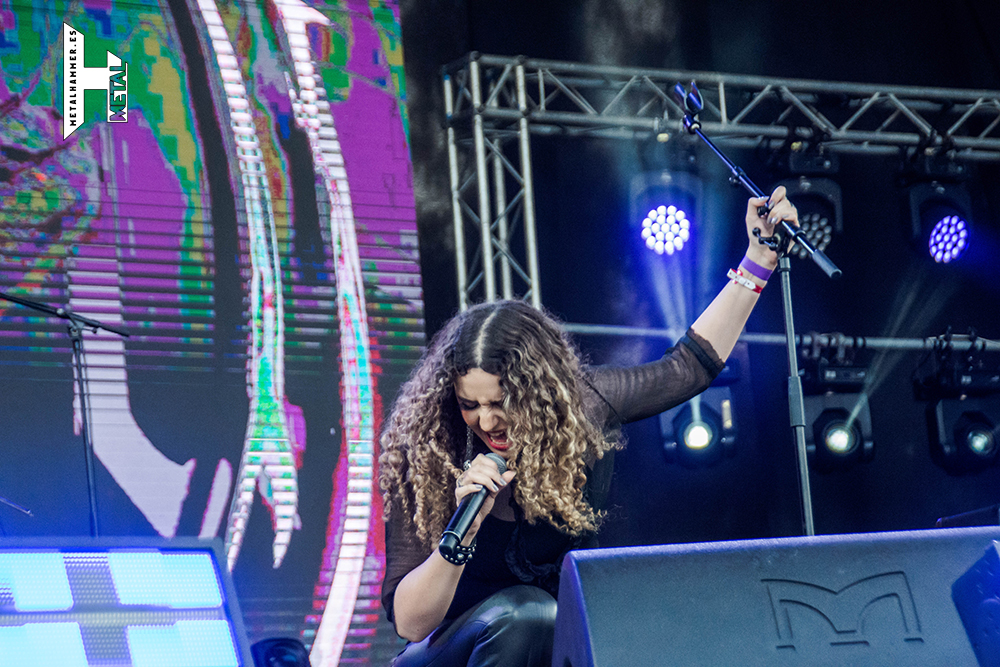
La última de las bandas en competición era la también local 2Min Away, un grupo formado por dos hombres y dos mujeres con un estilo absolutamente inclasificable, con mezcla de grunge, alternativo, rock and roll, heavy metal y tintes de muchos otros estilos, incluido el pop, del que procede su espectacular cantante con una personalísima voz y una presencia escénica arrolladora.
Formados en mayo de este mismo año 2026 probaron suerte en la preselección del Tremplin y, viendo lo que son capaces de hacer, su inclusión fue un gran acierto de la organización.
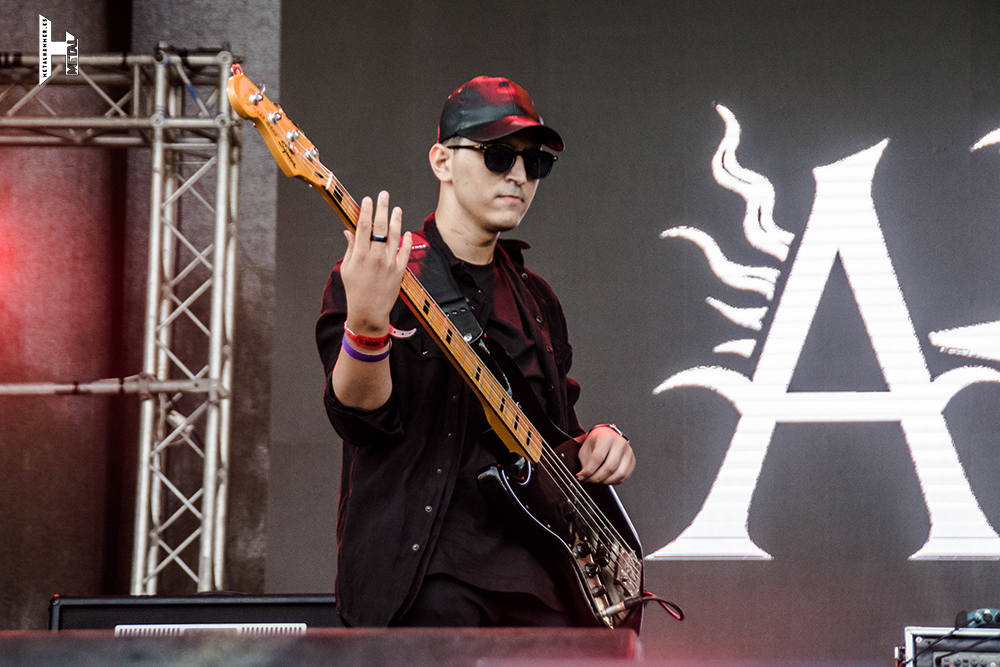
En ningún momento daban la sensación de banda nueva, con unas tablas en el escenario dignas de una banda veterana, especialmente las dos chicas, cantante y bajista que, por si solas forman el alma de la banda dando un espectáculo impresionante, buscando las cámaras y la complicidad con el público en todo momento mientras guitarra y batería se mantenían en un discreto segundo plano.
Saben a lo que juegan y lo hacen impecablemente bien. Las poses tanto de la cantante como de la bajista ante público y cámaras, las eternas sonrisas en sus rostros y su calidad dejaron constancia que se puede hacer buena música en este país sin que sea metal extremo.
Su actuación fue de lo mejorcito de la tarde y se postularon firmemente a premio, cuanto menos el segundo, aunque, Marruecos es como es y, tristemente, ciertos estilos no gozan de posibilidades en ningún concurso.
Con ellas se cerraba el Tremplin 2026 a la espera del anuncio de los ganadores que tendría lugar finalizado el concierto de Suicide Machine.
MYCOSE OF YOU
La primera de las bandas invitadas al festival este año era la franco-marroquí Mycose of You, una de las bandas que despertaban más interés dado lo inclasificable de su propuesta.
Liderados por el cantante, también animador y presentador de L’Boulevard, Samados, se mueven en una mezcla de estilos apabullante; desde el rap al metal pasando por el punk, el ska, el funk y la electrónica con toques de música tradicional marroquí que le vienen perfectamente bien al estilo del grupo.
La banda está formada por la base de batería, bajo, guitarra y voz pero con la inclusión de un DJ en el escenario que le aporta un plus absolutamente imprescindible para desarrollar su estilo con sus scratches y sonidos electrónicos.
Su propuesta absolutamente festiva, arrolladora, con una actitud increíble, perfectamente liderados por el carisma, la energía y la arrolladora presencia de su frontman Samados, fueron, sin duda, el gran descubrimiento de este año en este festival y, de largo, la mejor banda del día, comiéndose, literalmente, a todas las demás.
Pusieron a saltar, a bailar y a cantar a más de 25.000 personas y, absolutamente nadie, os lo puedo garantizar, quedó indiferente ante lo que se estaba viendo. Con sus letras alternando francés, inglés y Dariya, unos estribillos super pegadizos y una propuesta escénica divertidísima, eternas sonrisas de sus miembros, bromas y juegos entre ellos incluyendo el lanzamiento de un vinilo que aportó su Dj , RSK, sin duda serían una apuesta segura para cualquier festival europeo. No hay duda que si siguen en la brecha van a ser muy conocidos y respetados en toda Europa.
Como dato curioso que define un poco el espíritu festivo e irreverente de la banda hay que decir que, cuando empezaron a barajar nombres para ponerse, uno de los que más les gustaba y que, hasta el último momento estuvo presente fue Rage Against the Tajine, haciendo referencia a una de sus bandas fetiche pero que descartaron para no dar sensación de ser una banda tributo.
Todo esto y más nos lo cuentan en la siguiente entrevista.
SUICIDE MACHINE
Terminada la fiesta que organizó la banda anterior, era ya el momento de entrar en los terrenos más oscuros propios del metal extremo que tanto gusta en Marruecos.
Y la primera de las propuestas provenía de una banda que inició su trayectoria hace 14 años pero que la interrumpió súbitamente con la pandemia, para regresar con dos miembros originales y el resto de la formación renovada, este mismo año 2026 para lanzar su primer LP, Knight of the Abyss, un gran trabajo de Death Metal Melódico, el pasado mes de septiembre.
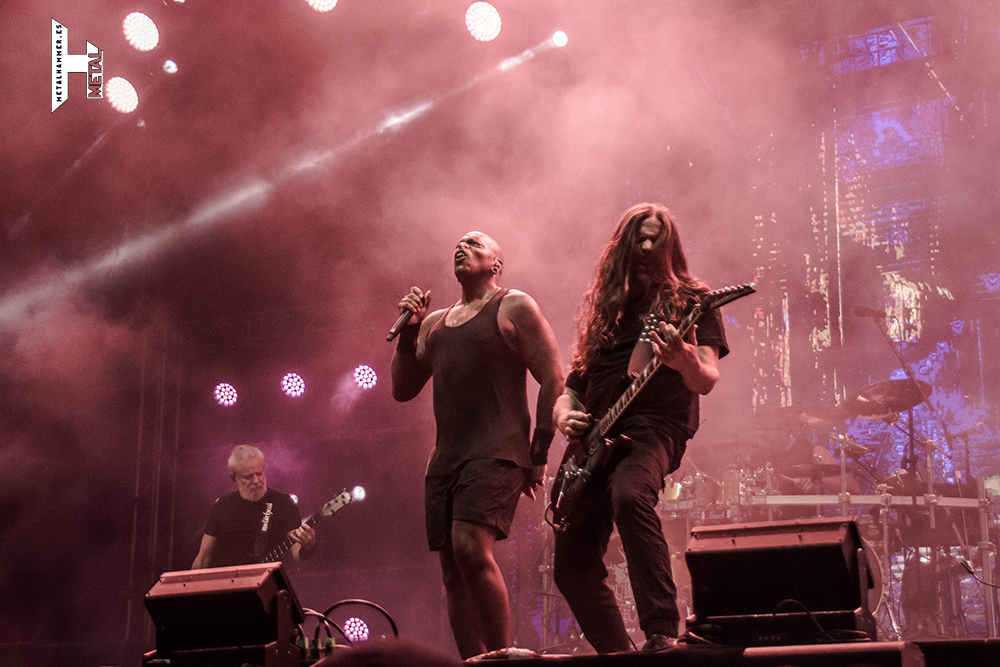
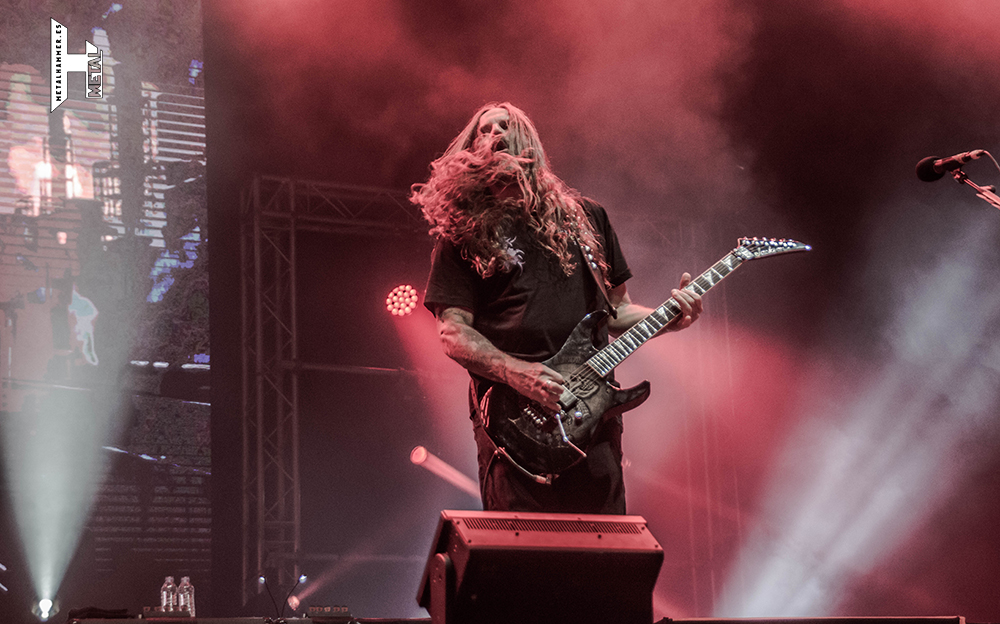
De este lanzamiento dejaron una buena muestra en un espectacular show basado, al 99% en la presencia y potencia escénica de su frontman, Elias Horaira (Pagan Ulver), que con su enorme capacidad de moverse, su teatralidad, sus guturales con registros inacabables y su carisma para arrastrar al público por el camino que desea, mantiene viva una propuesta a la que el resto de músicos, dejando aparte su enorme talento, virtuosismo y capacidad de interpretar a la perfección los temas con más melodía y armonías bastante más elaboradas de lo habitual en el estilo, poco sentido más añaden dada su nula interacción. Se mantuvieron absolutamente estáticos durante todo el concierto sin apenas un movimiento de cabeza. Hay que añadir también que se cambió el segundo guitarra para uno de los temas para agradecer la colaboración del invitado en conciertos donde no pudo acudir Abderrahamane Saidi, el titular. Que volvió a las tablas para seguir con el show después del dicho tema.
La banda aprovechó intensamente la pantalla de fondo con constantes proyecciones de imágenes de su disco y desarrolló un enorme concierto que gustó y mucho, a la multitud que abarrotaba el estadio a esta hora y que terminó con el frontman organizando dos enormes Wall of Death a lado y lado que la gente se apresuró a realizar.
En este tipo de estilos extremos los marroquís se mueven como pez en el agua, están seguros de su potencial y son una fuente inacabable de bandas que ofrecen una gran calidad. Los actuales Suicide Machine son una de las mejores, técnicamente y en interpretación y si a esto le añadimos la presencia arrolladora de su frontman Elias Horaira, tenemos ante nosotros más a una realidad que a una promesa.
Tuvimos el privilegio de entrevistar a la banda el día anterior al inicio del festival en el estudio de nuestro amigo Mamoun, al que agradecemos su disponibilidad y colaboración. En ella, perfectamente traducida por su bajista Tareq, nos cuentan muchas y muy interesantes cosas sobre su pasado y su futuro.
ANUNCIO DE GANADORES DEL TREMPLIN
Cerrado el concierto de Suicide Machine era el momento de desvelar las dos bandas ganadoras del Tremplin de este año.
El primer premio, como todos esperábamos sin albergar duda alguna, fue para los thrashers Lixivia. Merecidísimo galardón que los tiene que ayudar, a lo largo del próximo año, a avanzar y convertirse en la gran banda que ya apuntan ser.
El segundo premio correspondió a Darih, merecido también, por supuesto, después de ver su show, pero en mi opinión y es algo que cada año me ha pasado, había otra banda con más méritos para obtenerlo, 2Min Away, lo cual me lleva a desilusionarme un poco de este tipo de concursos en Marruecos, donde el jurado prima sus gustos particulares por encima de la calidad de las bandas participantes o criterios más estrictamente musicales.
Por lo que parece, en L’Boulevard si no tocas cualquier estilo extremo o cercano a este tipo de música, no tienes ninguna opción de obtener la preciada recompensa, aunque tu calidad sea sustancialmente mejor que la de las otras bandas.
Los tres años que he podido presenciar el concurso he tenido la misma amarga sensación, en 2024 la banda de Hard Rock Mean Machine se quedó sin recompensa pese a ser sustancialmente mejor que el ganador del segundo galardón, Nexus 7.17 que tocó con baterías secuenciadas todo el show. Evidentemente no había color en quien debía ser el ganador, Pagan Ulver, pero probablemente el segundo premio hubiera sido una justa retribución para los rockeros.
En 2025 la injusticia, a mi modo de ver, fue aun más exagerada dejando sin premio a la que fue, sin duda, la mejor banda sobre las tablas del Tremplin, The Sexophones, pero claro, su propuesta no era extrema y terminó ganando Manick Attack, que dieron un gran concierto, evidentemente, pero que ni de lejos se acercaban al nivel de The Sexhophones, merecedores, sin ninguna duda de la victoria absoluta.
Quizás habría que hacer una reflexión por parte del festival e introducir en el jurado algún miembro internacional con otra visión de la música que la estrictamente marroquí. No ayuda a la escena local ignorar, o al menos poner en segundo plano, a las bandas que no hacen Metal Extremo pues esto puede desmotivarlas y hacer que abandonen lo que podría ser una carrera muy prometedora por su parte.
No me toca a mí tomar estas decisiones, por supuesto, pero quizás habría que hacer esta amplia reflexión en beneficio de la escena marroquí que, en definitiva, es lo que busca el festival.
SOTHERION
La penúltima banda en entrar en escena fue la francesa Sotherion, un proyecto de una sola persona más que una banda propiamente dicha, como el mismo BST, nombre del líder y único miembro fijo de la banda, reconoce.
Su objetivo máximo es recobrar la esencia del Black Metal primigenio, en el más puro estilo Old School, sin modernidades ni añadidos de ninguna clase, solo oscuridad, rapidez en las guitarras, blast beats impecables y voces absolutamente guturales y profundas y eso es lo que desarrolló en un concierto para el que reclutó músicos de sus otros proyectos convirtiéndose en la primera actuación en directo de Sotherion en su corta historia.
Hay que decir que la banda se mostró compacta y equilibrada en todo momento, nunca dio la sensación de ser un conjunto de músicos contratados exclusivamente para la ocasión, cosa que, seguramente, se debe a su trayectoria juntos en otros proyectos que les da esta sincronización impecable que demostraron al público.
Con una escenografía discreta, apenas una proyección de fondo en pantalla que no cambió en todo el show y un desarrollo perfecto, BST mostró al público marroquí su proyecto unipersonal como si de una auténtica banda se tratase con solvencia y seguridad. Su objetivo de recuperar sin añadidos el Black Metal más crudo y originario se alcanzó a la perfección.
En la siguiente entrevista BST nos cuenta, con todo lujo de detalles, sus intenciones y los objetivos de su proyecto.
SEPULTURA
Llegados al final de la jornada del sábado solamente quedaba por saltar a las tablas el cabeza de cartel, los brasileños Sepultura que llegaban al festival, 16 años después de su anterior paso por aquí en lo que ellos denominan su Gira de despedida, aunque con este tipo de bandas nunca se sabe si están diciendo la verdad o simplemente es un gancho para captar más público.
La expectación despertada por los brasileños se respiraba en el ambiente. Muchos de los fans más jóvenes que se agolpaban en las primeras filas impacientes por disfrutar del concierto nunca habían tenido oportunidad de ver en directo a Sepultura y los más veteranos ardían en deseos de disfrutar nuevamente, como en 2010 del espectacular directo que proponen Andreas Kisser y sus muchachos.
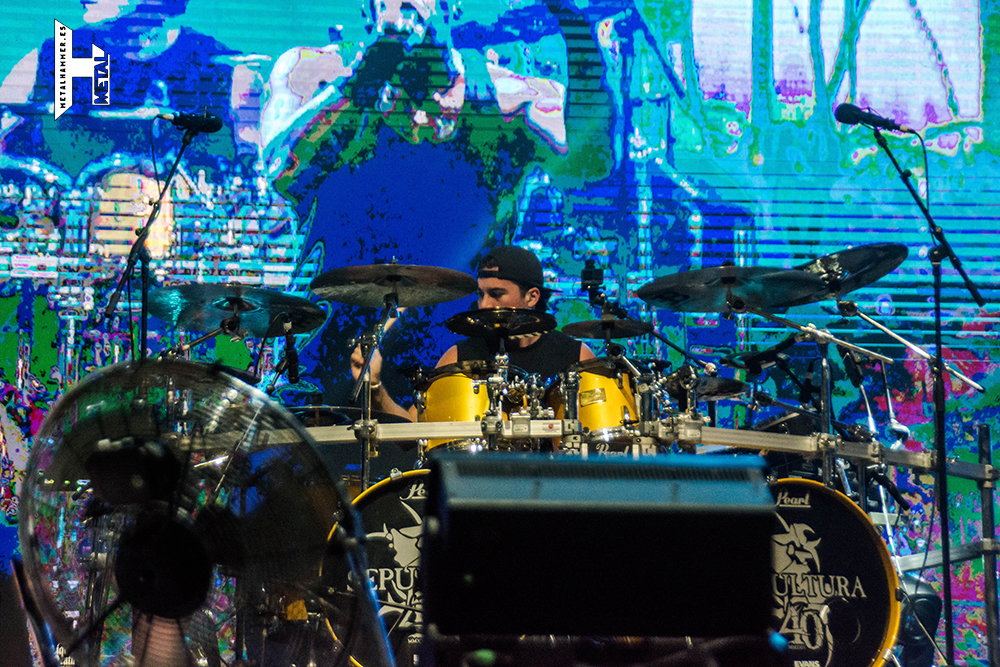
El show de los brasileños fue el estándar que están llevando a cabo en todos los conciertos de la gira de 40 aniversario, que trajeron este mismo verano al Leyendas del rock y que se plasmará en un disco en directo de 40 canciones tomadas de 40 conciertos distintos para lo que, evidentemente, se filmó entero este concierto. Un repaso a toda su discografía con un set perfectamente elegido y los temas situados en el lugar estratégico que corresponde para dar un show de menos a más y terminar con la locura habitual del público marroquí.
La nota más interesante de su actuación fue la batucada, ya clásica de la banda en la que invitaron a subir al escenario a gente del staff y también a algunos músicos de las cuatro bandas participantes en el Tremplin. Seguro que va a ser algo que estos jóvenes no olvidarán jamás.
Con una cuidada escenografía, con proyecciones en la pantalla de fondo de videos y fotos relativos al tema interpretado, con unos músicos en plena forma y Derrick en un nivel vocal espectacular fueron desgranando los temas uno por uno conduciendo al público hacia el terreno marcado por ellos y demostrando fehacientemente porqué son una banda tan querida en el norte de Africa.
Su último concierto en el continente negro dejó el listón tan alto que quizás costara superarlo en caso de haber otra ocasión.
Ahora tocará esperar a ver si cumplen su palabra de retirarse, al menos provisionalmente de la escena cerrando en su concierto de Sao Paulo del 7 de noviembre de 2026 o, si como es habitual en las bandas de su generación, se desmienten a si mismos y siguen publicando discos y haciendo giras de presentación de los mismos.
En esta breve entrevista (solo nos concedieron 5 minutos) Andreas Kisser nos explica brevemente los planes de futuro de la banda.
Finalizada la actuación del cabeza de cartel en olor de multitudes solo quedaba ya recogerse cada uno a su redil y esperar la jornada de clausura del domingo que prometía momentos muy interesantes junto con la entrega de premios del Tremplin.
DOMINGO, JORNADA DE CLAUSURA
El domingo siempre es un día especial para L’Boulevard. Han pasado ya las emociones y la intensidad de los conciertos de los otros tres días y este se dedica a ejercer de muestra de las músicas que se hacen actualmente tanto en Marruecos como en otros países africanos sin la presión de un cartel para atraer al público al recinto.
De hecho los domingos suelen ser, habitualmente, los días en que menos gente se congrega en el estadio R.U.C. Rugby y habitualmente presentan un perfil más familiar que los otros tres días.
En esta ocasión fue un día flojo en asistencia si la comparamos con los días del rap y el metal que batieron récords, de todas formas, muchos festivales europeos considerarían un gran éxito congregar un aforo de 10.000 o 15.000 personas o más en sus recintos en los días más fuertes, cosa que L’Boulevard consigue en el día que menos asistencia tiene, tal es la importancia de este festival.
Este año, en comparación con los anteriores, quizás el cartel del día era ligeramente más flojo iniciando la tarde a las 18:00 horas con dos DJs, Omar Ek, que a su vez se colgaba una guitarra para completar los sonidos electrónicos que proponía con música en vivo y Aziz Konkrite, con una propuesta también muy electrónica que dejó bastante indiferentes a los presentes en este momento, no muy numerosos, por cierto.
A las 19:45 Kin’Gongolo Kiniata, llegado desde la República Democrática del Congo iniciaba las actuaciones propiamente dichas con una banda en el escenario y música en directo. Pese a que tenía mucha curiosidad por disfrutar de su propuesta, la verdad es que se me hicieron bastante planos y anodinos no consiguiendo despertar mi interés.
A las 20:40 llegaba el plato fuerte del día, la entrega de premios a las bandas ganadoras de cada una de las secciones del Tremplin. Este año, al haberse anunciado los ganadores el mismo día de su actuación, el acto supo a poco. La emoción y la descarga de adrenalina de los ganadores ya no estaba presente pues habían tenido tiempo de asumirlo y, pese a la alegría de sus miembros al recoger el premio, las sensaciones no eran las mismas que los otros años.
Ya hemos dicho anteriormente que los ganadores en la división metal fueron, en primer lugar, LIXIVIA y en segundo DARIH, con los que conversamos brevemente después de la entrega de premios para que nos contaran de primera mano sus sensaciones y también sus perspectivas a partir de ahora, una vez concretado su premio.
Reproducimos a continuación las dos entrevistas, primero los ganadores del primer premio, LIXIVIA.
Y seguidamente los segundos clasificados, DARIH.
Después de la entrega de premios la música continuó, encarando ya la recta final del festival con dos bandas, la primera de ellas procedente de Siria y Francia, Sarab, que a la postre fue la que más interesante me resultó por su propuesta mezcla de Post-Punk, Techno, Rock y pura improvisación junto con un aderezo importante de música tradicional siria. Sin duda fueron lo mejor del día con diferencia.
Para cerrar la noche se contó con la presencia de los franceses Zentone, una banda que mezcla Punk, Rock y Reggae y que a mí, como las anteriores a excepción de los sirios, se me antojó muy plana y carente de la energía necesaria para levantar los ánimos en un festival.
Con ellos se cerraba esta edición, la numero 24 de L’Boulevard con la promesa de una edición de 25 aniversario muy especial que está preparando ya la organización.
Hablando con Hicham Bajou, co-director del evento, nos planteó la posibilidad, para el año que viene, como celebración del 25 aniversario, de recuperar la estructura prepandémica de L’Boulevard de dos fines de semana consecutivos y ocho días de música. Se iniciaría el primer fin de semana con el Tremplin y algunas bandas invitadas y se cerraría al siguiente con los grandes cabezas de cartel.
Esta estructura permitiría al festival tener más posibilidades de contratación de bandas y dar un mayor espectáculo a los presentes. De todas formas, los inconvenientes logísticos y de organización que representa este reto quizás no lo hagan viable. Habrá que esperar al anuncio del año próximo para confirmar o desmentir la propuesta.
Terminado el festival daremos un último apunte al análisis de la escena marroquí en forma de una entrevista que estábamos intentando hacer desde el año 2024 pero que no ha sido posible hasta esta edición, se trata de Reda, fundador y alma mater de la banda más grande que ha dado Marruecos en toda su historia, HOBA HOBA SPIRIT, una banda de rock, no de metal, que es la de más éxito internacional de este país, han tocado por todo el mundo, incluyendo una anécdota en un concierto en Nueva York con el batería de Sepultura que nos contó Off the Record.
Son conocidos en Europa, América, Asia y Africa y son auténticos embajadores de la cultura marroquí por todo el mundo. Sus temas cantados en Dariya son ya leyenda dentro de la escena local y, además, Reda es, aparte de un gran músico, periodista, historiador, escritor, influencer y embajador de su cultura con miles de experiencias que contar.
Estuvo firmando libros en el stand de merchandasing oficial de L’Boulevard este mismo día, con gran éxito hay que decir. Es la entrevista más larga que hicimos y, aun así, se quedó muy corta por todo lo que tenía que decirnos Reda. Adquirimos con él un compromiso de seguir hablando ante las cámaras en próximo año para ir completando su apasionante historia.
La reproducimos a continuación para que todos se puedan hacer una idea de la magia que transmite este hombre.
CONCLUSIONES
Por último, nos quedan las conclusiones de este tercer bloque de análisis de la escena.
A modo de resumen, recopilaremos los resultados obtenidos los dos años anteriores, añadiendo al final los de esta edición.
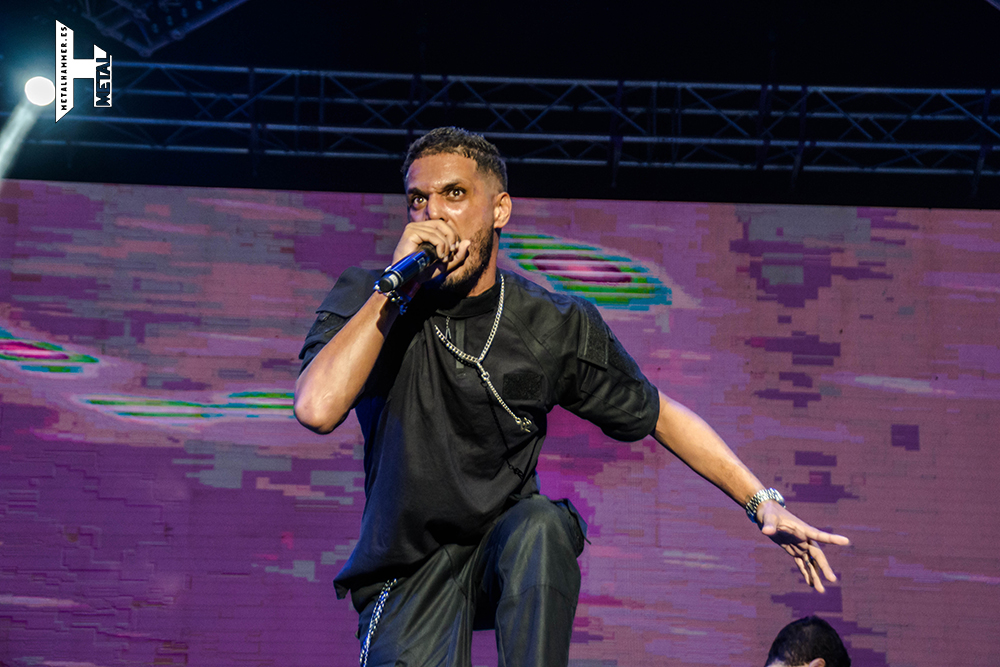
2024
La escena metal marroquí es un fenómeno relativamente reciente, que empieza a surgir en este siglo XXI. Ninguna de las bandas activas en la actualidad, y podría asegurar que las que no están activas tampoco, empezaron su carrera en el siglo XX. En el pasado siglo, más allá de la pasión de Mehdi “Metallica”, la escena era absolutamente inexistente. Hubo algún primer intento de formación de bandas a principios de siglo, pero fueron los hechos de 2003 con la detención de los 11 músicos acusados de satanismo cuando realmente empezó a despegar el metal como género propiamente dicho.
Bandas como Betweenatna, Sakadoya y Old School empezaron a encender la llama, además con muy buena calidad, pero la auténtica explosión de bandas sucedió a partir de 2015 con una nueva generación que ha mantenido el espíritu de estos pioneros, aprendiendo de ellos y lo ha aumentado con sus propuestas bien estructuradas y de mucha calidad. La escena en general, tanto en lo que se refiere a los músicos como en lo que afecta al público es muy joven, prácticamente el 90% de ellos se encuentran entre los 15 y los 30 años de edad, viendo muy pocas personas, más allá de las pocas bandas más veteranas existentes hoy en día que estén por encima de la treintena o la cuarentena.
La marroquí es una escena centrada, en más del 90% de sus propuestas, en el metal extremo. Según expresó Ismail “Raven Samael” Essalhi, líder de Pagan Ulver, en una entrevista que publica la revista Metal Hammer en su número del mes de noviembre de 2024, más del 50% de las bandas del país tocan Thrash Metal y el resto estilos muy extremos como Death y Black Metal en todas sus variantes y también Metalcore y Deathcore. Hay muy poca oferta de Heavy Metal Tradicional, Hard Rock o estilos más clásicos por lo que hay que deducir que las bandas beben de la diversificación de la escena internacional a partir de mediados de los 80 obviando el bagaje que provenía de los grandes dinosaurios del rock y el metal de los años 70.
La infraestructura para desarrollar el talento de las bandas es aún muy básica y, en muchos aspectos prácticamente inexistente. Hay muchas dificultades para que los grupos puedan ensayar porque no hay locales donde hacerlo más allá de lo que se ofrecen, sobre todo gracias a la infraestructura de L’Boulevard en el Centro Cultural Boultek, en Casablanca. Las dificultades para tener un lugar adecuado donde practicar y desarrollarse como banda pasa una alta factura a los músicos naturales del país.
Las salas de conciertos y los promotores también son prácticamente inexistentes, se organizan conciertos con cierta regularidad pero con muy poca frecuencia, con suerte cada banda tiene oportunidad de hacer, como máximo, un concierto al año, algunas ni siquiera esto, tal como contaban Nexus 7.17 en su entrevista, en las ciudades alejadas del núcleo musical que representa Casablanca, los músicos tienen que hacer actuaciones para turistas en los hoteles tocando versiones de bandas clásicas y así ganarse mínimamente la vida pero con nulas posibilidades de interpretar sus temas propios en una sala.
Como es también patente analizando con detalle la carrera de las bandas marroquíes, es muy complicado poder grabar un disco y, aún más poder hacerlo con medios profesionales. Casi no hay estudios de grabación y las producciones no están a la altura de lo que merecen los músicos locales, muy pocos productores tienen la formación adecuada para grabar, ecualizar, mezclar y masterizar discos de metal. Bandas como Old School con una carrera de 20 años a sus espaldas, no han conseguido aun grabar un álbum (Su disco debut In Failure We Trust fue publicado en el año 2025) y solo pueden ofrecer un puñado de singles; Betweenatna, activa desde el 2011 no consiguió grabar un disco hasta el año 2020 y la referencia absoluta en cuanto a veteranía y prestigio en el metal marroquí, Sakadoya, solo tiene editado su trabajo del año 2009, a la espera de la publicación de su nuevo material previsiblemente en 2025 (el disco se ha retrasado sustancialmente y está previsto su lanzamiento a principios de 2027). Solo contadas excepciones y con propuestas de enorme calidad, como Thrillogy, pueden lanzar discos con cierta regularidad, en su caso dos LPs y un EP desde 2017.
La proveniencia social de los músicos suele ser, mayoritariamente, de familias relativamente acomodadas o muy acomodadas, con cierto potencial económico que les permite invertir dinero en instrumentos, amplificadores y demás material, a unos precios que no están al alcance de cualquiera y con tiempo para poder dedicarlo a intentar labrarse una carrera sin la principal preocupación que tiene la mayoría de la población que es poder subsistir más o menos dignamente en el día a día.
En cuanto a la promoción internacional de los grupos marroquíes es, quizás, lo más complicado. Es altamente improbable conseguir un visado para poder salir a otros países y aun es más difícil conseguir la certificación como músico para tener acceso a dicho visado. Además, muy pocas bandas internacionales, más allá de la oferta que propone L’Boulevard, se acercan a este país a tocar o a ofrecer una pequeña gira de conciertos, cosa lógica dada la poca infraestructura de salas y promotores existente, donde la escena local se pueda reflejar y tomar referencias y para que el público en general pueda ver, más allá de lo que ofrece la red, la propuesta de las grandes o no tan grandes bandas extranjeras.
Si bien en los últimos años Marruecos se ha desarrollado bastante y los gobernantes y la sociedad en general, son de mente más abierta que hace 20 años, sigue percibiéndose un estigma que afecta a las bandas de metal que, la mayoría de la población considera satanistas y anti islámicas. Una buena muestra de ello es que, pese a que no hay censura oficial en este aspecto y las bandas lo niegan sistemáticamente, ellas mismas se autocensuran y ninguna trata en sus letras temas que afecten a la religión o al poder político para evitar posibles problemas con la cúpula dirigente del país. La crítica social y política es inexistente. Este es un punto en el que se necesita progresar bastante más para que la escena pueda asemejarse a lo que hay en la mayoría de los países del mundo. Ahora mismo, en Marruecos es impensable que existan bandas de “Metal Islámico” como existe el “Metal Cristiano” en Europa y Estados Unidos, bandas que hagan propuestas de Metal Extremo Satánico y tampoco bandas que critiquen abiertamente la religión, algo bastante habitual en occidente.
Finalmente, como resumen de todo lo expuesto en este reportaje, debo decir que la escena metal marroquí está en la misma situación que se encontraba la escena española a principios de los años 80 del siglo XX. Hay una explosión de bandas surgiendo por todas partes del país, especialmente en Casablanca y alrededores, con un público absolutamente fiel y apasionado y, en los dos casos, con mucha juventud. El metal es cosa de adolescentes o de jóvenes veinteañeros, con mucho futuro por delante y, este mismo entusiasmo que muestran los músicos hace que multipliquen por mucho sus esfuerzos para abrirse un camino, tanto en la escena local como en la internacional pese a que sus oportunidades siguen siendo, a día de hoy muy escasas y las probabilidades de darse a conocer masivamente son casi inexistentes.
Las mismas dificultades que experimentan en su día a día, con pocos locales para ensayar, con casi nulas posibilidades de grabar un disco y muy pocas oportunidades para tocar en directo dada la escasez de salas y conciertos organizados y la casi imposibilidad de conseguir visado para salir al exterior hacen que, pese a que hay mucha calidad en los músicos locales y las bandas tienen entidad suficiente para labrarse una carrera, sea altamente dificultoso que consigan hacerlo.
En definitiva y con todas las reticencias que se derivan de no haber tenido más tiempo para profundizar en el tema, hay que decir que la escena metal de Marruecos goza de muy buena salud en cuanto a bandas y público, que es un movimiento pujante y con futuro por delante pero con muy pocas posibilidades de desarrollo real a día de hoy. Tendremos que seguir atentamente la evolución de todo el conjunto de la escena y ver si, como yo intuyo, el futuro de nuestra música se halla en este tipo de países más que en la tradicional Europa donde todo está muy envejecido.
2025
Este año hemos intentado, en la medida de lo posible, ver aspectos del negocio musical en lo relativo al Metal que el año pasado no pudimos analizar por falta de tiempo y de medios. En esta ocasión, con un equipo más completo y con la experiencia adquirida en el 2024, hemos podido entrar en ellos y sacar las siguientes conclusiones:
Pese a que más del 90% de las bandas marroquíes se dedican al Thrash o al metal extremo también existe un mínimo número de ellas que desarrolla otros estilos. Grupos de Hard Rock como la de BABEL o THE SEXHOPHONES, por ejemplo, a los que podríamos unir MEAN MACHINE, presente el año 2024 en el Tremplin, ofrecen propuestas de muy buena calidad, bien elaboradas y que tienen la capacidad intrínseca de gustar a los amantes de estos estilos; también hay un cierto movimiento de bandas de Metal Alternativo o Metal Fusión como es el caso de NEW HATE, BAND 17 o BADIL, entre otras. El principal problema para este tipo de bandas, al intentar progresar o hacerse un hueco dentro de la escena local, es que no tienen un público objetivo capaz de convertirse en seguidor o fan de sus propuestas. Los Metalheads marroquíes están mucho más pendientes del Metal Extremo y no prestan atención a este tipo de música así que su futuro aun es más oscuro que el del resto de bandas, a no ser que consigan abrirse camino, de la forma que puedan, en Europa.
Tal como pasa en España y también en el resto de países europeos, evidentemente, existe un nicho para el metal humorístico, desenfadado, alegre y sin pretensiones más allá de pasárselo bien y disfrutar de lo que hacen, además, aquí sus propuestas son mucho más rompedoras que en España y arrastran, ellos sí, una gran cantidad de fans, es el terreno en el que se mueve BETWEENATNA que, por añadido, es la banda más popular y famosa de Marruecos. Su propuesta de temas basados en anécdotas divertidas, cantadas en Dariya, goza de más popularidad incluso que bandas más extremas como THRILLOGY, PAGAN ULVER, SAKADOYA O WE COME FOR WAR. Son, de largo, los que más camisetas venden y más suenan en los medios locales.
La nueva ola del Thrash marroquí, si es que se puede llamar así, representada por bandas como MANIC ATTACK, aún no está al nivel de los grandes veteranos del estilo como OLD SCHOOL (que han lanzado su primer disco este mismo año, después de más de 20 de carrera) pero progresan adecuadamente.
Existe también un cierto sustrato de bandas, que estarían representadas por propuestas como las de TAGREST, DARIH o CHIKNO cuyas propuestas van más dirigidas a tratar temas de interés local, como la historia, las tradiciones o la mitología del norte de África. Cada uno en su estilo, que además son muy diferentes, elaboran propuestas en este sentido con mayor o menor fortuna. CHIKNO, por ejemplo, mezcla magistralmente sonidos tradicionales con sonidos Metal hasta hacer un estilo muy particular y personal, aunque deben desarrollarlo más y plasmarlo en algún trabajo discográfico. Las otras dos bandas, más centradas en la historia, sobre todo DARIH, son muy útiles para dar a conocer ciertos hechos del pasado desde el punto de vista de su país y no desde el habitual prisma de los colonialistas europeos. Cambia sensiblemente la perspectiva y es muy interesante conocer la opinión de “la otra parte”. Musicalmente, hay calidad de sobra para plasmarlo en buenos términos.
En cuanto al espinoso capítulo de las bandas tributo que tantas ampollas y debates levanta en España, aquí es prácticamente inexistente, prueba de ello es que cuando L’Boulevard busca una banda tributo para actuar en esta edición 2025, tiene que encargarlo específicamente pues no existen opciones viables o de calidad suficiente para traerlas al festival. Evidentemente, en una escena tan pequeña como esta, donde apenas hay salas para tocar y muy poco público receptivo, resulta más que lógico que las bandas quieran mostrar su música propia y la audiencia esté ávida de nuevas propuestas de corte original. Aquí, al contrario que en España, no hay una audiencia envejecida que prefiere oír las canciones que conoce desde su infancia aunque sean mal interpretadas y alejadas del original, ni los músicos ni las salas tienen necesidad de recaudar algo de dinero con esta estrategia. Los grupos no hacen negocio ni con temas propios ni con versiones y las salas tienen el mismo público programen lo que programen dentro del estilo, incluso, quizás, tengan más retorno con bandas originales que con tributos.
En este aspecto debo decir que envidio a Marruecos por evitarse un enorme debate y un problema latente dentro de su escena.
Por último, con nuestra conversación con MAMOUN de Tricintour, tuvimos ocasión de hablar de dos aspectos más; por una parte, la figura del Tour Manager que aquí no es algo habitual pero que ayuda a las bandas que lo tienen, como OLD SCHOOL, a dar un paso adelante y promocionarse hacia una mejor posición en su nicho musical.
Por otra parte, la paupérrima infraestructura de promotores de conciertos, prácticamente inexistente en el país y que él, junto a sus socios, intenta hacer crecer. En las dos giras que han organizado hasta la fecha, con un mix de bandas españolas y marroquíes, los resultados han sido dispares, en una de ellas hubo beneficio, en otra pérdidas, cosa normal si tenemos en cuenta que, de momento, solo pueden organizar conciertos en tres ciudades, Tanger, Rabat y Casablanca puesto que el resto del país carece de infraestructura de salas para llevar a cabo los bolos y tampoco hay unas rutas de comunicación lo suficientemente rápidas como para desplazarse efectivamente de un punto a otro. Este aspecto tiene que ir desarrollándose poco a poco, de la mano de la base de salas que tienen que ir naciendo en el resto de ciudades importantes de Marruecos. Ya es muy positivo que exista esta iniciativa que tendremos que ir viendo cómo evoluciona con los años.
2026
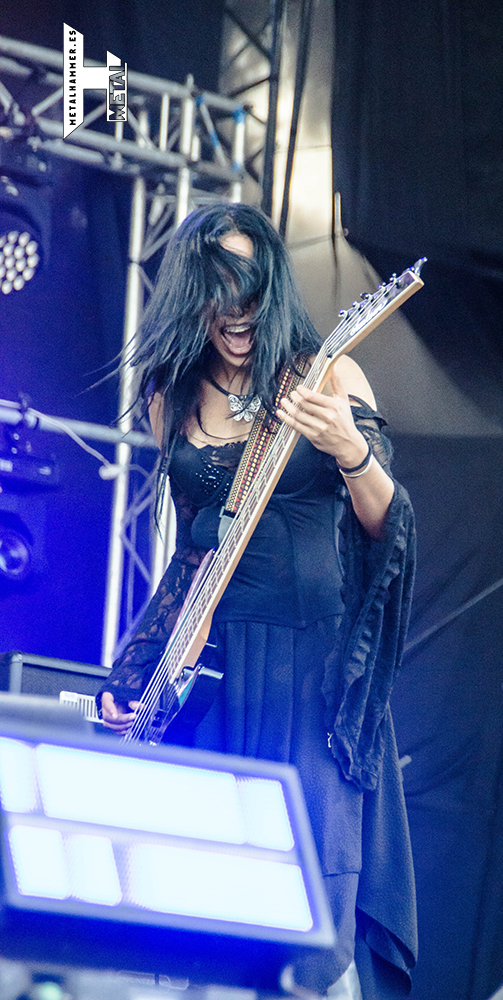
Con todo lo visto los años anteriores y el complemento hecho este año, cabe decir que se ve cierta evolución en la escena que hace concebir esperanzas de cierto progreso en la línea correcta.
Hasta la fecha solo se conocía un sello discográfico en el país, Darkside Records, sobre el que existe un amplio debate. Pese a que hemos tratado de hablar con ellos en cada visita, hasta el momento no ha sido posible, suponemos que por la intranquilidad que les produce que se les pueda preguntar acerca de las quejas de multitud de bandas que se han visto engañadas o, cuanto menos decepcionadas, por la actuación del sello. Lo cierto es que su actividad, más allá de eternos comunicados en redes sociales, es mínima, casi inapreciable.
Por este motivo, Mehdi, el bajista de SAKADOYA, nos explicó que han creado un pequeño sello ellos mismos para publicar su próximo disco y, a la vez, en la medida de lo posible, ayudar a otras bandas a publicar sus trabajos, cosa que ya hemos visto que es muy complicada en este país. Esperemos que la iniciativa sea viable y que, en unos años, sea mucho más accesible para los grupos locales grabar y dar a conocer su música.
En cuanto a la promoción de conciertos ha habido también cierta evolución, Tricintour, la promotora que conocimos el año pasado, se ha transformado Axis of Morock que gestiona la gira Tracktour y se ha profesionalizado más. La experiencia adquirida en estos pocos años de actividad les ha ayudado a convertirse en una iniciativa mucho más viable y con capacidad de conseguir más objetivos y de mejor calidad.
La infraestructura tanto de salas como de locales de ensayo sigue bajo mínimos, pero se empieza a notar cierta voluntad de dar un pequeño paso hacia adelante en este aspecto. Veremos en los próximos años que nos deparan.
La escena sigue creciendo con nuevas bandas apareciendo constantemente y ofreciendo una notable calidad (por ejemplo, Lixivia, 2Min Away, etc), esta tendencia debería plasmarse en los próximos años en una cierta “explosión” que marcaría un antes y un después en el Metal marroquí.
L’Boulevard es la prueba máxima que, si se hacen las cosas bien, hay una gran capacidad de convocatoria y que el público, muy joven en su mayoría, se muestra ávido de recibir propuestas tanto locales como internacionales que harán crecer, en caso de conseguirse, tanto la base de seguidores como la de músicos.
Sería muy recomendable, también, que el oído de los fans y también de los músicos, se abriera a otros estilos, no tan extremos, que enriquecerían notablemente el panorama en este país. Esperemos que, poco a poco, se vayan dando pasitos en este aspecto y en unos años podamos ver más movimiento en Hard Rock, Heavy Metal, Alternativo, etc.
Aunque es muy complicado, hay ciertas posibilidades de darse a conocer internacionalmente, la prueba más que palpable son los casos de HOBA HOBA SPIRIT o THRILLOGY y también de exportar su música y sonar en todo el mundo. Solo hay que tener constancia y persistencia y, poco a poco, estoy convencido que llegará el momento.
En definitiva, en estos tres años de análisis hemos podido certificar cierta evolución positiva en la escena local que hacen concebir esperanzas que, en un futuro no muy lejano, oiremos hablar de bandas marroquíes de forma más o menos habitual fuera de sus fronteras y podremos tener conciertos de ellas en salas o, quizás en festivales importantes del viejo continente.
La lectura de todos los indicios habidos aquí parece indicar que, con tiempo y constancia, Marruecos liderará al metal africano por todo el globo.
AGRADECIMIENTOS
Por último y para cerrar esta serie de reportajes quisiera agradecer a todos los que los han hecho posibles:
A todo el Staff de L’Boulevard Festival, sus co-directores, Momo y Hicham, su equipo logístico encabezado por Adil, el equipo de prensa formado por Layal, Sofía y Safia que tanto facilitan nuestro trabajo y se desviven para conseguir que nos sintamos como en nuestra propia casa.
A Mamoun y Hamza, junto a todos los músicos que nos ofrecen su amistad y su hospitalidad y también a tantas otras personas que siempre, en cada edición, nos reciben con los brazos abiertos y una sonrisa en los labios.
Nosotros quedamos eternamente agradecidos a todos ellos por su invitación, trato excelente dado en todo momento y, por que no decirlo, su amistad forjada a lo largo de estos años.
Sin más, nos despedimos hasta el año próximo en el que, “Inchallàh”, volveremos para disfrutar de la XXV edición de L’Boulevard que promete ser muy especial.
CRÉDITOS:
Fotos Darih: Jessie Shirel
Operadores de cámara: Diego Galindo y Diego Galindo Jr.
Traducción simultánea: Ismael Gómez
Supervisión y corrección de la traducción inglesa: Ismael Gómez
A todos ellos también muchísimas gracias por la ayuda y por los grandes momentos de diversión, charlas interminables y tiempo compartido.
English
L’Boulevard 2026
Casablanca, Marruecos. — Del 17 al 20 de septiembre de 2026
Text and photos: Quim Brugada
THE MOROCCAN SCENE EXAMINED IN DEPTH. ANALYSIS COMPLETED.
Two editions ago, taking advantage of our presence in Casablanca to cover L’Boulevard, we launched an in-depth analysis of the Moroccan Metal scene through conversations and interviews with various bands, promoters, festival staff, and other key figures involved in the current state of our music in this African country.
With last year’s edition, we had practically completed this work, although a few loose ends still remained. Some of them have now been addressed, while others, such as the state of Morocco’s domestic record industry, could not be fully examined. However, this fact in itself also allows us to draw certain conclusions.
Once again, and hopefully for many years to come, we had the privilege of being invited by the organizers to attend the best festival in Morocco, and perhaps in all of North Africa: L’Boulevard.
This four-day festival is truly cross-disciplinary, featuring a wide range of styles including Rap/Hip Hop (Thursday), Fusion (Friday), Metal (Saturday), and a closing day on Sunday dedicated to showcasing local and African music. It is a genuine celebration of great music, and this year marked its 24th edition, the best one I have witnessed to date.
More than 75,000 people attended the festival at the R.U.C. Casablanca stadium over the four days, with both Thursday and Saturday attracting over 25,000 spectators each. This represents a resounding success for a festival that has steadily grown over the years to become a benchmark event in Morocco.
As always, the organization was absolutely flawless, attentive to the needs of everyone involved, whether press, musicians, or the general public. The quality of the lighting and sound production is something many European festivals would envy.
Despite all this, the international geopolitical situation made its presence felt this year in a negative way, in the form of censorship, to put it mildly. On Thursday, a stand expressing support for the Palestinian people and condemning the policies of Israel and the United States was set up in the Souk area. With remarkable speed, the police ordered it to be shut down. The festival organizers, naturally, were obliged to comply with the government’s demand and dismantle it in order to avoid any further unwanted situations.
There have also been some voices, admittedly a minority, expressing concern about the possibility of sexual assaults occurring at an event with free access for the general public. In this regard, it should be noted that police protection around the venue is extensive. Numerous uniformed officers could be seen around the rugby field, accompanied by many trained dogs that serve both as a deterrent in the event of conflict and as support for law enforcement officers if necessary.
Such incidents can, of course, occur, but not to a greater extent than at any other large-scale public gathering anywhere else in the world. Furthermore, the solution proposed by these minority voices, namely charging admission, would not solve the problem should it arise. On the other hand, it would create a significant barrier for the majority of interested attendees, who are clearly very young and often lack sufficient financial means, preventing them from accessing and enjoying the event.
In my opinion, the support and assistance point installed in the Souk area, although it cannot be referred to by the same name used elsewhere, is a far more effective measure. It is highly visible, and anyone experiencing this kind of problem can go there and report the incident.
In any case, this does not diminish the festival’s overwhelming success in every respect. We will discuss these aspects in greater detail throughout this report while simultaneously completing our analysis of the Moroccan Metal scene.
PARALLEL FESTIVAL INITIATIVES
L’Boulevard is one of the key driving forces behind the growth, visibility, and promotion of the Moroccan music scene, not only within the Metal community but also in the Rap/Hip Hop and Fusion scenes, which receive the same level of commitment and support from the festival organizers.
The festival’s free admission policy is fundamental to achieving this goal. The fact that anyone, regardless of social background or economic circumstances, can enter the venue and enjoy their favorite music, whatever their preferred genre may be, is in itself a remarkable achievement. Moreover, attendees have the opportunity to see concerts by bands such as Sepultura, performances that would be virtually impossible to experience in Morocco without an event of this nature. This alone is reason enough to praise the work of the organizers. When one also considers the tremendous effort devoted to making these four days an opportunity to enjoy not only music but also a wide range of complementary activities, detailed below, the result is a truly wide-ranging cultural offering designed to promote and expand culture in all its forms.
The related activities include:
The Colokolo Circus, which has enjoyed a prominent space at the festival for many years, where visitors can take part in and practice its circus activities and exercises.
The Liquid Bridge Dance School, which offers its program free of charge for two hours each day before the concerts begin, allowing attendees to learn and explore this artistic discipline.
The Remork & Karkaba brass band, which performed on Sunday from 5:00 p.m. onwards, presenting its blend of Gnawa music and dance throughout the R.U.C. Rugby grounds.
The parallel activities organized by the EAC Boulevard Association, including educational visits and access to the Le Boultek cultural center, the true hub of the association’s activities.
The L’Boulevard Souk (the festival marketplace), which, as demonstrated in the reels published on Metal Hammer’s social media channels, offers a wide variety of activities. This year it featured more than 30 stands, including seven activity areas, seventeen associations and community groups, four artists exhibiting their work, and thirteen merchandise stalls, alongside a stimulating cultural offering that can often be difficult to discover amid the demands of everyday life.
Perhaps the most significant innovation this year was the successful implementation of a collaborative video game project that had already been introduced in a highly experimental form during the previous edition. The concept is activated on the festival’s giant screens from 4:00 p.m. onwards and is available during stage changeovers, which, it should be noted, are remarkably brief thanks to the efficiency of the production team. Using a free mobile phone application, all attendees can control their own individual experience within the game, creating virtual mosh pits, Wall of Death challenges, or customized concert scenarios that unfold according to their preferences. Without a doubt, it is an excellent initiative that further enriches the festival’s cultural offering.
TREMPLIN COMPETITION
Without a doubt, the most significant initiative supporting the local music scene is the Tremplin competition, organized annually as part of the festival. It serves as the primary showcase through which Moroccan artists can demonstrate their talent, creativity, and musical quality to a wider audience.
The competition takes place during the first three days of the festival. Thursday is dedicated to Rap/Hip Hop, Friday to Fusion, and Saturday to Metal.
On Thursday, seven Rap artists or groups are invited to perform, each receiving fifteen minutes on stage to present their music, win over the audience, and convince the jury that they deserve the substantial prizes offered by the organization.
Friday belongs to the Fusion category, with four bands competing under the same objective and given twenty minutes each to showcase their work.
Saturday is reserved for Metal, with four bands also receiving twenty minutes each to perform and make their case before the jury and the public.
Each spring, an application and selection process is opened to determine the fifteen finalists who will compete in the festival.
It is worth noting, however, that Metal bands face a particular disadvantage in terms of representation. For this edition, more than one hundred Rap artists and groups applied to participate, alongside more than seventy Fusion bands, while fewer than ten Metal bands submitted applications.
The relatively small size of the Moroccan Metal scene undoubtedly contributes to these numbers. However, according to numerous individuals involved in the competition in one way or another, there is also a degree of skepticism among Metal musicians regarding the contest itself. Based on some of the results observed over the years, they may have valid reasons for that attitude, a point that will be addressed later in this report.
The rewards available to the top two finalists are highly attractive. As detailed in the first installment of this series published in 2024, which can be read here: https://metalhammer.es/la-escena-metal-marroqui-lboulevard/
The prizes include increased financial support this year, amounting to 15,000 and 10,000 Moroccan Dirhams (approximately €1,500 and €1,000 respectively), as well as the opportunity to record an album, something that remains particularly difficult to achieve in Morocco.
In addition, the winners gain access to a series of workshops and training programs designed to improve their professional skills over the course of an entire year, along with the possibility of being invited to perform at the following edition of the festival as guest artists.
Beyond these tangible rewards, perhaps the most important benefit is the opportunity to perform in front of thousands of people in a country where live performance opportunities are limited and attracting large audiences is even more difficult.
One notable change introduced this year concerned the timing of the announcements.
Traditionally, winners were revealed during Sunday’s awards ceremony. In 2026, however, the results were announced on the same day as each competition, between the performances of the guest artists.
Personally, this is probably the aspect of the competition that I find least convincing. Announcing the results in advance removes some of the magic from the awards ceremony itself and diminishes the emotional impact that comes from discovering, moments before the presentation, that your band has won.
Nevertheless, this change does little to diminish the overall success of the competition or the immense contribution it makes to supporting and promoting local artists.
THE FESTIVAL
We now move on to the festival report itself. As a media outlet specializing in Metal, Metal Hammer will naturally place particular emphasis on Saturday’s events, while only briefly covering the other days. Although they are musically very interesting, they fall more within the remit of other types of media than our own.
THURSDAY: RAP/HIP HOP DAY
As every year, L’Boulevard’s activities begin on Thursday with the now traditional Rap Day, one of the genres that inspires the greatest passion in Morocco, especially this year, given the outstanding lineup assembled for fans of the style.
From the moment the gates opened in the early afternoon, it was clear just how much anticipation the lineup had generated. The flow of people entering the stadium seemed endless, eventually resulting in an attendance of between 25,000 and 30,000 people and giving the venue the appearance of a completely packed house.
After spending some time exploring the Souk and enjoying the many activities and attractions gathered there, the day began with a warm-up session led by Mikebeatz 23 at 4:45 p.m., followed promptly at 5:20 p.m. by the start of the day’s Tremplin competition.
The competing acts in this category were Funk Clan, Dgueulasse Gold, and Yuzy from Salé; Shinohidden from Berkane; Koga from Oujda/Ahfir; and Browny Original together with Strong & Qweta, local artists from Casablanca.
Each of the seven participants was given fifteen minutes on stage to convince the jury and secure their vote, and they all delivered strong performances. Admittedly, given my limited knowledge of this musical style, my own assessment may not be the most reliable, but the overall standard was clearly impressive. In the end, Shinohidden took first place, while Browny Original earned second place.
Once the competition had concluded, it was time for the invited artists to take the stage, and they were largely responsible for the tremendous excitement surrounding the day’s program.
Among them was Bo9al, one of the flagship artists of the new generation of Moroccan rappers, as well as the French artist DJ Fly, who has the remarkable ability to transform a DJ set into a full-scale live spectacle. Also appearing was fellow Moroccan performer Figoshin, one of the leading figures behind the modernization and renewal of Moroccan rap over the past fifteen years.
Heading the bill was an absolutely spectacular headliner and undoubtedly the main reason for the extraordinary anticipation among fans: Moroccan rapper Dizzy Dros. With only two albums to his name, he has become one of the most influential forces in the evolution of local rap, redefining the genre through a sound enriched with cinematic and atmospheric elements. He is not merely a star within Morocco but an international phenomenon, with some of his YouTube videos surpassing 100 million views, an achievement whose significance can hardly be overstated.
The opening day of L’Boulevard was an overwhelming success, one that already seems difficult to surpass in future editions.
FRIDAY: FUSION DAY
The festival’s second day was probably the least crowded in terms of attendance, although certainly not from a musical standpoint, as most of the performances on offer were highly interesting. That said, in some cases the final result did not entirely meet expectations, at least from my perspective.
At 5:40 p.m., the day’s Tremplin competition began, featuring four emerging fusion acts that left a very positive impression on this reviewer.
ARINASS
The band tasked with opening the competition came from Fez with a musical proposal that blended Gnawa, Aïta, and Chaabi traditions with influences from Reggae, Rock, and various forms of world music.
Perhaps somewhat static on stage due to understandable nerves, the most striking element of their performance was the interplay between the male lead vocalist and the two female backing singers. Combined with impeccable percussion and a balance of electric, rock-oriented passages and more ethnic, traditional sounds, the result was highly appealing.
It was a strong start to the afternoon and suggested that the rest of the competition would be, at the very least, interesting.
OXOR
Hailing from Marrakesh, this artist presents a blend of Pop, Afro music, Rhythm & Blues, and traditional Moroccan sounds through hybrid compositions that move between Afro-Gnawa and Neo-Chaabi.
Perhaps hindered by a stage setup featuring fewer musicians than one might have hoped for, consisting solely of guitar, drums, and vocals, they delivered what was, in my opinion, the least compelling performance of the day’s competition. Relying on approximately 90% pre-recorded backing tracks, the performers remained positioned on the right side of the stage, leaving a vast empty space on the left. Red roses decorating the microphone stands added a visual touch, and they were undoubtedly the act that interacted most with the audience, perhaps even excessively so.
Time spent engaging the crowd sometimes came at the expense of the music itself, although the vocal exchanges between the lead singer and the backing vocalists were certainly noteworthy.
Between songs, they paused to throw roses toward the audience. Unfortunately, none reached their intended targets, all landing instead in the large security pit in front of the stage. As a result, with only thirty seconds remaining of their allotted twenty-minute set, they began their final song and ultimately ran considerably over time.
In the end, the show felt somewhat flat and overly dependent on sequenced and pre-recorded music, factors that likely diminished their chances of winning.
METROTUNE
Representing Settat and Casablanca, Metrotune delivered an extraordinary performance of truly remarkable musical quality. The band develops a contemporary Moroccan fusion style that blends Salsa, Rock, and Gnawa influences while incorporating a distinctly seventies-inspired sound.
They opened with a song lasting nearly nine minutes, beginning with an extended instrumental introduction that incorporated elements of Progressive Rock, Metal, and classic Rock before their female vocalist entered the stage. Dressed in a striking red outfit and blessed with exceptional vocal abilities, she immediately elevated the performance.
Featuring English-language lyrics set against music of outstanding technical execution, the band’s sound placed keyboards prominently at the forefront, evoking the spirit of 1970s symphonic rock. Strong elements of Funk, alongside touches of Jazz and Blues, completed a truly overwhelming performance that, by itself, deserved first prize.
They left little room for doubt and established themselves as the strongest contender for the competition’s top honor.
IGHOULIDEN BAND
The final competitors came from Agadir. Ighouliden Band are veterans of the scene, having been active since 2008. Their music combines Amazigh traditions and Tazenzart influences with Ahwach rhythms, all built upon foundations drawn from Reggae, Jazz, Funk, Blues, and Rock.
Performing lyrics in Dariya, they presented a melodic, electric, and accomplished set marked by abundant percussion and constantly shifting rhythmic patterns.
It was a strong performance, although one perhaps expected even more from musicians possessing such a wealth of experience.
At the conclusion of the competition, the winner was, quite deservedly, Metrotune, while Arinass claimed second place. Having witnessed the performances of all the competitors, there was little anyone could argue with regarding the jury’s decision.
Once the Tremplin competition had finished, it was time for the invited acts to take the stage. All three were Moroccan projects: Rhita Nattah with her alternative Afro-Soul approach, Bab L’Bluz, whose music fuses Psychedelic Rock with Moroccan influences and features both French and Moroccan members, and the day’s headliner, Issam Kamal & Mazagan, pioneers of the Chaabi Groove style, where popular Moroccan singing traditions are combined with rock and funk instrumentation enhanced by electronic textures that create a rich and distinctive sound palette.
Having watched all three performances, I personally found them somewhat too restrained and lacking in standout moments beyond the fusion of styles itself. This impression may also have been shared by the audience, whose enthusiasm never approached the levels witnessed on the festival’s other days.
In short, from my perspective, the Tremplin competition proved more engaging than the invited performances, although it must be said that all of the acts on display performed at a very high standard.
SATURDAY: METAL DAY
Saturday is always the biggest day at L’Boulevard. After all, the festival began as an exclusively Metal event held in a small venue in Casablanca before gradually growing, expanding, and opening itself to other musical genres.
This year, with Sepultura headlining as part of their 40th-anniversary farewell tour, announced as the final tour of their career, expectations were even higher than usual. The Brazilian legends were returning to Morocco sixteen years after their only previous appearance in the country. However, the huge draw of Dizzy Dros on Thursday somewhat challenged the assumption that Metal Day would once again be the most attended. Although more than 25,000 people filled the venue, attendance did not surpass that of Rap Day.
Nevertheless, it was a tremendous success, and we will now recount the events of the day, including the interviews we conducted, as we do every year, with all the competing bands. These conversations help us understand their ambitions, influences, and musical philosophies in greater depth.
As usual, the afternoon began at 5:00 p.m. with the start of the Tremplin competition.
DARIH
With impeccable punctuality, local band Darih took to the stage. Although the festival organization categorized them as a Black Metal band, their performance suggested something quite different: a highly effective blend of Death Metal, Thrash Metal, and progressive influences. Their atmospheric elements certainly touched upon Black Metal territory, but musically they extended far beyond that label.
The band draws lyrical inspiration from Moroccan history, colonialism, and local legends, a welcome approach that serves as both entertainment and a source of knowledge about the country’s traditions and heritage.
The performance began somewhat hesitantly with the sirens that introduce their best-known song, «1907», a track recounting the French naval bombardment that devastated Casablanca and marked the beginning of one of the darkest periods of colonial rule.
The first two songs revealed some nervousness and uncertainty, but from the third onward the band grew steadily in confidence. Their performance gained strength and momentum until it reached a climax with a massive Wall of Death and complete audience approval.
It was undoubtedly a strong concert. Although they did not quite make my personal top two candidates for victory, they came extremely close.
In the following interview, we get to know the band better and hear about their approach to music and songwriting.
ANORA
Arriving from Kenitra, Anora presented a sound that could best be described as a mixture of Grunge, Alternative Rock, and Melodic Metal.
Formed in 2024, they were, in my personal opinion, the least compelling act of the afternoon, though this assessment is naturally influenced by individual taste.
The entire band remained positioned on the left side of the stage, leaving the right side completely empty and creating an obvious visual imbalance. More surprisingly, in a festival renowned for its impeccable sound quality, they struggled to achieve sufficient clarity in the mix. Constant feedback issues and synchronization problems made it difficult to fully appreciate their performance.
These technical difficulties likely had a significant impact on their stage delivery, compounded by the visibly nervous demeanor of the musicians. As a result, we were probably unable to witness the band’s true potential, which I am convinced they possess in abundance.
The show itself was somewhat flat, featuring compositions that perhaps lacked the refinement one might expect. However, their attitude was excellent. They gave everything they had, demonstrating a genuine determination to win over the audience and showcase their abilities.
With plenty of time ahead of them to develop and grow, there is little doubt that they will have future opportunities to shine at a higher level.
We will certainly be following their progress with interest to see whether they fulfill the promise they showed on this occasion.
The interview below provides a closer look at the band.
LIXIVIA
The third band in the competition came from Salé. Lixivia is made up of very young musicians, almost all of them barely into their twenties, and they deliver an absolutely ferocious style of Crossover Thrash.
Like the two previous acts, they were also formed in 2024. Their set opened with an extended guitar solo that was technically flawless and featured more Progressive Metal influences than Thrash, momentarily leaving the audience unsure of what was to come.
Then everything changed.
From that point onward, it was pure old-school Thrash Metal delivered at full throttle. Their stage presentation was impeccable, complete with outfits featuring shirts and caps representing their musical heroes. Their aggression matched that of the best bands in the genre, while their execution came remarkably close to perfection.
As the concert progressed, the intensity increased steadily. An impressive drum solo further elevated the performance, while the audience responded in kind. Mosh pits grew larger, faster, and more chaotic until the youthful crowd seemed on the verge of complete exhaustion.
During the final song, an unfortunate technical problem affected the bass guitar, rendering it inaudible throughout the track. Despite the efforts of five members of the festival staff who rushed onto the stage and worked tirelessly to solve the issue, they were ultimately unsuccessful.
Fortunately, this did nothing to diminish what was otherwise a truly extraordinary performance.
Much like Manic Attack achieved the previous year, Lixivia completely turned the venue upside down and presented an overwhelmingly convincing case for victory. Few people in attendance could have doubted that the prize should be theirs. Any other result would have felt profoundly unjust.
The following interview offers deeper insight into the band, their influences, and their aspirations.
2MIN AWAY
The final competitors were another local Casablanca act, 2Min Away, a band consisting of two men and two women whose musical style defies classification.
Their sound combines elements of Grunge, Alternative Rock, Rock & Roll, Heavy Metal, and numerous other influences, including Pop, from which their remarkable vocalist originates. Her highly distinctive voice and commanding stage presence immediately set the band apart.
Having formed only in May 2026, they entered the Tremplin pre-selection process and, based on what they demonstrated on stage, their inclusion proved to be an excellent decision by the festival organizers.
At no point did they resemble a newly formed band. Their stage confidence was more characteristic of seasoned veterans, particularly the singer and bassist, who unquestionably form the band’s core identity.
Together, they delivered an outstanding spectacle, constantly seeking interaction with cameras and audience members, while the guitarist and drummer remained in a more understated supporting role.
They clearly understand their strengths and execute their concept flawlessly. The poses adopted by both singer and bassist, their perpetual smiles, and their undeniable musical quality demonstrated that excellent music in Morocco does not have to be extreme metal in order to make an impact.
Their performance was among the strongest of the afternoon and positioned them as serious contenders for an award, at least for second place. Unfortunately, certain styles traditionally face greater challenges in competitions of this kind.
With their set, the 2026 Tremplin competition came to a close, and everyone awaited the announcement of the winners, scheduled for after the performance by Suicide Machine.
MYCOSE OF YOU
The first guest band to perform at the festival this year was the Franco-Moroccan outfit Mycose of You, one of the acts that generated the greatest curiosity due to the sheer originality and genre-defying nature of their music.
Led by frontman Samados, who also serves as one of L’Boulevard’s hosts and presenters, the band embraces an astonishing fusion of styles, ranging from rap and metal to punk, ska, funk, and electronic music, all enriched by touches of traditional Moroccan sounds that fit their musical identity perfectly.
The group is built around a traditional lineup of drums, bass, guitar, and vocals, but the addition of a DJ on stage adds an absolutely essential dimension to their sound through scratches, samples, and electronic textures.
Their performance was a nonstop celebration. Dynamic, energetic, and overflowing with personality, the band was guided by the charisma, energy, and commanding stage presence of Samados, who proved to be one of the festival’s most captivating performers.
Without question, they were the revelation of this year’s festival and, by a considerable margin, the best band of the day. They completely overshadowed every other act on the bill.
More than 25,000 people were jumping, dancing, and singing along, and I can confidently say that nobody remained indifferent to what was happening on stage. Alternating lyrics between French, English, and Dariya, delivering infectious choruses, and presenting an endlessly entertaining stage show, the band radiated positivity through constant smiles, jokes, and playful interaction among its members, including the memorable moment when DJ RSK launched a vinyl record into the crowd.
They would undoubtedly be a safe bet for any European festival lineup. If they continue along their current path, there is little doubt that they will become widely known and respected throughout Europe.
As a revealing insight into the band’s festive and irreverent spirit, it is worth mentioning that while searching for a name, one of the last options under consideration was Rage Against the Tajine, a humorous nod to one of their favorite bands. Ultimately, they abandoned the idea to avoid being perceived as a tribute act.
They discuss all this and much more in the following interview.
SUICIDE MACHINE
Once the party created by the previous band came to an end, it was time to venture into the darker territory of extreme metal, a style that enjoys tremendous popularity in Morocco.
The first representatives of this side of the scene were Suicide Machine, a band that originally began its journey fourteen years ago before suddenly halting its activities during the pandemic. In 2026 they returned with two original members and an otherwise renewed lineup, releasing their debut full-length album, Knight of the Abyss, in September, a remarkable work of Melodic Death Metal.
The band showcased plenty of material from this release in a spectacular performance that relied heavily on the stage presence and power of frontman Elias Horaira (Pagan Ulver).
His tireless energy, theatrical approach, immense range of growls, and remarkable ability to lead the audience wherever he wished made him the undeniable focal point of the show.
This should not detract from the rest of the musicians, whose talent, virtuosity, and ability to execute compositions packed with melody and sophisticated harmonies are beyond question. However, their complete lack of movement and interaction made them appear somewhat secondary from a visual standpoint. Throughout the show they remained almost perfectly still, barely moving even their heads.
One notable moment occurred when the band’s regular guitarist, Abderrahamane Saidi, briefly left the stage and was replaced for a single song by a guest musician as a gesture of gratitude for having filled in during previous performances when Saidi had been unavailable. He returned immediately afterward to continue the concert.
The band also made excellent use of the large video screen behind the stage, constantly displaying imagery related to the album and enhancing the overall production.
The result was a powerful performance that was warmly received by the huge crowd filling the stadium at that point in the evening. The show concluded with Elias Horaira organizing two enormous Walls of Death, one on each side of the venue, which the audience enthusiastically carried out.
Moroccan musicians seem to feel completely at home within extreme metal genres. Their confidence, technical ability, and the sheer number of quality bands emerging from the scene continue to impress.
The current incarnation of Suicide Machine stands among the strongest examples of this quality. Their technical level and musical execution are exceptional, and when combined with the overwhelming presence of Elias Horaira, they appear less like a promising prospect and more like an established reality.
We had the privilege of interviewing the band the day before the festival began at the studio of our friend Mamoun, whose hospitality and cooperation we greatly appreciate. During the interview, expertly translated by bassist Tareq, the band spoke extensively about both their past and their future plans.
ANNOUNCEMENT OF THE TREMPLIN WINNERS
Following the conclusion of Suicide Machine’s performance, it was finally time to reveal the two winners of this year’s Tremplin competition.
As virtually everyone expected, the first prize went to the Thrash Metal outfit Lixivia.
It was an entirely deserved victory and one that should help the band continue to develop over the coming year and grow into the major force that they already show signs of becoming.
The second prize was awarded to Darih.
This was also a fair recognition after the quality of their performance. However, as has happened in every edition I have attended, I personally felt there was another band that had made an even stronger case for the award: 2Min Away.
This recurring pattern has led to some disappointment regarding these competitions in Morocco, where jury members often appear to favor their personal stylistic preferences over broader musical criteria or the overall quality of the competing bands.
The impression persists that, at L’Boulevard, bands that do not perform extreme music or genres closely connected to extreme metal have very limited chances of winning, regardless of whether their overall musical quality may surpass that of other competitors.
In each of the three editions I have witnessed, this same feeling has remained.
In 2024, the Hard Rock band Mean Machine left empty-handed despite delivering, in my opinion, a substantially stronger performance than Nexus 7.17, which received the second prize despite relying on programmed drums throughout its set. There was no dispute that Pagan Ulver deserved the overall victory, but the second award might fairly have gone to the rock band.
In 2025, the situation appeared even more pronounced. The Sexophones, unquestionably the strongest band on stage during the Tremplin competition, failed to receive any prize. Instead, Manick Attack emerged victorious. Although they delivered a strong concert, they never approached the level demonstrated by The Sexophones, who, in my view, fully deserved the overall win.
Perhaps this is an issue that merits reflection on the part of the festival organizers. Including an international jury member with a broader musical perspective could bring a different balance to the evaluation process.
Ignoring, or at least consistently placing secondary importance on, bands that do not perform extreme metal does little to help the development of the local scene. On the contrary, it risks discouraging musicians who may possess enormous potential and causing them to abandon what could otherwise become highly promising careers.
It is not my place to make such decisions, of course, but perhaps this is a discussion worth having if the ultimate objective remains the continued growth and diversification of the Moroccan music scene, which is, after all, one of the festival’s primary missions.
SOTHERION
The penultimate band to take the stage was the French act Sotherion, which is less a conventional band than a one-man project, as BST, the group’s leader and sole permanent member, readily acknowledges himself.
His primary objective is to recapture the essence of early Black Metal in its purest old-school form, free from modern influences or embellishments of any kind. Just darkness, relentless guitar speed, impeccable blast beats, and deep, uncompromising growls. That was precisely what he delivered during a performance that required the recruitment of musicians from his other projects, making this concert the first live appearance in Sotherion’s short history.
It must be said that the band sounded cohesive and balanced throughout the entire set. At no point did they resemble a group of musicians assembled solely for the occasion, something that undoubtedly stems from their shared experience in other projects, a background that translated into the impressive synchronization demonstrated on stage.
With understated stage production, limited to a single backdrop projection that remained unchanged throughout the performance, and flawless execution, BST successfully presented his solo project to the Moroccan audience as though it were a fully established band. His mission to revive the rawest and most uncompromising roots of Black Metal was accomplished perfectly.
In the following interview, BST explains in great detail the intentions and goals behind his project.
SEPULTURA
As Saturday’s program drew to a close, only the festival’s headliner remained: the Brazilian legends Sepultura, returning to Morocco sixteen years after their previous appearance as part of what they describe as their farewell tour. With bands of this stature, however, it is always difficult to know whether retirement plans are truly final or simply an effective way of generating additional excitement.
The anticipation surrounding the Brazilians was evident everywhere. Many of the younger fans packed into the front rows had never had the opportunity to see Sepultura live, while older attendees were eager to relive the experience they had enjoyed back in 2010, when Andreas Kisser and company previously brought their explosive live show to Moroccan audiences.
The band’s performance followed the same format they have been presenting throughout their 40th-anniversary tour, the same production that appeared this summer at Leyendas del Rock. The tour is also being documented for a forthcoming live release consisting of forty songs recorded across forty different concerts, which explains why the entire set in Casablanca was professionally filmed.
The show offered a comprehensive journey through the band’s extensive discography. The setlist was expertly constructed, with songs positioned strategically to create a gradual rise in intensity, building momentum until reaching the kind of collective madness for which Moroccan audiences have become famous.
Perhaps the most memorable moment came during the band’s now traditional batucada section. For this part of the performance, members of the festival staff and musicians from the four Tremplin finalist bands were invited onto the stage to participate. It is safe to say that this is an experience those young musicians will never forget.
Supported by carefully designed visuals, including photographs and video projections related to each song being performed, and backed by a lineup operating at peak form, the band delivered a truly commanding performance. Derrick Green was particularly impressive, delivering a spectacular vocal display while the group methodically guided the audience through every stage of the concert’s emotional and musical progression.
The response from the crowd once again demonstrated why Sepultura remain one of the most beloved Metal bands throughout North Africa.
Their latest appearance on the African continent set such a high standard that surpassing it may prove difficult should another opportunity arise in the future.
Now all that remains is to wait and see whether they honor their intention to step away, at least temporarily, from the music scene following their final scheduled concert in São Paulo on November 7, 2026, or whether, as often happens with bands of their generation, they eventually reconsider and continue recording and touring.
In the following brief interview, limited to just five minutes, Andreas Kisser outlines the band’s future plans.
With the headliner’s triumphant performance bringing Saturday to a close, there was nothing left to do but return home and await Sunday’s closing day, which promised several interesting moments, along with the official Tremplin awards ceremony.
SUNDAY: CLOSING DAY
Sunday is always a special day at L’Boulevard. The intensity and excitement of the previous three days have already passed, and the final day is traditionally devoted to showcasing the music currently being created in Morocco and across other African countries, without the pressure of a headline-grabbing lineup designed primarily to draw large crowds.
In fact, Sundays are usually the least attended day of the festival and tend to attract a more family-oriented audience than the other three days.
This year was no exception. Attendance was relatively modest compared to the record-breaking crowds seen on Rap Day and Metal Day. Even so, many European festivals would consider attracting between 10,000 and 15,000 people a major success for their busiest days, whereas L’Boulevard achieves such numbers even on its quietest day. That alone speaks volumes about the importance and stature of this festival.
Compared to previous editions, this year’s Sunday lineup may have been slightly less impressive. Activities began at 6:00 p.m. with two DJs. Omar Ek combined electronic sounds with live guitar playing, while Aziz Konkrite presented a similarly electronic-oriented performance. Both acts were met with a fairly indifferent response from the audience, although attendance was still relatively low at that early stage.
At 7:45 p.m., Kin’Gongolo Kiniata, arriving from the Democratic Republic of the Congo, opened the live concert portion of the evening with a full-band performance. Although I was genuinely curious to discover their music, I personally found the set rather flat and unremarkable, failing to fully capture my attention.
At 8:40 p.m., the highlight of the day arrived with the presentation of the Tremplin Awards to the winners of each competition category.
This year, however, because the winners had already been announced on the day of their performances, the ceremony lacked some of the excitement traditionally associated with the occasion. The surprise and emotional release that had characterized previous editions were largely absent, as the winners had already had time to process the news. While their joy was evident when receiving their awards, the atmosphere did not quite match that of previous years.
As mentioned earlier, the winners in the Metal category were Lixivia in first place and Darih in second.
Following the ceremony, we spoke briefly with both bands to hear their immediate reactions and discuss their future plans now that they had secured these important awards.
The first interview features the overall winners, Lixivia.
This is followed by our conversation with the runners-up, Darih.
After the award ceremony, the music continued as the festival entered its final stretch.
The first of the evening’s remaining bands was Sarab, a Franco-Syrian project whose music combines Post-Punk, Techno, Rock, and a significant degree of improvisation, all enriched by traditional Syrian musical influences.
For me, they were by far the most interesting act of the day. Their unique fusion of styles offered something genuinely distinctive and engaging.
To close the festival, the organizers welcomed the French band Zentone, whose sound merges Punk, Rock, and Reggae.
Like most of the other acts on Sunday’s bill, with the notable exception of Sarab, I found their performance somewhat flat and lacking the energy necessary to truly ignite a festival audience.
With their concert, the 24th edition of L’Boulevard officially came to an end.
Attention now turns toward next year’s event, which will mark the festival’s 25th anniversary, an occasion for which the organizers are already preparing something special.
During a conversation with Hicham Bajou, co-director of the festival, he mentioned the possibility of reviving the pre-pandemic format for the anniversary edition. Under this structure, L’Boulevard would once again span two consecutive weekends and eight days of music.
The first weekend would be dedicated to the Tremplin competition and selected guest artists, while the second would conclude with the major international headliners.
Such a format would significantly expand the festival’s programming possibilities and allow for a more ambitious overall experience. However, the substantial logistical and organizational challenges involved may ultimately make the idea difficult to implement.
For now, we will have to wait for next year’s official announcement to know whether the proposal becomes reality.
With the festival concluded, there remained one final contribution to our ongoing analysis of the Moroccan music scene.
Since 2024, we had been trying to arrange an interview with Reda, founder and driving force behind Hoba Hoba Spirit, arguably the most important and internationally successful band Morocco has ever produced.
Although primarily a Rock band rather than a Metal act, Hoba Hoba Spirit has achieved worldwide recognition, performing across Europe, the Americas, Asia, and Africa. During our conversation, Reda even shared an off-the-record anecdote involving a New York concert and the drummer of Sepultura.
The band has become a genuine ambassador for Moroccan culture abroad. Their songs, performed in Dariya, have achieved legendary status within the country’s music scene.
Beyond his achievements as a musician, Reda is also a journalist, historian, writer, influencer, and cultural ambassador with an endless collection of stories and experiences to share.
Earlier that same day, he spent several hours signing books at the official L’Boulevard merchandise stand, attracting considerable interest from festivalgoers.
Our interview with him turned out to be the longest we conducted during the festival, yet even then it felt far too short considering everything he had to say.
Before concluding, we agreed to continue the conversation on camera next year so that we can further explore and document his fascinating story.
We reproduce the interview below so that everyone can experience a glimpse of the remarkable charisma and knowledge that this extraordinary individual conveys.
CONCLUSIONS
Finally, we come to the conclusions of this third installment of our analysis of the Moroccan Metal scene.
As a summary, we will revisit the findings from the previous two years before adding the observations gathered during this latest edition.
2024
The Moroccan Metal scene is a relatively recent phenomenon that only truly began to emerge during the 21st century. None of the bands currently active, and, as far as I am aware, none of those no longer active either, began their careers during the 20th century. Beyond the passion and pioneering efforts of Mehdi “Metallica”, the scene was virtually nonexistent during the previous century. There were a few early attempts to form bands at the beginning of the 2000s, but it was the events of 2003, when eleven musicians were arrested and accused of Satanism, that ultimately gave the Metal movement the visibility that allowed it to grow into a recognizable scene.
Bands such as Betweenatna, Sakadoya, and Old School helped ignite the initial spark, and did so with remarkable quality. However, the true explosion of new bands occurred after 2015, when a new generation emerged. They absorbed the legacy of those pioneers while expanding upon it with more structured and increasingly sophisticated musical proposals.
The scene, both in terms of musicians and audiences, remains extremely young. Roughly 90% of participants appear to fall between the ages of fifteen and thirty. Outside of a handful of veteran musicians and older bands, it is relatively uncommon to encounter participants in their forties or beyond.
The Moroccan Metal scene is overwhelmingly focused on extreme forms of Metal. As Ismail “Raven Samael” Essalhi, leader of Pagan Ulver, explained in an interview published by Metal Hammer in its November 2024 issue, more than half of the country’s Metal bands perform some form of Thrash Metal, while most of the remainder operate within genres such as Death Metal, Black Metal, Metalcore, and Deathcore.
Traditional Heavy Metal, Hard Rock, and more classic styles are comparatively rare. This suggests that Moroccan bands have largely drawn inspiration from the diversification of the international Metal scene that began during the mid-1980s, while paying less attention to the foundations established by the great Rock and Metal pioneers of the 1970s.
The infrastructure available for developing musical talent remains extremely limited and, in many respects, almost nonexistent.
Many bands struggle to find rehearsal spaces, with few options available beyond those provided by L’Boulevard, particularly through the Le Boultek Cultural Center in Casablanca. The lack of suitable facilities places a considerable burden on young musicians and limits opportunities for artistic development.
The same shortcomings affect the live music ecosystem. Concert venues and promoters are scarce. While performances are organized with some regularity, opportunities remain infrequent. At best, many bands can expect to play a single concert per year, and some fail to secure even that.
As members of Nexus 7.17 explained in their interview, musicians living outside the Casablanca area often have little choice but to perform cover songs for tourists in hotels in order to earn a modest income. Opportunities to perform original material in dedicated music venues are extremely rare.
Recording and releasing music presents an equally significant challenge.
There are very few professional recording studios in the country, and even fewer producers with the specialized skills required to record, mix, and master Metal albums to international standards.
A striking example is Old School, a band with a twenty-year history that nevertheless did not release its debut album, In Failure We Trust, until 2025. Before that, they had only been able to release a handful of singles.
Similarly, Betweenatna, active since 2011, did not release a full-length album until 2020.
Meanwhile, Sakadoya, one of the most respected veteran acts in Moroccan Metal, still has only its 2009 release available, with its long-awaited successor now expected in early 2027 after substantial delays.
Only a small number of exceptions, such as Thrillogy, have managed to maintain a relatively consistent recording output, releasing two full-length albums and one EP since 2017.
The social background of many musicians also plays an important role. Most appear to come from relatively comfortable or affluent families capable of investing in instruments, amplifiers, and other equipment whose costs remain beyond the reach of much of the population.
This financial support also provides them with the time necessary to pursue their musical ambitions without facing the daily struggle for economic survival that affects many Moroccans.
International promotion represents perhaps the greatest challenge of all.
Obtaining visas to travel abroad remains extremely difficult, and gaining official recognition as a professional musician in order to qualify for such visas can be even more complicated.
Likewise, very few international bands visit Morocco outside the opportunities provided by L’Boulevard. Given the scarcity of venues and promoters, this situation is understandable, but it also limits opportunities for local musicians to interact with, learn from, and share stages with international artists.
Although Morocco has undergone significant social and economic development in recent years, and both society and government are noticeably more open-minded than they were twenty years ago, a lingering stigma toward Metal remains.
Much of the general public continues to associate Metal with Satanism and anti-Islamic ideas.
While bands consistently deny facing official censorship and insist that no formal restrictions exist, many nevertheless engage in self-censorship. Very few address topics related to religion or political power in their lyrics, preferring to avoid potential difficulties with authorities.
Social and political criticism is almost entirely absent from the scene.
This remains one of the areas where further progress would be beneficial if the Moroccan Metal scene wishes to resemble those found in many other parts of the world.
At present, it is virtually impossible to imagine the existence of Islamic Metal bands comparable to Christian Metal groups in Europe or North America. Likewise, openly Satanic Extreme Metal bands or groups openly criticizing religion remain largely absent from the Moroccan scene, despite being relatively common in Western countries.
Ultimately, my overall assessment is that the Moroccan Metal scene today occupies a position similar to that of the Spanish Metal scene in the early 1980s.
Bands are emerging throughout the country, particularly in Casablanca and its surrounding areas. The audience is passionate, loyal, and overwhelmingly young.
Metal remains very much a music of teenagers and young adults, giving the scene enormous potential for future growth.
The enthusiasm displayed by musicians is remarkable. Despite limited opportunities, they continue investing tremendous effort into building careers both within Morocco and beyond its borders.
Yet the challenges remain substantial.
The shortage of rehearsal facilities, the difficulties involved in recording albums, the scarcity of live performance opportunities, and the almost insurmountable obstacles associated with international mobility continue to restrict the development of even the most talented artists.
In conclusion, and acknowledging the limitations that come from not having had more time to investigate every aspect in greater depth, it is fair to say that the Moroccan Metal scene enjoys excellent health in terms of both bands and audiences.
It is a vibrant movement with genuine momentum and significant future potential.
However, its opportunities for sustained professional development remain extremely limited at the present time.
The evolution of the scene will be fascinating to follow in the coming years. Indeed, I increasingly suspect that the future growth of Metal may be found in countries such as Morocco, where the scene remains youthful, energetic, and expanding, rather than in parts of Europe where audiences and structures are becoming progressively older and more established.
2025
This year, we made a concerted effort to examine aspects of the Metal music industry in Morocco that, due to limitations in time and resources, we had been unable to analyze in 2024. With a larger team and the experience gained during last year’s investigation, we were able to delve deeper into these issues and draw the following conclusions.
Although more than 90% of Moroccan bands are devoted to Thrash Metal or other extreme Metal genres, there is also a small but noteworthy number of groups exploring different styles. Hard Rock acts such as Babel and The Sexhophones, to which we could also add Mean Machine, who competed in the 2024 Tremplin, offer well-crafted, high-quality music capable of appealing to fans of those genres. There is also a growing presence of Alternative and Fusion Metal projects such as New Hate, Band 17, and Badil, among others.
The main challenge faced by these bands is the absence of a strong domestic audience for their music. Moroccan Metal fans generally focus their attention on extreme forms of Metal and rarely engage with these alternative styles. As a result, the future may be even more difficult for these groups unless they manage, somehow, to establish themselves in Europe.
Just as in Spain and elsewhere in Europe, there is also a place for humorous, lighthearted, and entertaining Metal intended primarily to have fun rather than make grand artistic statements. In Morocco, however, these proposals can be considerably more innovative and tend to attract substantial followings.
The best example is Betweenatna, arguably the most popular and widely recognized Metal band in Morocco. Their songs, based on humorous anecdotes and performed in Dariya, often enjoy greater popularity than those of more extreme and internationally respected bands such as Thrillogy, Pagan Ulver, Sakadoya, or We Come for War. By a considerable margin, they are the band that sells the most merchandise and receives the most attention from local media.
The new wave of Moroccan Thrash Metal, if it can be described as such, represented by bands like Manic Attack, has not yet reached the level of the genre’s veterans, such as Old School, who finally released their debut album this year after more than two decades of activity. Nevertheless, the younger generation is progressing steadily.
There is also a group of bands represented by projects such as Tagrest, Darih, and Chikno, whose music focuses on local themes, including North African history, traditions, and mythology.
Each approaches these topics differently.
Chikno, for example, masterfully combines traditional sounds with Metal elements to create a highly distinctive musical identity, although the project still needs to further develop and document its ideas through recorded releases.
The other two bands, particularly Darih, focus more heavily on historical themes. Their music provides listeners with an opportunity to explore significant events from Morocco’s perspective rather than through the traditional lens of European colonial narratives. This alternative viewpoint offers a fascinating and valuable perspective on history, while the musical quality of these bands is more than sufficient to support their artistic ambitions.
Another interesting aspect concerns tribute bands, a topic that generates endless debates within the Spanish music scene.
In Morocco, tribute acts are almost nonexistent.
A clear demonstration of this occurred when L’Boulevard sought to include a tribute band in the 2025 edition and ultimately had to commission one specifically, because there were virtually no suitable or high-quality candidates available locally.
This reality is entirely understandable within such a small scene. With few venues, limited audiences, and scarce opportunities to perform, musicians naturally prefer to present their own original material, while audiences remain eager to discover new music rather than revisit familiar songs.
Unlike Spain, Morocco does not have a large aging audience interested primarily in hearing nostalgic recreations of the music of its youth. Nor do musicians and venues depend on tribute acts as a profitable business model.
Bands generally earn little money whether they perform originals or covers, and venues often attract similar audiences regardless of the program. In some cases, original bands may even generate greater interest than tribute acts.
In this respect, I must admit that I envy Morocco for avoiding what has become a significant and ongoing debate within the Spanish Rock and Metal scene.
Finally, during our conversation with Mamoun from Tricintour, we explored two additional topics.
The first was the role of the Tour Manager, a position that remains uncommon in Morocco but which can greatly assist bands in advancing their careers and improving their visibility. Bands such as Old School, which benefit from this kind of support, have been able to strengthen their position within their respective niches.
The second topic concerned the near-total absence of concert promotion infrastructure in the country.
Mamoun and his partners have been attempting to address this issue. Through the tours they have organized featuring combinations of Moroccan and Spanish bands, results have been mixed. One tour generated profits, while another resulted in losses.
Given current conditions, this is hardly surprising.
At present, regular events can only realistically be organized in three cities: Tangier, Rabat, and Casablanca. The rest of the country still lacks the venue infrastructure necessary to support touring circuits, while transportation networks do not yet allow rapid and efficient movement between many locations.
This situation can only evolve gradually, hand in hand with the development of additional venues in other major Moroccan cities.
Nevertheless, the existence of initiatives such as Tricintour is already an encouraging sign, and their future development will be worth monitoring closely.
2026
Taking into account everything observed during previous years and the new information gathered this year, it is fair to say that the Moroccan Metal scene is showing signs of gradual evolution and progress in a positive direction.
Until recently, only one record label was known to operate within the scene: Darkside Records.
The label remains the subject of considerable debate. Despite our efforts to speak with its representatives during every visit, it has not yet been possible. We suspect this reluctance may stem from concerns about questions regarding the numerous complaints from bands that have felt misled or, at the very least, disappointed by their experiences with the label.
Whatever the reason, its activity appears minimal beyond occasional social media announcements.
For this reason, Mehdi, bassist of Sakadoya, explained that the band has established its own small label in order to release its upcoming album and, whenever possible, help other Moroccan bands publish their music as well.
Given the difficulties facing artists in the country, this initiative is highly encouraging. Hopefully it will prove sustainable and help make recording and distributing music more accessible in the coming years.
There have also been positive developments in concert promotion.
Tricintour, the promoter we met last year, has evolved into Axis of Morock who do the Tracktour and have adopted a significantly more professional structure. The experience gained during its early years has transformed it into a more viable organization with greater capacity to achieve its objectives and handle larger projects.
Infrastructure remains underdeveloped, both in terms of venues and rehearsal facilities, but there is now a noticeable willingness within the community to take modest but meaningful steps forward.
The scene itself continues to expand. New bands emerge constantly and often demonstrate significant quality. Recent examples include Lixivia, 2Min Away, and several others who suggest that the next few years may bring a genuine breakthrough moment for Moroccan Metal.
L’Boulevard itself provides definitive evidence that substantial audiences exist when events are properly organized. Most attendees are young and eager to discover both local and international artists. If this momentum continues, it should help grow both the fan base and the number of musicians entering the scene.
It would also be beneficial for audiences and musicians alike to broaden their horizons beyond exclusively extreme forms of Metal.
Greater interest in Hard Rock, Traditional Heavy Metal, Alternative Metal, and related genres would significantly enrich the country’s musical landscape. Hopefully, this diversification will occur gradually over the coming years.
Although international recognition remains difficult to achieve, it is by no means impossible.
The examples of Hoba Hoba Spirit and Thrillogy clearly demonstrate that Moroccan artists can reach international audiences and successfully export their music beyond national borders.
Perseverance and consistency remain essential. Given enough time, I am convinced that further success stories will emerge.
In conclusion, these three years of analysis have allowed us to document genuine and measurable progress within the Moroccan Metal scene.
The evidence increasingly suggests that, in the not-too-distant future, hearing about Moroccan bands beyond the country’s borders will become commonplace. We may well see them performing regularly in European clubs and perhaps even appearing at some of the continent’s major festivals.
All available indicators point in the same direction: with patience and continued development, Morocco has the potential to become the leading force in African Metal on the global stage.
ACKNOWLEDGEMENTS
Finally, to conclude this series of reports, I would like to thank everyone who made it possible:
The entire L’Boulevard Festival staff, particularly co-directors Momo and Hicham, the logistics team led by Adil, and the press team consisting of Layal, Sofía, and Safia, whose support consistently makes our work easier and who always strive to make us feel completely at home.
Special thanks also go to Mamoun, Hamza, and all the musicians who have shared their friendship and hospitality with us, as well as to the many other people who, year after year, welcome us with open arms and genuine warmth.
We remain deeply grateful for their invitation, their kindness, their professionalism, and, above all, the friendships forged throughout these years.
Until next year, then, when, Inshallah, we will return to celebrate the 25th edition of L’Boulevard, which promises to be a truly special event.
CREDITS
Photographs Darih: Jessie Shirel
Camera operators: Diego Galindo y Diego Galindo Jr.
Simultaneous interpretation: Ismael Gómez
English translation review and supervision: Ismael Gómez
To all of them, my sincere thanks for their invaluable assistance and for the many moments of fun, endless conversations, and shared experiences that made this project possible.