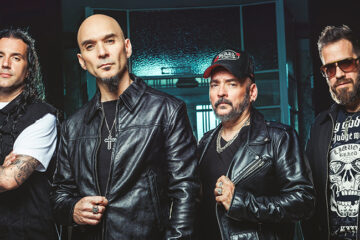
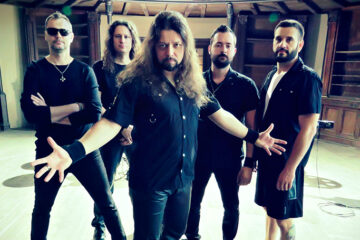
La colaboración entre Adrian Smith (Iron Maiden) y Richie Kotzen (Mr. Big, The Winery Dogs) se ha consolidado como una de las propuestas más sólidas del hard rock actual.
En su último trabajo, Black Light / White Noise, grabado entre Los Ángeles y Londres, canciones como “Muddy Water”, “Darkside”, “Life Unchained” o “Black Light”, muestran un sonido más definido y una libertad creativa que permite a ambos guitarristas abrirse a influencias que van de los 70 a la actualidad. Lejos del contexto de Iron Maiden, Smith recupera aquí su faceta más bluesy y melódica, mientras Kotzen aporta su habitual mezcla de groove, técnica y soul. Con Julia Lage al bajo y Bruno Valverde a la batería, el proyecto adquiere identidad de banda completa.
Con una gira europea que pasará por España (Madrid y Barcelona) en febrero de 2026 de la mano de Madness Live!, Smith/Kotzen presentan un disco que confirma su madurez como dúo y su intención de seguir desarrollando este camino paralelo.
Entrevista por Luis Díaz.
Castellano
Luis: Antes de nada, esto empezó casi como un proyecto, ¿no? Pero ahora lleváis dos discos de estudio, un EP, un álbum en directo… ya no suena a “proyecto”. Es una banda muy consolidada.
Adrian Smith: Bueno, creo que Richie y yo empezamos a trabajar juntos hace ya unos cuatro años. Es bastante tiempo, pero como él tiene su agenda y yo la mía con Maiden, encontrar momentos para trabajar juntos no es tan sencillo. Aun así, hemos hecho muchas cosas en ese periodo: dos discos, como dices, el EP, el directo…
Una de las primeras cosas que pensé al escuchar el disco es que suena muy fresco. Da la sensación de que estuvierais simplemente tocando juntos en una sala, muy natural, inmediato, nada sobreproducido.
Sí, intentamos mantener la producción sencilla: dos guitarras, Richie y yo cantando, bajo y batería. Ya está. Mi inspiración viene, en gran parte, de lo que escuchaba de adolescente en los 70: Bad Company, Free… Esa música sigue en mi ADN. Tomamos todo eso como inspiración para escribir canciones, pero intentando llevarlo a otro nivel, darle nueva vida a ese formato de rock blues y crear temas que la gente pueda recordar y con los que se identifique. Y por lo que vemos, está funcionando.

Hay un tema, «Muddy Waters», que tiene un groove muy potente. Me llamó mucho la atención el bajo, suena muy fuerte, muy presente. Julia tiene un papel importante ahí.
Sí, Julia es fantástica. Es la mujer de Richie, como seguramente ya sabes, y es una artista por derecho propio. También toca con Vixen.
Sí. Canta, toca la guitarra… puede hacer de todo.
Y además es una gran persona y una gran músico de banda, siempre toca lo que la canción necesita. Sobre si es ella o Richie quien toca el bajo en el primer tema del disco, no sabría decirte; Richie también grabó algunas líneas de bajo. Probamos bastantes bajistas para el grupo, incluso algunos con bastante nombre, pero no fue hasta que Julia tocó junto a Bruno cuando todo encajó de verdad. Ahí es cuando las piezas se pegaron.
Nunca habíamos tocado las canciones en directo antes; se escribieron en el estudio. Por eso, si escuchas el álbum en vivo, verás cómo los temas evolucionan, cambian, ofrecen algo distinto.
Sí, se nota que en directo hay otra vida.
Richie está muy metido en la improvisación, cada vez más. Creo que se aburre del formato convencional de canción. Nosotros no improvisamos tanto como él hace con su banda en solitario, pero sí que alargamos algunos temas. Suelen salir en la prueba de sonido: “Oye, probemos esto esta noche”, y lo hacemos de forma bastante espontánea.
En Maiden no podemos hacer eso, es un espectáculo con luces, producción… y no puedes cambiar las canciones sobre la marcha. Aquí sí podemos soltarnos un poco más. Para mí sigue siendo todo sobre las canciones, pero el directo es otro mundo: intentas darles otra dimensión.
Y aquí también se ve mucho Blues. Eso con Maiden quizá no puedes explorarlo tanto.
No, si me pongo a tocar Blues en mitad del show de Maiden me caerá una bronca… Yo crecí escuchando lo que diría que es la segunda generación de guitarristas de rock-blues. Dave es igual, Dave Murray. No era tanto el Blues original, sino el Blues rock, gente como Cream y los que vinieron justo después, influenciados por Cream, como Gary Moore, los guitarristas de Thin Lizzy, Pat Travers… Ese rollo de principios de los 70.
Sigo volviendo a escuchar Cream; es mi época favorita de la forma de tocar de Clapton. Y el Blues tiene una profundidad emocional enorme. Pero, como digo, es solo el punto de partida.
El disco tiene elementos del Blues, pero no es un álbum de Blues como tal.
Exacto. Tiene elementos de Blues, pero para mí es más una cuestión de sensaciones. El Blues es atemporal porque es una forma de expresión emocional. Es sacar lo que llevas dentro, compartir sentimientos, desahogarte, tener un buen rato para quejarte del mundo y soltar todo eso. Eso es el Blues.
Una de las canciones que más me impresionó fue la última, «Beyond the Pale». ¿De dónde vino la inspiración? Te atraviesa el corazón, desde la primera nota ya estás dentro. Es mágico.
Gracias. Supongo que quería hacer algo en lo que la guitarra del principio estuviera inspirada quizá por Gary Moore, algo en la línea de lo que él habría hecho. Tiene un pequeño matiz jazzístico, pero muy emocional. La frase del título la aportó Richie, habla de cuando algo ha ido demasiado lejos y ya no puedes recuperarlo. Creo que todo el mundo puede identificarse con eso.
Trabajando tan de cerca con otro músico, siempre se aprende algo. ¿Qué crees que ha aportado Richie a tu sonido o a tu composición? ¿Cómo te ha influido trabajar con él?
Le tengo un enorme respeto como músico. Es muy completo, canta, toca, produce… Tenía su propio estudio, así que conoce todo el proceso de producción. Toca teclados también. Creo que nos complementamos muy bien. Yo quería cantar un poco en este proyecto; Richie es un gran cantante, pero nuestras voces encajan bien juntas. Siempre me han gustado las bandas con dos cantantes, como Deep Purple. Me parece interesante y hoy en día casi nadie hace eso. Le da un ángulo distinto a la música. Y Richie es un gran compositor. Si llevo una idea, él siempre tiene algo que añadir. Trabajamos muy bien juntos.
Como vocalista, probablemente has mejorado al cantar más.
Sí, es fantástico. Siento que he mejorado; creo que he crecido como cantante. Claro, tengo que cantar al lado de Richie, que es increíble, y yo no tengo su rango, pero tengo mi propia voz y disfruto cantando. Siempre lo he hecho.
Cuando Dave Murray y yo éramos críos, yo tenía 15 años, él ya tocaba la guitarra y yo quería ser su amigo porque los dos llevábamos el pelo largo. Pensé: “Bueno, yo seré el cantante”. Ni siquiera era Urchin todavía, fue antes. Creo que lo primero que tocamos juntos fue un tema de Hawkwind, «Silver Machine». Dave podía tocarlo y yo lo cantaba. Luego hacíamos versiones de Chuck Berry, los Stones, Ten Years After… todo ese rollo setentero.

Ahora, con Black Light/White Noise ya publicado desde hace un tiempo, ¿siguen siendo tus canciones favoritas las mismas o ha cambiado tu percepción..o depende del día?
Estoy muy orgulloso del álbum, me gustan todas las canciones. Hay una llamada «Darkside» que me gusta mucho; es una balada lenta, que va creciendo poco a poco. Es una gran canción. Pero, ya te digo, me gustan todas. «Muddy Waters» es un tema fantástico, un gran tema de apertura. Hay mucho material en el disco y tengo muchas ganas de tocarlo en directo. Hay otra canción, «Blindsided», que será nuestro nuevo single: estamos grabando el vídeo ahora y saldrá justo antes de la gira. Esperamos tocarla en directo. En la última gira solo teníamos material de un disco; esta vez tenemos dos álbumes, así que hay mucho más donde elegir.
Y la gira empieza aquí en España, en Madrid.
Sí
Arrancáis en Madrid y Barcelona. Llegáis después de Navidad, en enero. ¿Alguna idea del setlist?
Sí. Vamos a estar ensayando en la Costa Oeste de Estados Unidos. Tenemos una lista de canciones con las que probablemente empecemos y luego veremos cómo va todo. Tengo muchas ganas de esos ensayos.
¿Habéis pensado en cambiar «Wasted Years» por «Back in the Village», por ejemplo?
(Risas) No lo descartaría. Toqué «Back in the Village» en otro proyecto paralelo y funcionaba muy bien. No descarto tocar cosas de Maiden si encajan. Seguro que habrá fans de Maiden en los conciertos, pero esto va sobre todo del material nuevo. Quizá metamos algo al final del show. Ya veremos. Lo decidiremos sobre la marcha.
Ahora vives básicamente en Los Ángeles. Recuerdo cuando Rod vivía allí y tú hiciste “Sheriff of Huddersfield”… es irónico.
Sí, un poco, ¿no?
Él vivía prácticamente en el Rainbow. ¿Qué te atrae de Los Ángeles? ¿Cuál es el encanto?
Yo solo vivo aquí dos o tres meses al año, en invierno. Los inviernos en Inglaterra se estaban volviendo demasiado duros para mí, así que empecé a venir aquí. El tiempo es fantástico. Además, la familia de mi mujer está aquí. Ella es canadiense, pero su madre vivía aquí, falleció hace poco y su hermano sigue aquí, así que tenemos familia. También hay una escena musical muy buena.
Así que tú también vives en Londres.
Sigo pasando tiempo en Londres, eso sí. Vivo justo a las afueras. Paso unos tres meses allí, tres meses de gira con Maiden y otros tres meses… donde toque.
En la última gira de Maiden recuperaste algunas guitarras míticas, una de Powerslave, otra de The Number of the Beast, la roja con las rayas blancas. Muy guapas. Tienes un auténtico arsenal de guitarras. Si tuvieras que quedarte solo con una, ¿cuál sería tu favorita?
Uf… probablemente un par. Una es mi Les Paul Gold Top original
La dorada
Sí, la dorada. Fue mi primera guitarra “de verdad” y sigue siendo fantástica, pero ya no me la llevo de gira. Luego tengo mis Jackson. De hecho, acabo de recibir una nueva, un modelo signature para el 50 aniversario, que usaré en la próxima gira de Maiden. Aún no ha salido al mercado, pero es muy especial. Y he redescubierto mis guitarras Lado, esas con picos de los 80 que usé en «2 Minutes to Midnight» y cosas así. Me están haciendo una nueva y es una auténtica belleza, una máquina de metal. Tengo muchas ganas de tocarla.
Quería preguntarte también por Nicko. Es realmente admirable la gira que hizo después de sufrir un ictus tan fuerte. Solo pensarlo pone la piel de gallina, algo así te pasa y pocas semanas después estás en la carretera…
Sí, es increíble. Y más con toda la exigencia de Maiden, todos esos cambios, toda esa energía. El puesto de batería en Maiden es uno de los más duros, sin duda, es muy físico. Nick sufrió un ictus, pero por suerte tuvo una recuperación parcial. Aun así afectó a su forma de tocar. Gracias a Dios ahora está bien, pero es algo muy serio. Es la vida, y hay que reconocer que ya no somos unos críos.
Para la banda tuvo que ser como estar en una encrucijada: ¿qué hacer si él no podía continuar?
Fue muy duro. En la gira anterior, Nick hizo todo lo que pudo, pero él mismo sabía que ya no podía tocar como antes. Tuvimos que hacer el cambio para que la banda pudiera seguir. Fue desgarrador. Nick ha sido, y sigue siendo, una parte enorme de Maiden. Siempre lo será. Tiene una presencia gigantesca y la gente lo adora. Todos lo queremos; es un batería increíble.
En los 80 hicisteis aquel bolo íntimo en el Marquee, The Entire Population of Hackney. ¿Ves posible hacer algo así de nuevo? No sé, en Cart and Horses o algo así, para rescatar temas que no tocáis desde hace años, como «She’s a Roller».
Madre mía… No lo sé. Maiden y Smith/Kotzen ya ocupan mucho tiempo. Me mantienen muy ocupado… y muy feliz, la verdad.
Para terminar, ¿quieres enviar un mensaje a los seguidores de España?
Sí. Como digo, vamos a España con Smith/Kotzen, tocaremos en Madrid y Barcelona. Nos encantaría veros allí. Será algo más íntimo, cercano y personal. Debería ser muy divertido. Y después vendrá Maiden. Gracias por todo el apoyo durante tantos años.
Nos vemos en Madrid… Y en Shepherd’s Bush.
Sí, gran sala.
Allí nos vemos amigo. Cuídate, espero que sigas bien.
Igualmente. Gracias, tío, un placer verte.
English
The collaboration between Adrian Smith (Iron Maiden) and Richie Kotzen (Mr. Big, The Winery Dogs) has established itself as one of the strongest proposals in contemporary hard rock. What began in 2021 as a one-off project has evolved into a formula in which both musicians can naturally explore blues rock, hard rock, and a melodic side that complements their main careers.
Their latest work, Black Light / White Noise, recorded between Los Angeles and London, reflects that cohesion. Songs like “Muddy Water,” “Darkside,” “Life Unchained,” and “Black Light” showcase a more defined sound and a creative freedom that allows both guitarists to embrace influences ranging from the ’70s to today. Far from the context of Iron Maiden, Smith taps back into his more bluesy and melodic side, while Kotzen contributes his signature blend of groove, technique, and soul. With Julia Lage on bass and Bruno Valverde on drums, the project takes on the identity of a full band.
With a European tour set to stop in Spain (Madrid and Barcelona) in February 2026, promoted by Madness Live!, Smith/Kotzen present an album that confirms their maturity as a duo and their intention to continue developing this parallel path.
Interview by Luis Díaz.
Luis: First of all, this started almost like a side project, right? But now you have two studio albums, an EP, a live album… it doesn’t sound like a “project” anymore. It’s a very solid band.
Adrian Smith: Well, I think Richie and I started working together about four years ago. That’s quite a while, but because he has his schedule and I have mine with Maiden, finding time to work together isn’t that easy. Even so, we’ve done a lot in that period: two albums, as you said, the EP, the live record…
One of the first things I thought when listening to the album is that it sounds very fresh. It feels like you were just playing together in a room, very natural, immediate, nothing overproduced.
Yeah, we tried to keep the production simple: two guitars, Richie and I singing, bass and drums. That’s it. My inspiration comes largely from what I listened to as a teenager in the 70s: Bad Company, Free… That music is still in my DNA. We take all that as inspiration to write songs, but trying to take it to another level, give new life to that blues-rock format and create songs people can remember and relate to. And from what we can see, it’s working.
There’s a track, “Muddy Waters,” that has a really powerful groove. The bass caught my attention — it’s very strong and up-front. Julia plays an important role there.
Yeah, Julia is fantastic. She’s Richie’s wife, as you probably know, and she’s an artist in her own right. She also plays with Vixen.
Yeah. She sings, plays guitar… she can do everything.
And she’s also a great person and a great band musician, she always plays what the song needs. As for whether it’s her or Richie playing bass on the first track of the record, I couldn’t tell you; Richie also recorded some bass lines. We tried quite a few bass players for the group, even some with big names, but things didn’t really click until Julia played together with Bruno. That’s when the pieces fit together.
We had never played the songs live before; they were written in the studio. That’s why, if you listen to the live album, you’ll hear how the songs evolve, change, and offer something different.
Yeah, you can tell they take on a different life onstage.
Richie is really into improvisation, more and more. I think he gets bored with the conventional song format. We don’t improvise as much as he does with his solo band, but we do extend some songs. It often comes up at soundcheck: “Hey, let’s try this tonight,” and we end up doing something pretty spontaneous.
With Maiden we can’t do that, it’s a show with lights, production… you can’t just change the songs on the fly. Here we can loosen up a bit more. For me it’s still all about the songs, but live is another world: you try to give them another dimension.
And here you can dive much more into the Blues. That’s something you probably can’t explore as much with Maiden.
No, if I start playing Blues in the middle of a Maiden show I’ll get told off… I grew up listening to what I’d call the second generation of rock-blues guitarists. Dave is the same, Dave Murray. It wasn’t so much the original Blues, but Blues-rock, people like Cream and those who came right after, influenced by Cream: Gary Moore, the Thin Lizzy guitarists, Pat Travers… that early 70s vibe.
I still go back to listening to Cream; it’s my favourite Clapton era. And the Blues has enormous emotional depth. But, like I say, it’s just the starting point.
The album has elements of blues, but it isn’t a blues record as such.
Exactly. It has elements of Blues, but for me it’s more about the feeling. Blues is timeless because it’s a form of emotional expression. It’s letting out what you have inside, sharing feelings, venting, having a good moment to complain about the world and release all that. That’s the Blues.
One of the songs that impressed me the most was the last one, “Beyond the Pale.” Where did the inspiration come from? It pierces your heart; from the first note you’re already inside. It’s magical.
Thanks. I guess I wanted to do something where the opening guitar was maybe inspired by Gary Moore, something along the lines of what he might have done. It has a slight jazzy touch, but it’s very emotional. The title phrase came from Richie; it’s about when something has gone too far and you can’t get it back. I think everyone can relate to that.
Working so closely with another musician always teaches you something. What do you think Richie has brought to your sound or songwriting? How has working with him influenced you?
I have enormous respect for him as a musician. He’s very complete, he sings, plays, produces… He had his own studio, so he knows the entire production process. He plays keyboards too. I think we complement each other very well. I wanted to sing a bit in this project; Richie is a great singer, but our voices blend well together. I’ve always liked bands with two singers, like Deep Purple. I find it interesting and hardly anyone does that nowadays. It gives the music a different angle. And Richie is a great songwriter. If I bring an idea, he always has something to add. We work very well together.
As a vocalist, you’ve probably improved by singing more.
Yeah, it’s fantastic. I feel like I’ve improved; I think I’ve grown as a singer. Of course, I have to sing next to Richie, who’s incredible, and I don’t have his range, but I have my own voice and I enjoy singing. I always have.
When Dave Murray and I were kids, I was 15, he was already playing guitar and I wanted to be his friend because we both had long hair. I thought, “Well, I’ll be the singer.” It wasn’t even Urchin yet, it was before that. I think the first thing we played together was a Hawkwind song, “Silver Machine.” Dave could play it and I would sing it. Then we did Chuck Berry covers, the Stones, Ten Years After… all that 70s vibe.
Now that Black Light/White Noise has been out for a while, are your favourite songs still the same or has your perception changed… or does it depend on the day?
I’m very proud of the album; I like all the songs. There’s one called “Darkside” that I really like; it’s a slow ballad that builds and builds. It’s a great song. But like I said, I like them all. “Muddy Waters” is a fantastic track, a great opener. There’s a lot of material on the record and I can’t wait to play it live. There’s another song, “Blindsided,” which will be our new single, we’re filming the video now and it’ll come out right before the tour. We hope to play it live. On the last tour we only had material from one album; this time we have two, so there’s much more to choose from.
And the tour starts here in Spain, in Madrid.
Yes.
You kick off in Madrid and Barcelona. You arrive after Christmas, in January. Any idea of the setlist?
Yes. We’ll be rehearsing on the West Coast of the U.S. We have a list of songs we’ll probably start with and then we’ll see how everything goes. I’m really looking forward to those rehearsals.
Have you thought about swapping “Wasted Years” for “Back in the Village,” for example?
(Laughs) I wouldn’t rule it out. I played “Back in the Village” in another side project and it worked really well. I don’t rule out playing Maiden stuff if it fits. I’m sure there will be Maiden fans at the shows, but this is mostly about the new material. Maybe we’ll throw something in at the end of the show. We’ll see. We’ll decide on the fly.
You basically live in Los Angeles now. I remember when Rod lived there and you did “Sheriff of Huddersfield”… it’s ironic.
Yeah, a bit, isn’t it?
He practically lived at the Rainbow. What draws you to Los Angeles? What’s the charm?
I only live here two or three months a year, in winter. Winters in England were getting too hard for me, so I started coming here. The weather is fantastic. Also, my wife’s family is here. She’s Canadian, but her mother lived here — she passed away recently — and her brother is still here, so we have family. And there’s also a great music scene.
So you still live in London as well.
I still spend time in London, yes. I live just outside the city. I spend about three months there, three months touring with Maiden, and another three months… wherever it happens to be.
On the last Maiden tour you brought back some iconic guitars, one from Powerslave, another from The Number of the Beast, the red one with white stripes. Really cool. You have a real arsenal of guitars. If you had to keep just one, which would be your favourite?
Oof… probably a couple. One is my original Les Paul Gold Top.
The golden one.
Yeah, the golden one. It was my first “real” guitar and it’s still fantastic, but I don’t take it on tour anymore. Then I have my Jacksons. In fact, I just received a new one, a signature model for the 50th anniversary, which I’ll use on the next Maiden tour. It’s not out yet, but it’s very special. And I’ve rediscovered my Lado guitars, those pointy ones from the 80s that I used on “2 Minutes to Midnight” and things like that. They’re making me a new one and it’s an absolute beauty, a metal machine. I can’t wait to play it.
I also wanted to ask you about Nicko. It’s truly admirable that he did that tour after suffering such a severe stroke. Just thinking about it gives you goosebumps, something like that happens and a few weeks later you’re on the road…
Yeah, it’s incredible. And even more so with all the demands of Maiden, all those changes, all that energy. The drummer’s spot in Maiden is one of the toughest, no doubt, it’s very physical. Nick had a stroke, but fortunately he had a partial recovery. Even so, it affected the way he plays. Thank God he’s okay now, but it’s something very serious. That’s life, and we have to acknowledge we’re not kids anymore.
For the band it must have felt like being at a crossroads: what to do if he couldn’t continue?
It was very hard. On the previous tour, Nick did everything he could, but he knew he couldn’t play like before. We had to make the change so the band could carry on. It was heartbreaking. Nick has been, and still is, a huge part of Maiden. He always will be. He has a massive presence and people adore him. We all love him; he’s an incredible drummer.
Back in the 80s you played that intimate show at the Marquee, The Entire Population of Hackney. Do you see something like that happening again? I don’t know, maybe at Cart and Horses or something like that, bringing back songs you haven’t played in ages, like “She’s a Roller.”
My God… I don’t know. Maiden and Smith/Kotzen already take up a lot of time. They keep me very busy… and very happy, to be honest.
To finish, do you want to send a message to your fans in Spain?
Yes. As I’ve said, we’re coming to Spain with Smith/Kotzen, we’ll be playing in Madrid and Barcelona. We’d love to see you there. It’ll be something more intimate, close and personal. It should be a lot of fun. And then Maiden will come. Thank you for all the support over so many years.
See you in Madrid… And in Shepherd’s Bush.
Yes, great venue.
See you there, my friend. Take care, hope you’re doing well.
Same to you. Thanks, mate, great to see you.