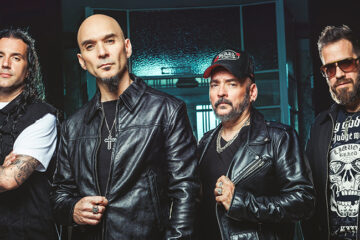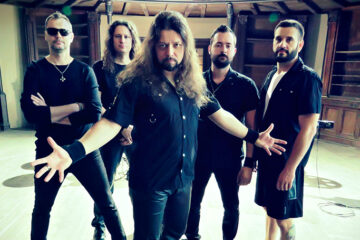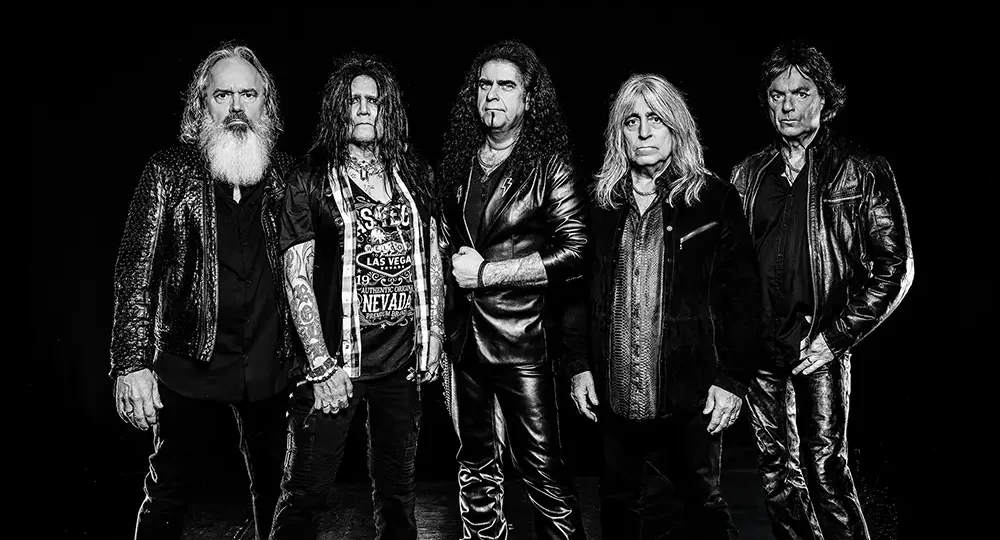
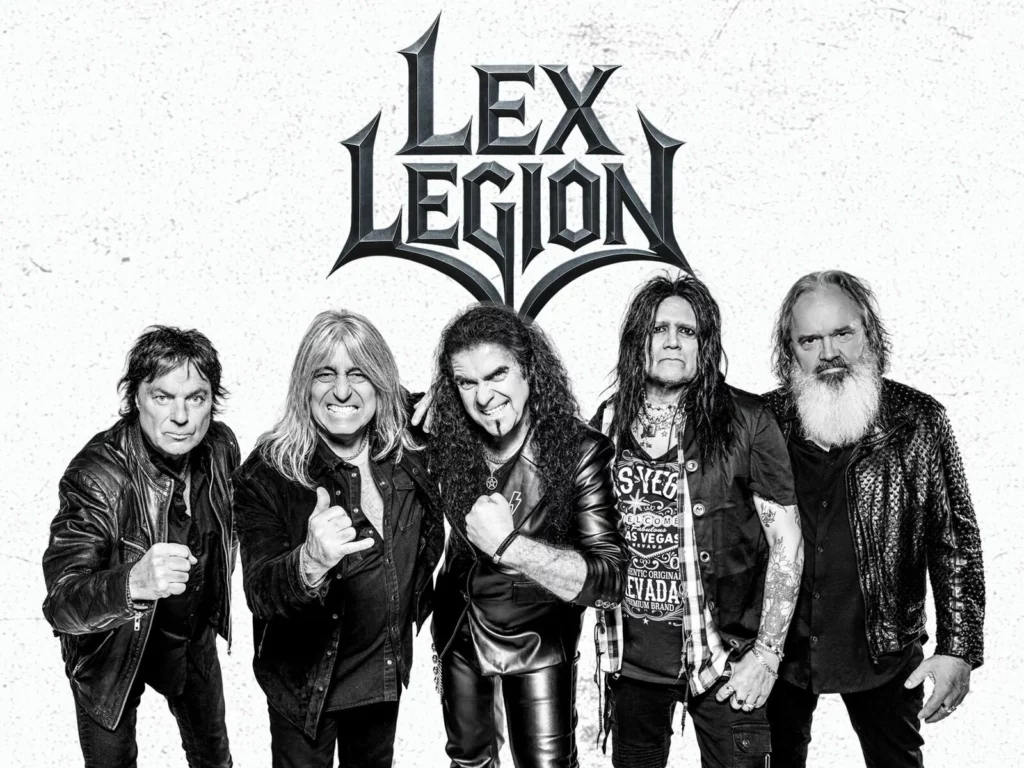
A estas alturas de la película ya cuesta que nada ni nadie nos sorprenda en este mundillo. De ahí que cualquier cosa que nos vendan como “supergrupo” deba mirarse con cierto recelo en principio. Ciertamente el calificativo se podría aplicar a Lex Legion contando con cuatro quintas partes de la clásica formación de King Diamond de finales de los 80 —con Mikkey Dee, Pete Blakk, Andy La Rocque y Hal Patino— y enriquecido con la voz de Nils K. Rue (Pagan’s Mind). Todo ello por no mencionar la relación de estos músicos con nombres como Motorhead, Scorpions y Death en su currículum. Por todo ello nos pusimos en contacto con el legendario Andy LaRoque que nos atiende desde su estudio en Suecia.
Castellano
Hola Andy, ¿atareado?
Sí, no paro de hacer cosas aquí en el estudio.
Bueno, aquí estamos para charlar de Lex Legion. He de decir que realmente me asaltó la curiosidad por escuchar el disco cuando supe de la banda, y ahora que lo he hecho, lo primero que se me ocurre es una pregunta obvia, pero creo que imprescindible. Os conocéis desde hace años, todos los chicos de Lex Legion. ¿Por qué ha sido 2026 el momento definitivo para sacar esto a la luz y no antes?
En realidad no fue a propósito que el lanzamiento fuera ahora. Simplemente sucedió. Pero la semilla de todo esto se remonta, de hecho, a 2008. Así que llevamos mucho tiempo trabajando en esto. Es decir, Pete y yo nos sentamos aquí en el estudio y trabajamos en algunos riffs y canciones que nunca se utilizaron para nada, salvo una canción del álbum que se remonta a esa época y que es la última del disco.
Así que esa es la única canción que tenemos de las sesiones de 2008, si se le puede llamar así. Y luego, en cierto modo, volvió a empezar, durante la pandemia del COVID allá por 2020, cuando Pete le tocó unas cuantas canciones a Mickey Dee. Y Mickey Dee pensó: «Oye, esto es realmente bueno. Quiero participar en esto, y vamos a intentar que Andy y Hal también se sumen”. Hal Patino, ya sabes, y yo.
Así que Mickey me llamó y me preguntó si me interesaba unirme a este proyecto o como quieras llamarlo. Y claro, dije que sí, porque sé que Pete y yo trabajamos muy bien juntos. Podemos hacer cosas realmente buenas y lo pasamos bien. Así que claro, ni siquiera tuve que escuchar las canciones antes de decir que sí.
Así que eso está bien. Y luego empezamos a reunirnos en el estudio, simplemente trabajamos en unas cuantas canciones, unos cuantos riffs, e intentamos encontrar la dirección correcta. Y esto fue como en el 2021, creo.
Al escuchar tu explicación, supongo que la química, por así decirlo, nunca se perdió, ya que habéis estado en contacto durante todos estos años.
Sí, exactamente. Quiero decir, he estado en contacto con Mickey todo este tiempo. Y, ya sabes, hubo unos años con Pete en los que no tuve contacto con él, y lo mismo con Hal, la verdad. Pero ha sido algo intermitente, ya sabes, durante… Bueno, nos conocemos desde hace más de 40 años, ¿sabes? Es una locura. Así que ha sido algo intermitente en ese sentido.
Pero luego, durante la pandemia, cuando empezamos a componer canciones y encontramos la dirección correcta, necesitábamos un cantante, por supuesto, y estuvimos hablando de quién sería adecuado para este proyecto. Así que nos llevó un tiempo, la verdad, hasta que recordé: «Oye, he estado trabajando con Nils, es un tipo genial. Quizá debería enviar algunos enlaces a su trabajo anterior con Pagan’s Mind».
Así que le envié unos cuantos enlaces a Mickey, y Mickey los escuchó, Pete también, y a los dos les pareció genial. Así que, bueno, por eso tenemos ahora a Nils en la banda y creo que encaja a la perfección con lo que estamos haciendo.
Hablando de Nils, ¿qué es lo que más te ha sorprendido de su interpretación en las composiciones?
Es decir, es un cantante con un talento increíble, escribe buenas letras y todo eso, y antes de que encontráramos realmente el rumbo, simplemente le dijimos que intentara ser él mismo, ya sabes, que hiciera lo suyo.
No queremos que sea un clon o una copia de nadie más, solo que haga lo que mejor sabe hacer, y probablemente eso sea ser Nils, así que es como ha acabado siendo. Y es increíble, los gritos agudos y su registro, ya sabes, eso es increíble, en mi opinión esa es una cualidad realmente buena de Nils, sin duda.
El álbum tiene un aire evidente al sonido de King Diamond de los 80, pero también a las bandas clásicas de metal de esa década. Al escucharlo, me vinieron a la mente nombres como Priest, por ejemplo. Supongo que es algo que está en vuestra música, en vuestro ADN, en el sonido de aquella época.
Sí, exactamente. Estoy totalmente de acuerdo. Intentamos evitar ser un clon o una copia de cualquier cosa que hayamos hecho antes, incluido King Diamond. Pero, claro, se notan las influencias, ya sabes, porque así es como componemos la música. Así es como la tocamos. Y hemos crecido con la música de finales de los 70 y principios de los 80.
Así que a veces es difícil evitarlo, y se notan las influencias de los 80 porque ese es nuestro ADN, ¿entiendes lo que digo? Pero, sin duda, intentamos alejarnos de lo que hemos hecho en el pasado. Tampoco queremos ser una continuación de nada de lo que hayamos hecho antes. Así que intentamos que Lex Legion sea una banda única, que se valga por sí misma, si sabes a lo que me refiero.
Hablando de algunas de las canciones, como «Gypsy Tears» o «The Resurrected», en mi opinión, las guitarras suponen un paso adelante. ¿Podrías contarnos cómo surgieron estas canciones desde el punto de vista de la guitarra?
Sí, lo que solemos hacer cuando empezamos a componer una canción es que Pete y yo nos reunimos aquí en el estudio, nos sentamos y vamos elaborando riffs y partes de la canción. Y a veces tengo una canción en la cabeza, desde el principio hasta el final. Y a Pete le pasa lo mismo.
Luego intentamos juntarlo todo. A veces nos ayudamos mutuamente; por ejemplo, Pete tiene un riff inicial de algo y yo tengo un segundo riff de esa canción. Así que intentamos juntarlo. Y luego, cuando tenemos una estructura básica, Mickey viene al estudio para que pueda escucharla y quizá reorganizar las cosas si hace falta; es decir, quizá duplicar el estribillo o quitar una parte o añadir otra a la canción. Así es como lo hacemos para tener una estructura antes de enviársela a Nils, que puede hacer lo suyo, y también a Hal, y sí, bueno, así es como suele empezar.
Y supongo que, tras una carrera de 40 años, la forma de abordar un solo o un riff ha cambiado mucho; ahora piensas más en la melodía quizá y, no sé… en muchos aspectos a la hora de construir esa melodía o ese riff.
Sí, quiero decir que, cuanto más mayor te haces, al menos en nuestro caso, más relajado te sientes con las cosas. Y a veces Pete y yo ni siquiera tenemos que hablar, es como si él se sentara ahí y tocara y yo me sentara a hacer lo mismo. Él simplemente dice: «Vale, tengo una idea», y toca algo y es como: «¡Guau!», justo ahí. Así que sí, en mi opinión, hoy en día es mucho más fácil conseguir las cosas, ya sabes, tal y como las quieres, que cuando eras más joven, porque llevas mucho tiempo trabajando en ello y, la experiencia y todo lo que hay detrás lo hace más fácil, en mi opinión.
Estoy pensando… Supongo que tiene que ver con algo que leí, recuerdo que Mikkey, hace un par de días hablaba de la libertad que se siente al componer y sacar música nueva, porque no tenéis la presión de tener que sacar un nuevo álbum o presentar una nueva banda, ya que sois músicos muy conocidos y, bueno, sacamos esta música y disfrutamos haciéndolo y, si a la gente también le gusta, perfecto.
Sí, exactamente, exactamente. Quiero decir, nos llevó algo de tiempo hacer esta música, claro, pero no es como si fuéramos al estudio y tuviéramos que grabar 10 canciones en dos semanas, no es así en absoluto. Pero hemos ido, hemos ido avanzando poco a poco y tratando de encontrar la dirección correcta, en primer lugar, ya sabes, y luego, cuando tenemos unas cuantas canciones listas, nos metemos aquí en el estudio, Pete y yo, y grabamos quizá una o dos o quizá tres canciones, seguidas, y luego nos las enviamos el uno al otro.
Así que la presión no es tan alta si la comparas con cómo podía ser en los viejos tiempos, cuando hacías todo al mismo tiempo en el estudio, porque cuando empezamos con esto ni siquiera teníamos una discográfica detrás, así que nos tomamos nuestro tiempo para hacerlo bien. Y ahora, para el próximo álbum, sabemos exactamente qué hacer, así que creo que va a ser más o menos lo mismo para el próximo álbum. Es decir, no hay presión, de verdad, simplemente hacemos lo nuestro.
¿Supongo que ya tenéis canciones compuestas para un segundo álbum?
Tenemos algunas ideas por ahora, sí.
Y para los fans del equipo, ¿usasteis vuestras guitarras signature para todo el álbum? ¿O qué combinación usáis?
Usamos, en primer lugar, el Marshall JVM; ya sabes, soy fan de Marshall, eso es seguro, aunque hay muchos amplificadores buenos por ahí, pero querías algo que supieras que iba a funcionar.
Y el Marshall JVM lo usamos junto con el pedal Suta, el Suta Duality; es un sueco el que fabrica esos pedales. Es absolutamente increíble, esa combinación con el amplificador Marshall es genial, y la caja Marshall, por supuesto, un buen micrófono delante de la caja, conectado a unos preamplificadores de micrófono realmente buenos que tengo aquí.
yo usé mi guitarra ESP o LTD signature, que es la marca que me patrocina ahora. La uso para todos mis solos, pero para las guitarras rítmicas usábamos un modelo E2 ESP Eclipse, para todas las guitarras rítmicas. Son guitarras muy sólidas, se mantienen afinadas, son fáciles de tocar y, sí, tienen buen sonido.
Has producido y mezclado el álbum en tu propio estudio. ¿Es difícil ser el productor de unos amigos con los que lleváis 30 años? ¿Te hacen caso cuando les das instrucciones?
Jajaja, no, es que cada uno tiene como tres manos para hacer más o menos lo que quiera y eso es un alivio, en cierto modo, porque realmente no tienes que pensar en ello. Y si hay algo de lo que hablamos, algo como, quizá deberías hacer algo diferente aquí, lo que sea, pero eso realmente nunca pasa.
Quiero decir, todo lo que hemos hecho hasta ahora está bien, creo. Y a veces puede ser difícil, claro, producir tu propia música cuando también la tocas, si sabes a lo que me refiero; normalmente no me gusta mucho eso, pero esta vez todo nos salió muy fácil, el sonido que tenemos surgió de forma natural, de una manera extraña.
No sé, pero no tuvimos que trabajar muy duro para conseguir el sonido que tenemos en el álbum, porque empezamos con un sonido de guitarra muy bueno, creo. Y el sonido de la batería en sí es realmente bueno, aunque Mikkey lo grabó en diferentes ocasiones. Creo que fue en el estudio, quizá seis o siete veces diferentes para grabar todas las canciones. Y, bueno, solo fueron unos pequeños retoques en la batería, y todo sonaba bien.
Y tenía una idea del sonido del bajo en mi cabeza y sé que Hal Patino tiene ese sonido de bajo. Así que eso también fue algo bueno. Así que todo fue muy bien, diría yo, con Nils grabando sus voces en su estudio casero en Noruega. Y una vez que recibí los archivos de él, todo estaba bien por ahí también. No tuve que retocar ni cambiar muchas cosas. Ya sabes, todo estaba bien. Y estoy seguro de que todo quedó tal y como él lo había imaginado para el álbum. Espero que sí.
Háblame del sonido. Ahora que estás en tu estudio, con todo el equipo que tienes ahí, ¿cómo decides cuándo una canción está terminada? Me refiero a que, con la tecnología actual, creo que es fácil sobreproducir, pero el álbum suena muy directo. ¿Cómo lo has conseguido?
Bueno, simplemente intentamos que suene más o menos normal. Quiero decir, no queríamos exagerar con nada. Hay tantos álbumes por ahí que, como dices, están sobreproducidos, con montones de teclados y capas y capas de guitarras por todas partes…
Mucha compresión…
Sí, exactamente. Eso también. Queremos mantener este sonido natural. Y, por ejemplo, solo tenemos como dos guitarras rítmicas en el álbum, una a la izquierda y otra a la derecha. A veces entra una tercera guitarra en algunas armonías, pero es muy básico para que suene sencillo, potente y básico. Me gusta eso, en lugar de tener cientos de pistas de teclados o de guitarras, que también puede estar bien. Pero no lo queríamos en este proyecto, al menos, así que…
Y supongo que algunas de las bandas que vienen a tu estudio a grabar buscan ese sonido concreto, que suene como, no sé, el King Diamond de los 80, y quizá tu trabajo consista en decirles: «Oye, tenéis que buscar vuestro propio sonido a vuestra manera».
Por supuesto, eso lo hace más único, claro, pero si tienen alguna petición especial, como «quiero sonar como Slayer en Raining Blood», o lo que sea, si de verdad quieren hacerlo, entonces solo tengo que analizarlo y ver qué podemos hacer para que queden contentos, si de verdad es lo que quieren. Pero, claro, siempre es mejor intentar mantener la originalidad, ya sabes, en todo lo que hagas, por supuesto.
Si no te pregunto por el próximo lanzamiento de King Diamond, estoy seguro de que muchos fans aquí en España me matarán, sin duda. ¿Qué puedes contarnos al respecto? ¿Estás trabajando en algunas ideas, nuevas canciones, algún plan?
Sí, bueno, ya sabes, tenemos canciones, las tenemos desde hace mucho tiempo, de hecho, y le he estado enviando a King, hace cuatro años, le envié un montón de canciones, decidimos usar como tres de esas canciones para el próximo álbum. Y de hecho ya hemos empezado a grabar algunas partes, así que no es que esté totalmente muerto ni nada por el estilo, y el plan es que lo grabemos este año. Ese es el plan.
Hace tiempo que no hablo con King, pero ese es el plan. Y tenemos canciones, así que es cuestión de grabarlas. Así que él tiene que terminar su parte del álbum, ya sabes, y una vez que esté hecho, podremos empezar a grabar la batería, el bajo, las guitarras rítmicas y todo lo demás. En mis canciones, creo que las guitarras rítmicas ya están grabadas, y ya tenemos algunos teclados. De hecho, parte del bajo también está ya, así que está en marcha, pero por desgracia lleva mucho tiempo, y lo siento. Así son las cosas.
Hablando de esto, eres el único miembro que nunca ha dejado King Diamond. ¿Qué te mantiene motivado después de tantos años y tantos discos junto a King Diamond?
Sí, pero quiero decir, supongo que King y yo tenemos la misma visión sobre la música y también sobre la puesta en escena, es decir, cómo se puede… esa combinación de cosas, ya sabes, la compartimos, así que probablemente eso es lo que me ha mantenido en la banda durante mucho tiempo, la verdad, y sigo pensando que es muy divertido salir de gira y todo eso.
Hicimos una gira por Estados Unidos hace unos años en la que tuvimos muchos problemas, pero aun así la superamos. Y luego, cuando hicimos la gira europea el verano pasado, en 2025, todo fue mucho más fluido. Todo fue realmente bien, creo, y lo pasamos muy bien, así que sí, fue genial, de verdad. Y eso es, eso es lo mío, quiero decir, voy a cumplir 40, 41 años este verano con ello, es una locura.
Por supuesto, por supuesto. Y volviendo a Lex Legion, con las apretadas agendas de Scorpions y King Diamond, ¿veremos a Lex Legion actuando en directo con regularidad o se tratará de un proyecto de estudio?
No nos veréis en un escenario este año, lo más probable, porque Mickey va a estar muy ocupado con Scorpions hasta finales de octubre. Así que, ya sabes, cuando sea el momento adecuado, nos veréis en directo seguro. Así que quizá el año que viene, diría que sin duda. Y como he dicho, ya tenemos ideas, al menos algunas, para el segundo álbum con esto. Así que no es solo un proyecto puntual, es decir, tenemos la intención de seguir con esto, sin duda.
Y para todos los fans aquí en España, ¿algún recuerdo de tus conciertos en España a lo largo de los años que tengas en mente o algo que recuerdes especialmente?
Oh, sí, tío. Recuerdo cuando tocamos en España, creo que fue la primera vez con King Diamond en España, en 1990, cuando Snowy se rompió el pie durante la gira. Fue una locura total. Eso fue en 1990. En las partes en las que se supone que tiene que tocar la doble pedalera.
Sí, tocaba con una de sus manos en “floor tom”, en lugar de con uno de sus pies, ya sabes, fue una locura, tío. Y lo hizo durante un par de conciertos, de hecho. Fue una locura total. Es un recuerdo que nunca olvidaré. Y lo tengo grabado en vídeo por ahí, también, es una locura, tío. Es uno de los recuerdos más locos que tengo de España.
Tío, me encanta tocar en España y también me encanta pasar las vacaciones en España. «Vacaciones» en España. Perfecto.
Esperemos que os volvamos a ver… Siempre digo lo mismo pero muchas bandas han dejado de venir y las cuestiones económicas tienen mucho que ver.
Sí, es mucho más caro: el mercado financiero y los presupuestos de las bandas han ido bajando, mientras que los costes de todo han subido un 100 %. Así que hoy en día es mucho, mucho más caro salir de gira que antes de la COVID, por ejemplo. Cuesta mucho dinero, es una locura, hoy en día, por desgracia.
Si quieres decirle algo a todos los fans…
Claro. Quiero decir, de una forma u otra, realmente deseamos poder ir allí, ya sabes, para que podáis vernos en directo, en un futuro seguro. Quiero decir, sabemos que tenemos muchos fans en España. Así que esperamos veros pronto.
English
Hi Andy, busy?
Yeah, I haven’t stopped working here in the studio.
Well, we’re here to talk about Lex Legion. I have to say I was really curious to hear the album when I first heard about the band, and now that I’ve listened to it, the first thing that comes to mind is an obvious question, but I think it’s essential. You’ve all known each other for years, all the guys in Lex Legion. Why was 2026 the right time to release this and not sooner?
That wasn’t really on purpose to have a release now. It just happened. But the seed to all this actually started back in 2008. So we’ve been working on this for a long time. I mean, me and Pete sat here in the studio, and we worked on some riffs and some songs that never really were used for anything, except for actually one song on the album that originates from that time is the last one on the album.
So that’s the only song that we have, you know, from the 2008 sessions, if you would call it that way. And then it kind of restarted again, you know, during the COVID pandemic back in 2020 when Pete played a few songs for Mickey Dee. And Mickey Dee thought, hey, this is really good stuff. I want to be involved in this, you know, and let’s try to get Andy and Hal on board here too. Hal Patino then, you know, and me.
So Mickey called me and asked if I was interested in joining this project or whatever you will call it, you know. And sure, I said yes, because, you know, I know that me and Pete are working very well together. And we can do really good things and we have a good time and all that, you know. So sure, I didn’t even have to hear the songs, you know, before I said yes.
So that’s good. And then we started to meet in the studio, just worked out a few songs, you know, a few riffs and tried to find the right direction, you know. And this was like 2021, I believe, you know.
Listening to your explanation, I guess that the chemistry, to say in some way, never went away because you are in contact during all these years each other.
Yeah, exactly. I mean, I’ve been in contact with Mickey all the time. And, you know, there were a few years with Pete, I didn’t have contact with him and same with Hal actually. But it’s been on and off, you know, for, I mean, we know each other for more than 40 years, you know, it’s crazy. So it’s been on and off with that.
But then during the pandemic when we started to write songs and we found the right direction, we needed a singer, of course, you know, and we’ve been talking about who should be good for this Project. So it took us a while, actually, until I kind of remember, hey, I’ve been working with Nils, he’s a great guy. Maybe I should send some links to his previous work with The Pagan’s Mind.
So I sent a few links to Mickey, and Mickey listened to it, and so did Pete, and they both thought it was really great. So, I mean, that’s why we have Nils in the band now and he’s a perfect match, I think, for what we’re doing.
Talking about Nils, what has surprised you the most about his take on the compositions?
I mean, he’s a super talented vocalist and he writes good lyrics and everything and before we really found the direction of things we just told him try to be yourself, you know, do your thing.
We don’t want you to be a clone or a copy of anyone else just do what you’re best at, you know, and it’s probably being Nils so that’s how it turned out, you know. And he’s amazing, the high screams and his range, you know, that’s amazing, in my opinion, you know, that’s one really good quality from Nils, definitely.
The album has an obvious vibe to the King Diamond sound of the 80s, but even to the classic metal bands of the 80s. Listening to the album came to me in names like Priest, for example. I guess it’s something in your music, DNA, the sound of that era.
Yeah, exactly. I totally agree. We try to stay away from being a clone or a copy of anything we did before, including King Diamond. But of course, you will hear influences, you know, because that’s the way we write music. That’s the way we play it. And we’re born and raised with music from the late 70s and the early 80s.
So sometimes it’s hard to avoid, you know, and you will hear influences from the 80s because that’s the DNA we have, you know what I’m saying? But we definitely try to stay away from things we’ve done in the past. And we don’t want to be a continuation of anything we’ve done before in the past, too. So we try to make Lex Legion as a unique band, it’s got to stand on its own feet, if you know what I mean.
Talking about some of the songs, songs like Gypsy Tears or The Resurrected, in my opinion, the guitars are a step forward. Can you tell us how these songs came about from the guitar perspective?
Yeah, what we usually do when we start composing a song is that me and Pete, we meet here in the studio, and we sit down and work out riffs and parts of a song. And sometimes I’ve got a song in my mind like from the beginning to the end. And so does Pete. And then we just try to put everything together. And sometimes we just help each other to let’s say Pete has a starting riff from something and I have a second riff from that song.
So we try to put it together. And then when we have a basic structure, we have Mickey coming down to the studio, so he can take a listen to it and maybe rearrange things if needed I mean, maybe double the chorus or take out the part or add a part into the song, that’s how we do it to have a structure of things before then we send it to Nils, who can do his thing and also with Hal and yeah, I mean, that’s how it usually starts.
And I guess after a 40-year career, the approach to a solo or a riff changed a lot, thinking about melody and I don’t know… a lot of aspects during the construction of this melody or this riff.
Yeah, I mean, the older you get, I mean, at least for us the more relaxed you get with things. And sometimes me and Pete don’t even have to talk, it’s just like he sits there and plays and I’ll sit there and play. And he just said, okay, I have an idea and he plays something and it’s like, wow, right there, so yeah, it’s much easier, in my opinion, nowadays to achieve things, you know, the way you want it than it was when you were younger because you’ve been working on things for a long time and, you know, the experience and everything behind it makes it easier, in my opinion.
I’m thinking… I guess it’s something related with something that I read, I can remember from Mickey, a couple of the days ago, talking about the freedom that you feel composing and releasing new music actually, because you don’t have the pressure of how to release a new album or a new band because you are very well-known musicians and, okay, we release this music and we enjoy doing this and if people enjoy it also, okay, perfect.
Yeah, exactly, exactly. I mean, it took some time to make this music, of course, I mean, but it’s not like we’re going into the studio and now we have to record 10 songs in two weeks, it’s not at all like that. But we’ve been, we’ve been slowly progressing and, and try to find the right direction, first of all, you know, and then when we have a few songs coming up, we go in here to the studio, me and Pete, just, do maybe one or two or maybe three songs, in a row and then we send it to each other.
So the pressure is not that high if you compare it to how it could be back in the days when you were doing everything at the same time in the studio, because when we started with this, we didn’t even have a record company behind this, so we just took our time to make it good. And now for the next album, we know exactly what to do, so I think it’s going to be about the same thing, you know, for the next álbum. I mean, no pressure, really, we just do our thing.
I guess you have songs composed for a second album?
We have a few ideas so far, yes.
And for the gear fans, did you use your comparison signature guitars for the whole album? Or what combination do you use?
We used, first of all, Marshall JVM, you know, I’m a Marshall fan, that’s for sure, even though there are so many good amplifiers out there, but you wanted something that you know will work. And the Marshall JVM, we used that together with the Suta pedal, the Suta duality, it’s a Swedish guy who’s making those pedals. It’s absolutely amazing that combination with the Marshall amp is great, and the Marshall cabinet, of course a good microphone in front of the cabinet, into my some really good mic pres here.
And I was using my signature ESP or LTD guitar, that’s what I’m endorsed with now. I’m using that for all my solos, but for the rhythm guitars, we were using an E2 ESP Eclipse model, for all the rhythm guitars. Very solid guitars, they stay in tune, easy to play, and yeah, good sound.
You produce and mix the album in your own studios. Is it difficult being the producer for your own friends of 30 years? Do they listen to you when you give them instructions?
Jahahah, No, I mean, everyone has like three hands to do pretty much what they want and that’s so relieving, in a way, because you don’t really have to think about it. And if there is something that we talk about it, if something is like, maybe you should do something different here, whatever, but that really never happens.
I mean, everything we did so far is like good, I think. And sometimes it can be hard, of course, to to produce your own music when you play the music also, if you know what I mean, I usually don’t really like that, but everything this time around came really easy to us, the sound we have came up naturally in a weird way.
I don’t know, but we didn’t really have to work on it very hard to get the sound that we have on the album, because we started out with a very good guitar sound, I think. And the drum sound itself is really good, even though Mika recorded it at different occasions. I think it was in the studio, maybe six or seven different times to record all the songs. And, well, that was just a few small tweaks under drums, and everything sounded good.
And I had a vision of the bass sound in my head and I know that Hal Patino has that bass sound. So that was also a good thing. So everything went really smoothly, I would say, Nils recording his vocals in his home studio back home in Norway And once I got the files from him, everything was good there, too. I didn’t really have to tweak or change a lot of things. You know, everything was good. And I’m sure that everything ended up the way he envisioned it on the album. Hopefully.
Tell me about the sound. Now that you are sitting in your studio and all the equipment that you have here, how do you decide when a song is finished? I mean, with today’s technology, I think it’s easy to overproduce, but the album sounds very direct. How did you manage that?
Now, we just try to keep it kind of normal. I mean, we didn’t want to overdo anything. I mean, there are so many albums out there with, as you say, overproduced with tons of keyboards and layers of guitars all over and layers…
A lot of compression…
Yeah, exactly. That, too. I mean, we want to keep this kind of a natural sound. And for example, we only have like two rhythm guitars on the album, one left, one right. Sometimes there is a third guitar coming in during some harmonies, but very basic to keep it like simple, powerful and basic. I like that instead of having like hundreds of keyboard tracks or guitar tracks, that can be good, too. But we didn’t want it on this project, at least, you know, so.
And I guess that some of the bands that are coming to your studio to record are searching for that certain sound, sounding like, I don’t know, the 80s King Diamond and maybe your job is to say, hey, you have to search for your own sound in your own way.
Of course, that makes it more unique, of course, but if they have like a special request, I want to sound like Slayer did on, raining blood, whatever, if they really want to do that, then I just have to analyze it and see what we can do, to make them happy, if they really want that. But of course, it’s always better to try to stay unique, you know, with whatever you do, of course.
If I don’t ask about the next King Diamond release, I’m sure a lot of fans here in Spain will kill me, for sure. What can you explain about it? Are you working on some ideas, new songs, any plans?
Yeah, I mean, you know, we have songs, we have had songs for a long time, actually, and I’ve been sending King, four years ago, I sent him like a bunch of songs, we decided to use like three of those songs for the next album.
And we have actually started recording parts of that too, so it’s not like it’s totally dead or anything, and the plan is that we’re going to record this year. That’s the plan. I haven’t talked to King in a while, but that’s the plan. And we have songs, so it’s a matter of recording.
So he has to finish his part of the album, you know, and once that’s done, we can start recording drums, we can start recording bass and rhythm guitars and everything. On my songs, I think rhythm guitars are recorded, we have some keyboards already. Some of the bass is actually there too, so it’s in progress, but unfortunately, it takes a long time, and I’m sorry about that. That’s the way it is.
Talking about this, you’re the only member who has never left King Diamond. What keeps you motivated after so many years and so many albums alongside the King?
Yeah, but I mean, I guess me and King, we have the same vision about the music and also the stage set, I mean, how you can, that combination of things, I mean, we share that, so that’s probably, what kept me in the band for a very long time, actually, and I still think it’s a lot of fun to tour and stuff. We did a US tour a few years back when we had a lot of problems, but still we got through it. And then when we did the European tour last summer in 2025, everything was so much smoother. Everything was really good, I think, and we had a good time, so yeah, that was great, really. And that’s, that’s my, I mean, I’m 40, 41 years this summer, it’s crazy.
Absolutely, absolutely. And returning to Lex Legion with the busy schedules of Scorpions and King Diamond, will we actually see Lex Legion on the stages regularly or will it be a studio project?
You will not see us on a stage this year, most likely, because Mickey is going to be really busy with Scorpions up until the end of October And so it, you know, when the time is right, you will see us live for sure So maybe next year, I would say that, you know, definitely. And as I said, we already have ideas, some ideas, at least, you know, for the second album with this. So it’s not just a one-off project, you know, so I mean, we intend to continue with this for sure.
And for all the fans here in Spain, any memory from your shows during the years from Spain that you have in your mind or something that you remember especially?
Oh, yeah, man. I remember when we played in Spain, I think it was actually the first time with King Diamond in Spain, 1990, when Snowy broke his foot on the tour. That was absolutely crazy. That was 1990. So on the parts where he’s supposed to play the double kick drums.
Yeah, he played with one of his hands on the floor, Tom, instead of one of his feet, you know, that was crazy, man. And he did that for a couple of shows, actually. That was absolutely insane. That’s a memory I will never forget. And I have it on video somewhere, too, it’s crazy, man. That’s one of the craziest memories ever from Spain.
Man, I love to play in Spain and I love to have vacation in Spain, too. “Vacaciones” in Spain. Perfect.
Let’s hope we see you again… I always say the same thing, but lots of bands have stopped coming, and financial issues have a lot to do with it.
Yeah, it’s much more expensive, the financial market and the budgets of the band has been going down and the costs of everything going up 100%. So it’s much more, much more expensive to tour these days than it was before the COVID, for example. So it costs a lot of money to tour, it’s absolutely crazy, nowadays, unfortunately.
If you want to say something to all the fans…
Sure. I mean, in one way or another, we really wish that we can come down there, you know, so you can see a slide, you know, in the future, for sure I mean, we know we have a lot of fans in Spain. So hope to see you guys soon.