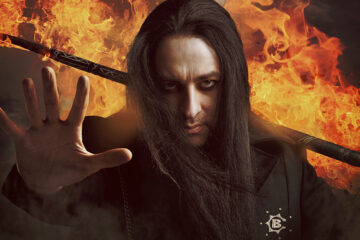
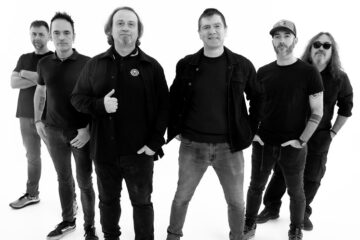
Desde el corazón del noreste polaco, CZART se presenta con una propuesta artística difícil de clasificar. El proyecto cruza todos los límites de lo musical, lo visual y lo simbólico.
Hoy conversamos con su creador, Michał Chrościelewski, para entender qué hay detrás de esta apuesta tan singular: qué fuerzas la inspiran, qué historia la habita y qué pretende despertar en quienes se atreven a entrar en su mundo.
Castellano
Marta: Hola, ¿qué tal estás? Últimamente os estáis haciendo conocidos por vuestros videoclips tan perturbadores o impactantes, según se mire, pero me gustaría saber tu opinión personal. ¿Qué parte de tu obra sientes más real: lo que se escucha, lo que se ve o lo que se siente?
Michal: Hola, estoy muy bien, gracias. Las emociones y los sentimientos son, con diferencia, el elemento más genuino. Es la sensibilidad que sentimos lo que nos impulsa a crear música y visuales capaces de evocar, capturar y conservar esas emociones. En segundo lugar está la música en sí, donde sonidos reales tocados con instrumentos en vivo se mezclan casi imperceptiblemente con los generados por inteligencia artificial. El lado visual está creado íntegramente con herramientas de IA, lo que me permite seguir mi imaginación e inventar escenas e imágenes surrealistas que serían difíciles de lograr por métodos tradicionales. Si el resultado final provoca emociones reales en el público, lo consideramos un éxito.
El álbum debut, si no me equivoco, se titula Czarty Polskie («Brujas polacas«) ¿Qué papel juega la culpa en el universo que habéis creado en este disco? Si la demonología polaca servía en su momento para explicar el mal como algo externo, ¿qué nos dice eso sobre nuestra dificultad para aceptar la responsabilidad? ¿Hasta qué punto el álbum funciona como una acusación, y hasta qué punto como una forma de absolución?
Czarty polskie es un álbum conceptual arraigado en la demonología medieval polaca. Explora el horror como un fenómeno holístico, que se despliega tanto en la música como en lo visual. La narrativa se basa en antiguas creencias que atribuían las malas acciones y desgracias no a los humanos, sino a fuerzas demoníacas, sirviendo como una forma de racionalizar el comportamiento humano.
Además, la explicación del funcionamiento del mundo en muchas culturas —particularmente la atribución de ciertos comportamientos humanos a la “voluntad divina”— disminuye la responsabilidad personal y debilita el pensamiento independiente. En el pasado, muchos juicios terminaban en sentencias de muerte para personas acusadas deliberadamente de brujería. Todos hemos oído hablar de brujas quemadas en la hoguera, no solo por practicar la medicina herbal, sino también en casos en los que un respetable marido engañaba a su esposa y luego culpaba a la amante, diciendo que ella lo había “hechizado” y que el diablo había entrado en su alma. Así evitaba la responsabilidad de la traición, mientras que la mujer inocente con la que tuvo el romance era castigada. Ese es solo un ejemplo. Personalmente, creo firmemente en asumir la responsabilidad total por las propias acciones.
Las letras del álbum no son una excusa, sino una acusación dirigida a aquellos que, por medio de la educación, el poder o la riqueza, han manipulado o siguen manipulando a los pobres y sin educación, alimentándolos con disparates que, lamentablemente, muchos han creído. Por otro lado, las viejas creencias a menudo surgían de la falta de conocimiento y daban espacio a la imaginación. De ahí la personificación del mal y los misterios que lo rodeaban.

¿Por qué elegiste hablar desde Polonia en lugar de usar un lenguaje más “universal”? ¿Qué tiene el idioma polaco que no se puede traducir? ¿Hay sonidos, expresiones, palabras malditas que solo pueden existir realmente en su fonética original?
Las letras incorporan fragmentos auténticos de “Czary i czarty polskie oraz Wypisy czarnoksięskie” («Hechicería y demonios polacos, con extractos de brujería”), un libro de 1924 del renombrado escritor polaco Julian Tuwim. En su libro, Tuwim cita textos antiguos escritos en una forma arcaica del polaco que hoy suena notablemente solemne y mucho más vívida que el habla cotidiana. Tiene una cualidad poética y fonética que complementa perfectamente la historia que queríamos contar. Se adapta a la representación de un mundo fantástico. Además, usar mi idioma nativo hace que las letras que escribí se sientan más auténticas. Me identifico con ellas más profundamente. Y cuando se combinan con el diseño sonoro generado por IA, el resultado es impactante, como una voz invocada del pasado.
Lo interesante es que, en su libro, Tuwim describe cómo los demonios, aunque sin forma, podían moldear cuerpos a partir del aire y vapores terrestres, y hablar en un “lenguaje artificial”. Esta idea poética inspiró el uso de herramientas de IA modernas en el proceso creativo tanto de la música como de los vídeos. De ahí también surgió la idea del nombre de la banda. En la creencia eslava, un czart es un demonio del mal; en la creencia cristiana, es el diablo. Lo desconocido e irreal de repente se volvió visible y audible, y así nació nuestra visión.
¿Cuál fue el primer momento en que pensaste: “Esto no es solo música”? ¿Hubo un momento clave en el que todo cambió de forma y se volvió algo más performativo, casi como una puesta en escena?
Fue una fusión. Un momento en el que sentí físicamente cómo los visuales creados daban un significado más profundo a la energía de la música, y cómo la música, a su vez, daba sentido a las imágenes. Este collage de sensaciones se completa con la capa lírica.
¿La IA que usas entiende el miedo? Después de ver vídeos como «Księga grzechów» —por cierto, me encanta esa canción—, ¿es posible enseñarle el terror a una red neuronal? ¿Y si lo que crea es aún más inquietante porque no entiende el horror humano?
Nos alegra que te guste «Księga grzechów» (“El Libro de los Pecados”). Es una de nuestras canciones más importantes. La IA, creada por humanos, puede ser enseñada sobre lo que es el “miedo”, pero sigue siendo solo una herramienta. Es el usuario quien es responsable de los resultados que la IA produce y, lo más importante, de cuáles de esos resultados decide aceptar y publicar. Hay herramientas que censuran contenido generado por IA —y eso está bien. Pero también hay otras que no lo hacen. Esta canción también aborda esa idea: que hay límites que no deben cruzarse, porque hacerlo puede causar daño. Fomentar la violencia contra otros, ya sean personas o animales, o glorificar la brutalidad, es simplemente absurdo y debería tener consecuencias. Una vez más, todo se reduce a la responsabilidad.
¿Alguna vez ha habido una escena o imagen que incluso a ti te perturbó después de crearla? ¿Puede el creador sorprenderse con su propia obra? ¿Hasta qué punto la creación cobra vida propia y te devuelve algo que no esperas?
Sí, he tenido situaciones en las que la IA generó una animación que me hizo retroceder y la eliminé. Crear escenas grotescas de forma realista, sin sentido, aunque sabemos bien que algunas personas usan todos los medios posibles para provocar controversia y forzar los límites de lo aceptable. No apoyo ese enfoque. En mi opinión, la IA funciona mejor cuando se utiliza para crear un mundo que no existe: el surrealismo y las escenas que no ocurrirían normalmente en la vida cotidiana. Es ciencia ficción, un mundo fantástico que puede ser inquietante, pero también humorístico. A menudo, los resultados de estos experimentos me sorprenden y desvían la dirección original, abriendo la puerta a descubrimientos completamente nuevos. Eso es increíblemente inspirador.
Bueno y, ¿qué se siente al dirigir visualmente una pesadilla y luego descubrir que al público le encanta?
Crear una pesadilla nunca fue nuestro objetivo principal. La música que grabamos nos llevó a construir una capa visual que la acompañara, y es principalmente la atmósfera y la energía de la música lo que da forma al resultado final. Me alegra mucho que los vídeos con paisajes invernales polacos, brujas, demonios y terrores descritos en antiguos cuentos populares hayan tenido una respuesta tan positiva. Especialmente porque evocaron las mismas emociones en muchos espectadores que en nosotros. Nunca esperábamos que ganara tanta popularidad.
¿Qué significa “lo demoníaco” en la era de la nube y los macrodatos? ¿Qué relevancia tiene hoy en día la figura del demonio?
Hay un giro lingüístico fascinante: en informática, un “daemon” es un proceso en segundo plano que se ejecuta sin interacción humana directa. Estos daemons operan continuamente, gestionando tareas en silencio. Aunque su intención es benigna, la metáfora de un daemon refuerza la idea de que agentes autónomos están manejando nuestras vidas digitales, a menudo sin nuestro conocimiento, lo cual resuena con la idea de “fuerzas demoníacas” que modelan nuestro mundo desde las sombras. En la teología y la literatura, los demonios a menudo operan tras el velo, influyendo indirectamente. De manera similar, en la era de la nube, las infraestructuras masivas de datos y los algoritmos de aprendizaje automático actúan sin supervisión humana ni comprensión plena. El demonio, en la era digital, ya no es un ser literal, sino una herramienta conceptual: una forma de hablar sobre poder sin responsabilidad, automatización sin transparencia y conocimiento sin sabiduría. Nos ayuda a confrontar la lógica alienígena de los sistemas que hemos creado, que a menudo superan nuestra comprensión y control, como los demonios de antaño.

¿Cuál ha sido la mayor posesión que has sufrido a manos del proyecto CZART? ¿Hay una parte de ti que ya no te pertenece desde que entraste en este universo?
En una lectura más psicológica o existencial, se podría decir que estamos poseídos por nuestros dispositivos: siempre conectados, constantemente vigilados, alimentando datos a fuerzas invisibles que nos conocen mejor que nosotros mismos.
El sentimiento que CZART despertó en mí y del que no puedo liberarme es un impulso poderoso de seguir creando y explorar las increíbles posibilidades que se abren ante nosotros. CZART no exige sacrificios; para nosotros, no es un símbolo del mal, sino de lo desconocido. Algo que debemos buscar comprender para que deje de dar miedo. CZART no promueve la adoración del diablo, al contrario: queremos promover una energía positiva, creativa y empoderadora.
Sobre el momento del saxofón en «Czart Rogaty«. Cuando ese sonido inesperado, casi sensual, aparece entre capas de metal extremo… ¿qué narrativa secreta se activa? ¿De quién fue esa locura?
Nuestra música es sensual. Junto a muchos riffs rápidos, agresivos y de gran energía, el álbum también contiene momentos y melodías que pueden ser profundamente conmovedores. Ese es el tipo de música que amamos: ecléctica, que bebe de muchas inspiraciones y lleva al oyente a un viaje. Esa idea en particular fue mía. Soy un gran fan del jazz y de la música de John Coltrane.
¿Piensas que has creado un nuevo tipo de arte? ¿Crees que el público capta el simbolismo o eso es parte del misterio?
No, no creo que hayamos creado algo completamente nuevo. Es una mezcla de diferentes inspiraciones filtradas a través de nuestro gusto y sensibilidad. Tal vez el secreto esté en las proporciones. El arte debe seguir siendo misterioso; es ese misterio el que crea espacio para la interpretación. Hacemos música y vídeos que nosotros mismos queremos escuchar y ver. Una vez que empiezan a tener vida propia, se vuelven profundamente personales para algunos, mientras que a otros pueden no gustarles en absoluto. Pero, al final, toman el significado que cada espectador u oyente les asigna. Y así es como debe ser. A nivel emocional intangible, la conexión que sentimos con tantas personas es realmente hermosa y conmovedora. Esa energía, esa capacidad de reunir a la gente, es lo que nos impulsa.
¿Teneis fecha prevista para el lanzamiento de su álbum debut? ¿Podemos esperar actuaciones en directo pronto?
Nos complace anunciar que hemos firmado con el sello italiano de culto CODE666/Aural Music (Slow, Messa, Amesoeurs, Ne Obliviscaris, Imperial Triumphant, Ashenspire, Ephel Duath, entre otros). Estoy muy agradecido con Emiliano Lanzoni, el responsable del sello, por su disposición a trabajar con nosotros.
Ellos se encargarán de lanzar nuestro álbum debut Czarty polskie este otoño. Por ahora, es un proyecto de estudio compuesto por mí, Michał Chrościelewski en las guitarras y Paweł Smarkusz en la batería, pero estamos planeando tocar en vivo.
Gracias por concedernos esta entrevista. Os deseamos todo lo mejor. ¿Hay algo que te gustaría añadir para nuestros lectores y tus seguidores?
Muchas gracias por las preguntas tan reflexivas y por la oportunidad de hacer esta entrevista para Metal Hammer España. Nuestro mensaje para todos los lectores es simple: Sean amables los unos con los otros; este mundo ya está lo suficientemente loco.
English
From the heart of northeastern Poland, CZART presents an artistic proposal that defies classification. The project crosses all boundaries—musical, visual, and symbolic.
Today we speak with its creator, Michał Chrościelewski, to understand what lies behind this unique endeavor: the forces that inspire it, the story it carries, and what it hopes to awaken in those who dare to enter its world.
Marta: Hi, how are you? Lately, you’ve been getting known for your striking music videos, but I’d like to hear your personal take. What part of your work feels the most real to you: what’s heard, what’s seen, or what’s emotionally felt?
Michal: Hi, I’m doing great, thank you. Emotions and feelings are by far the most genuine element. It’s the sensitivity we feel that drives us to create music and visuals capable of evoking, capturing and preserving those emotions. In the second place it’s the music itself where real sounds played on live instruments blend almost imperceptibly with those generated by AI. The visual side is created entirely using AI tools, allowing me to follow my imagination and invent surreal scenes and images that would be difficult to achieve by means of traditional methods. If the final result evokes real emotions in the audience, we consider it a success.
Your debut album, if I’m not mistaken, is titled Czarty Polskie. What role does guilt play in the world you’ve created with this album? If Polish demonology once served to explain evil as something external, what does that say about our inability to take responsibility? To what extent is the album an accusation, and to what extent is it an absolution?
Czarty Polskie is a concept album rooted in medieval Polish demonology. It explores horror as a holistic phenomenon – unfolding across both music and imagery. The narrative draws from ancient beliefs that attributed evil deeds and misfortunes not to humans, but to demonic forces, serving as a way to rationalize human wrongdoing.
Additionally, the explanation of the world’s workings in many cultures-particularly the attribution of various human behaviors to “divine will” diminishes personal responsibility and weakens independent thought. In the past, many court cases ended in death sentences for individuals deliberately accused of witchcraft. We’ve all heard of witches being burned at the stake, not only for practicing herbal medicine, but also in cases where a respectable husband cheated on his wife and then blamed the mistress, claiming she had “bewitched” him and that the devil had entered his soul. In this way, he avoided accountability for the betrayal, while the innocent woman he had an affair with was punished. That’s just one example. Personally, I’m a firm believer in taking full responsibility for one’s actions. The lyrics on the album are therefore not an excuse, but rather an accusation, aimed at those who, by virtue of education, power, or wealth, have manipulated or continue to manipulate the poor and uneducated by feeding them nonsense, much of which, unfortunately, has been believed. On the other hand, old beliefs often stemmed from a lack of knowledge and gave space for imagination. Hence the personification of evil and the mysteries surrounding it.
Why did you choose to speak from Poland, instead of using a more “universal” language? What is it about the Polish language that can’t be translated? Are there sounds, expressions, cursed words that can only truly exist in their original phonetics?
The lyrics incorporate authentic excerpts from “Czary i czarty polskie oraz Wypisy czarnoksięskie” (“Polish Witchcraft and Devils, with Sorcery Excerpts”) a 1924 book by renowned Polish writer Julian Tuwim. In his book, Tuwim quotes old Polish texts written in an archaic form of the polish language that today sounds remarkably dignified and far more vivid than everyday speech. It carries a poetic and phonetic quality that perfectly complements the story we wanted to tell. It suits the depiction of a fantastical world. Moreover, using my native language makes the lyrics I wrote feel more authentic. I identify with them more deeply. And when paired with AI-generated sound design, the result is striking, like a voice summoned from the past.
What’s interesting, in his book, Tuwim described how devils, although formless, could mold bodies from air and earthly vapors, and speak in an “artificial language”. This poetic idea inspired the use of modern AI tools in the creative process behind both the music and the videos. That’s also where the idea for the band’s name came from. In Slavic belief, a czart is a demon of evil, in Christian belief, it is the devil. The unknown and unreal suddenly became visible and audible, and so our vision was born.
What was the first moment when you thought: “This isn’t just music”? Was there a turning point—an image, a mix—where everything took on a new dimension and crossed into something performative?
It was a fusion. A moment when I physically felt how the created visuals gave deeper meaning to the energy in the music, and how the music, in turn, gave meaning to the images. This collage of sensations is completed by the lyrical layer.
Does the AI you use understand fear? After watching videos like Księga grzechów—by the way, I love that song—is it possible to teach terror to a neural network? And what if what it creates is even more unsettling because it doesn’t understand human horror?
We’re glad you like “Księga grzechów” (“The Book of Sins”). It’s one of the most important songs for us. AI, created by humans, can be taught what “fear” is, but it remains only a tool. It is the user who is responsible for the outcomes AI produces and, most importantly, for which of those outcomes they choose to accept and publish. There are tools that censor AI-generated content – and that’s a good thing. But there are also ones that don’t. This song addresses that too: the idea that there are boundaries that should not be crossed, because doing so can cause harm. Encouraging violence against others, whether people or animals or glorifying brutality is simply foolish and should carry consequences. Once again, it comes down to responsibility.
6Has there ever been a scene or image that disturbed even you after creating it? Can the creator be surprised by their own work? To what extent does creation take on a life of its own and give back something you didn’t foresee?
Yes, I’ve had situations where AI generated an animation that made me recoil and I deleted it. Creating realistically gruesome scenes is pointless, although we know well that some people use every available means to provoke controversy and push the boundaries of what is acceptable. I don’t support that approach. In my opinion, AI works best when it’s used to create a world that doesn’t exist – surrealism, and scenes that wouldn’t normally happen in everyday life. It’s science fiction, a fantastical world that can be unsettling, but also humorous. Often, the outcomes of these experiments surprise me and shift the direction I was originally heading in, opening the door to entirely new discoveries. That’s incredibly inspiring.
What does it feel like to visually direct a nightmare— and then to find out that the audience loves it?
Creating a nightmare was never our main goal. The music we recorded guided us toward crafting a visual layer that matched it, and it’s primarily the atmosphere and energy of the music that shape the final result. I’m really glad that the videos featuring Polish winter landscapes, witches, devils, and the terrors described in old folk tales were met with such an incredibly positive response. Especially because they evoked the same emotions in many viewers as they did in us. We never expected it to gain such popularity.
What does “the demonic” mean in the age of the cloud and big data? What relevance does the figure of the demon still have today?
There’s a fascinating linguistic twist: in computing, a “daemon” is a background process that runs without direct human interaction. These daemons operate continuously, silently managing tasks. While benign in intent, the metaphor of a daemon reinforces the sense that autonomous agents are managing our digital lives, often without our knowledge – resonating with the idea of “demonic forces” shaping our world from behind the curtain. In theology and literature, demons often operate behind the veil, influencing events indirectly or from the shadows. Similarly, in the cloud era, massive data infrastructures and machine learning algorithms operate invisibly, collecting, processing and acting upon data without human oversight or full comprehension. The demon, in the digital age, is less a literal being and more a conceptual tool, a way to talk about power without accountability, automation without transparency, and knowledge without wisdom. It helps us confront the alien logic of the systems we’ve created, which often exceed our understanding and control, much like the demons of old.
What has been the greatest possession you’ve suffered at the hands of the CZART project? Is there a part of you that no longer belongs to you since entering this universe?
In a more psychological or existential reading, one could say we are possessed by our devices – always connected, constantly surveilled, feeding data to invisible forces that know us better than we know ourselves.
The feeling that CZART awakened in me and from which I can’t break free is a powerful urge to keep creating and to explore the incredible possibilities that lie ahead. CZART doesn’t demand sacrifice; for us, it’s not a symbol of evil, but of the unknown. Something we should seek to understand so that it ceases to be frightening. CZART doesn’t promote devil worship, on the contrary, we want to promote positive, creative, and empowering energy.
About the saxophone moment in «Czart Rogaty». When that unexpected, almost sensual sound appears amid layers of extreme metal… what secret narrative is being triggered? Who came up with that madness?
Our music is sensual. Alongside many fast, aggressive, and high-energy riffs, the album also contains moments and melodies that can be deeply moving. That’s the kind of music we love – eclectic, drawing from many inspirations, and taking the listener on a journey. That particular idea was mine. I’m a big fan of jazz and the music of John Coltrane.
Do you feel you’ve created an entirely new kind of art? Do you think the audience picks up on the symbolism, or is that part of the mystery?
No, I don’t think we’ve created something entirely new. It’s a mix of different inspirations filtered through our own taste and sensitivity. Perhaps the secret lies in the proportions. Art should remain mysterious – it’s that mystery that creates space for interpretation. We make music and videos that we ourselves want to listen to and watch. Once it starts to live its own life, it becomes deeply personal to some, while others might not like it at all – but ultimately, it takes on whatever meaning the viewer or listener assigns to it. And that’s how it should be. On an intangible emotional level, the connection we feel with so many people is truly beautiful and moving. That energy, the ability to bring people together is what drives us.
Is there a planned release date for your debut album? And can we expect any live performances in the near future?
We are thrilled to announce we have signed a record deal with the cult Italian label CODE 666/Aural Music (Slow, Messa, Amesoeurs, Ne Obliviscaris, Imperial Triumphant, Ashenspire, Ephel Duath, and many others). I am grateful to Emiliano Lanzoni, the head of the label, for his willingness to work with us.
They will take care to release our debut album Czarty polskie this autumn. For now, it’s a studio project with me, Michał Chrościelewski on guitars and Paweł Smarkusz on drums, but we’re planning to play live.
Thank you for giving us this interview. I wish you all the best. Is there anything you’d like to add for our readers and your followers?
Thank you so much for the thoughtful questions and the opportunity to do this interview for Metal Hammer Spain! Our message to all the readers is simple: Be kind to one another—this world is already crazy enough.