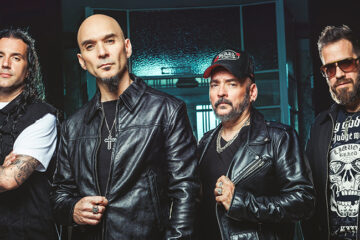
Pocas bandas pueden jactarse de haber definido el ADN de un género y, cuatro décadas después, seguir teniendo un papel relevante en la escena. Hablar de Kreator es hablar de la columna vertebral del thrash metal europeo. Hoy, la leyenda continúa con el lanzamiento de su nuevo asalto sonoro: Krushers of the World. Llamamos al mismo Mille que atiende sentado en un banco en las calles de Berlín con retraso respecto al horario fijado en una conversación que quedó truncada antes de tiempo precisamente por ese retraso. Tuvimos la promesa por su parte de recuperarla en fechas siguientes, así como de la discográfica, y por ello la hemos retenido hasta el momento… pero visto que no se ha cumplido tal promesa hasta ahora hemos decidido publicarla. Veremos si habrá segunda parte…
Castellano
Aquí estamos para hablar de este nuevo álbum, el número 16, !!16 álbumes de Kreator¡¡. Primero tengo que decir que suena increíble. Cada instrumento está en su sitio y tiene el protagonismo adecuado, especialmente, en mi opinión, la batería, que hoy en día tiende a estar sobreproducida. Suena orgánico dentro de lo que se entiende por sonido de batería actual y trabajar con Jens Bogren en Fascination ha sido genial, por lo escuchado. ¿Colaboraste en la producción o le diste directrices o dijiste cómo querías que sonara el álbum?
Um, “orgánico” es un buen término para describir el ambiente general. Por supuesto, no nos oponemos a la tecnología moderna. Nos encanta la tecnología moderna, pero también nos encantan los sonidos orgánicos, y Jens es alguien que, para transmitirte el ambiente y darte la impresión correcta de lo que está sucediendo, selecciona y recopila… la interpretación.
Reunía a todo el mundo en la misma sala y grababa primero la batería, luego el bajo, y se aseguraba de que todas las interpretaciones fueran al 110 %. Así que lo que se oye es básicamente lo mejor de su interpretación, y eso es lo que crea el sonido. Sé a qué te refieres cuando hablas de sonidos orgánicos, es algo que nos gusta a todos, pero eso es algo que se da por sentado cuando se trabaja con Jens, él siempre se asegura de que la batería suene natural y, por lo que yo sé, no hay mucho triggering en la batería, ¿sabes? Así que creo que eso es básicamente lo que se oye.
Permíteme expresar mi impresión sobre el álbum, es algo que siempre me gusta compartir con los músicos. Creo que recibirá tanto elogios como críticas. Canciones como «Barbarian», «Deathscream» y «Psychotic Imperator» recuperan esa esencia clásica del thrash, mientras que otras como «Satanic Anarchy» y «Krushers of the World» tienen mucha melodía y me recuerdan de alguna manera al estilo melódico escandinavo. ¿Qué opinas al respecto?
En primer lugar, hacemos lo que nos dicta el corazón. Cada vez que hacemos un disco, intentamos crear cosas que no hayamos hecho antes. Intentamos probar cosas nuevas. También intentamos crear canciones que nos gusten, y eso es todo lo que podemos hacer. Lo que la gente diga después, no está en nuestras manos.
Así que pensamos: «Da igual, digan lo que digan, hemos dado lo mejor de nosotros». Lo hemos hecho por nosotros, se trata de innovar, como acabas de mencionar, este es nuestro decimosexto álbum y, bueno, para no aburrirnos y no decepcionarnos, nunca escribiríamos música que complaciera a la gente. Eso no es lo que somos. Escribimos música que nos gusta y nos encanta el álbum. Creemos que tiene algo, quiero decir, hay algo de thrash metal, pero es como muy, muy actualizado.

Es una versión actualizada de Kreator. Por ejemplo, acabas de mencionar «Psychotic Imperator», que es una canción de thrash metal, pero nunca se ha hecho como la hemos hecho nosotros. Ya sabes, es una versión totalmente nueva de una canción de thrash metal fresca y mejorada. Así que si no fuera por eso, si no hubiéramos encontrado estas canciones como «Deathscream», «Psychotic Imperator» y «Barbarian», si no hubiéramos encontrado estas canciones, simplemente no las habríamos incluido en el álbum. ¿Entiendes lo que quiero decir?
Es como cuando empiezas a escribir y comienzas los procesos creativos, te conectas con la chispa creativa y te conectas con lo divino, te conectas con el universo y lo que sea, solo estamos canalizando lo que hay. Así que lo que sale de nosotros es lo que tú oyes, lo que salió. Pasó a través de nosotros. Para mí, no se trata de quién le gusta, se trata de si, cuando lo escucho, me hace sentir la magia que sentimos cuando lo grabamos. ¿O no me hace sentir nada? Y prefiero sentir el espíritu y la energía que complacer a la gente. ¿Entiendes lo que quiero decir?
Para mí, quiero decir, sé que algunas bandas apuestan por el sonido old school y graban sus álbumes de forma cutre, como para sonar más auténticas, ya sabes, y a mí me parece bien. Quiero decir, haz lo que quieras, pero nosotros somos creativos, hacemos las cosas a nuestra manera.
Siempre es lo mismo, la gente quiere escuchar un sonido concreto de una banda y el mismo tipo de álbum, y durante tu carrera siempre has intentado hacer cosas diferentes. Podemos hablar de Endorama, podemos hablar de Outcast o Cause for conflict, y cada álbum es muy diferente. Y creo que es una de las cosas principales e importantes de Kreator. Obviamente, hay gente, incluyéndome a mí, porque descubrí a la banda en la época de Terrible Certainty, que disfruta de las canciones rápidas y trash. Hablando de canciones que me sorprendieron, una es «Loyal to the Brave», porque contiene diferentes partes que van desde el thrash hasta el metal tradicional, melodía e incluso suena como una especie de banda sonora al principio. Es genial, pero ¿podría ser una canción para conciertos en directo? ¿Podría tener buena acogida entre los fans?
No lo sé. No lo he pensado. No he pensado en lo que vamos a tocar en directo, pero cada vez que pensaba en el próximo repertorio, esa canción me venía a la mente porque es muy diferente. Y lo que creo que hace que una canción sea buena para tocar en directo es la dramaturgia, ya sabes, empezamos rápido y luego vamos más despacio y luego… Es casi como si los conciertos fueran una canción larga.
Así que cuando pensaba en el nuevo repertorio, me venía a la mente esa canción. Si acabará en el repertorio, aún no lo sé. Pero creo que a mucha gente le encantará la canción porque para mí significa mucho. Habla de la unidad, de la amistad. En realidad, habla del amor. Es una especie de historia de vampiros muy romántica, de romanticismo oscuro, en el sentido de que hablo de que me encontraste en la oscuridad y todo eso. Para mí es una canción muy emotiva y me encantaría interpretarla en directo. Veremos si funciona cuando la toquemos como banda.
Siempre es diferente cuando tocas en una sala de ensayo o empiezas a hacer la preproducción del álbum y luego te das cuenta de que quizá no encaja en este repertorio o quizá aparecerá en otro repertorio diferente. Así que lo bonito de tener un nuevo álbum es que puedes elegir lo que mejor se adapte a la emoción de un nuevo concierto de Kreator.
¿Y qué me dices de “Tränenpalast”? Te deben encantar las películas de terror…
Sí, me encantan las películas de terror. Me gustan todo tipo de películas, ¿sabes? Me encanta el cine europeo independiente. Me gusta todo, pero también soy un gran fan del terror. Hace tiempo había una canción que hablaba de la película Midsommar y esta vez tenemos la canción Suspiria, compuesta por Laszlo, que habla de la película Suspiria.
Siempre pensé que era como, ya sabes, también tengo que ser sincero contigo. Quiero decir, escribo poesía, escribo letras. Y siempre hay nuevos temas que busco a veces, ya sabes, cuando tienes que escribir 10 o 12 canciones, no quieres repetirte. Y luego está esta pequeña historia que puedo contar, en la que puedo elegir cómo contar la historia en la canción, de lo que siento cuando escucho esto… Cuando veo la película, esa es mi versión de cómo la veo, ya sabes, cuando se me ocurren las letras.
En tus últimos álbumes han aparecido diferentes colaboraciones con distintos cantantes, y algunas de ellas, creo, sorprenden a los fans porque a veces son melódicas, voces femeninas, etcétera. ¿Tienes en mente alguna colaboración que pienses: «Oh, me encantaría hacerlo, pero no es para Kreator»?
Sí, ha habido muchas ideas como esa. Pero también tengo que decir que tiene que surgir de forma natural, como la colaboración que hemos hecho con Britta, que surgió de forma natural. Nunca planeamos hacerlo. No fue como: «Vale, vamos a hacerlo, vamos a tener que contar con una cantante femenina para esto». Simplemente sucedió.
Así que lo que surja y lo que sea, quien esté disponible, también es una cuestión de disponibilidad. Ya sabes, no quieres forzar las cosas. No quieres decir: «Ah, tenemos que hacer una colaboración». Para conseguir fans de diferentes bandas, estoy totalmente en contra de eso. Lo que me parezca natural, lo que me parezca que tiene sentido para Kreator, lo haré.
En mi opinión, hay algunos momentos clave en la historia de Kreator, como por ejemplo, la salida de Extreme Agressionen un estilo más técnico, la ruptura musical con Renewalo Endoramay Violent Revolutioncomo el regreso a los Kreator más genuinos. ¿Qué es Kreator hoy en día musicalmente? ¿Estás personalmente satisfecho con la evolución de la banda a lo largo de los años o alguna vez has sentido presión comercial o por parte de una discográfica en algún momento clave de tu carrera para aumentar la audiencia potencial de la banda?
No realmente. Siempre intentamos experimentar, con canciones industriales de los años 80 o 90 para Renewal y Endorama. Eso era lo que sentíamos en ese momento. Sentíamos que así era como debíamos expresarnos creativamente.
Hoy en día, cuando tocamos el estilo que tocamos ahora, quiero decir… siempre ha sido así, todo lo que se oye es siempre Kreator porque yo soy el cantante, yo soy el compositor. Así que siempre es como un conjunto diferente de mi personalidad y de dónde estoy musicalmente.
Lo que hago hoy en día es más bien como si hubiera encontrado una forma de comunicarme con mi banda y con la gente con la que trabajo cuando compongo. Pero, básicamente, cuando compongo, nunca se trata de lo que la gente piensa y de cómo se recibe comercialmente. De verdad. Me encanta componer canciones pegadizas. Es muy obvio. Si escuchas una canción como «Krushers of the World», es muy pegadiza.
Quiero que a la gente le guste y, ya sabes, está hecha para un gran concierto en directo. Ya sabes, cuando escribí la canción, pensé: «Quiero una canción que sea muy lenta, que mueva el aire, que sea como… como muy masiva, con un ambiente increíble, ya sabes, muy, muy pesada, pero no rápida. Así que esto es lo que pienso. Así es como lo hago. Nunca pienso: «Oh, voy a escribir una canción y entonces esto va a pasar». No va a pasar porque no puedes, no controlas lo que va a pasar.
Si escribiera una canción para la radio, por ejemplo, ya sabes, muy comercial, muy, no sé, pop o lo que sea. No puedo controlar si va a salir en la radio o no, pero escribiría algo que creo que saldrá en la radio. Y luego, cuando no pasa, pienso: «¿Por qué he hecho esto?».
Así que prefiero no hacerlo. Yo escribo música para mí mismo primero. Y luego, si pasa algo, como, por ejemplo, que a la gente le encanta. Es porque es nuestra música, es nuestra versión del metal, y creo que así es como funciona en mi mundo, es más natural y sale más… Es más orgánico que forzar a cierto público a que te guste, ya sabes, o intentar perseguir a un público, lo que esté de moda en ese momento, ya sabes, eso no va a suceder. No va a funcionar.
Como alguien que ha estado involucrado y parte de la escena del heavy metal durante décadas, como tú, y ha visto muchos cambios, ¿qué crees que ha mejorado y qué ha empeorado en esta escena musical? ¿Crees que todavía hay espacio para la rebelión y el mensaje en el metal actual?
Depende de cómo definas la rebelión. Ya sabes, la escena metal lleva establecida al menos 20 años, 25 años desde principios de la década de 2000, cuando los festivales de metal empezaron a surgir y Wacken se hizo enorme.
¿Es eso rebelión? La verdad es que no lo sé. Quiero decir, ¿es divertido? Sí. ¿Tiene una mentalidad determinada? ¿Todos creemos en la paz? ¿Todos creemos en la unidad del metal, que puede unir a personas de diferentes orígenes? Sí. Entonces, ¿es rebelión? No lo sé.
En mi caso, tú dijiste que nos sigues desde Terrible Certainty, debes haber alcanzado cierta edad…
Ya voy por los 50…
¿Entiendes lo que quiero decir? Sería raro decir que sigo siendo rebelde y que tengo una mentalidad rebelde. Eso no es realmente rebelde. Es más bien único. Creo que veo el mundo de una determinada manera porque soy metalero y también fan incondicional.
Tengo mi propia filosofía sobre cómo veo el mundo. Pero, ¿es rebelde? No soy yo quién debe decidirlo. ¿Era rebelde cuando empezamos? Sí. ¿Es rebelde ahora? No lo sé. Otros deben decidirlo, porque soy totalmente sincero contigo.
Probablemente, la rebeldía es para los adolescentes. Y si se aficionan al metal porque piensan que es rebelde, me parece bien.
Creo que en nuestras letras intentamos hablar solo de cosas que son alentadoras. Hablamos de cosas que nos cabrean. Hablamos de cosas que no nos gustan. Hablamos de horror. Hablamos de cosas que te transportan a mundos de demonios, monstruos y paisajes extraños, muy extraños…
Pero creo que los jóvenes de hoy en día piensan principalmente que ser rebelde es votar, por ejemplo, a gente como Trump o Milei o a este tipo de idiotas.
Probablemente sea cierto. Entonces, definitivamente, el metal no es rebelde.
Hace un par de años, tuve la oportunidad de hablar con Tom Gabriel, de Celtic Frost…
Yeah, me encanta ese tipo.
Y la conversación nos llevó al pasado. Él expresó opiniones negativas sobre Karl Walterbach, el fundador de Noise Records. No sé si tú tienes la misma opinión sobre Karl y aquella época, porque él no habla muy bien de Karl y de todo lo que pasó en Noise.
No, creo que Karl nos dio una oportunidad cuando éramos como… Cuando firmé mi contrato discográfico, tenía 16 años. Mi madre tuvo que firmar el contrato discográfico. Así que no, creo que Karl hizo mucho por la escena.
Cometía errores y aprendía sobre la marcha. Firmaba bandas que nunca habrían conseguido un contrato. Hizo mucho por la escena. Esa es mi opinión.
Tom puede tener una opinión diferente. No pasa nada. Ya veremos de dónde viene. Pero si no fuera por Karl Walterbach, no habría existido Helloween, no habría existido Running Wild, ni Celtic Frost. Todas estas bandas nunca habrían conseguido un contrato. Y creo totalmente que ha hecho muchas cosas buenas por la escena. ¿Siempre fue justo a la hora de pagar a las bandas? No lo sé. Quizás no siempre, pero los tiempos eran diferentes.
Aquí se truncó nuestra conversación cuando nos proponíamos a plantear su posible entrada en Celtic Frost y otros aspectos del pasado interesantes. Veremos si hay oportunidad en un futuro de volver a conversar con Mille…
English
Here we are to talk about this new album, number 16, my God, 16 albums from Kreator. First I have to say that it sounds amazing. Each instrument is in its place and has just the right prominence, especially in my opinion, the drums, which tend to be overproduced nowadays. It sounds organic within thinking in what is today’s drum sound and working with Jens Bogren at Fascination has been great for, from what I’ve heard. Did you collaborate on the production or give guidelines or say to him how you want the album to sound this time?
Um, organic is a good, good like term to, to describe the overall vibe of it. Of course we’re not opposed to modern day technology. We love modern day technology, but we also love organic sounds and Jens is somebody that, in order to get you the vibe and he get, give you the right… impression of what’s happening.
He was selecting and collecting…performance. He was having everybody in the same room and recording first the drums, then the bass, then making sure that every performance is 110%. So what you hear is basically greater as at his best performance and that makes the sound. I know what you mean when you talk about the organic sounds, that’s some, something that we’re all fans of, but that’s a given working with and with Jens, it’s always, he always makes sure that the drums sound natural and there’s not, uh, from my… from what I know, there’s not much triggering involved with the drums, you know? So I think that’s basically what you hear.
Let me say my impression about the album, because it’s something that I always want to share with the musicians. I think it will receive both praise and criticism. Songs like “Barbarian”, “Deathscream” and “Psychotic Imperator” recapture that classic thrash essence, while others like “Satanic Anarchy” and “Krushers of the World” have a lot of melody and remind me in some way, this Scandinavia melodic style, what’s your thoughts on it?
First and foremost, we do whatever comes from the heart. There’s never, every time we do an album, we try to come up with stuff that we haven’t done before. We try to, um, we try to try new things. We also try to come up with songs that we love, and that’s all we can do. Whatever people say afterwards, it’s not in our hands.
So we’re like, go whatever, say whatever, we gave our best. We did to us, it’s about coming up, like you just mentioned before, this is our 16th album and, um, in order to not be bored and not be underwhelmed, we would never ever write music that pleases people. That’s not who we are. We write music that pleases us and we love the album. We think it has some, I mean, there’s some thrash metal stuff on there, but it’s like very, very like updated.
It’s an updated version of Kreator. It’s a very, like a song, for example, you just mentioned “Psychotic Imperator” is a thrash metal song, but it’s never been done the way we’ve done it there. You know, this is a totally new version of a fresh, greater thrash metal song. So if it wasn’t that, it wasn’t for that, if we wouldn’t have found these songs like “Deathscream” and “Psychotic Imperator”, “Barbarian”, if we wouldn’t have found these songs, we would have just not, we… they wouldn’t be on the album. You know what I mean?
So it’s like when you, when you start writing and you start the creative processes, you connect with the, the, the, the creative spark and you connect with the divine, you connect with the universe and whatever the, the, we’re only like channeling what’s there. So whatever comes out of us is, is what, what you hear is what came out. It came through us. To me, it’s not about like, oh, whoever likes it, it’s about, does it feel like when I listen to it, does it make me feel the magic that we felt when we were recording it? Or does it make me feel nothing? And I’d rather feel the spirit and the energy than please people. You know what I mean?
That to me, I mean, I know some bands are going for the way old school sound and they record their albums shitty on a, on a, you know, and that’s fine with me. I mean, do whatever you want, but we’re creative, we’re doing things our way, you know.
It’s always the same, people want to listen to a concrete sound from a band and the same kind of album and during your career you always try to do different things. We can talk about Endorama, we can talk about Outcast or Cause for conflict and every album is very different. And I think it’s one of the main and important things about Kreator. Obviously there’s people, including me because I discovered the band in the Terrible Certainty times, who enjoy the trashy and fast songs. And talking about songs that surprised me, one is “Loyal to the Brave” because it contains different parts ranging from thrash to traditional metal, melody, and even sounds like a kind of a soundtrack at the beginning. It’s great, but could it be a song for live shows? Could it be well-received for fans?
I don’t know. I haven’t thought about it. I haven’t thought about what we’re going to play live, but every time I thought about the next setlist, that song came to my mind because it’s so different. And what I think makes a good live song is the dramaturgy, you know, we have like, you start fast and then you go slower and then you, it’s almost like the live shows almost like a long song.
So when I thought about the new setlist, that song came up, if it ends up on the setlist, I don’t know yet. But I think a lot of people will love the song because to me, it means a lot. It means it talks about unity, talks about friendship. It sounds about, it talks about love, actually. It’s a little bit of a vampire story that’s very romantic, dark romanticism, you know, in a sense of like, I talk about like, you found me in the darkness and all that stuff. So it’s like a, to me, it’s a very emotional song and I would love to perform it live. We’ll see if it works when we play it as a band.
It’s always different when you play in a rehearsal room or you start doing pre-production for the album and then you figure maybe it doesn’t fit into this setlist or maybe it will pop up in a different setlist. So it’s like, the beauty of having a new album is like you can pick whatever fits to the excitement of a new Kreator show.
And what about Tränenpalast? You must love horror films!
Yeah, I love horror films. I’m not like… I mean, I love all kinds of films, you know? I love European art house. I love everything, but I’m also a big fan of horror. And I think there’s on 80 Wallace, there was a song that was talking about the movie Midsommar.
And this time we have the song Suspiria, which are trained by Laszlo, which talks about the movie Suspiria. And I always thought that’s like, you know, I also have to be honest with you. I mean, I’m writing poetry, I’m writing the lyrics. And there’s always new themes that I’m looking for sometimes, you know, when you have to write 10 or 12 songs, you don’t want to repeat yourself. And then there’s this little story that I can tell where I can just pick from what’s already there and just talk about how I believe the song, what I feel when I, you know, when I hear this… when I watch the movie, that’s my version of how I see it, you know, when I come up with the lyrics.
In your last albums, different collaborations of different singers appeared, and some of them, I think, surprise fans because sometimes it’s melodic, female voices, etcetera. Do you have any collaboration in mind that maybe you think, oh, come on, I will, I would love to do this, but it’s not for Kreator.
Yeah, there’s been, there’s a lot of ideas like that. But I also have to, you know, it has to come natural, you know, like the collaboration that we did with Britta now that just came natural. We never planned on doing this. It wasn’t like, okay, we’re going to do, we’re going to have to do like a female singer on this. It just happened.
So whatever comes up and whatever, whoever’s available is also a matter of availability. You know, you don’t want to force things. You don’t want to be like, ah, we need to make a collaboration. So in order to get fans from different bands, you know, I think I’m totally against that. Whatever feels natural, whatever I feel makes sense for Kreator, I will do.
There are some key moments in Kreators history, in my opinion, the release, for example, of extreme aggression in a more technical style, the musical break with Renewal or Endorama and Violent Revolution as the return to the original creator. What is Kreator today musically? Are you personally satisfied with how the band has evolved over the years or have you ever felt pressure commercially or by a record label at any key moment in your career to increase the band’s potential audience?
Not really. We always try experimenting with industrial songs in the 80s or 90s for Renewal and Endorama. Those were what we felt at the moment. We felt that’s how we should express ourselves creatively.
Nowadays, when we play the style that we do now, I mean, there’s always been like, everything you hear is always Kreator because I’m the singer, I’m the songwriter. So it’s always like a different set of my personality and where I am musically.
What I do nowadays, it’s more like I kind of found a way of communicating with my band and with the people that I work with when I write. But basically, when I write, it’s never about like what people think and how it’s received commercially. Really. I mean, I love writing songs that are catchy. It’s very obvious. If you listen to a song like “Krushers of the World”, it’s very catchy.
I want people to be into it and, you know, it’s made for a big live concert hall. You know, that was when I wrote the song, I was like, I want one song that’s like this very slow, it should move the air, it should be like, wow, you know, like very massive, like amazing vibe, you know, very, very heavy, but not fast. So this is what I think. This is how I do it. You know, I’m never like, oh, you know what, I’m going to write a song and then this is going to happen. It’s not going to happen because you cannot, you do not control what’s going to happen.
If I would write a song for the radio, for example, you know, like very commercial, very like, I don’t know, poppy or whatever. I can’t control whether or not it’s going to be on the radio, but I would write something that I think will be on the radio. And then when it doesn’t happen, I’m like, why did I do this?
So I rather not do this at all. You know, I write music for myself first. And then if something happens to it, like, for example, people love it. It’s because it’s our music, our version of metal, you know, and I think that’s the way In my world, that’s that it’s more, it comes more natural and comes more … It’s more organic than forcing a certain audience to like you, you know, or trying to chase an audience, chasing the metal or whatever, you know, whatever’s trendy at the moment, you know, that’s not going to happen. It’s not going to work.
As someone who has been involved in a part of the heavy metal scene for decades like you and has seen a lot of changes, what do you think has improved and what has gotten worse in this music scene? Do you think there is still a space for rebellion and message in today’s metal?
Depends on how you define the rebellion? You know, the metal scene has been established for at least 20 years, 25 years now from the beginning of the 2000s when the metal festivals were coming out like Wacken became huge.
So is that rebellion? I don’t know, really. I mean, is it fun? Yes. Does it have a certain mindset? Do we all believe in peace? Do we all believe in the unity of metal that can bring people together from all different backgrounds? Yes. So is it rebellion? I don’t know.
For me, I’m you know, you said you follow us since Terrible Certainty, you have you must have reached a certain age…
I’m 50…
See, you know what I mean? So it would be weird to say I’m still rebellious and I have a rebellious mindset. That’s not really rebellious. It’s more unique. I think I see the world in a certain way because I’m a metalhead or I’m also a hardcore fan.
I have my own philosophy of how I see the world. But is it rebellious? I’m not the one to decide that. Was it rebellious when we started? Yes. Is it rebellious now? Don’t know. Other people should decide it because I’m totally honest with you.
Rebellion is probably for people that are teenagers. And if they get into metal because they think it’s rebellious, that’s fine.
I think in our lyrics, we try to just talk about things that are encouraging. We talk about things that we are pissed off about. Things that we don’t like. About horror. We talk about things that take you into worlds of demons, monsters and bizarre, bizarre landscapes…
But I think young people today think mostly that to be rebellious is to vote, for example, people like Trump or Milei or these kind of silly and idiot people.
That’s probably right. So then metal is definitely not rebellious.
A couple of years ago, I had the opportunity to talk with Tom Gabriel from Celtic Frost…
Oh yeah, I love the guy.
And the conversation took us back to the past. He expressed negative opinions about Karl Walterbach, the founder of Noise Records. I don’t know if you have the same opinion of Karl and that time, because he expresses not very good thoughts about Karl and all the way that works in Noise.
No, I think Karl gave us a chance when we were like… When I signed my record deal, I was 16 years old. My mother had to sign the record deal. So no, I think Karl did a lot for the scene.
He was making mistakes, and was all learning by doing. He was signing bands that would have never gotten signed. And he did a lot for the scene. That’s my opinion.
Tom can have a different opinion. That’s fine. We’ll see where he’s coming from. But if it wasn’t for Karl Walterbach, there wouldn’t have been any Halloween, there wouldn’t have been Running Wild, no Celtic Frost. All these bands would have never gotten signed. And I totally think that he’s done a lot of good things for the scene. Was he always fair when it came to pay the bands? I don’t know. Maybe not always, but the times were different.