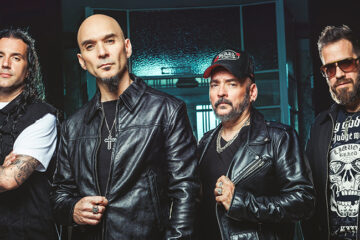
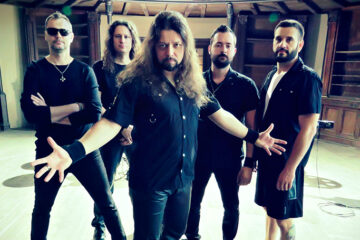
Han pasado más de tres décadas desde que Paradise Lost redefiniera los cimientos del doom y el metal gótico, y su legado continúa expandiéndose con cada nuevo capítulo. Desde la crudeza de Lost Paradise y el hito que supuso Draconian Times hasta el oscuro esplendor de Obsidian, la banda británica ha demostrado una capacidad única para reinventarse sin perder jamás su identidad. Con Ascension, Paradise Lost abre una nueva etapa que promete ser tan sombría como ambiciosa. Hablamos con Nick Holmes sobre el presente y el futuro de la banda, y el eterno desafío de mantener viva la llama de una carrera que ya es historia del metal.
Castellano
Hola, Nick, ¿cómo estás?
Bien.
17 álbumes. Increíble… Todavía recuerdo cuando descubrí a la banda con Icon. Han pasado cinco años desde el último álbum de estudio, han pasado muchas cosas, especialmente en el mundo de la música, como los efectos de la COVID, por supuesto. ¿Es esa la razón principal de estos cinco años? Es la primera vez que creo que han pasado cinco años entre álbumes de estudio.
Sí, bueno, normalmente son unos tres años, si incluyes la composición, la grabación y luego la gira, unos tres años, pero obviamente hemos tenido dos años de la pandemia. Así que supongo que esa es la razón.
No creo que haya sido necesariamente algo negativo desde el punto de vista de las canciones, porque en realidad hemos tenido un pequeño descanso de componer un álbum cada tres años. Así que hemos tenido un poco más de tiempo para trabajar, un poco más de margen de maniobra y pensar realmente en cada canción y, ya sabes, en lo variadas que van a ser, en lo variado que va a ser el álbum. Sí, creo que ha sido una ventaja tener este tiempo, supongo, esta vez, sobre todo después de 17 álbumes.
Tuve la oportunidad de hablar con Greg sobre Obsidian, y me explicó que, tras Medusa, queríais que ese álbum fuera más diverso de forma intencionada. En esta ocasión, creo que es una mezcla de ambos, ¿no crees?
Sí, creo que hay elementos de muchos períodos de la banda en este álbum. Creo que probablemente la mayor influencia, y aún así, digo influencia en el sentido más amplio, fue probablemente el hecho de que regrabamos el álbum Icon, porque acabábamos de empezar a componer este álbum cuando lo hicimos.
El simple hecho de abordar esas canciones, volver a cantarlas y volver a tocarlas nos recordó cómo solíamos componer canciones en aquellos días, antes de que existiera el intercambio de archivos, Internet y todo eso. Y pensamos, intentemos recuperar un poco de ese ambiente y quizá algunas de estas canciones, desde luego no todas, pero, ya sabes, eso fue lo que más influyó en la dirección que tomó este álbum.
Pero, dicho esto, hay muchas canciones que no se parecen en nada a ese álbum. Una canción como «Silence Like The Grave» tiene un rollo similar, supongo. Incluso entonces, la canción «Diluvium» recuerda mucho a algo del álbum Shades Of God. Así que creo que está bastante bien sumergirse de vez en cuando en el pasado para ver dónde estabas cuando hiciste eso y si te trae recuerdos de cómo lo hiciste.
Pero, al mismo tiempo, siempre miramos hacia adelante. Siempre tratamos cada álbum como un lienzo en blanco, pero no creo que haya nada de malo en echar un vistazo al pasado de vez en cuando.
Estoy de acuerdo, hay discos en los que, siendo el mismo grupo, suena muy diferente, por ejemplo Icon o One Second.
Sí, pero quiero decir… creo que el tema recurrente es que la forma en que Greg toca la guitarra, es muy singular. Creo que ese es el punto de referencia de Paradise Lost. Básicamente, creo que es el estilo guitarrístico de Greg. Es decir, es en gran medida el sonido. Así que, hagamos lo que hagamos, siempre suena como Paradise Lost, independientemente de lo duras que sean o no las guitarras.

Hablando de las canciones del álbum, creo que hay temas como «Salvation» y «Silence, like The Grave», con toda la diversidad que la banda ha mostrado a lo largo de su carrera. Otras como «Savage Days» y «Sirens» satisfarán a los fans del rock y el metal clásico, creo. Pero también hay, por ejemplo, «Serpent on the Cross» y «Siren Serenade», con vuestro estilo único y muy personal. No sé si tenéis la misma opinión sobre la diversidad o estas canciones.
Sí, somos conscientes de lo diferentes que son. Pero, como he dicho, creo que el tiempo que tuvimos para hacerlas nos permitió sentarnos y pensar en probar un estilo diferente o un estilo diferente en cada canción.
A veces, si tienes muy poco tiempo para componer, tus canciones pueden acabar siendo un poco parecidas porque estás en la misma mentalidad. Pero definitivamente tuvimos más tiempo para… Quiero decir, «Lay a Wreath Upon the World» fue, creo, la primera canción que compusimos para este álbum. Y creo que empezamos a escribirla incluso antes de la pandemia. Creo que empezamos a trabajar en ella y esa canción es muy diferente a las demás. Pero la dejamos aparcada durante un tiempo.
Luego, cuando recuperamos todas las canciones, dijimos: «Vamos a volver a sacar esa y a ver cómo encaja con el resto del álbum». Pensamos que encajaba bastante bien porque es muy diferente al resto. Así que, sí, creo que es bueno tener un poco de tiempo para mezclar estilos y trabajar en diferentes sensaciones en diferentes canciones. Pero también se puede perder demasiado tiempo en ello, ¿sabes? Así que creo que encontramos el punto óptimo en el tiempo que tuvimos.
¿Hay alguna canción del álbum que consideres especialmente representativa de la dirección actual de la banda?
Yo diría que los primeros 30 segundos de la primera canción. Quiero decir, el hecho es que la primera canción es porque, bueno… originalmente no iba a ser la primera canción. Pero esa canción es muy típica de Paradise Lost. Creo que lo es todo. Tiene el sello distintivo de la banda. Así que diría esa canción en particular. Si sigues escuchando fragmentos del álbum, diría que esa. Aparte de eso, no sé, la verdad. Quiero decir, todo el álbum nos representa ahora y hacia dónde vamos a ir en el futuro. No lo sé. Pero aquí es donde estamos ahora.
Para mí está claro que una de las razones de vuestro sonido personal, y lo mencionaste anteriormente, es el toque de Greg con la guitarra. Es absolutamente personal y clásico de Paradise Lost.
Sí, por supuesto. Quiero decir, siempre ha sido el sonido de la banda desde que empezamos. Siempre ha sido su forma de tocar, tiene un estilo muy único, es simplemente cómo toca. No es algo que haya aprendido ni nada por el estilo. Es simplemente cómo toca. Así que sí. Y creo que hay mucho de eso en este álbum, sin duda.
Una de las cosas que más me gustan, no solo de vuestro nuevo disco en general, sino de la escena rock y metal, es que se puede escuchar el álbum completo. Quiero decir, no es música con solo una o dos canciones buenas y el resto de relleno. Eso pasa en la música pop, pero en la escena metal, para las bandas, creo que el álbum como concepto es importante, un grupo de canciones juntas como concepto.
Sí, quiero decir, hubo tiempos en los que teníamos que componer singles. Quiero decir, si no salías en MTV, automáticamente vendías mucho, mucho menos que si salías. Obviamente, entonces lo importante era salir en MTV.
Así que tenías que escribir singles y todo el proceso de composición se centraba en eso. Bueno, ¿cuál va a ser el single? Y entonces podías tener un álbum brillante. Pero alguien diría: «Bueno, no veo ningún single».
Eso era lo único que parecía importar, lo cual es increíblemente deprimente para una banda, pensar que lo único que tienes que hacer es un single. Por suerte, hace años que no tenemos eso y ya ni siquiera pensamos en singles. Así que ahora podemos componer álbumes como solíamos hacer en los viejos tiempos.
En cierto modo, quizá sea lo mismo actualmente por la cantidad de singles que aparecen antes de la salida de un disco, por ejemplo, recuerdo que con el último álbum de Arch Enemy, cuando salió, creo que ya se habían publicado cuatro o cinco canciones anteriormente. Es la mitad del álbum.
Exacto. Sí. Quiero decir, siempre es útil tener una canción que, ya sabes, si tienes una canción que triunfa en el mercado y la gente que ni siquiera conoce, ni siquiera le gusta el heavy metal, conoce la canción, entonces sí. De acuerdo. Pero, ¿con qué frecuencia ocurre eso? Quiero decir, ¿cuándo fue la última vez que ocurrió? ¿con Enter Sandman, quizás? ¿Y cuánto tiempo hace de eso? Quiero decir, en el mundo del metal, rara vez ocurre.
Pero supongo que, obviamente, las discográficas y los representantes siempre quieren conseguir esa canción. Pero nosotros siempre hemos sido una banda de álbumes y lo de los singles era, en todo caso, un obstáculo, más que otra cosa. Quiero decir, hoy en día ni siquiera pensamos en ello.
En la conversación que mencioné con Greg sobre Obsidian, él me explicó que tenía seis versiones diferentes de Obsidian en su disco duro. ¿Ocurrió lo mismo esta vez?
Probablemente tiene cientos de versiones diferentes. Es decir, las revisiones de las canciones son una locura. Entre cómo empiezan y cómo terminan, probablemente estemos hablando de gigabytes por canción. Me refiero a un disco duro de cien gigas por canción, cómo pueden cambiar realmente.
Quiero decir, si hay algo, puedes seguir insistiendo en una idea, puedes tener como 30 versiones de una idea y luego, al final, piensas: «Un momento, esto no funciona». Así que vuelves a lo básico. Entonces, normalmente se reescribe por completo y puede que haya algún elemento de lo que habías escuchado antes, pero está muy, muy oculto.
Así que, sí, a veces puedes darte cabezazos contra la pared… pero cuando llegas a donde quieres llegar, la recompensa merece la pena. Porque, ya sabes, esa es la clave. Seguimos emocionándonos con el resultado final.
Cuando llegamos a la canción exactamente como la queremos y tenemos la sensación de que funciona tal y como queremos. Pero llegar a eso puede ser una puta pesadilla, si te soy sincero. Puede ser realmente un trabajo muy laborioso y duro llegar hasta ahí. Pero supongo que es como un rompecabezas si no funciona. Es raro que una canción funcione a la primera. A veces sí. A veces las cosas simplemente funcionan, pero es raro. Creo que es raro con cualquier banda.
¿Y qué hay de las letras? Las letras de Paradise Lost siempre han reflejado un fuerte componente melancólico y existencial. Así que, por favor, explica a los españoles qué queríais explorar en este nuevo trabajo. Me imagino que escuchar las noticias estos días y la situación mundial podría ser útil para explorar las contradicciones humanas en las letras, por ejemplo…
Bueno, para ser específico sobre lo que está pasando en el mundo, prefiero evitarlo, si puedo. Porque lo ves, quiero decir, no me preocupo por las noticias porque puedo verlas. No necesito escribir sobre ellas.
Pero supongo que todo lo que he escrito trata sobre cómo me siento a la edad en la que lo escribo. Y supongo que ahora es exactamente lo mismo. Quiero decir, hay mucha más muerte en nuestras vidas a la edad que tenemos ahora. Hemos visto mucha más.
Y también nos preguntamos cuándo nos tocará a nosotros, que es otra cosa. Así que siempre existe esa amenaza. Y siempre está ahí. Yo cuestiono las creencias y las creencias de la gente. También cuestiono cómo la gente afronta las situaciones y los cambios en la vida, los acontecimientos que la transforman, cómo les afecta. Quiero decir, incluso solo por vivir la pandemia, fue interesante ver cómo reaccionó la gente ante ella y cómo afectó a la vida personal de algunas personas y a otras no, y cómo a algunas personas no les afectó en absoluto.
Pero estas personas son amigos míos y siguen viéndose afectadas por ello. Así que no es que escriba sobre la pandemia, sino que me fascina cómo la gente afronta las grandes turbulencias. Y también qué hace que la gente crea en cosas y qué hace que no crea en otras. Esas son las preguntas que todos nos hacemos y sobre las que sigo escribiendo. Pero ahora desde la perspectiva de alguien de 54 años, en lugar de alguien de 18 o lo que sea.

Entiendo lo que dices, tenemos más o menos la misma edad…
Exacto. Sí. A partir de ahora todo va cuesta abajo, jajajajajaj.
Sí, totalmente!!. He leído un poco sobre la portada. Aparece la pintura La corte de la muerte, de George Frederic Watts, que se encuentra en la Tate Gallery de Londres. Tiene sentido si tenemos en cuenta la letra y el ambiente del álbum. Hablando de portadas, trabajasteis para Medusa con Branca, de Barcelona. Quizás la gente aquí en España no lo sepa.
Sí, sí. Quiero decir, en aquella época nos gustaba ese estilo, sin duda. Es un estilo muy específico. Pero era exactamente lo que buscábamos en aquel momento. Así que, sí, siempre intentamos innovar. Cuando veo todas las portadas de los álbumes juntas, veo que son muy variadas y eso me gusta.
Pero no es muy habitual que nos pongamos de acuerdo en el diseño artístico a la primera. El diseño artístico es muy subjetivo. Y creo que es más subjetivo que la música. Puede que no te guste una banda de metal, pero puedes apreciar su metal. Pero con el arte es algo totalmente diferente. Es muy subjetivo. Así que, rara vez nos ponemos de acuerdo a la primera, pero con esto lo hicimos. Y me alegré mucho porque facilitó mucho todo lo demás.
Sí, siempre quisimos usar algo parecido a una pintura de un gran maestro, como una pintura renacentista. Greg encontró esta pintura y me gustó de inmediato. Así que, de inmediato, lo teníamos, ya sabes, y luego todo lo demás, el diseño, el arte, todo lo demás viene después. Y todo funciona una vez que lo consigues, pero tienes que conseguir esa portada.
Pero, sí, realmente nos pusimos de acuerdo en cuanto al tiempo con los elementos de vida y muerte y, como dices, cuestionando todo. Encaja muy bien, pero la obra de arte en sí es un cuadro enorme. Creo que es como un cuadro gigantesco. Creo que está en una galería de arte en Bristol, en el Reino Unido, o podría estar ahora en Londres. Pero creo que vamos a intentar visitar la obra de arte real para hacernos una foto con ella en algún momento de este año.
Estoy de acuerdo en que es muy subjetivo, pero tienes libertad para elegir las portadas de tus álbumes. Lo digo porque, por ejemplo, si Iron Maiden no saca una portada con Eddie, los fans van a liar una gorda…
Sí, sí, es cierto. Supongo que si empiezas con la mascota muy pronto, entonces tienes que seguir con ella. Supongo que es como lo de Megadeth y la cara con más cabezas. Pero nunca hemos tenido una mascota, ya sabes, tenemos la corona de espinas, que seguimos usando. Pero sí, no es como si tuviéramos que colarla en la portada de alguna manera.
Si tuvieras que describir Ascensión en la historia de Paradise Lost, ¿cómo lo harías?
Bueno, diría que es nuestro mejor álbum, pero muy típico. Sí, quiero decir… es que no sé.
No fue fácil escribirlo. Pero todo lo que hicimos valió la pena, ya sabes, y luego, una vez que llegamos a un punto, pensé: «Sí, esperemos que hayamos conseguido hacer un buen álbum». Y creo que encaja y es una buena transición desde el último álbum, pero también es diferente.
No soy yo quien debe decirlo, porque como artista, siempre piensas que aún no has hecho tu mejor álbum. Así que si llegas a un punto en el que crees que tu mejor trabajo está en el pasado, entonces es mejor que lo dejes.
No tiene sentido continuar si tienes esa mentalidad. Pero creo que es lo mejor que podemos ofrecer ahora mismo. Es lo mejor que somos ahora. Y eso es todo. Y eso es todo lo que pienso. Creo que es el público general el que debe decidir dónde encaja en los anales de nuestra historia..
Hablando de las partes vocales a lo largo de los años, has mantenido un estilo vocal que ha evolucionado desde guturales profundos hasta registros más melódicos. ¿Cómo cuidas tu voz y cómo decides qué registro utilizar en cada canción?
En lo que respecta a la voz, hay que sacrificar todo lo demás, nada de trasnochar ni salir de fiesta.
Pero no es tan difícil de evitar porque ya no soy joven. Así que no necesito salir por discotecas y bares. No lo necesito. No es que ya no me interese. Puedo tomarme una copa tranquilamente con mis amigos y luego irme a la cama temprano. No pasa nada. Pero supongo que es fácil juzgar mi voz basándose únicamente en mi edad, en mi rango de edad, porque ya he dejado atrás la época de salir de fiesta. Dormir mucho es muy importante para la voz.
En cuanto a la voz adecuada o la parte adecuada, supongo que solo depende de lo agresiva que sea la canción. He aprendido que cantar con una voz más suave sobre riffs pesados suena horrible. Suena como si necesitara una voz dura sobre un riff duro. Eso es algo que definitivamente he aprendido a lo largo de los años. Tiene que ser una voz adecuada para el riff adecuado. Así que tiendo a seguir esa teoría.
Hablando de otros proyectos musicales, porque estos días, sabiendo que íbamos a tener esta conversación, he estado escuchando diferentes cosas donde cantas. ¿Cuál es la motivación para explorar un universo tan alejado del metal? ¿Fue la liberación creativa o un reto personal?
Sí, fue cuando estábamos en la pandemia. Obviamente, tuvimos algo de tiempo libre. Y Greg dijo, ¿te apetece hacer algo como Host, solo por diversión?
Pero resultó que nos lo tomamos tan en serio como en PL y también nos estábamos tirando de los pelos por eso. Porque nos tomamos todo muy en serio. Pero sí, fue básicamente como un proyecto de confinamiento, para ver a dónde nos llevaba.
Y eso fue más o menos todo, la verdad, ya sabes, no queríamos ponernos directamente con otro álbum de Paradise Lost. Queríamos tomarnos un pequeño descanso. Y creo que, sin duda, ayudó a salvar la brecha bastante bien, la verdad. Estuvo bien hacerlo y luego empezar a trabajar en el álbum de PL después de eso.
Para los fans aquí en España de estas otras visiones musicales, ¿alguna noticia de Bloodbath o no sé si estás pensando en alguna colaboración…?
No, ahora mismo no. Quiero decir, obviamente tenemos un nuevo álbum a punto de salir, así que vamos a estar ocupados con PL. Pero, en cuanto a Bloodbath, seguiremos haciendo festivales el año que viene. Sí, tenemos cosas en marcha. En cuanto a música nueva, no lo sé. No lo sé. ¿Quién sabe? Ya veremos qué nos depara el futuro.
Hablando de colaboraciones, has prestado tu voz a una gran variedad de proyectos muy diferentes. ¿Qué te atrae de colaborar fuera de tu entorno habitual?
Simplemente tiene que gustarme la canción. Si me gusta la canción, eso es prácticamente todo lo que necesito. En general, no importa qué sea, siempre y cuando, en última instancia, lo fundamental es que me guste la canción. Si no me gustara, no lo haría. Ya sabes, es más bien una sensación instintiva.
Y algo que nos ha decepcionado mucho aquí en España en los últimos años, porque suele ocurrir. Y esta vez, con Paradise Lost, ha vuelto a pasar. No hay gira en España este otoño en vuestra gira europea. En los últimos años, esto suele ocurrir no solo con vosotros, sino con muchas bandas que no tocan aquí. Lo hemos comentado con diferentes bandas. Por ejemplo, Schmier, de Destruction, me explicaba que los promotores de aquí no quieren pagar lo que se les pide. Explica que, en realidad, todo es más caro, los autobuses, salarios…etc.
Podría ser. Quiero decir, depende de la situación particular de cada banda. En gran parte también podría tener que ver con el itinerario. Si es viable conducir una distancia X, podría serlo.
Vamos a hacer una segunda parte de todos modos, así que tocaremos en España en la segunda parte. Así que solo es la primera parte y luego haremos la segunda parte el año que viene. No queremos estar fuera ocho o nueve semanas seguidas. Nos lo han dicho. Así que queremos hacer solo dos partes.
Probablemente iremos a lugares donde no fuimos en la primera parte. Pero, como he dicho, depende de las circunstancias de cada banda. Sin embargo, normalmente no tiene nada que ver con la banda el motivo por el que no van a un lugar. Normalmente se debe a cuestiones logísticas y financieras y a todas esas cosas aburridas. Normalmente nueve de cada diez veces es eso.
Y habéis tocado habitualmente en España durante vuestra carrera. No ha sido raro veros por aquí.
No, en absoluto. Pero como he dicho, vamos a ir en la segunda parte de la gira, seguro que iremos a España.
Ok, Nick. Gracias por tu tiempo. Te lo agradezco.
Saludos, amigo. Te lo agradezco. Muchas gracias.
Espero verte tocando por aquí en esa segunda parte de gira.
Sí, sin duda, tío. Saludos. Adiós.
English
Hi Nick, how are you?
Good
17 albums. My God… Amazing. I still remember when I discovered the band with Icon. It’s five years since the last studio album, a lot of things have happened and especially in the music world like the COVID effects, of course. Is that the main reason for these five years? It’s the first time I think that there’s been five years between studio albums.
Yeah, I mean, there’s usually around three years, if you include writing, recording, and then touring, it’s around three and then, but obviously we’ve had two years with the pandemic.
So I guess pretty much that is the reason why, you know.
I don’t think it’s necessarily been a negative from the song perspective because we’ve actually had a bit of a break from writing an album every three years. So we had a bit more time to kind of work, a bit more room to maneuver and sort of really think about each song and, you know, how varied they’re going to be, how varied the album’s going to be. Yeah, I think it’s been a plus having this long, I guess, this time, particularly after 17 albums.
I had the chance to talk with Greg for Obsidian and he explained to me about being an album more diverse intentionally after Medusa. This time, I think it is a kind of mix of both, don’t you agree?
Yeah, I think there’s elements of, many periods of the band are on this, there’s elements of it. I think probably the biggest, single most influence, and even then it’s, I say influence in the loosest term, was probably the fact that we re-recorded the Icon album because we just started to write this album when we did that, when we re-recorded that.
And just approaching those songs and re-singing those songs and replaying those songs just kind of reminded us how we used to write songs back in the day, back in those days, before file sharing and the internet and all that. And we thought, you know, let’s try and get a bit of that vibe going and perhaps some of these songs, certainly not every song, but, you know, so that was the kind of single most thing that kind of steered the ship slightly with this album.
But I mean, with that said, you know, there’s plenty of songs that are nothing like that album. But, you know, a song like “Silence Like The Grave” kind of has a similar vibe to that, I guess. So, even then, the song “Diluvium”, is very reminiscent of something off the Shades Of God album.
So I think it’s quite good to maybe dip your toe in the past occasionally to see what, you know, where you were when you did that and if it brings back any memories of how you did it. But at the same time, we still always look forward all the time. You know, we always treat each album with a blank canvas, but it’s not, I don’t think there’s anything wrong with, you know, just kind of flipping through into the past occasionally.
I agree, there’s records that being the same band sounds very different, for example Icon or One Second.
Yeah, but I mean, it’s, I think that the running theme is, I mean, the way Greg plays his guitar is very unique. I think that is the kind of benchmark to Paradise Lost. I think it’s basically Greg’s guitar style. I mean, it’s very much the sound. So whatever we do, it always kind of sounds like Paradise Lost anyway, you know, regardless of how heavy the guitars are or aren’t, you know.
Talking about the songs of the album, I think that there are songs like “Salvation” and «Silence, like The Grave”, with all this diversity that the band shows during their career. Others like “Savage Days” and «Sirens» will satisfy the fans of, I think, rock and classic metal. But there’s also, for example, «Serpent on the Cross» and «Siren Serenade» in your unique and very personal style. I don’t know if you have the same feelings about the diversity or these songs.
Yeah, I mean, we were aware of how kind of different they are. But like I said, I think the passage that the time we had to do them, we were able to actually sit and think about, you know, let’s try a different style or a different style in each song.
Sometimes if you have very limited time to write, your songs can become a little bit samey because you’re in the same mindset. But we definitely had more time to, I mean, «Lay a Wreath Upon the World» was, I think that’s the first song we put together for this album. And I think that was started to be written even before the pandemic. I think we started to actually start to and that song is very different to the other songs. But we kind of shelved that for a while.
But then when we were bringing all the songs back, we said, let’s bring that one out again and see how it fits with the rest of the album. We thought it fit quite nicely because it’s quite different to the rest of it. So, yeah, I think it’s good to have a bit of time to mix up the styles and work on different feelings in different songs. But I think you can have too much time as well, you know. So I think we got the kind of sweet spot in the time we had.
Is there any song on the album that you consider particularly representative of the band’s current direction?
I would say the first 30 seconds of the first song. You know, I mean, the fact is the first song is because I mean, it wasn’t going to be the first song originally. But it’s so typical of Paradise Lost that song. I think it’s just so everything about it. It’s got the hallmarks of the band. So I would say that song, particularly, you know, if you keep taking a kind of sound bite of the album, I would say that one. Other than that, I mean, it’s I don’t know, really. I mean, the whole thing just represents us now and where we’re going to be for the next. I don’t know. But this is where we are now.
For me it’s clear one of the reasons for your personal sound, and you mentioned previously, is Greg’s touch with that guitar. It’s absolutely personal and classic Paradise Lost.
Yeah, absolutely. I mean, it’s always been the, you know, the sound of the band since we started. You know, I mean, it’s always been the way he plays, it’s a very unique style he’s got, which he just, you know, that’s just how he plays. It’s not anything he’s trained or anything. It’s just how he plays it. So it’s yeah. And I think there’s a lot of that on this album, for sure.
One of the things that I enjoy the most about, not only about your new record in general in the rock and metal scene, is that you can listen to the whole album. I mean, it’s not music with just one, two good and the rest it’s worst. It happens in pop music, in the metal scene, for the bands, I think the album as a concept is important, a couple of songs together.
Yeah, I mean, one of the days where we would, you know, we had to write, I mean, back in the day, you had to write singles. I mean, if you didn’t get MTV play, you would automatically sell way, way less than if you I mean, obviously it was all about getting on MTV back in the day. So you had to kind of write singles and every on the entire writing process was used to be around. Well, what’s going to be the single? And then you could have a brilliant album. But someone would say, oh, well, I don’t hear a single.
I mean, that’s all it seemed to be about, which is incredibly depressing for a band to just think, well, you know, all you got to do is a single. So, I mean, luckily, we haven’t had that for a number of years and we don’t even think about singles anymore. So it’s instantly we can just write albums like we used to do in the old days. So it’s kind of… we know we don’t have that kind of single thing anymore.
In some way, maybe it’s the same actually, for example, I remember with the last Arch Enemy album when it was released, there have been, I think, four or five songs released previously. It’s half of the album.
Right. Yeah. I mean, it’s always useful to have a song that, you know, if you’ve got a song that breaks through in the mainstream and people that don’t even know, don’t even like heavy metal know the song, then yeah. Okay. But I mean, how often does that happen? You know, I mean, when was the last time that happened with Enter Sandman, maybe?
And how long ago was that? I mean, in the metal world, it rarely happens, you know. But I mean, I guess, you know, obviously record labels and management, they always want to get that song. But we’ve always been an album band and the single thing was, if anything, was a hindrance, more than anything. I mean, these days we don’t even think about it, you know.
In the conversation that I mentioned with Greg for Obsidian, he explained that he had six different versions of Obsidian in their hard drive. Did it happen the same this time?
We probably had hundreds of different versions. I mean, it’s… the revisions in the songs are crazy. How they start and how they end up, you’re probably talking gigabytes per song. I mean, like a hundred gig hard drive per song, how they, yeah, they can really change.
I mean, if something, you can keep hammering away at one idea, you can have like 30 versions of one idea and then eventually you think, hang on a minute, this isn’t working. So then it’s right back to basics. So then it’s usually completely rewritten and there might be an element of what you heard previously there, but it’s very, very hidden.
So it’s, yeah, I mean, sometimes you can really bang your head against the wall and you just, but when you get to where you want to get to, the payoff is worth it. Because, you know, that’s the whole point. We still get excited about the finished result.
You know, when we get to the song where it’s like exactly how we want it and we get the feeling that we get when we think, yes, that works exactly how we want it. But to get to that can be a fucking nightmare, if I’m honest. It can be really, you know, painstakingly, you know, hard work to get there. But, I guess that’s the, it’s like a puzzle almost, you know, sometimes if it’s not working. It’s rare that a song works straight away. Sometimes it does. Sometimes things just work, but it’s rare. I think it’s rare with any band.
And what about lyrics? Paradise Lost lyrics have always reflected a strong melancholic and existential component. So please, explain a little bit to the Spanish people, what did you want to explore in this new work? I can imagine listening to the news these days and the world situation could be useful to explore human contradictions in the lyrics for example…
Well, I mean, well, to be specific about what’s going on in the world, I’d rather avoid it, if I can. Because you see it, you know, I mean, I don’t worry about the news because I can just watch the news. I don’t need to write about it. But I mean, I guess everything I’ve written is about how I feel at the age that I write it. And I guess now it is exactly the same. I mean, there’s a lot more death in our lives in the age that we are now. We’ve seen a lot more of it.
And then we’re also wondering when it’s going to be our turn, which is something else. So there’s always that threat there. And there’s always that. I kind of question beliefs and people’s beliefs. I also question how people deal with situations and deal with life changes, life changing events, how it affects them. I mean, even just, you know, living through the pandemic, it was interesting to see how people reacted to that and how it affected people’s personal lives and how it didn’t and how some people just didn’t affect them at all.
But these people are friends of mine are still affected by it. So not that I write about the pandemic, but how people just deal with major turmoil, I guess, is always fascinating. And also what makes people believe in things and what makes them not believe in things. So those are the questions we all ask and I still write about that. But just from a 54 year old now, as opposed to an 18 year old or whatever.
I understand what you are saying, we are more or less from the same age…
Right. Yeah. It’s all downhill from now, jajajajajaj
Yeah. Absolutely. And I read a little bit about the cover. It features the painting The Court of Death. It’s covered by George Frederic Watts, which is in the Tate Gallery in London. It makes sense if we consider the lyrics and the atmosphere of the album. Talking about covers. You work for Medusa with Branca from Barcelona. Maybe people here in Spain don’t know about it.
Yeah. Yeah. I mean, for that time, we kind of were into that style for sure. It’s a very specific style. But that’s exactly what we were looking for at that time. So, yeah, we would, you know, it’s I mean, we always try and shake up. When I look at all the album covers next to each other, they’re all very varied and I kind of like that.
But it’s not very often we agree on artwork straight away. The artwork is so subjective. And I think it’s more subjective than music. You know, you might not like a metal band, but you can appreciate its metal. But with art, it’s a total different thing. It’s just so subjective. So, I mean, we rarely but we agreed straight away with this. And I was so pleased because it made everything else so easy.
So, yeah, with this, we always wanted to use something like a grandmaster type painting, like a Renaissance type painting. So Greg found this painting and I liked it straight away. And so straight away, we were there, you know, and then everything else, the layout, the artwork, everything else comes after. And it all works once you get it but you got to get that cover.
But, yeah, we really agreed on it just time with the kind of life and death elements and like you say, questioning everything. It ties in nicely with but the actual artwork itself is a huge painting. I think it’s like an enormous painting. I think it’s in an art gallery in Bristol in the UK or it could be in London now. But I think we’re going to try and visit the actual artwork to get a photograph with it at some point this year. But yeah, anyway, but it’s kind of straight out of the gate. So I was kind of happy that we straight away, you know, so it didn’t it wasn’t like.
I agree it’s very subjective but you have the freedom to choose the covers for your albums. I say it because, for example, if Iron Maiden don’t release a cover with Eddie, fans will cue the band.
Yeah, yeah, that’s true. I mean, but I mean, I guess if you get the mascot very early on, then you’ve got to kind of stick with it. I guess it’s like the Megadeth thing and the more head face. But I mean, we never had a mascot, you know, I mean, we’ve got the well, we have the Crown of Thorns, which we still use. But yeah, it’s not like we have to kind of sneak it into the cover somewhere, you know.
If you have to describe Ascension in the history of Paradise Lost, what would it be?
Well, I would say it’s our best album, but very typical. Yeah, I mean, no, I mean, it’s I don’t know. I mean, it was , I don’t think it was, it wasn’t easy to write it. But everything we did paid off, you know, and then once we got to a point, I thought, yeah, we managed to do hopefully a good album.
And I think it fits in and it’s a nice transition from the last album, but it’s also different from the last album. So but yeah, it’s kind of it’s kind of not for me to say, because as an artist, you always think you still haven’t done your greatest album. So if you get to a point where you think your best work is in the past, then you may as well stop.
There’s no point continuing if you have that mindset. So but I think it’s the best it is what we are now. It’s the best we are now. And that’s it. And that’s all I that’s the mind is for the general public to decide where it fits in the annals of our history, I guess.
Talking about the vocal parts over the years, you have maintained a vocal style that has evolved from deep growls to more melodic registers. How do you take care of your voice and how do you decide which register to use in each song, actually?
I mean, as far as vocals go, you just got to have lost the rest, no late nights, no partying. But it’s not that difficult to avoid because I’m not a young man anymore. So I don’t need to be going out to nightclubs and bars. I don’t need to do that. It’s not that it doesn’t interest me anymore. I can have a quiet drink with my friends and then go to bed early. It’s fine. But I guess, you know, it’s easy to look at my voice purely based on my age, my age range, because I’m beyond the party time. So plenty of sleep, you know, is really important for voice.
As regarding the right voice or the right part, I guess it’s just down to however aggressive the song is. I’ve learned that singing a softer voice over heavy riffs sounds kind of rubbish. It sounds like it needs to have a hard voice over a hard riff. So that’s something I definitely learned over the years. It’s got to be a suitable voice for the suitable riff. So I tend to just play on that, you know, on that theory.
Talking about other musical projects, because these days, knowing that we had this conversation, I was listening to different stuff that you sing. What’s the motivation to explore a universe so distant from metal? Was it the creative liberation or personal challenge?
Yeah, we just know we were during the pandemic. We had some downtown downtime, obviously. And Greg, did you fancy just doing like a Host type thing as just something as a bit of fun?
But it turned out we were as kind of serious about it as we were at PL and we were tearing our hair out about that as well. So because we just take everything so intensely. So but yeah, it was yeah, it was just basically like a bit of a lockdown project, really, to see what it’s to see where it would go.
And that when that was pretty much it, really, you know, I mean, we didn’t want to go straight into another Paradise Lost album. We wanted to have a little bit of a break. And I think it definitely helped bridge the gap quite nicely, actually. It was nice to kind of do it and then start working on the PL album after that, you know.
For fans here in Spain of these other musical visions, any news from Bloodbath or I don’t know if you are thinking of any collaboration…
No, not right now. I mean, we’ve got a lot of obviously new album coming out, so we’re going to be busy with PL. But I mean, Bloodbath, we’re still doing festivals next year. Yeah, we’ve got stuff coming in. As far as new music, I don’t know. I don’t know. Who knows? We’ll see what we’ll see what’s around the corner.
Talking about collaborations, you have lent your voice to a variety of very different projects. What attracts you to collaborating outside your usual environment?
I just got to like the song. If I like the song, then that’s pretty much all I need. Generally speaking, it doesn’t matter what, as long as I have to ultimately the bottom line is I have to like the song. If I didn’t like it, I wouldn’t do it. You know, it’s pretty much a gut feeling.
And one thing that we in Spain here are very disappointed in the last few years because it’s happening usually. And this time with Paradise Lost happened again. No touring in Spain this autumn in your European tour. In the last few years, it’s happening usually not only with you, with a lot of bands not playing here. We comment and discuss a little bit with different bands. For example, Schmier from Destruction just explained to me that the promoters here don’t want to pay that is required. He explains that actually all the things are more expensive, buses, etc.
It could be. I mean, it depends on each band’s individual situation. I mean, a lot of it, it could be to do with the routing as well. If it’s viable to drive X amount, a lot that could be. I mean, we’re going to do a second leg anyway, so we will play Spain in the second leg. So it’s only part one and then we’ll do part two next year.
So because we start to split up our toes, we don’t want to be away from eight or nine weeks in one go. We’re getting told for that. So we want to just do two legs. So we will probably do, you know, places where we didn’t do in leg one. But I mean, like I said, it depends on each band’s circumstances. But it’s usually nothing to do with the band, why they will not go to a place. It’s usually down to the logistics and finance and all the boring stuff like that. Usually nine times out of ten, you know.
And you usually play in Spain during your career. It’s not strange for you.
No, absolutely not. But like I said, I mean, we will come, the second leg will be, we will get to Spain for sure.
Ok Nick. Thanks for your time. I appreciate it.
Cheers, buddy. Appreciate it. Thank you very much.
Hope to see you playing here in the second leg.
Yeah, definitely, man. Cheers. Bye