Castellano
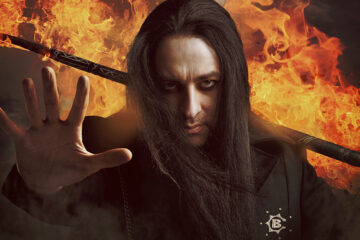
En los últimos años han aparecido distintos proyectos que revisitan los repertorios y las sonoridades de la música medieval desde enfoques actuales. Formada por Noxifer (Gaita)
y Umbrae (Davul), Tabernis se adscribe a esta corriente, desde una propuesta instrumental centrada en la gaita y la percusión. Seasons of the Dark Hive será el primer LP del dúo, que se publicará a través de Napalm Records el 24 de abril, tras un EP inicial con el que ya habían comenzado a circular por festivales europeos. Conversamos con ellos sobre la génesis del proyecto y sus dinámicas de creación.
Fotos: Ingmar Wein
Buenas, ¿qué tal estáis? La verdad es que la imagen del proyecto llama mucho la atención y despierta bastante curiosidad. Vamos al comienzo… antes de TABERNIS, ¿de dónde venís musicalmente? ¿Formabais parte de otros proyectos o trayectorias distintas?
Hola, ¡todo está bien! Gracias por la entrevista.
La música y el arte han formado parte de nuestro ADN desde muy jóvenes. Hemos explorado muchos horizontes a lo largo de los años. Nuestras raíces están en el rock, folk, metal y hardcore, pero estamos abiertos a todos los estilos y épocas. Siempre hay algo interesante que aprender.
Tabernis es diferente de nuestras antiguas bandas por la amplitud de su universo. Este proyecto va más allá de ser solo un grupo musical. Es un concepto artístico global, más libre y más desligado.
Vuestra música se inspira en el mundo medieval, y dentro de ese imaginario aparece también la colmena y la apicultura. El zumbido colectivo de las abejas, la cera en los rituales o incluso su relación con instrumentos tradicionales sugieren una conexión muy interesante con el sonido. ¿Es la colmena también una especie de metáfora musical dentro del proyecto?
La colmena encarna la comunidad. Representa un ideal de vida colectiva y define el ecosistema alrededor de Tabernis. Público, técnicos, músicos: formamos un grupo que trabaja con un objetivo común. Nuestro objetivo es encontrar una esencia artística compartida. Queremos vibrar, trabajar y zumbar juntos. Este enfoque resalta el equilibrio natural y la cohesión.
La colmena es una energía más que una simple metáfora musical. El bordón de la gaita y el violonchelo durante los conciertos nos recuerda físicamente esa vibración, el zumbido de una colmena.
Tabernis apuesta por una instrumentación muy esencial, donde el lenguaje musical se construye prácticamente en el diálogo entre gaita y percusión ¿Cómo se desarrolla ese intercambio creativo entre vosotros? Y, ligado a esto, ¿cómo surgió el concepto de vuestro primer álbum, Seasons of the Dark Hive?
Queríamos llevar el uso de nuestros dos instrumentos al máximo. La clave está en la escucha y la simbiosis, lo que hace que el intercambio sea naturalmente eficiente. Construimos los temas manteniendo una visión global. La principal dificultad de componer solo con dos instrumentos es variar las estructuras y los ritmos. Para mantener la espontaneidad, componemos rápido y evitamos la primera idea, que a menudo es demasiado tradicional. Esto aporta un toque diferente.
El proyecto es reciente; las primeras ideas datan de junio de 2024. Seasons of the Dark Hive fue compuesto para ofrecer suficiente “miel” a nuestro público y asegurar conciertos de duración generosa. Hemos notado que estamos guiados por las estaciones en nuestros ciclos musicales.
En el lore, creamos estaciones de la “Dark Hive” que corresponden al ciclo de una colmena; de ahí nace el concepto. Toda esta información está en el libreto del álbum, especialmente en la edición de coleccionista.
En el disco aparecen patrones rítmicos que generan una sensación hipnótica, pero al mismo tiempo el álbum alterna momentos más rápidos con pasajes atmosféricos. ¿Es intencionada esta forma de componer? Y teniendo en cuenta que vuestra música dialoga con una tradición muy antigua, pero se presenta en un contexto cultural contemporáneo, ¿cómo decidís cuándo mantener la austeridad de gaita y percusión y cuándo introducir otros elementos sonoros que amplían el paisaje del disco?
La gaita aporta el lado tradicional con melodías típicas. El sonido del davul suele seguir esa línea. Modernizamos los arreglos con un enfoque proveniente del rock. El davul se toca con un espíritu grunge, pop, rock, hardcore o metal, según lo que resulte coherente.
Nos gusta la repetición para crear un paralelismo con el trabajo de las abejas. Aunque tienen varias funciones durante su vida, algunas tareas son redundantes. La repetición permite especializarse y convertirse en experto. Entramos en nuestra colmena y marcamos el ritmo del trabajo.
Finalmente, ponemos nuestra propia energía en las canciones. A veces nos permitimos ser totalmente tradicionales. Respetamos enormemente las tradiciones.
«Sanctus» abre el ábum como una especie de invocación que introduce al oyente en el universo de Seasons of the Dark Hive. También encontramos reinterpretaciones de material medieval como «Mel Obscurum (Palästinalied)», «Apem Vidi (Ai Vist Lo Lop)» o «Hive Dance (Bransle du maître de la maison)» (he visto además videos anteriores al álbum en YouTube). Como single de presentación escogisteis «Tenebrae» y, personalmente, uno de los temas que más me ha gustado es «Florenscentia». Habladme un poco de estas canciones.
«Sanctus» actúa como una incantación y un comienzo. Venimos del santuario. El tema empieza de forma progresiva: la colmena despierta y la Dark Hive llega.
Las canciones tradicionales son un homenaje a nuestra herencia medieval. Conservamos la huella y la energía de nuestros ancestros. Estos temas han sido interpretados muchas veces. Nosotros los interpretamos aportando una parte de nosotros mismos. Modificamos una pieza para hacerla nuestra, sin pretender mejorarla.
«Tenebrae» fue compuesta rápidamente, pero con un método diferente. La atmósfera nació únicamente del davul. La gaita se añadió después, una vez que el ritmo y la estructura estaban terminados. El enfoque del davul es grunge. Queríamos imaginar qué ofrecería una banda medieval con este universo.
«Florenscentia» tiene una historia distinta. Partimos de un ritmo melancólico de gaita. El davul aporta intensidad para evitar que el conjunto resulte pesado. El violonchelo añade efectos a este tema. El nombre proviene del latín y significa florecimiento, el acto de florecer o de alcanzar algo. Es un momento épico.
Cuando trabajáis con material de origen medieval, ¿os interesa más su dimensión histórica o la posibilidad de que siga funcionando como música viva en el presente? Y dentro de ese proceso, ¿qué papel juega la intuición frente a decisiones más reflexivas o basadas en la investigación?
La dimensión histórica y el misterio que contiene nos conmueven. Estas melodías llevan consigo una energía antigua. No intentamos modernizar el estilo medieval. Tocamos esta música porque representa un arte popular y lejano. Imaginar las emociones que han sentido los oyentes a lo largo de los siglos nos produce vértigo.
Intentamos hacer emerger el alma de la música. El folk nos atrae por su energía y sus emociones. Actúa como un acceso al pasado. Nuestro enfoque no se basa en una interpretación histórica estricta. Exploramos una idea: ¿y si nuestra cultura actual y la antigua fueran una sola? (Que en realidad lo son).
La intuición guía nuestro trabajo. Nos permite mantenernos conectados con esa energía sin perdernos en un análisis rígido.

En un disco con quince piezas, la selección final debió de ser importante. ¿Cómo decidís qué composiciones entran finalmente en el álbum y cuáles se quedan fuera? Y dentro de ese proceso, ¿os ocurre que la música os lleva a veces hacia direcciones que no habíais previsto al principio?
Nos quedamos con todos los temas. Durante el proceso de composición, grabamos nuestras ideas directamente. Modificamos una parte si el resultado carece de interés o no fluye con naturalidad. El davul es el que más se adapta en este proceso.
Nos preguntamos si cada elección representa la mejor opción para nosotros en ese momento. Nuestra reflexión no gira en torno a gustar o no. Intentamos dar el máximo. Inyectamos toda nuestra alma en cada tema. Esta sinceridad nos lleva a veces a sonidos inesperados, sin restricciones.
Para mantener ese aspecto espontáneo, primero creamos una pista guía en directo. Tocamos sin metrónomo, dejándonos cierta libertad. Después grabamos la versión final basándonos en esa pista guía.
En un proyecto como Tabernis, donde el sonido está muy ligado a lo físico de los instrumentos, ¿cómo influye el gesto corporal en la construcción de las piezas? Y cuando esa música llega al público, ¿qué aspectos creéis que se perciben de forma diferente según el contexto en que se escucha? ¿en solitario, en concierto o dentro de un festival?
Tocar en Tabernis requiere una implicación física importante. Las pausas son escasas y es difícil detenerse durante la actuación. Como somos un dúo, adaptamos el repertorio para alternar entre momentos intensos y pasajes más calmados. Esta organización nos proporciona un ligero descanso y aporta alivio a nuestra interpretación.
La escucha individual favorece la interiorización. Permite sentir emociones personales. El oyente puede reflexionar o entrar en una especie de estado meditativo. En un concierto o festival, la atmósfera se vuelve más festiva y cercana. Sin embargo, la atmósfera de la Dark Hive sigue estando presente y es compartida por todo el público
Ya habéis tenido la oportunidad de presentar vuestra música en festivales y en grandes escenarios. ¿Cómo se transforma el proyecto cuando pasa del estudio al directo? Y a partir de ahí, ¿qué tipo de experiencia o relación con el público buscáis crear en vuestros conciertos?
La historia de Tabernis es única. Pasamos de las redes sociales al estudio y luego al escenario. Al principio compartíamos vídeos cortos e improvisaciones. Gracias al rápido apoyo de nuestra “colmena”, grabamos una demo para hacer oficial el proyecto. El estudio sigue siendo un espacio íntimo. Grabamos en casa con equipos sencillos, lo que nos obliga a ser creativos con la grabación y la mezcla del sonido.
Para llevar este universo al escenario, nos rodeamos de personas con una gran apertura artística. En 2026, el equipo que nos acompaña entiende perfectamente el concepto.
Durante los conciertos, nos comunicamos con el público manteniendo el espíritu de nuestros vídeos y nuestras voces características. Buscamos acercarnos a la gente a nivel energético. El objetivo es compartir un momento juntos. También intentamos hacer siempre cosas originales: este año, una catapulta lanzará regalos al público, y contamos con un ritual de ofrendas para los asistentes.
Mirando hacia atrás al momento en que empezasteis este proyecto, ¿qué cosas de vuestra forma de trabajar o de entender la música han cambiado más desde entonces?
Al principio estábamos en un estado de asombro y urgencia. Nos dejábamos llevar por la novedad. Hoy trabajamos con más calma y serenidad. Hemos aprendido a rodearnos mejor y a pensar de forma más sencilla.
Nuestra visión de la composición y del trabajo musical sigue siendo la misma. Sin embargo, ahora entendemos mejor la industria musical. Al inicio, la presión nos hacía temer que todo pudiera detenerse de repente.
Finalmente, volvemos a la esencia misma del proyecto. Continuamos nuestro camino con una visión clara. Esta experiencia nos aporta una mayor tranquilidad.
Para terminar: después de completar este primer álbum, ¿qué preguntas quedan abiertas en Tabernis de cara al futuro?
Hemos escrito la primera página de nuestra historia. Esta narrativa se desarrolla a través de la música y del lore presente en la edición de coleccionista. Continuaremos construyendo el universo de Tabernis y la Dark Hive. Una de nuestras ideas es revelar la historia a lo largo de los años y de las temporadas de conciertos.
Actualmente, estamos sentando las bases. Estamos presentando a los Apicultores, a los Monjes Oscuros y este universo de fantasía. El futuro aún está por definirse. Escribiremos la siguiente parte de estas aventuras el próximo año.
¿Os gustaría dejar un mensaje a vuestro público español?
Gracias a España. Vivimos uno de nuestros mejores conciertos en el Resurrection Fest de 2025. Fue una de las primeras actuaciones en escenario de Tabernis. Este momento quedará grabado en la historia de la colmena.
¿Y si el punto de partida de la Dark Hive estuviera en España?
Seguid siendo tan humanos y espontáneos. Enviamos todo nuestro cariño al pueblo español. ¡Nos vemos pronto!
English
In recent years, a number of projects have emerged that revisit the repertoires and sonic textures of medieval music from contemporary perspectives. Former by Noxifer (Bagpipe) and Umbrae (Davul), Tabernis aligns with this current through an instrumental approach centered on bagpipes and percussion. Seasons of the Dark Hive, due out on April 24 via Napalm Records, will be the duo’s first LP, following an initial EP that had already taken them to several European festivals. We spoke with them about the project’s origins and their creative dynamics.
Fotos: Ingmar Wein
Hi, how are you? The visual identity of the project is really striking and immediately sparks curiosity. To start from the beginning: before Tabernis, where do you come from musically? Were you involved in other bands or musical paths before this project?
Hi, everything is fine! Thank you for the discussion.
Music and art have been part of our DNA since we were very young. We explored many horizons over the years. Our roots are in rock, folk, metal, and hardcore, but we are open to every style and era. There is always something interesting to learn.
Tabernis is different from our old bands because of its vast universe. This project goes beyond being just a music group. It is a global artistic concept, more free and more detached.
Your music draws inspiration from the medieval world, and within that imagery the beehive and beekeeping also appear. The collective buzzing of bees, wax used in rituals, and even their symbolic relationship with traditional instruments suggest a fascinating connection with sound. Is the beehive also a kind of musical metaphor within the project?
The hive embodies the community. It represents an ideal of collective life and defines the ecosystem around Tabernis. Audience, technicians, musicians: we form a group working with a common goal.
Our goal is to find a shared artistic essence. We want to vibrate, work, and buzz together. This approach highlights natural balance and cohesion.
The hive is an energy rather than just a musical metaphor. The drone of the bagpipes and the cello during concerts physically reminds us of this vibration, the buzzing of a beehive.
Tabernis works with a very essential instrumentation, where the musical language is built almost entirely through the dialogue between bagpipes and percussion. How does that creative exchange between you develop? And connected to that, how did the concept of your first album, Seasons of the Dark Hive, come into being?
We wanted to push the use of our two instruments to the maximum. The key lies in listening and symbiosis, which makes the exchange naturally efficient. We build the tracks while keeping an overall vision. The main difficulty of composing with only two instruments is varying the structures and rhythms. To stay spontaneous, we compose quickly and avoid the first idea, which is often too traditional. This brings a different touch.
The project is recent, the first ideas date back to June 2024. Seasons of the Dark Hive was composed to offer enough honey to our audience and to ensure concerts of a generous length. We notice that we are driven by the seasons in our musical cycles.
In the lore, we created «Dark Hive» seasons that match the cycle of a beehive; this is the origin. All this information is in the album booklet, and specifically in the lore of the collector’s edition.
The album features rhythmic patterns that create a hypnotic feeling, yet it also alternates very rhythmic moments with more atmospheric passages. Is this contrast intentional in the way you compose? And considering that your music engages with a very ancient tradition while being presented in a contemporary cultural context, how do you decide when to maintain the austerity of bagpipes and percussion and when to introduce other sonic elements that expand the album’s soundscape?
The bagpipes bring the traditional side with typical melodies. The sound of the davul generally follows this path. We make the arrangements modern with an approach coming from rock. The davul is played with a grunge, Pop, rock, hardcore, or metal spirit, depending on what stays coherent.
We like repetition to create a parallel with the work of bees. Even if they hold several functions during their life, some tasks are redundant. Repetition allows one to specialize and become an expert. We enter our hive and we set the rhythm for the work.
Finally, we put our own energy into the songs. From time to time, we allow ourselves to be totally traditional. We respect traditions enormously.
“Sanctus” opens the album almost like an invocation, introducing the listener to the universe of Seasons of the Dark Hive. The record also includes reinterpretations of medieval material such as “Mel Obscurum (Palästinalied)”, “Apem Vidi (Ai Vist Lo Lop)”, and “Hive Dance (Bransle du maître de la maison)” (I’ve also seen some earlier videos on YouTube that predate the album). As the lead single you chose “Tenebrae,” and personally one of the tracks I enjoyed the most is “Florenscentia.” Could you tell me a bit more about these pieces?
«Sanctus» acts as an incantation and a beginning. We come from the sanctuary. The track starts progressively: the hive wakes up and the Dark Hive arrives.
The traditional songs are a tribute to our medieval heritage. We keep a trace and the energy of our ancestors. These titles have been played many times. We interpret them by bringing a part of ourselves. We change a track to make it our own without pretending to improve it.
«Tenebrae» was composed quickly, but with a different method. The atmosphere was born from the davul alone. The bagpipe was added to the rhythm and structure once finished. The approach to the davul is grunge. We wanted to hear what a medieval band would offer with this universe.
«Florenscentia» has a different story. We based it on a melancholic bagpipe rhythm. The davul plays with intensity to avoid making the whole thing feel heavy. The cello brings effects to this track. The name comes from Latin and means flowering, the act of blooming or accomplishing something. It is an epic moment.
When you work with material of medieval origin, are you more interested in its historical dimension, or in the possibility that it can still function as living music in the present? And within that process, what role does intuition play compared to more reflective or research-based decisions?
The historical dimension and the mystery it contains touch us. These melodies carry an ancient energy. We do not try to modernize the medieval style. We play this music because it represents a popular and distant art. Imagining the emotions felt by listeners over the centuries gives us vertigo.
We try to bring out the soul of the music. Folk music attracts us through its energy and emotions. It acts as an access to the past. Our approach is not about historical interpretation. We explore an idea: what if our current culture and the old one were one? (Which is the case?)
Intuition guides our work. It allows us to stay connected to this energy without getting lost in a rigid analysis.
On an album with fifteen tracks, the final selection must have been an important step. I also get the sense that there may have been more material behind it. How do you decide which compositions ultimately make it onto the record and which ones are left out? And during that process, does the music sometimes lead you in directions you didn’t initially expect?
We kept all the tracks. In the composition work, we record our ideas directly. We modify a part if the result lacks fun or does not flow freely. The davul is adapted most often.
We ask ourselves if each choice represents the best option for us at the moment. Our reflection is not about pleasing or not. We try to give our maximum. We inject our whole soul into each track. This sincerity leads us sometimes to unexpected sounds without restrictions.
To keep this spontaneous aspect, we create a live guide track first. We play without a metronome while leaving ourselves some freedom. We then record the final version based on this guide track.
In a project like Tabernis, where the sound is so closely tied to the physical nature of the instruments, how does bodily gesture influence the construction of the pieces? And when this music reaches the audience, what aspects do you think are perceived differently depending on the context in which it is heard, alone, in concert, or within a festival setting?
Playing in Tabernis requires significant physical investment. Breaks are rare and it is difficult to stop during the performance. Since we are a duo, we adapt the setlist to alternate between intense moments and calmer passages. This organization grants us a light rest and brings relief to our performance.
Individual listening encourages internalization. It allows one to feel personal emotions. The listener can reflect or enter a form of meditation. In a concert or festival, the atmosphere becomes festive and friendly. However, the Dark Hive atmosphere remains present and shared by the entire audience.
You have already had the chance to present your music at festivals and on large stages. How does the project transform when it moves from the studio to the live setting? And from there, what kind of experience or relationship with the audience are you aiming to create during your concerts?
The story of Tabernis is unique. We went from social media to the studio, then to the stage. At the start, we shared short videos and improvisations. Because of the quick support from our hive, we recorded a demo to make the project official. The studio remains an intimate space. We record at home with simple equipment, which forces us to be inventive with sound recording and mixing.
To bring this universe to the stage, we surround ourselves with people who have great artistic openness. In 2026, the team accompanying us understands the concept perfectly.
During concerts, we communicate with the audience while keeping the spirit of our videos and our typical voices. We seek to get closer to people energetically. The goal is to share a moment together. We also always try to do original things: this year, a trebuchet will send goodies into the crowd, and we have a ritual with offerings for the public.
Looking back to the moment when you first started this project, what aspects of your way of working or understanding music have changed the most since then?
At the beginning, we were in a state of wonder and urgency. We let ourselves be carried by the novelty. Today, we work with more calm and serenity. We have learned to surround ourselves better and to think more simply.
Our vision of composition and musical work remains the same. However, we understand the music industry better now. At the start, the pressure made us fear that everything would stop suddenly.
Finally, we return to the very essence of the project. We continue our path with a clear vision. This experience brings us greater peace of mind.
Finally: after completing this first album, what questions does the Tabernis project leave open for you as you look toward what comes next?
We have written the first page of our story. This narrative develops through the music and the Lore found in the collector’s edition. We will continue to build the universe of Tabernis and the Dark Hive. One of our ideas is to reveal the story over the years and concert seasons.
Currently, we are laying the foundations. We are presenting the Beekeepers, the Dark Monks, and this fantasy universe. The future is yet to be defined. We will write the next part of these adventures next year.
Would you like to say something to your Spanish listeners?
Thank you to Spain. We experienced one of our best concerts at Resurrection Fest in 2025. It was one of the first stage appearances for Tabernis. This moment will stay engraved in the history of the hive.
What if the starting point of the Dark Hive was in Spain? Keep being so human and spontaneous. We send all our kindness to the Spanish people. See you soon!