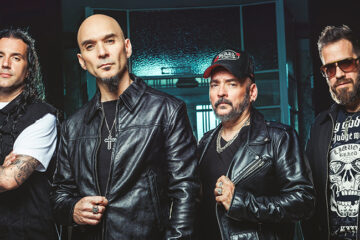
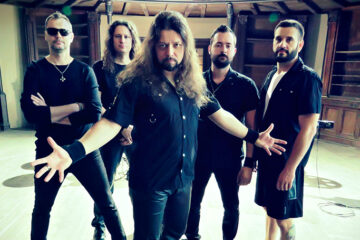
Hasta Grecia viajamos para conocer Evolution, el nuevo álbum de la veterana banda Acid Death, un trabajo que propone un trayecto por la evolución humana traducido en metal extremo, virtuosismo instrumental y una narración cargada de metáforas. Desde la escena helena, hablamos con el grupo sobre el nacimiento del trabajo y el peso que tiene en su legado.
Castellano
Antes de entrar en detalles, debo decir que el álbum me sorprendió gratamente. Aunque Evolution no es un álbum conceptual, gira en torno al tema de la evolución humana abordado desde diferentes perspectivas. ¿Qué importancia tuvieron la interpretación y la emoción a la hora de dar forma a este registro, en lugar de una representación fiel o lineal de la historia? ¿Describirías la Evolución como una lectura emocional de la historia, una reflexión filosófica o un equilibrio entre ambas?
Antes que nada, gracias por vuestras palabras. Sí, Evolution ya está aquí y, de hecho, es nuestro octavo álbum. Se trata de un disco temático, no conceptual, que gira en torno a la evolución humana a través de las distintas eras. Podríamos decir que es una lectura emocional de la Historia y, al mismo tiempo, un análisis filosófico. Intentamos abordar estos temas con un único lenguaje, capaz de transmitir mensajes concretos y despertar diferentes emociones en el oyente. Creemos que lo hemos conseguido.
Muchos álbumes se estructuran como narrativas lineales, pero en tu caso optaste por un mosaico de episodios. ¿Por qué crees que la historia de la humanidad se comprende mejor a través de fragmentos que de una línea temporal cerrada? Tras el diálogo entre humanos e IA en “Singularity”, “Coded Dominion” introduce un nuevo tipo de intercambio, esta vez entre melodismo progresivo y dinamismo extremo, a la vez que plantea la cuestión de quién controla a quién. ¿Consideraste alguna vez usar voces adicionales o entidades no humanas para representar diferentes etapas tecnológicas, o preferiste reservar ese recurso únicamente para la apertura del álbum?

En realidad, el álbum comienza con dos A/I, en los que uno descubre la identidad del otro. «Coded Dominion» habla del progreso tecnológico y refleja con claridad lo que decimos hoy sobre la evolución de la A/I… Fue la forma en que preferimos empezar este álbum. Tienes razón, estamos en camino de un mosaico de episodios, una forma totalmente diferente de una línea temporal cerrada. La primera idea era esa línea temporal, pero decidimos hacerlo de una manera más libre y accesible para el público. Cada canción se puede reproducir por separado y el fan, al tener la letra a mano, tiene toda la información relacionada con la canción sin perder ningún elemento del álbum.
El álbum tiene un peso rítmico mayor que trabajos anteriores, menos exhibicionista técnicamente pero más contundente. ¿Sentisteis la necesidad de “pisar tierra” musicalmente para hablar de algo tan humano como la evolución?
Bueno, cualquiera que escuche el álbum tiene una vía libre para comprender el significado de las canciones. Los mensajes, por supuesto, tienen su significado, pero el fan que los escucha tiene la oportunidad de analizarlos, aceptarlos o rechazarlos. Existe la posibilidad de pensar: «Vale, estoy de acuerdo…», «No, esto está totalmente mal…» o incluso «¿De qué demonios estás hablando?». En cualquier caso, este puede ser un «juego» muy interesante para cualquiera que escuche el álbum.
Tras tantos años de carrera, ¿qué descubriste sobre tu propia forma de componer al trabajar con un concepto global? ¿El álbum reveló hábitos, peculiaridades u obsesiones que no habías notado antes?
Es curioso que sigamos trabajando del mismo modo que hace cinco o diez años. El hecho de que Acid Death mantenga la misma formación desde 2012 significa que nos conocemos muy bien y, lo que es más importante, sabemos cómo trabaja cada uno. En el caso de Evolution, las cosas fueron un poco diferentes, ya que Dennis Kostopoulos (guitarra solista) tuvo la idea de hacer un álbum temático y Kostas Alexakis (batería) propuso el tema central de ese trabajo. Dennis compuso la mayor parte de la música y yo escribí la mayoría de las letras, no porque los demás no quisieran hacerlo, sino porque encontré una fórmula que me funcionaba y podía gestionarla bien.
Todo fluyó también en el estudio: cuando entiendes cómo trabaja tu compañero, es más fácil completar las cosas y los resultados siempre terminan siendo interesantes.
«The Gateway to Knowledge» cuenta con la participación de Kelly Shaefer y James Murphy. ¿Cómo encajaron estos invitados en una pieza con un concepto tan específico y qué os atrajo de contraponer esos dos extremos dentro de la evolución humana?
Para nosotros fue un sueño hecho realidad contar con estas dos personalidades en la grabación. Todo comenzó gracias a nuestro webmaster y al propietario del webzine griego Altars of Metal, Dimitris Petrakis, quien había entrevistado tanto a Kelly como a James. Él fue quien nos lanzó la idea diciéndonos: “¿por qué no?”. Primero contacté con Kelly R. Shaefer, que estaba de gira con ATHEIST, y pensé: “estará demasiado ocupado como para responder… pero vamos a intentarlo”. Me hizo muy feliz recibir su mensaje diciendo: “Sí, me gusta el tema, envíame también las letras y las líneas vocales y dame algo de tiempo para volver de la gira”. Su voz encajó a la perfección con la mía, como si hubiera dos personajes vocales distintos dentro de la canción.
Con James ocurrió algo muy similar: estaba realmente entusiasmado con la parte del solo y dio el cien por cien en lo que grabó. Fue un gran honor para nosotros tener un pedazo del death metal de Florida concentrado en una sola canción y, lo más importante, que Kelly R. Shaefer y James Murphy toquen juntos por primera vez en un mismo tema… y que ese tema sea “The Gateway to Knowledge”.
Mis temas favoritos del álbum se mueven entre «Rise of Salvation» y el corte final «Forging the Chains»: el primero por lo pegadizo y el segundo por su nivel impresionante. Pero ¿qué canción crees que representa mejor a la banda? ¿Tienes algún tema favorito dentro del disco?
Mmm… esa es una pregunta realmente —REALMENTE— difícil. Personalmente, no puedo decir “mi favorita es esta” o “aquella”… y lo mismo ocurre con el resto de la banda. ¡Las amamos todas!
Grabasteis en varios estudios, entre ellos el legendario Sierra Studios. ¿Crees que el “espíritu” de ciertos lugares influye en la interpretación, o es un mito romántico al que los músicos se resisten a renunciar?
Evolution fue grabado en tres estudios diferentes. Comenzamos con la batería en Sierra Studios de Atenas, un lugar de grabación con casi medio siglo de historia musical, por el que han pasado nombres como Demis Roussos, Vangelis Papathanasiou, Iced Earth, Ofra Haza y muchos, muchos más. Las guitarras se grabaron en SymbolicP Studios, con Kostas Papadopoulos —guitarrista de Yoth Iria— a cargo de la mesa de mezclas. El bajo, las voces, la mezcla y la masterización se realizaron en nuestro propio estudio, S.I.A. Recordings.
Por supuesto, el espíritu de algunos lugares es mágico y puede darte un gran impulso cuando estás en plena fase creativa. Para algunos esto puede parecer un mito, pero en realidad es algo esencial cuando creas. No es lo mismo grabar en una habitación vacía, con nada más que una tarjeta de sonido y un ordenador, que hacerlo en un estudio profesional con todo el equipamiento necesario, un ingeniero de sonido profesional y, lo más importante, la sensación de que allí se han creado decenas de discos fundamentales.
En la portada, la figura humana parece ser al mismo tiempo creadora y creada, una idea que el artista John Nakos lleva a un terreno muy sugerente. ¿Podrías hablarnos de esta imagen y de cómo encaja dentro del concepto general del álbum?
John Nakos es el diseñador gráfico con el que trabajamos desde 2012, cuando salió Eidolon, el primer álbum tras la reunión de la banda. Su idea para el arte de Evolution fue crear una figura humana que está “ciega” mientras intenta cincelar su propio mundo. Ese planteamiento encajó perfectamente con lo que teníamos en mente. Intentamos hacer de nuestro mundo un lugar mejor… pero ¿tenemos realmente los ojos abiertos para ver lo que estamos haciendo?
Vuestra música siempre ha incorporado elementos de jazz, fusión e incluso texturas étnicas. ¿Crees que aquí funcionan como “ecos ancestrales” dentro de una obra que habla precisamente de los orígenes? ¿Y cómo os afecta —si es que os afecta— saber que los seguidores que os acompañan desde los años 90 esperan encontrar en cada álbum algún reflejo de ese sonido primigenio?
Tienes razón: los elementos de jazz y fusión están presentes en nuestra música desde 1996, cuando empezamos a trabajar en el álbum Pieces of Mankind. En aquellos años, me atrevería a decir que esos elementos eran más evidentes que hoy en día. Fuimos la primera banda de Grecia en ser descrita como “Progressive Death Metal” en aquella época. Somos conscientes de que los fans esperan encontrar estos matices en cada nuevo álbum, y en Evolution también están presentes, aunque de una forma más enfocada al death metal. Al fin y al cabo, somos una banda de death metal y tratamos de ser muy cuidadosos al incorporar estos elementos en este estilo. Son importantes para nosotros, sin duda, pero al mismo tiempo la música debe tener cohesión y, sobre todo, resultar interesante para un fan del death metal.
El metal extremo suele centrarse en el apocalipsis. Vosotros, en cambio, elegís la evolución. ¿Crees que el metal necesita más obras que miren hacia el futuro en lugar de enfocarse únicamente en la destrucción?
Las letras son una parte realmente importante de cada grabación; esa es nuestra forma de verlo. En nuestro caso, siempre prestamos mucha atención a lo que decimos en ellas y, en Evolution, sí, preferimos centrarnos en el tema que atraviesa el álbum. Hablar de destrucción puede ser interesante, pero no hacerlo únicamente de eso. Imagina un disco que repite los mismos riffs de principio a fin… no creo que eso resulte interesante para la mayoría de la gente.
El título del álbum es muy directo: Evolution. Si tuvieras que resumir la evolución de Acid Death desde 1989 hasta hoy en una sola palabra, ¿cuál sería? (No vale repetir “evolución”).
Una sola palabra: ¡progreso! Sí. Para nosotros, que empezamos en 1989 como una banda típica de death/thrash y hemos llegado a ser lo que somos hoy, la palabra “progreso” es la más adecuada.
Tras trabajar con un concepto tan amplio, ¿tenéis pensado continuar por la vía conceptual en futuros discos o preferís alternar entre trabajos temáticos y otros más libres?
La verdad es que no lo sabemos. Evolution fue un experimento para nosotros y, hasta ahora, los comentarios que estamos recibiendo son más que positivos. Así que sí… ¿por qué no? Podríamos repetir la experiencia en el futuro con otro tema.
A la hora de llevar un álbum tan atmosférico y narrativo al directo, ¿cómo lo trasladáis sin perder su esencia? ¿Habrá elementos visuales, intros extendidas o un planteamiento distinto del escenario? ¿Tenéis fechas confirmadas? ¿Vendréis a España?
Comenzamos las fechas de Evolution en directo el 24 de enero. Tenemos tres conciertos programados en Grecia y habrá más hasta el verano. La gran idea para nosotros es presentar el álbum completo sobre el escenario, tal y como es, incluyendo las intros y preludios, y llevando todo el arte al directo. Es un plan ambicioso y ya hemos empezado a trabajar en ello.
Además, ¡ir a España es un sueño para nosotros! Así que cualquier sugerencia será más que bienvenida.
Gracias por la entrevista y por vuestro tiempo. ¿Hay algo que os gustaría añadir para los lectores?
Nos gustaría agradecer a Metal Hammer España esta oportunidad. Sí, Acid Death está aquí y Evolution es un álbum para todos vosotros. ¡Dadles una oportunidad!
English
We travelled all the way to Greece to discover Evolution, the new album by veteran band Acid Death — a work that traces a journey through human evolution, translated into extreme metal, instrumental virtuosity and metaphor-laden storytelling. From the Hellenic scene, we spoke with the band about the album’s origins and the weight it carries within their legacy
Before getting into the details, I must say the album pleasantly surprised me. Although Evolution is not a conceptual album, it revolves around the theme of human evolution approached from different perspectives. How important was interpretation and emotion in shaping this record, rather than a faithful or linear representation of history? Would you describe Evolution as an emotional reading of history, a philosophical reflection, or a balance between both?
At first thank you for your good words! Yes, Evolution is here and actually it is our 8th album. It is a thematic album –not a concept one- that has to do with Human Evolution through the Ages. We can say that of course it is an emotional reading of History and the same time a philosophical analysis. We tried to approach the related topics with single language that can give specific messages and create various emotions to the audience. We thing we made it.
Many albums are structured as linear narratives, but in your case you opted for a mosaic of episodes. Why do you think the history of humanity is better understood through fragments rather than a closed timeline? After the dialogue between human and AI on “Singularity,” “Coded Dominion” introduces a new kind of “exchange,” this time between progressive melodicism and extreme dynamism, while also raising the question of who controls whom. Did you ever consider using additional voices or non-human entities to represent different technological stages, or did you prefer to reserve that resource solely for the album’s opening?
Actually the album starts with two A/Is that the one discovers other’s identity. “Coded Dominion” talks about technological progress and gives a good point of what we say today about the A/I evolution… It was the way that we preferred to start this album. You are right on that, we are on the way of a mosaic of episodes, totally different way of a closed timeline. The first thought was that timeline but we decided to do it in a more free and “audience-friendly” way. Any track can be played separately and the fan, having the lyrics at hands, has all the related track info without losing any element of the album.
The album has a stronger rhythmic weight than previous works. Did you feel the need to “ground” yourselves musically in order to speak about something as human as evolution? When you deal with themes like AI, social decay, or spirituality, are you concerned that the audience might interpret your messages literally? Or do you prefer ambiguity to open up space for reflection?
Well, there is a free way that anyone who listens to the album to understand the meanings of the songs. The messages of course have their meaning but the fan who listens to them has the opportunity to analyze then, to accept them or to refuse them. There is the opportunity to think that “ok, I agree…” or “no, this is totally wrong…” or even “what the f**k are talking about?” In any case this can be a very interesting “game” for anyone who will listen to the album.
After so many years in your career, what did you discover about your own way of composing when working with a global concept? Did the album reveal habits, quirks, or obsessions you hadn’t noticed before?
It is so strange that we work on the same way as we used to work 5 of 10 years ago. I mean being the same team from 2012 that Acid Death’s line up is stable means we know each-other well and most important we know how everyone of us works. It “Evolution” case things were a little different since Dennis Kostopoulos (lead guitars) had the idea of a thematic album and Kostas Alexakis (drums) had the topic of this thematic album. Dennis created most of the music and I wrote most of the lyrics, not because nobody else wanted to write but because I found a formula that worked for me and I could manage it.. Things worked fine also in the studio, you know, when you understand how your partner works it is easier to complete the things and the results are always interesting!
“The Gateway to Knowledge” features Kelly Shaefer and James Murphy. How did these guests fit into a piece with such a specific concept, and what interested you about juxtaposing those two extremes in human evolution?
It was a Dream Of Life for us to have both these personalities in this recording! Things started from or webmaster and owner of a Greek webzine, Altars Of Metal, Dimitris Petrakis, who had interviewed both, Kelly and James. He had the idea bu telling us “why not?” I contacted Kelly R Shaefer first, he was on tour with ATHEIST and I thought “too busy to get back…But let’s try”. I was more than happy to receive his message, “Yes, I like the track, please send me also the lyrics and the vocal lines and give me some time to return from the tour”. His voice fitted perfectly together with mine on a way like there are two vocal characters in the track. The same happened with James, he was really happy with the solo part and he gave his 100% on what he recorded. It was a bug honor to us to have a good piece of Florida’s Death Metal in one song and most important is tha both Kelly R Shaefer and James Murphy are playing for first time together in one song and this song us “The Gateway To Knowledge”.
My favorites on the album are somewhere between “Rise of Salvation” and the closing track “Forging the Chains”: one for how catchy it is and the other for its stunning level. But which song do you think represents the band best? Do you have a personal favorite on the album?
Hmmm…That’s a really –REALLY- difficult question! Personally no, I cannot say “My favorite one is this” or “that”… The same happens also with the rest of the band. We love all of them!
You recorded in several studios, including the legendary Sierra Studios. Do you believe the “spirit” of certain places influences performance, or is that a romantic myth musicians refuse to abandon?
“Evolution” was recorded at three separated studios. We started with drums that were recorded at Sierra Studios of Athens, it is a recording place with almost half a century of music history, with names like Demis Roussos, Vangelis Papathanasiou, Iced Earth, Ofra Haza and many-many more who have recorded there. Guitars were recorded at SymbolicP Studios with Yoth Iria’s guitarist, Kostas Papadopoulos, at mixing desk. Bass, vocals, mix and mastering took place at our own studio, S.I.A. Recordings. Of course the spirit of some places is magic and can give you a big “turn up” when you are at creation stage! For some this is a myth but actually it is a “must” when you create. Imagine to record in a single room with nothing around, just a sound card and a computer and to record in a professional studio with all the necessary hardware, a professional sound engineer and most important the feeling that there were dozens of important records that were out from this place…
On the cover, the human figure seems both creator and created—a concept that artist John Nakos brings into a very suggestive territory. Could you talk about this image and how it fits into the album’s overall concept?
John Nakos is the graphic designer we work with from 2012, when the first album after band’s reunion,“Eidolon” was out. His thought behind “Evolution” art was to create a human who is “blind” the same time that he tries to chisel his world. His idea fitted perfectly to what we had in our mind. We try to make or world better…But are our eyes open to see what we do?
Your music has always included elements of jazz, fusion, and even ethnic textures. Do you think these influences work here as “ancestral echoes” within a piece that speaks precisely about origins? And how does it affect you—if it affects you at all—to know that fans who have followed you since the ’90s expect to find in each album some reflection of that primordial sound?
You are right, Jazz and Fusion elements exist in our music from 1996 when we started working on “Pieces Of Mankind” album. Those years I dare say those elements were in a more clear way than today. We were the first band from Greece that was described as “Progressive Death Metal” back on those days. We are sure that the fans are waiting to find these elements in every new album, the same happens in “Evolution” but in a more “Death Metal” way. You know, we are a Death Metal band and we try to be very careful on adding these elements in Death Metal music. It is important for us of course but the same time music has to have a cohesion and most of all to be interesting for a Death Metal fan.
Extreme metal often focuses on the apocalypse. You choose evolution instead. Do you think metal needs more works that look toward the future rather than solely toward destruction?
Lyrics are a really important part of every recording. That’s our thought. In our case we always pay attention to what we say on lyrics and in “Evolution” yes, we prefer to focus on the related theme of the album. Talking about Destruction, yes, can be interesting but not talking only for that! Imagine a record that includes the same riffs from the beginning to the end…I don’t think this is interesting for most of the people out there.
The album title is very direct: Evolution. If you had to summarize the evolution of Acid Death from 1989 until today in a single word, what would it be? (You can’t reuse “evolution.”)
One word only. Progress! Yes. For us, who started as a typical Death/Trash band in 1989 and became what we are today the word “Progress” is the right one.
After working on such a broad concept, do you plan to continue down the conceptual path on future albums, or do you prefer alternating between thematic works and freer ones?
Really, we don’t know! “Evolution” was an experiment for us, until now the comments we accept are more than positive. Yes…why not! We can retry it in the future with another topic.
When you think about performing live, how do you translate such an atmospheric and narrative album without losing its essence? Will there be visual elements, extended intros, a different stage setup? Do you have confirmed live dates? Will you be coming to Spain?
We start the “Evolution Live Dates’ from January 24th. We have arranged three shows in Greece, there will be more until summer and the big idea for us it to present the entire album on stage as it is. Including the intros/preludes, having the entire art on stage etc. It is a big plan for us, we have already started working on it. Also! It is a Dream Of Life to come to Spain! So, any suggestions are more than welcome!
Thank you for the interview and for your time. Is there anything you would like to add for the readers?
We would like to thank Metal Hammer Spain for this opportunity. Yes, Acid Death is here and Evolution is an album for all of you out there. Give it an opportunity!