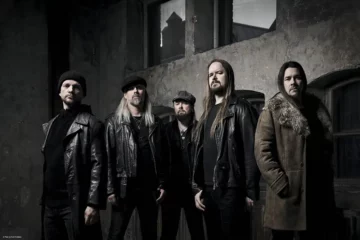
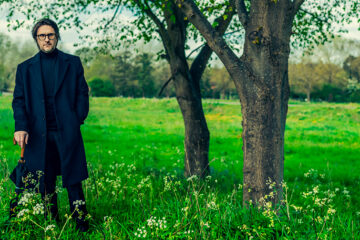
Pocos cantantes han pasado por tantas formaciones, participado en diferentes proyectos, colaboraciones de todo tipo e incluso una carrera en solitario como Jeff Scott Soto. Su discografía se cuenta por decenas y su voz pasa por ser una de las voces del rock. Uno de los proyectos más destacados en los que está involucrado en los últimos años es W.E.T. El grupo proviene de la asociación de sus miembros con otras bandas, Robert Säll & Andreas Passmark de Work of Art, Erik Mårtensson & Magnus Henriksson de Eclipse y el mismo Jeff Scott Soto de Talisman. Han sacado nuevo disco, Apex, y llamamos a California para saber más.
Castellano
Hola Jeff ¿cómo estás?
Todo bien, todo perfecto.
Aquí estamos para hablar de este nuevo álbum, Apex, pero contigo… podríamos hablar de bandas y proyectos musicales durante días. Pero primero, dejadme decir, que todo fan de la banda sabe que Wet seguramente no es la primera prioridad de los miembros. Todos tenéis vuestras propias bandas y proyectos, pero supongo que sentís algo especial por W.E.T porque encontráis tiempo para sacar nuevos discos y dedicar vuestro tiempo a componer y grabar. ¿W.E.T es algo especial o sólo otro proyecto para lanzar diferentes ideas musicales?
Te daré la respuesta de artista y la respuesta personal. La respuesta de artista es: «Oh, nos encanta la música, nos encanta trabajar juntos, nos queremos, estamos deseando hacer esto». Y la respuesta personal es: tenemos un contrato, tenemos que entregar un álbum. Jajajajaj
No, hablando en serio, es desde el primer día cuando la discográfica montó este proyecto, porque es propiedad de la discográfica. La idea de la discográfica no era crear un supergrupo, sino más bien un conglomerado de los tres grupos que realmente les gustaban en la discográfica, que eran Talisman, Work of Art y Eclipse. Y sólo querían ver qué pasaría si nos ponían en la misma habitación y reuníamos todas esas energías diferentes en un álbum. Y fue algo increíble hacer el primer álbum, y porque fue, no quiero decir exitoso… pero sí, fue exitoso.
Para mí, el éxito es cuando la gente se siente identificada con algo que estoy haciendo, cuando mucha gente se siente identificada con W.E.T. Así que para mí y para nosotros fue un éxito porque cualquier artista, cualquier músico, su objetivo en la vida es hacer llegar su música a la gente y que realmente la acepte. Y como esto fue aceptado en los mismos niveles, quizá incluso más que los grupos con los que ya estábamos, por supuesto que nos entusiasma poder seguir haciendo más música juntos. No es una excepción.
Sí, es difícil encontrar esas ventanas de oportunidad en las que todo el mundo no está tan ocupado como para que podamos centrar nuestras energías en las nuevas canciones, pero también tenemos 365 días al año. Y a partir de ahí, en algún momento deberías ser capaz de encontrar el tiempo necesario para poner todos los huevos en la misma cesta y crear música.

Pues definitivamente hay química independientemente sea o no un proyecto auspiciado por una discográfica. Hay buenos discos y canciones. Lo preguntaba porque forzar según qué ideas, proyectos o miembros no siempre debe dar buenos resultados.
Bueno, supongo que en cierto modo…, no nos estoy comparando con ellos, porque obviamente son una gran banda. Han hecho una gran música y siguen haciéndolo. Miro a W.E.T y es, es algo así como nuestro Def Leppard. Recuerdas los días o los años en que Def Leppard tardaba cuatro años en hacer un álbum. Y cuando el álbum salía era alucinante porque sonaba como si viniera del futuro.
Esta es una de las cosas que tenemos con W.E.T. Tenemos el lujo del tiempo. No hay prisa por hacer un álbum cada año porque tenemos que prepararnos para una gira cada año. Todo esto se basa en que lo hacemos cuando sentimos que está listo para hacerlo. Y a partir de ahí podemos tomarnos nuestro tiempo para hacer las canciones y crearlas, probando cosas diferentes.
No tienes ni idea de cuántas versiones diferentes probamos durante las grabaciones. No es como los álbumes normales. Estoy concentrado. Sé exactamente lo que quiero, lo que estoy haciendo. Pero con W.E.T, podemos terminar el disco y luego tres, cuatro meses después…, oh Dios mío, no me gusta como canté eso. Oh, tengo una nueva idea mejor que esa. O Eric dirá, hey chicos, se me ocurrió otra canción. Tiene que estar en el álbum. Tenemos que quitar esta canción. Todos esos pequeños cambios ocurren porque tenemos el tiempo para hacerlo.
Cuando normalmente no tendríamos ese lujo de tiempo si fuera un álbum anual contractual y un proyecto que tuviéramos que hacer cada año, ya sabes, en un momento determinado. Y esta es una de las razones por las que somos capaces de capturar el relámpago en la botella porque tenemos tiempo para sentarnos. Otra cosa en la que tengo que centrar las energías es que hacemos esta música para la gente que la ama. Ya no la hacemos para nosotros, porque ya sabemos lo que somos capaces de hacer. Pero la gente como tú sabe cómo debe sonar este sonido y este grupo. Así que tenemos que asegurarnos de ofrecer eso cada vez que hacemos un nuevo disco de W.E.T.
Entiendo perfectamente lo que dices de este lujo, porque hubo épocas en las que las bandas podían trabajar en un álbum durante dos o tres años. Ahora es completamente imposible.
Ya no estamos en esa época de discos hinchados de dinero e inflados de elementos. Los discos solían costar 350.000 dólares porque la banda vivía en un hotel y en el estudio creando noche y día durmiendo en el estudio. Ya no hacemos esas cosas porque los presupuestos ya no existen para eso. Simplemente no es una realidad.
Así que tenemos la nueva forma de hacer las cosas en la que todo el mundo tiene estudios en casa. Todo el mundo es capaz de compartir ideas e ir y venir. Para mi el resultado es el mismo porque podemos vivir con ello y sentarnos a escucharlo, a diferencia de cuando estamos en una habitación creando un álbum y se hace en un mes de convivencia en el estudio. Así que no hay más cambios en ese mes. Así que sí, podemos darnos el lujo de tomarnos nuestro tiempo y hacer las cosas hasta que sintamos que está bien, hasta que sintamos que está listo.

Alguna cosa buena debe tener la tecnología ya sea las grabaciones o esta conversación cara a cara tú en Los Angeles y yo en España.
Sí, por supuesto. Por supuesto. Y son los cambios que tienes que aprender y adaptarte, desde la forma en que la música se vende o incluso se compra o se escucha hoy en día. Tienes que adaptarte a todos los diferentes cambios. Pero en lo que a mí respecta, esto es un lujo que todos hemos soñado. Tener el lujo de grabar en casa en un nivel de calidad bueno y también hacer cosas como esta donde no tengo que volar a España sólo para sentarme en una habitación y hablar contigo.
Todas esas cosas eran sueños que teníamos cuando estábamos en los 80 y 90. Y ahora esta es la realidad. Así que hay que encontrar nuevas formas de adaptarse y hacer que la nueva tecnología trabaje para ti en lugar de trabajar en contra de ella. Porque hay tanta gente diciendo…, oh, echo de menos los viejos tiempos. Quiero cinta analógica. Estupendo. Hazlo. Eso te va a costar mucho dinero y te va a llevar mucho tiempo. Podemos estar enfocados a esto y aquello y aquello al mismo tiempo y ser capaces de enfocar nuestras energías cuando y donde las necesitemos.
Háblanos de cómo habéis trabajado para este disco, compartiendo archivos en Internet o os habéis reunido en algún momento en Estados Unidos o Suecia, quizá para las grabaciones, la producción… Cuéntanos un poco más, por favor.
Oh, W.E.T. se parece mucho a todo mi trabajo con artistas extranjeros desde los primeros días de Talisman, incluso hasta Axel Rudi Pell. Y lo mismo con la forma en que lo hacemos. Seguimos haciéndolo ahora de esta manera cuando aún podemos permitirnos el lujo.
Podríamos tener a mi banda viviendo al final de la calle, pero seguiríamos haciéndolo de esta manera en términos de hacerlo fácil y rápido. Si trabajo en algo, puedo enviarlo y mis colegas lo escucharán de inmediato en lugar de, oh, ¿a qué hora vas a estar aquí? Oh, llegas tarde. Vale, nos vemos mañana. Y ya no tienes que lidiar con eso. Así que, sí, personalmente me encanta esta forma de hacer las cosas.

¿Me equivoco o has participado en el proceso de mezcla de este álbum?
Yo no. Y estas son todas las entrevistas que estoy haciendo para este álbum. Necesito enfatizar y estoy realmente empujando y alabando a Eric Martensson porque ha sido una especie de supervisor. Es una especie de titiritero de todos los discos de W.E.T., si se me permite.
Él está haciendo las producciones que está haciendo. Reúne a los compositores con los que trabaja o con los que ellos trabajan para conseguir las canciones, las letras que él hace. Hace la maqueta de la canción, la canta en el estudio. Incluso si no son letras reales, es más la la la. Así que tengo mi mapa de exactamente lo que debería estar haciendo en las canciones.
Él las mezcla. Él lo masteriza. Él se ocupa del arte. Se ocupa de todo. Robert y yo, contribuimos. Pero Eric es más o menos el supervisor, asegurándose de que todo está sucediendo de la manera que está sucediendo. Y una de las razones por las que es porque confiamos en él. Confiamos en él porque tiene una actitud muy fuerte sobre cómo hay que hacer las cosas. Confiamos en él, le damos el balón y le dejamos que lo maneje.
Así que le doy un gran elogio a Eric por todo lo que hace por y con esta banda. Y sí, no fue la excepción aquí. Él fue el líder y se aseguró de que todo sucediera de manera oportuna como se supone que debe suceder. Las actuaciones de todos están ahí para que pueda mezclarlo y convertirlo en lo que estás escuchando hoy.
Te lo pregunto porque leí algo, y no recuerdo exactamente dónde, pero leí algo sobre que participaste en el proceso de mezcla.
No, quiero decir, cuando Eric mezcla los álbumes, por supuesto, nos lo envía a todos para que podamos opinar y poder decirle, “creo que el coro debería venir aquí” o “deberías utilizar otra línea aquí». Ya sabes, pequeñas cosas diferentes que podemos acotar y luego él las arregla. Pero no estamos en la misma habitación cuando está mezclando el disco. Y creo que funciona mejor porque lo último que quiere es que la gente le hable al oído cuando está tratando de conseguir lo que oye como mezcla final. Así que es mejor que le demos nuestras notas y que él pueda centrarse en conseguir lo que queremos oír sin que nosotros tengamos que estar allí.
English
Hi Jeff, how are you?
Okay, perfect
Here we are to talk about this new album, Apex, but with you… we could talk about bands and music projects for days. But first, let me say, every fan of the band knows that Wet surely is not the first priority of the members. All of you have your own bands and projects, but I guess you feel something special for Wet because you find time to release new albums and dedicate your time to composing and recording. Is W.E.T something special or just another project to release different musical ideas?
Let me give you the artist’s answer and let me give you the personal answer. The artist’s answer is, oh, we love the music, we love working with each other, we love each other, we look so forward to doing this. And then the personal answer is, we’re on contract, we have to deliver an album. Jajajajaj
No, to be seriously speaking though, it’s from day one when the label put this project together, because it is owned by the label. This was the idea of the label to make not a supergroup, but more of a conglomeration of the three acts that they really loved at the label, which were Talisman, Work of Art, and Eclipse. And they just wanted to see what would happen if they put us in the same room and we would actually put all those different energies together onto one album. And it was an amazing thing doing the first album, and because it was, I don’t want to say successful, yes, it was successful.
For me, success is when people resonate with something that I’m doing, when a lot of people resonate with Wet. So for me and for us, that was successful because any artist, any musician, their goal in life is to get their music to people and people to actually accept it. And because this was accepted in the same levels, maybe even more than the groups we were already with, of course we get excited to be able to continue doing more music together. And this is no exception.
Yeah, it’s difficult to find those windows of opportunity where everybody’s not so busy that we can focus our energies on the new songs, but we are also dealing with 365 days in a year. And from that, at some point you should be able to find the necessary time to put all your eggs in the same basket and to create some music.
Well, there is definitely chemistry regardless of whether it is a label-sponsored project or not. There are good records and good songs. I was asking this because forcing certain ideas, projects or members to be forced should not always give good results.
Well, I guess in a, I’m not comparing us to them by no means, because obviously they are a great band. They’ve done some great music and continue to do so. I look at W.E.T is, it’s kind of like our Def Leppard. Remember the days or the years when Def Leppard would take four years to make an album. And when the album came out, it was mind blowing because it sounded like it came from the future.
And this is one of the things we have with W.E.T. We have the luxury of time. There’s no rush to make an album every year because we have to get ready for a tour every year. This is all based on, we do it when we feel like it’s ready to do it. And then from there we can really take our time in making the songs and creating them, trying different things.
You have no idea how many different versions that we tried during the recordings. It’s not like normal albums. I’m focused. I know exactly what I want, what I’m doing. But with W.E.T, we can finish the record and then three, four months later…, oh my God, I don’t like the way I sang that. Oh, I have a new idea better than that. Or Eric will say, hey guys, I came up with another song. It has to be on the album. We have to remove this song. All those little changes occur because we have the time to do that.
Where normally we wouldn’t have that luxury of time if it were just a contractual annual album and project that we had to do every year, you know, by a certain time. And this is one of the reasons why we’re able to kind of capture the lightning in the bottle because we have the time to actually sit back. And another thing I really have to focus the energies on is that we are making this music for the people who love it. We’re not so much making it for us anymore because we already know what we’re capable of doing. But people like you, you know what this sound and this band should sound like. So we have to make sure that we deliver that every time we’re making a new W.E.T record.
I understand perfectly when you said about this luxury because there were times when bands could work on an album for two or three years. It’s completely impossible right now.
We’re not in those days anymore where, you know, we don’t have bloated, inflated records. The advances back in the days when albums used to cost $350,000 because the band were living in a hotel and they were living in the studio creating night and day sleeping in the studio. We don’t do those things anymore because the budgets don’t exist for that anymore. It’s just not a reality.
So we have the new way of doing things where everybody’s got home studios. Everybody’s able to share ideas, you know, and go back and forth for me. I find the same result because we can live with it because we can sit back with it and listen as opposed to when we’re in a room creating an album and it’s done within a month of living together in the studio. So there’s no more changes within that month. So yeah, we have the luxury of just taking our time and doing things until we feel it’s right, until we feel it’s ready.
There must be something good about technology, whether it’s the recordings or this conversation between you in Los Angeles and me in Spain.
Yeah, of course. Absolutely. And it’s the changes you have to learn everything from the way music is sold or even bought today or listened to today. You have to adapt to all the different changes. But as far as I’m concerned, this is a luxury that we all dreamed of having the luxury of recording at home in a quality level and also doing the things like this where I don’t have to fly to Spain just to be able to sit in the room and talk with you.
All those things where they were dreams that we had when we were, you know, in the 80s and 90s. And now this is the reality. So you find new ways to adapt and you make the new technology work for you as opposed to working against it. Because there’s so many people, oh, I miss the old days. I want analog tape. Great. Do that. That’s going to cost you a lot of money and it’s going to take you a lot of time. We can be focused to this and that and that and that at the same time and be able to focus our energies when and where we need them.
Tell us about how you work for this album, sharing files on the Internet or you meet in the US or Sweden, maybe about the recordings, production… Tell us a little bit more, please.
Oh, W.E.T. is very much like all my work with overseas artists from the early days of Talisman, even into Axel Rudi Pell. And the same with the way we’re doing. We still do them now this way when we still have the luxury.
We could have my band live down the street from each other, but we would still be doing it this way in terms of just making it easy and fast. If I work on something, I can fire it off and my colleagues will listen to it right away as opposed to, oh, what time are you going to be here? Oh, you’re running late. OK, I’ll see you tomorrow. And you don’t have to deal with that anymore. So, yeah, I personally love this way of doing things.
Am I wrong or are you involved in the mixing process of this album?
I am not. And this is all the interviews I’m doing for this album. I need to emphasize and I’m really pushing and praising Eric Martensson because he has been kind of the overseer. These is kind of the puppet master of all the W.E.T. records, if I may.
He’s doing the productions he’s doing. He’s gathering the songwriters that he’s working with or that they’re working with to get me the songs, the lyrics he’s doing. He’s demoing the song, singing them in the studio. Even if they’re not real lyrics, it’s more la la la. So I have my map of exactly what I should be doing on the songs.
He’s mixing it. He’s mastering it. He’s dealing with the artwork. He’s dealing with everything. Robert and I, we contribute. But Eric is pretty much the overseer, making sure that everything is happening the way it’s happening. And one of the reasons why he is is because we trust him. We trust him because he’s got a really strong attitude on how things need to be done. And we trust that and we give him the ball and we let him run with it.
So I give such a high praise to Eric for everything that he does for and with this band.
And yeah, it was no exception here. He was the ringleader and making sure that everything happened in a timely manner the way it’s supposed to happen. And everybody’s performances are there and everybody’s everything’s there so he can mix it and make it into what you’re hearing today.
I ask because I read something and I don’t remember exactly where, but I read something about that you’re involved in the mixing process.
No, I mean, when Eric mixes the albums, of course, he sends it to all of us so we can say, I think the backing vocal should come up here. Oh, you use the wrong line here. You know, little different things we can make notes and then he fixes them. But we’re not in the same room when he’s mixing the record. And I think it works better because the last thing he wants is people talking in his ear when he’s trying to get what he hears as a final mix. So it’s better we give him our notes and then he could focus on getting it the way we want to hear it without us having to be there.