Castellano
Después de más de veinte años sin publicar un disco en solitario, Tony Iommi regresa con From The Dark. El guitarrista de Black Sabbath habla sobre cómo ha preparado este nuevo trabajo, los músicos que lo acompañan, la pérdida de Ozzy Osbourne y lo que tiene pensado hacer a partir de ahora.
Han pasado 21 años desde la publicación de tu último álbum en solitario y 13 desde el último disco de Black Sabbath. ¿Qué te motivó a hacer un nuevo álbum y cuánto tiempo llevas trabajando en «From The Dark»?
En realidad, todo empezó hace bastante tiempo. No nos lo tomábamos con demasiada prisa, como si todo tuviera que estar terminado en uno o dos meses. Quería tomármelo con calma e ir plasmando las ideas a medida que surgieran, pero acabé disfrutando mucho convirtiéndolas en canciones. Así que ha sido un proceso desarrollado a lo largo del tiempo, y lo hemos hecho deliberadamente de esa manera porque no había ninguna fecha límite. Podía trabajar a mi propio ritmo.
Para mucha gente, la última vez que te vio fue en el concierto Back To The Beginning. Desde entonces, todo el mundo ha sentido la pérdida de Ozzy. ¿Cómo has estado? ¿Te viene bien tener un nuevo proyecto en el que centrarte?
Sí, bueno, después del concierto Back To The Beginning, que por supuesto fue lo último de Sabbath, aquello supuso realmente el final de todo. Quiero decir que, aunque Ozzy siguiera aquí, habría sido el final igualmente, porque ese era el plan. Y sí, ahora eso me ha abierto la puerta para seguir adelante y hacer mis propias cosas. Ha sido estupendo, porque puedo hacer otras cosas: están surgiendo proyectos e ideas. Hay gente que quiere que toque en sus discos, como Robbie Williams, que quería que grabara un tema con él. Fue muy divertido hacerlo y después grabar el vídeo con él. Ha sido interesante hacer algo un poco diferente para mí.
Cuéntanos un poco cómo ha sido el proceso de composición de From The Dark. ¿Todo empieza con un riff y se desarrolla a partir de ahí?
Creo que todos los discos que he hecho empiezan con un riff. Se me ocurre uno, lo grabo y después trabajo a partir de él. Ha habido épocas en las que grababa riffs en una cinta de casete, luego la guardaba y no volvía a verla. Porque, aunque siempre pienso: «Podría reproducirla y empezar a escuchar lo que tengo», en realidad no suelo hacerlo. Prefiero sentarme y crear algo nuevo. Me gusta que las ideas surjan en el momento y, si entonces siento que funcionan, intentar convertirlas en algo.
¿Ha sido diferente el proceso de composición respecto a tus discos anteriores, tanto en solitario como con Black Sabbath?
Bueno, este álbum ha sido completamente diferente de los anteriores. Sobre todo con Sabbath, solíamos entrar y ponernos a tocar con la banda. Tenías que hacerlo allí mismo, en ese momento. Pero para este disco tengo montado mi propio estudio y puedo entrar y grabar ideas cuando realmente estoy preparado. Después decidimos a quién íbamos a utilizar para la batería, quién iba a tocar el bajo y lo organizamos de esa manera.
Grabaste la mayor parte del álbum en tu estudio de casa. ¿Fue fundamental para poder perfeccionar las cosas sin presiones externas?
Para mí era importante hacerlo en casa porque, una vez más, no tienes la presión de tener que alquilar un estudio y desplazarte hasta allí. Literalmente voy al estudio que tengo en casa y puedo hacerlo en ese mismo momento. Y Mike Exeter ha sido de gran ayuda. Lleva conmigo ya, Dios mío, deben de ser 25 o 30 años, y hemos trabajado mucho juntos. Así que tenemos una forma de trabajar que funciona. Si quiero grabar un riff en el estudio, él viene, prepara un ritmo de batería programado y yo grabo el riff. Y a partir de ahí vamos construyendo la canción. Por eso ha sido estupendo poder hacerlo así, por mi cuenta. Eso sí, hemos tenido que ir a otro estudio para grabar algunas baterías, porque en el mío no tengo una sala para batería. Es básicamente una sala de control, que a mí me va perfectamente. Así que simplemente nos desplazamos a otro estudio para grabar las pistas de batería.
¿Utilizaste algún equipo especial, como guitarras o amplificadores, durante la grabación del álbum?
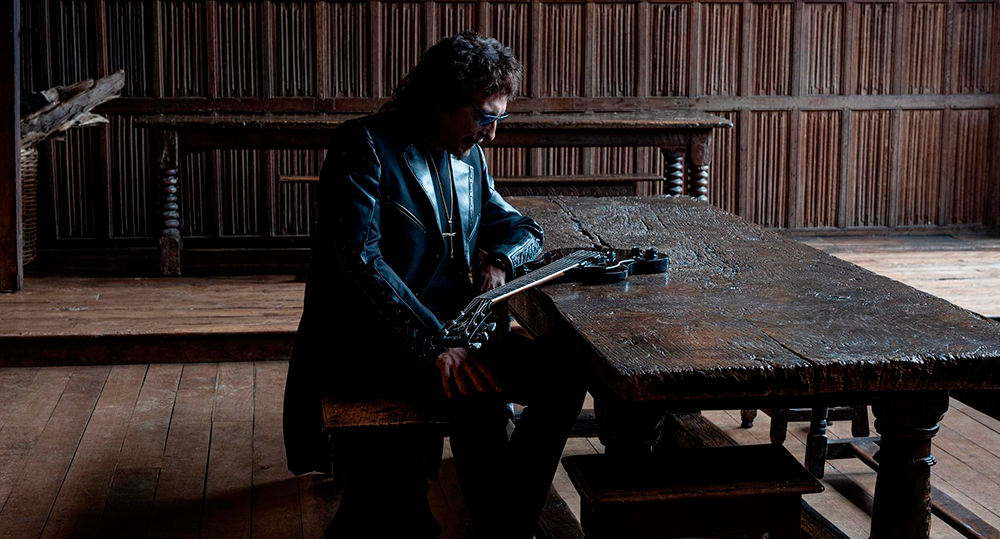
Sí, he utilizado varias guitarras para este disco. Bueno, he ido probando unas cuantas. Primero utilicé la Gibson Monkey, concretamente una réplica de mi guitarra original. También he utilizado algunas de las guitarras JD que me fabricaron hace muchos años. Todas son bastante antiguas, las tengo desde hace Dios sabe cuánto tiempo, unos cuarenta años. Así que, básicamente, he utilizado esas guitarras, Gibson y JD. Y creo que también utilicé una Taylor.
¿Cómo conociste al cantante Jørn Lande?
Creo que vino cuando el productor Bob Marlette estaba trabajando en mi antigua casa. No recuerdo exactamente cómo nos pusimos en contacto con Jørn. Vino y cantó en una de las canciones. Pero en aquel momento no teníamos nada decidido; solo era una prueba. Al final, la discográfica quiso volver a alguien conocido, como Glenn Hughes. Así que terminé haciendo el álbum con Glenn. Pero aquel fue nuestro primer contacto. Después, cuando falleció Ronnie y organizamos un concierto homenaje, propuse a los demás que probáramos con Jørn. Y así lo hicimos, y estuvo muy bien. Me gusta, me gusta su voz, su forma de enfocar las cosas y su manera de trabajar.
¿Qué tiene la voz de Jørn que encaja tan bien en este álbum?
Jørn tiene un registro extraordinario y una voz muy potente. Yo quería una voz realmente poderosa para este álbum. Siempre lo había tenido en mente para hacer algo juntos. Es perfecto, es agradable trabajar con él, tiene un registro muy amplio, es un buen cantante y aporta buenas ideas. Así que era la persona indicada.
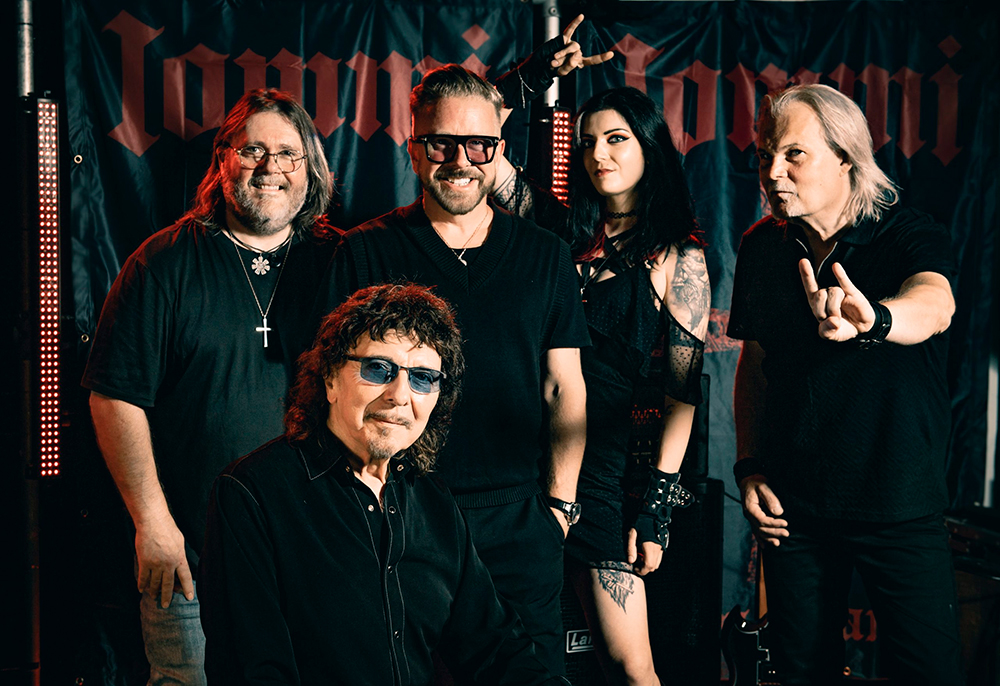
Karl Brazil toca la batería en el álbum. ¿Cómo lo conociste?
Karl Brazil era amigo de Mike Exeter. Cuando Mike y yo empezamos a trabajar en las ideas, pensamos en quién podría encargarse de la batería. Y pensé: “Bueno, estaría bien contar con alguien de Birmingham”. Karl Brazil es de Birmingham, además de ser un gran músico y una persona realmente agradable. Y eso era lo que buscaba. Quería gente agradable, con la que fuera fácil llevarse bien y que disfrutara con lo que hace.
Karl encajaba perfectamente. Le encanta tocar, disfruta muchísimo haciéndolo. Y, además, yo hice aquella colaboración con Robbie Williams, en la que también participó Karl, así que, en cierto modo, intercambiamos papeles.
El bajo del álbum lo toca Beck Baldwin. ¿Cómo la incorporaste al proyecto?
Yo no conocía a Becky. De nuevo, estuvimos pensando en distintas personas y pensé que estaría bien contar con alguien que no fuera tan conocido, pero que fuera bueno. Como digo, no la conocía, pero cuando la escuchamos por primera vez pensé: «Sí, es realmente buena y tiene un estilo parecido al de Geezer». Becky encajó muy bien. Es una persona agradable y una gran bajista. Así que formamos un buen equipo.
La ciudad de Birmingham ha abrazado a Black Sabbath. ¿Era importante para ti trabajar con músicos de la ciudad?
Bueno, sí, porque soy de Birmingham y me parecía bonito mantener esa conexión con la ciudad. Karl es de Birmingham. Becky vive ahora en Birmingham, aunque no es originaria de allí, pero prácticamente podría serlo, porque lleva allí bastante tiempo. Y creo que sí, que la relación entre nosotros y Birmingham se ha hecho realmente fuerte.
Es fantástico, y Birmingham se ha portado muy bien con Black Sabbath. Tenemos allí el banco, ese gran banco de metal. También tenemos un puente llamado Black Sabbath y, por supuesto, Ozzy tiene el toro en la estación. Así que sí, la ciudad realmente se ha volcado con Black Sabbath.
¿Cuál es tu canción o momento favorito del álbum?
Es difícil elegir una canción favorita de un álbum. Esa pregunta siempre aparece cada vez que publicas uno, y tu manera de verlo va cambiando. Un día me gusta muchísimo una canción y, un mes después, me gusta más otra. Así que varía; no suelo intentar escoger una en particular. De hecho, ahora mismo me gusta mucho cómo canta «Legacy». Creo que es una canción realmente buena, al menos por el momento. Pero, como digo, vas pasando de un tema a otro con el tiempo.
English
After more than twenty years without releasing a solo album, Tony Iommi returns with From The Dark. The Black Sabbath guitarist talks about how he put together his new record, the musicians involved, the loss of Ozzy Osbourne, and what he plans to do next.
It’s been 21 years since the release of your last solo album and 13 years since the last Black Sabbath album. What was your motivation to make a new album and how long has From The Dark been in the making?
It actually started quite a war back. They were just not taking it too seriously, like saying everything has to be made within a month or two months. I wanted to take me to them and just put ideas down as they come on, but turned into really enjoying making them into songs.
So it’s been over a period, but we’ve done it purposely because there was no deadline on it. I could do it at my own leisure.
A lot of people would have only seen you last at the Back To The Beginning show. The whole world felt the loss of Ozzy since, how have you been and does it feel good to have a new project to focus on?
Yeah, well after the beginning show was of course the final sabber thing that was really the end of everything. I mean, even if I was still being there, it would have been the end of everything, because that was the plan. And yeah, it’s opened the door for me now to move on and do my own things. And it’s been great because I can do, there’s other projects, ideas coming in. People wanted me to play on their album and like Robbie Williams who wanted to do the track with them.
And that was good fun, you know, to do that and then do the video with them. And it’s been interesting to do that, something a bit different for me.
Tell us a bit about the song writing process for From The Dark, does it start with a riff and build from there?
All the albums I’ve done, I think, starts with the riff. You come up with the I’d just put a riff down and then work on that.
I’ve had periods where I’ve just put riffs down on a cassette and then put the cassette away and never seen it. Because always when I think, oh, I can play back and start listening to what I’ve got, I don’t tend to do that, I tend to sit down and come up with something new. I like to come up with stuff on the spot and then if it feels good at that time, then try and make it into something.
Has the writing process differed from previous albums, be it solo or with Black Sabbath?
Well, this album has been completely different from the past, because especially with Sabbath we used to go in and or even be so less stuff before going in plain with the band.
You’ve got to do it there and then. But with this album I’ve got my own studio up and go in and and just put stuff down when I’m ready really. And then we decided we’re going to use on drums or we’re going to play on bass and and do it that way.
You recorded the majority of the album in your home studio, was that essential in getting things absolutely perfect and not having external pressure?
It was important for me to do it at home because again there’s no pressure of having to hire a studio and get there and I literally go to my home so I can do it there and then.
And Mike Exeter has been a great help. He’s been with me now for getting on for God. He must be 25, 30 years and work with me a lot.
So we’ve got a thing rolling there. If I want to put a riff down in the studio, he comes and then he’ll put a drum beat down, just a program drum, and I’ll put the riff down. And then we build it like that really.
So it’s been good being able to do it alone. I mean, we’ve had to go into the studio to do some drums, because I don’t have a drum room in my studio. It’s mainly just a control room, which works right for me. And then we’re just going to another studio to put the drumless down.
Did you use any particular equipment; guitars or amps during the recording of the album?
Yeah, I used quite a few guitars on this record. Well, I went through a few different ones. I started with the Gibson Monkey, which is a replica of my original guitar. I also used some of the JD guitars that were made for me many years ago. They’re pretty old now. I’ve had them for God knows how long, about forty years. So, mainly those, really, Gibson and JD. And I think I used a Taylor as well.
How did you first meet vocalist Jorn Lande?
I think he came when I had this engineer, the producer Bob Marlet was working at my house, my old house. And you’re, I don’t know, we even got in touch for you, you want to can’t remember. He came and sang on one of the songs. But at that time we weren’t sure about anything, it was just a trial. And at the end of the day, it ended up that the record company wanted to go back to a familiar face, like Cruxer Glen Hughes. So, Glen and then I’d done the album.
But that was the first initial thing we’d worn. And then we had worn, I suggested you want when Ronnie passed away and we’d done a tribute concert. I said to the other guy, so let’s try your one for this. And we did, and he was good. No, I like him, I like his voice, I like his approach and the way he does stuff.
What was particularly about Jorn’s voice that worked so well on this album?
Yeah, your one’s going to go to a great range and a great powerful voice. I wanted a really powerful voice for this album.
I’ve always had him in mind for something. He’s perfect, he’s nice to get on with, he’s a really good range, a good singer, comes up with some good ideas, hopefully. So he was just the one.
Karl Brazil plays drums on the album, how did you meet him?
Karl Brazil was a friend of Mike Exeter’s. When Mike and I started putting the ideas together, we thought about who we could get on drums. And I thought, “Well, it would be nice to have somebody from Birmingham. Karl Brazil is from Birmingham, and he’s a great player and a really nice guy. And that’s what I was looking for. I wanted nice people, people you could get along with and who really love what they do.
Karl was exactly that. He loves playing, he really enjoys it. And I also did that thing with him and Robbie Williams, so we sort of swapped roles.
The bass on the album is played by Beck Baldwin, how did you recruit her?
I didn’t know I was Becky. Again, we thought of different people and I thought, well, it was nice to use somebody who’s not that known, but who’s good.
And I say, I didn’t know him, but when we first heard, I thought, yeah, she’s really good and she’s got Geezer style. Becky worked out really well and she’s a nice person and a great player. So we had a good team.
The city of Birmingham has embraced Black Sabbath, was it important for you to work with musicians from the city?
Well, yes, because I’m from Birmingham, and I thought it would be nice to keep that connection with the city. Karl is from Birmingham, and Becky lives in Birmingham now. She’s not originally from there, but she might as well be, because she’s been there long enough. And I think the relationship between us and Birmingham has become really strong.
It’s fantastic, and Birmingham has been really good to Black Sabbath. We’ve got the bench there, that big metal bench. We’ve also got a bridge called Black Sabbath, and of course, Ozzy’s got the bull in the station. So yeah, the city has really embraced Black Sabbath.
What’s your favourite track or moment from the album?
It’s hard to pick a favourite song of an album and always that question always comes up every time you do an album and and things change with how you look at it. Some one day I really like that track and then a month later I like that one now. So it does vary I don’t you try to really pick a particular one.
I actually like the one the way he sings «Legacy». I think that’s a really good one at the moment but oh you know as I say you move on to different tracks as you go on.