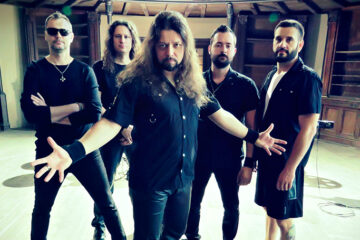
Hay bandas que tienen peso en toda una escena. Todos podemos recitar una serie de nombres, al igual que cualquier ser humano que haya tenido alguna relación o mínimo interés por la escena del heavy metal, que son indiscutibles y pilares de todo un género. Uno de esos nombres es sin duda Helloween. Des de Metal Hammer hemos informado sobre su venida a España, dedicamos un día a la banda con diferentes reseñas de su nuevo disco y estuvimos en Holanda escuchándolo en primicia en abril. Aquí por fin traemos a nuestra web las palabras del grupo.
Castellano
Cada época tiene sus particularidades que con el tiempo cambian o desaparecen. Cuando internet y las redes eran solo una imaginación la industria de la música tenía por costumbre invitar a un nutrido grupo de periodistas musicales para escuchar, valorar y entrevistar a bandas de renombre que presentaban nuevo disco. No había otra manera. Tocaba mover el trasero hacia el lugar escogido. No os voy a contar como funciona ahora…, no cuesta mucho imaginarlo.
Por eso recibir una invitación para escuchar el nuevo disco de Helloween en Amsterdam y entrevistar al grupo parecía ciencia ficción hoy en día. Ni pensar nada hacía falta, cogimos un vuelo el día concertado y nos plantamos en la capital de los canales.
Todo tenía lugar en los Wisseloord, situados a unos 35 minutos de Amsterdam en la acogedora localidad de Hilversum. Lo cierto es que no es fácilmente localizable ya que primero debes entrar en una especie de bosque-jardín en donde al fondo se divisa en primer término una pequeña cafetería con todo tipo de memorabilia que emanaba la historia del lugar. Historia entre la que podemos contar grabaciones de bandas como Iron Maiden, Deff Leppard o Scorpions. Rodeados de algunos edificios que albergan una academia para estudiantes del noble arte del sonido, poco o nada hace pensar lo que alberga en su interior.
Desde el primer momento nos cruzamos con la banda al completo que se mostraba la mar de relajada esperando todas las entrevistas que debían afrontar durante la jornada. Entrevistas que eran organizadas y controladas por un personaje, señora para más señas, con mano de hierro y experiencia en estas lides aunque le colamos algún gol ya que cada medio tenía asignado uno de los músicos y al final estuvimos con tres, a saber, Michael Weikath, Michael Kiske y Andy Deris. En la terraza de la cafetería nos sentamos con el dúo Weikath-Kiske después de haber escuchado el nuevo disco, Giants and Monsters.
Tantos años, tantos discos y todavía haciendo buenos trabajos y, la verdad, pareceis muy felices con todo lo que envuelve al grupo ahora mismo…
Kiske (K) – ¿Lo has escuchado ya?

Si, si, justo acabo de salir del estudio
K – Oh, perfecto sigue sigue perdona…
Tan solo que en este punto de una carrera como la vuestra hacer un disco puede ser como ir al trabajo cada mañana y os veo muy motivados.
K – De la manera que hacemos ahora las cosas hace que sea más fácil todo. Me refiero a que hace que no tengas la percepción de ser un trabajo. Nos lo tomamos con más calma y simplemente hacemos lo que sea durante dos semanas, tres semanas, quizás un descanso, la próxima vez serán cinco semanas, que es lo máximo, y luego habrá otro descanso más largo.
Las cosas han salido bien con la reunión, podemos tocar en sitios grandes, también viajas bien, puedes volar bien, así que no te cansas tan rápido, porque puedes hacerlo a un cierto nivel, y eso lo hace más fácil. Es imposible convertir esto en un trabajo, se convierte en un trabajo en el sentido de que es lo que haces, estás acostumbrado a ello.
Llevo haciéndolo desde que tengo 17 años o algo así. Nunca hice otra cosa pero es tan diverso que siempre pasas por diferentes fases, tienes mucho tiempo libre y ahora nos habíamos tomado como dos años libres. No puedes hacer eso en muchos trabajos. Todo lo que rodea a la música siempre es muy diferente. Las giras son quizás lo más estándar hasta cierto punto pero todo lo que las rodea es siempre algo nuevo.
¿Qué es lo que te emociona de hacer música hoy en día?
Estar emocionado por cómo salen las cosas es prácticamente lo mismo. Esta vez ha habido un montón de canciones tuyas (refiriéndose a Weikath), pero también especialmente de Marcus, que ni siquiera pensábamos que iban a salir tan bien. Las teníamos en la lista. Las grabamos y pensamos que probablemente serían una cara B o algo así, pero han quedado muy bien y eso es emocionante. Especialmente cuando haces las voces e intentas averiguar cómo hacer la canción, cuando eres capaz de darle la vuelta y hacerla emocionante.
Nos ha pasado varias veces que había un par de canciones que no pensábamos que iban a salir bien, aunque es la dinámica que se produce cuando trabajas con muchos músicos y productores. Produces una canción que puede cambiar por completo y convertirse en algo totalmente diferente, y tienes otras que se quedan tal y como están, prácticamente como en la demo. Simplemente la grabas mejor, todo es un poco mejor en términos de producción, pero el ambiente sigue siendo el mismo. No te sorprende que eso ocurra algunas veces. Pero cuando eres creativo y no tienes miedo de darle la vuelta a las cosas y jugar con ellas, hay sorpresas todo el tiempo y esa es la parte emocionante, igual que antes.
Personalmente creo que es la época más madura de la banda, sabéis cómo debe sonar Helloween en ese estilo personal del grupo y sacar buenos temas aunque no tengo claro si lo hace más fácil o más complicado…
Es más fácil. Es como si hubieras creado tu marca, por así decirlo, ya no tienes que demostrar nada más que sigues siendo relevante. Lo único es que el disco no debe ser aburrido. Debe haber algo nuevo en él, lo que lo hace mucho más fácil porque llevamos bastante tiempo en esto.
Tenemos muchas cosas que podemos hacer porque la banda ha coqueteado con muchos estilos, también cuando Kai y yo no estábamos en ella. Han hecho tantas cosas diferentes cuando miras todos los discos… Hay tantas variaciones que han hecho que ahora se asocian con el nombre y puedes hacer casi cualquier cosa. Quizás no podríamos hacer jazz, pero en cuanto al rock, sí. Pop rock, rock pesado, rock rápido… Podríamos hacer cualquier cosa.
Puedo estar de acuerdo, escuchando el disco suena a Helloween pero sin repetir constantemente las mismas estructuras.
Es fresco. Eso es lo que me emociona tanto. No esperaba que pasara con tantas canciones de todos los compositores, teníamos más de 20 canciones.
¿Estás diciendo que ahora mismo hay diez canciones fuera del álbum?
Yeah, hay 10 canciones que se han quedado fuera. Es sorprendente y excitante…
Sabiendo eso… ¿Cómo abordar la creación del álbum esta vez? ¿Hay algo que quisierais cambiar en comparación con el álbum anterior?
K – Quizás queríamos romper un poco más, pero hay cosas que realmente no se pueden preparar. Simplemente tienes una idea para una canción y luego la canción sale, no sé cómo escribes tú… (dirigiéndose a Weikath)
WEIKATH (W) – Hablamos de esto en Brasil…
K – Sí, sí, sí, pero lo que intento decir es que realmente no se puede trabajar así, tienes ideas y la canción acaba siendo lo que es al final.

W – ¿Cuál podría ser el siguiente paso musical con el nuevo álbum? Siempre se dice eso, pero esta vez alguien dijo… Quizá un poco más comercial, bueno… para la discográfica y todo eso, pero no…
K – Era más bien que queríamos abrirnos un poco más que en el último disco, no en cuanto a las canciones que había, sino que las canciones que elegimos acabaron siendo más o menos lo que la gente esperaba hasta cierto punto y, en mi opinión, habría sido un poco aburrido hacer lo mismo otra vez. Así que lo que dije cuando tuvimos esa reunión es que nos abriéramos, que no tuviéramos miedo y que probáramos otras cosas si se presentaban, pero en términos de compositores. No sé si Andy puede escribir de otra manera, hay que preguntárselo a él, algunas personas pueden hacerlo, pueden sentarse y escribir canciones de una manera específica. Yo nunca podría hacerlo. No sé si tú podrías hacerlo…
W – Sí, yo lo hago todo el tiempo, pero me contengo porque siempre tiendo a componer canciones comerciales y cursis. Has oído «Moonlight», ¿verdad? Y eso es como, ya sabes, durante la última década más o menos dejé de hacerlo porque molesta a mucha gente. Prefieren una canción rápida o algo así como un himno típico de Helloween, así que me concentré en eso. Solo fue que alguien dijo que era un poco más comercial sin referirse a ti.
K: No usamos ese término, fue más bien que pensamos que el último disco era demasiado nervioso, con demasiada información. Era exagerado, eso es lo único. Ahora con más calma…
W – Era muy progresivo, sin críticas, a todo el mundo le encantó y le gustó. Hice temas progresivos más largos en el último, así que pensé, vale, alguien dijo comercial y esa es la ocasión, eso es lo que voy a hacer.
En el álbum anterior compusiste tres canciones de entre seis y siete minutos, largas y épicas…
W – Ahora intento ser breve. Escucho cosas como «The Saints» y siempre pienso: «Vale, haz una versión alternativa con menos solos», pero era el signo de los tiempos y entonces quieres demostrarlo con otro solo. Quería intentar abordarlo de una forma un poco más madura y decir: «Tienes tres guitarristas y les dejo tocar los dos solos». Me gustan Hansen y Sascha y me gusta un solo en otro lugar o porque estoy alineado con las melodías para tocar allí cuando lo hago, no un tercer solo solo por tenerlo todo.
K – Es cierto, por eso el último disco estaba sobrecargado, porque todo el mundo tenía que tener una parte solista y luego tienes una parte armónica que vuelve a aparecer, así que estaba todo desordenado.
W – Aunque eso era una característica en aquel entonces, porque todo el mundo quería.
K – Y funcionó, al público le encantó el álbum.
En los dos temas que has escrito del disco tenías la voz de Michael en tu cabeza?
W – No, siempre lo hago, quiero decir, él puede cantar prácticamente todo excepto los agudos más arriba… ¡los gritos!, pero ahora incluso hace gritos.
K – Eso es más Andy, solo que un poco más agresivo. Andy es el que realmente sabe gritar. Yo no soy muy de gritar.
W – Así que cualquier cosa melódica que yo haga, él siempre puede cantarla. Fue como en The Keeper of the Seven Keys, teníamos una demo en la que yo tocaba cada tono en un órgano y luego íbamos como…
K – Yo te estaba visitando por aquellos días cada día y nos quedamos toda la noche porque él es un vampiro, no duerme, y estaba tocando «Eagle Fly Free», tenía las ideas básicas de esa y de «The Keeper of the Seven Keys», tú tenías esa mucho antes de “Halloween”, la canción.
W – Normalmente cantaba todo por el tono, por el ritmo.
K – ¡Tenía que aprenderlo!
W – No había nada como… “No quiero aprender esto” o lo que sea, te digo lo que tienes que cantar.
K – Haz lo tuyo, pero mantén la idea.
W – Normalmente era que él simplemente la cantaba, por ejemplo… “Giants”, quiero decir, en aquel entonces «Giants» en Chameleon, él cantaba todos los tonos que había y no hacía falta discutir. La cantaba en su dormitorio muy muy bajito y con esa voz lo metía en una pequeña demo, sonaba enorme.
Creo que lo más importante es que todos los miembros se reconocen fácilmente en la composición, pero encaja perfectamente en el marco de la banda.
K – A veces me parece un milagro que esto funcione, porque somos muy diferentes. Todos somos muy diferentes, por supuesto que tenemos cosas en común, de lo contrario no podríamos estar en una banda. Nos gustan las mismas cosas específicas, pero aparte de eso no podríamos ser más diferentes, y eso crea tensión también en el escenario. Creo que hay una energía muy especial que proviene de los miembros. No sabes qué es. Creo que es el karma, algo que es más grande cuando estamos todos juntos que cuando estamos separados.
Pero, ¿es factible mantener el equilibrio dentro de la banda cuando hay 5 o 6 compositores potenciales?
K – Es otra vez esa cuestión de la edad. Cuando eres más joven, te metes mucho más rápido en discusiones estúpidas. Tienes que demostrar tu valía, aún eres joven, estás definiendo tu personalidad. Cuando te haces mayor, tiendes a ser más amable y comprensivo, y también más dispuesto a dejar vivir al otro. Eso lo hace mucho más fácil. Todos tenemos carácter fuerte, todos tenemos una opinión, a veces discutimos sobre cosas, pero nunca se nos va de las manos.
Estamos aquí por el nuevo disco. Hay tres canciones que me llaman la atención: «Giants», «We Can Be Gods» y «Universe». No sé por qué, ya que es la primera vez que escucho el álbum, obviamente, pero estas tres canciones reflejan lo que estamos diciendo. La mezcla de los diferentes compositores, el estilo de la banda… Tenéis un problema para hacer el set-list para la gira, porque creo que las nuevas canciones encajan perfectamente con todo vuestro catálogo.

K – Siempre tenemos demasiadas canciones. Es bueno tener esa canción como buen ejemplo. A veces el compositor no está seguro de quién debería cantar una canción, pero la mayoría de las veces tiene al cantante en mente. Suele decir: «Escribí esto para Michael» o «Escribí esto para Andy». Eso es lo que pasó con “Universe” y Sasha, él quería que yo la cantara enseguida. Me envió la demo, hice las voces y eso lo hizo fácil. Andy, tal vez sea una canción de Kai, pero a veces no lo sabemos, así que hicimos grabaciones, Andy y yo, no todas las canciones, pero tal vez el 60 %. Los dos lo hicimos, para que los productores pudieran decidir qué funcionaba mejor, porque somos muy diferentes. Cualquier cantante aquí, incluso Kai, puede cantar todas las canciones y de alguna manera funcionaría. Todo el mundo tiene sus cualidades, en las que uno es un poco más convincente en un área u otra, y eso es algo que a veces hay que averiguar y luego hay que decir: «Vale, esto funciona muy bien». Nunca hay discusiones de ego entre Andy y yo. Nunca. Es increíble. Realmente se trata solo de la canción.
W – Todo en pro de esa unidad. Es como si supieras que algo puede ir en la dirección correcta, entonces es mejor no tocarlo, no vale la pena.
K – La canción tiene que funcionar, tiene que convencerte. Eso es lo único que importa, incluso en la mezcla, puedes discutir sobre pequeñas cosas, pero mientras la canción te llegue y la entiendas, entonces está bien.
¿De todo el proceso de un disco fue más duro hace 4 años cuando todo el mundo estaba a la expectativa de lo que podríais hacer y parecía como una prueba o ahora que puede ser como confirmar aquello?
K – En mi opinión, esta producción ha sido la más fácil hasta ahora. Pregúntaselo a los productores, ellos lo dirán. Esta mañana, cuando volví a ver a Dennis después de un par de semanas, me dijo: «Esta producción ha sido muy relajada».
Desde la reunión hemos visto un ambiente familiar, abrazos en el escenario, tocando de maravilla…
K – No estaríamos aquí si no fuera así…
¿Quiero decir, ha pasado algo diferente entre bastidores?
K – Firmamos contratos. Los contratos habrían terminado en 2019, creo… algo así, que es cuando se agotaban. Solo firmamos contratos para una gira de conciertos. Ni siquiera planeamos grabar un disco, por si acaso no funcionaba y teníamos que separarnos, pero funcionó y todos querían continuar, así que firmamos nuevos contratos.
La democracia en una banda puede ser difícil, hay tantas opiniones…
K – Es parte de la energía, pero es horrible. A veces discutimos y alguien se siente herido, pero eso es parte de la dinámica. Si todos nos motivamos mutuamente con diferentes puntos de vista y opiniones, eso obliga a luchar por cada punto de vista, a aclarar lo que quieres decir o a abrirse y escuchar lo que dice el otro. Mientras seas capaz de comunicarte y no se convierta en algo demasiado personal, es positivo, lo necesitas. Es como con una batería, necesitas el positivo y el negativo para tener energía, y creo que en una banda pasa lo mismo. Hay bandas que funcionan con una sola fuerza motriz, algunas bandas que tienen una o dos personas que lo hacen todo, y funciona, y en esta banda hay mucha gente creativa.
Podría escribir canciones, pero no lo hago porque creo que ellos lo hacen de todos modos y lo hacen mejor. Quizás haya algo en el futuro, pero no me obligo a mí mismo, así que estoy feliz de dejarlo fuera. Donnie no escribe canciones, pero todos los demás pueden hacerlo, tenemos siete miembros y seis pueden escribir canciones, eso es increíble.
¿Seguir siendo relevante en la escena se hace duro o incita a ser más creativo?
K – No puedes hacerte relevante, o lo eres o no lo eres. Los discos salen a la luz como esta vez, simplemente salen de forma natural y eso me emociona. De alguna manera, seguimos siendo relevantes. Todavía hay algunos elementos nuevos y lo mismo ocurre con los directos. O hay magia o no la hay, no se puede crear, no se puede, simplemente ocurre o no ocurre.
W – No puedes forzar una dirección determinada, no puedes forzar el éxito, no puedes forzar el culto ni nada.
K – Cuanto menos lo hagas, mayor es la posibilidad de que funcione. Es una contradicción. Todo lo que tiene energía, todo lo que tiene poder, siempre viene del corazón. Es un cliché, lo sé, pero es cierto. Todo lo que haces por entusiasmo tiene una cierta energía, tiene una cierta fuerza, y todo lo que construyes en tu cabeza porque quieres sacar algo de ello, como el éxito, debilita lo que haces porque no es el centro de atención. No se trata de la música. No estás poniendo realmente tu corazón en la música, es otra cosa lo que te importa. El dinero.
El éxito lo debilita, así que cuanto menos te importe… Nunca nos importó y simplemente sucedió. Nunca me importó el dinero en mi vida, nunca, pero siempre estuvo ahí y creo que por eso sucede. Es como un viejo sombrero, todos los músicos apasionados te dirán lo mismo. Es una historia diferente. Si pones tu corazón en algo y escribes una canción donde eres tú mismo y escribes sobre algo que te importa, que te interesa, eso tiene alma. Está vivo. No es algo muerto, pero cualquier cosa que hagas con la cabeza, calculando porque quieres lograr algo, para mí es música falsa, así que cuanto menos piense la gente en el éxito y la carrera, mejor.
Tenemos un representante que se encarga de eso, así que no tenemos que pensar en ello, pero él no sería capaz de engañarse a sí mismo. Kai, lo mismo, es una persona tan auténtica que no podría hacer otra cosa que lo que le gusta, le emociona, así que es casi como una protección en esta banda. Ni siquiera funcionaría, no funcionaría. No sé si has tenido momentos así en los que has probado algo, no sé qué has hecho en los últimos años… (dirigiéndose a Weikath)
W – Y a veces pasan cosas… esa canción de la que hablábamos, me gustaba, la hice para una amiga. Ella tenía una demo y yo escribí algo. Me decía que quizá le vendría bien conseguir un pequeño contrato discográfico o un pequeño contrato de distribución, o algo así, solo como ejemplo, y luego nunca se materializó. Todavía tenía la grabación y entonces le dije que quizá él podría cantarla, porque nos faltaba una canción y me gustaría probarla, ya que ella no la aceptó o no era necesaria.
K – Pero tú siempre fuiste… Quiero decir, siempre te vi como alguien apasionado por las canciones, como si fueran tus hijos, sean lo que sean, pero no lo haces por otras razones, en primer lugar, para escribir esa canción en particular.
K – Lo que quiero decir es que cuanto menos te importa, más te importa la música, más éxito puedes tener. No hay garantía, no lo pienses, cuanto menos energía desperdicies, más se puede desarrollar, pero le quita calidad a la música. Se puede hacer bien técnicamente, pero no tendrá alma. Todo lo que hagas, y sabes que todo el mundo tiene algún tipo de creatividad, ponle corazón, alma y tendrá algún tipo de energía. La música no es física, la música no son guitarras. No puedes agarrar la música, la música no es nada físico. Tienes instrumentos que hacen la música, pero la música no es nada físico, es energía pura y mueve las almas, así que la energía que pones ahí se transmite.
Quizás este sea el problema hoy en día. Especialmente para las bandas nuevas, que buscan más visualizaciones o un éxito rápido con la esperanza de una carrera musical…
K – Siempre ha estado ahí, siempre ha formado parte de ello. Siempre has tenido a esos y a esos, y sigues teniendo jóvenes increíbles que están surgiendo, pero es difícil. Se ha vuelto realmente difícil para ellos ser vistos, ser escuchados, comenzar una carrera…
En este momento irrumpe nuestra amiga la mánager infalible para alertarnos que nuestro tiempo allí finalizaba y que si queríamos tener oportunidad de charlar con más miembros de la banda nos debíamos meter en uno de los estudios. La verdad… dejar allí sentados a dos personajes como Kiske y Weikath no me apetecía… con la de cosas que te pueden explicar pero ¿qué puedes hacer? Dieron muestra de estar más que acostumbrados a estas maneras de mánager autoritario. Pero teníamos cita con otro miembro del grupo, con ello seguiremos en la seguna parte…
English
Every era has its own particularities that change or disappear over time. When the internet and social media were just a dream, the music industry used to invite a large group of music journalists to listen to, evaluate, and interview renowned bands presenting their new albums. There was no other way. I’m not going to tell you how it works now… it’s not hard to imagine.
That’s why receiving an invitation to listen to Helloween’s new album in Amsterdam and interview the band seemed like science fiction today. We didn’t hesitate, we took a flight on the agreed date and headed to the capital of the canals.
Everything took place at Wisseloord, located about 35 minutes from Amsterdam in the cozy town of Hilversum. The truth is that it’s not easy to find, as you first have to enter a kind of forest-garden where, in the background, you can see a small café with all kinds of memorabilia that exudes the history of the place. This history includes recordings by bands such as Iron Maiden, Def Leppard, and Scorpions. Surrounded by buildings that is an academy for sound students.
From the outset, we encountered the entire band, who appeared very relaxed as they awaited the interviews they would have to face during the day. These interviews were organized and controlled by a woman with an iron fist and experience in these matters, although we managed to sneak in a few extra questions, as each media outlet had been assigned one of the musicians and we ended up with three: Michael Weikath, Michael Kiske, and Andy Deris. We sat down with the Weikath-Kiske duo on the terrace of the bar after listening to the new album, Giants and Monsters.
So many years, so many albums, and you’re still doing great work. And, honestly, you seem very happy with everything surrounding the band right now…
KISKE (K) – Have you heard it yet?
Yes, yes, I just left the studio.
K – Oh, perfect, go on, go on, sorry…
It’s just that at this point in a career like yours, making an album can be like going to work every morning, and I see you guys very motivated.
K – The way we do things now makes everything easier. I mean, it makes it feel less like work. We take it easier and just do whatever for two weeks, three weeks, maybe a break, next time it’ll be five weeks, which is the maximum, and then there’ll be another longer break.
Things have worked out well with the reunion, we can play in big venues, you also travel well, you can fly well, so you don’t get tired as quickly, because you can do it at a certain level, and that makes it easier. It’s impossible to turn this into a job, it becomes a job in the sense that it’s what you do, you’re used to it.
I’ve been doing it since I was 17 or something. I’ve never done anything else, but it’s so diverse that you always go through different phases, you have a lot of free time, and now we’ve taken about two years off. You can’t do that in many jobs. Everything surrounding music is always very different. Touring is perhaps the most standard thing, but everything surrounding it is always something new.
What excites you about making music today?
K – To be excited about how things turn out is pretty much the same thing. There have been a whole bunch of songs this time from you (referring to Weikath) but also especially from Marcus we didn’t even think that they would turn out so good. We had them on the list. We recorded them and we thought probably a B side or something like that and they turned out really good and that’s exciting. Especially when you do the vocals and you try to figure out how to do the song when you are able to turn it around and make it exciting.
We had that a few times there were a couple of songs that we didn’t think that they would make, even though it’s the dynamic that happens when you work together with many musicians and with producers. You produce a song that can completely change and turn into something completely different and you have other songs that just stay the way they are pretty much the demo. You just record it better, everything is a bit better in terms of production but the vibe stays the same. It doesn’t surprise you that it happens a few times. But when you are creative and you are not afraid of turning things around and fooling around there are surprises all the time and that’s the exciting part the same as it used to be.
Personally, I think this is the band’s most mature period. You know how Helloween should sound in that personal style of the band and how to produce good songs but it’s not clear if it’s easier or more difficult…
K – It’s easier. It’s also like you have written your brand, you have created your brand, so to speak, you don’t really have to prove anything anymore other than that you are still relevant. That’s the only thing the record shouldn’t be boring. It should be something on there that’s fresh, that makes it a lot easier because we have been around for quite a while.
We have a lot of things we can do because there is so much in styles that this band has done, also like when Kai and I were not in the band. They have done so many different things when you look at all the records the band has done. There is so much that they have done that is now associated with the name so you can do almost anything. Maybe we couldn’t do jazz but it’s like in terms of rock. Poppy rock, heavy rock, speedy… We could do anything.
I agree, listening to the album sounds like Helloween obviously, but not repeating all the same structures.
K – It’s fresh. That’s what I was so excited about. I didn’t expect that with so many songs coming in from all the songwriters, we had like over 20 songs.
Are you saying there’s ten songs out of the album right now?
K – Yeah, yeah, yeah there are 10 songs outside of the album. It’s amazing, it’s exciting…
Knowing that… How did you approach the making of the album this time? Is there anything you wanted to change compared to the previous album?
K – We wanted maybe to break out a little more but there is something you can’t really prepare. You just have an idea for a song and then the song turns out I don’t know how you write…
WEIKATH (W) – We talked in Brazil about this…
K – Yeah, yeah, yeah but what I’m trying to say is that you can’t really work that way, you have ideas and the song turns out to be what it is in the end.

W – What could be the next musical step with the new album?, you always say those things but then this time somebody said… a little bit more commercial maybe, good for the record company and stuff but don’t…
K – It was more like we wanted to open up a little bit more than the last record, not in terms of the songs that were there but the songs we picked it ended up to be pretty much what people expected to a certain extent and it would have been, in my opinion, a bit boring to do the same thing again. So what I was saying when we had that meeting is let’s just open up, let’s just not be afraid and let’s just try out other things too if they come but in terms of the songwriters. I don’t know if Andy can write in a different way, you gotta ask him that some people can do that, some people can sit down and write songs in a specific way. I could never do that. I don’t know if you could do that…
W – Yeah I do that all the time but I keep back because I always have the tendency of coming up with commercial cheesy songs. You heard the “Moonlight”, right? And that’s like, you know, for the last decade or so I stopped doing that because you annoy a lot of people with it. They would rather have a speed song or something like a typical Helloween anthem so I was concentrating on that. It was just that somebody said a bit more commercial without returning to you.
K – We didn’t use that term, it was more, we thought that the last record was too nervous, too much information. It was over the top, that’s the only thing with that. Take it a little easy…
W – It was very progressive, no criticism, everybody loved it and liked it. I did longer progressive tracks on the last one so I thought, okay, somebody said commercial and that’s the occasion that’s what I do.
In the previous album you wrote three songs with about six to seven minutes, longer epic ones…
W – Now I try to keep it short. I listen to things like “The Saints” and always go like, okay, you know, make like an alternate version with less solo parts, but it was the sign of the times and then you want to prove this like, and another solo part, and another solo part this time. I wanted to try to approach it a little bit more grown up mature and go like, you know, you have three guitarists and then like I I let them play like the two solos. I like Hansen and Sascha and I like a solo somewhere else or because I’m aligned with the melodies to play there when I do that, not a third solo just for the sake of having everything.
K – That’s true, that’s also why the last record was overloaded because everybody always had to have a solo part and then you have a harmony part that comes again so it was just all over the place.
W – Even though that was a feature back then because everybody wanted to
K – And in worked, the audience loved the album
In the two new songs you wrote for the album did you have Michael’s voice on your head?
W – No, I always do that, I mean, he can sing basically everything except for like, shouts but now he even does shouter.
K – That’s more Andy, just a little more aggressive. Andy is the one who can really do the shouting stuff. I’m not really a shouter.
W – So whatever enthemic melodic stuff I do, he can always fucking sing it. It was like The Keeper of the Seven Keys, we had a demo where I mean I played on an organ each and every tone and then we were going like…
K – I was visiting you by those days and we stayed the whole night because he’s a vampire, he doesn’t sleep at daytime and he was playing “Eagle Fly Free”, he had the basic ideas of it and “The Keeper of the Seven Keys”, you had that one way before Helloween the song was written.
W – Usually he always sang everything by the tone, by the beat
K – I had to learn it!
W – There was nothing like… I don’t want to learn this or whatever I tell you what to sing
K – You do your own thing but you keep to the idea
W – Usually it was that he just fucking sang it or Giants, I mean, back then “Giants” on the Chameleon, he sang every tone there was and no discussion necessary. It’s like he sang it in his bedroom really really quiet and like he had that train voice and everything just like in a little demo it sounded huge.
I think the most important thing is that it’s very recognizable to every member about composing, but it fits perfectly in the big picture of the band.
K – I said that also in earlier interviews, sometimes it’s a miracle to me that this works because we are so different. Everybody is very very different, of course we have common ground otherwise you couldn’t be in a band. We like specific things equally and stuff like that apart from that we couldn’t be more different but that creates a tension also on stage. I think that there’s a very special energy that comes from the members. You don’t know what it is. I think that’s karma, something going on that’s bigger when we are all together than anyone separately.
But, how feasible is it to keep the balance inside the band when you have 5 or 6 potential songwriters?
K – That’s the age thing again when you are younger much quicker become into stupid arguments. You have to prove yourself, you are still a young person, you define your personality. When you get older you tend to become more gentle and more understanding and also more willing to let the other one live. Makes it a lot easier. We all have strong heads, everybody has an opinion, sometimes you do argue about things but it just never really gets out of hand.
We are here for the new. There are 3 songs that take my attention: “Giants”, “We Can Be Gods» and “Universe”. I don’t know why because it’s the first time I listen to the album obviously but these 3 songs are all about what we are saying. The mix of the different composers, the style of the band… you have a problem to do a set-list for the tour because I think the new tunes fit perfectly with all your catalogue.
K – We always have too many songs. It’s good to have that song, for instance, as a good example. Sometimes the songwriter isn’t sure who should sing the song but most of the time they have the singer in the head. He usually says: “I wrote this for Michael” or “I wrote this for Andy”. That’s what happened with Universe and Sasha, he wanted me to sing it right away. He sent me the demo, I did the vocals and that makes it easy. Andy maybe that’s a Kai song but sometimes we don’t know so we did recordings, Andy and I, not all of the songs, but maybe 60%. We both did, so the producers could figure out what works the best because we are very different. Any singer here, even Kai, anyone can sing all the songs and it would somehow work. Everybody has it’s quality where one is a little more convincing to that area or that area and that’s something you sometimes have to figure out and then you have to say ok, right, this works great. It’s just never any ego arguments with me or Andy. Never. It’s amazing. It’s really all just about the song.
W – Let’s put it at that behaviour, let’s put it at that united thing. It’s like if you know where something can go in the right direction then you better not touch it, it’s not worth it.
K – The song has to work, it has to convince you. That’s all that matters even in the mixing situation, you could argue about little things but as long as the song comes over and you understand the song then it’s good.
Was the whole process of making an album harder four years ago, when everyone was waiting to see what you could do and it felt like a test, or now, when it’s more like confirming what you’ve already achieved?
K – This production has been the easiest production ever in my opinion. Ask the producers, they’re just say it. This morning when I met Dennis again after a couple of weeks he said: “this is such a relaxing production”.
Since the reunion we have seen a familiar atmosphere, hugs on stage playing amazing…
K – We wouldn’t be here if not in that way…
¿I mean, does something different happen behind the curtains?
K – We did contracts. The contracts would have been over I think… 2019 something like that, that’s when they were running out. We just made contracts for one live circle, touring circle. We didn’t even plan a record just in case if it didn’t work out we can go separate ways, but it worked out and everybody wanted to continue, so we made new contracts
Democracy in a band can be hard, so many opinions…
K – It’s part of the energy but it sucks. Sometimes we do fight and somebody feels hurt but that’s part of the dynamic. If everybody you kind of motivate each other also with different understandings and opinions it forces you to either fight for your point or make it clearer what you mean or open up and listen to what the other guy says. As long as you are able to communicate and it doesn’t go too personal it’s positive, you need this. It’s like with the battery, you need plus and minus to have the juice and I think it’s the same thing in a band. You have bands that work with one driving force, a few bands that have one or two people who do everything, and it works, and in this band you have so many creative people.
I could write songs but I don’t because I think they do it anyway and they do it better. Maybe there’s something coming up down the line but I don’t force myself so I’m happy to leave that out. Donnie doesn’t write songs but everybody else can write songs, you have seven members and six can write songs, that’s amazing.
Staying relevant in the scene is difficult, or does it encourage you to be more creative?
K – You can’t make yourself relevant, you either are or you’re not. The records come into place like this time, it just came so naturally into place and it excites me. We’re still somehow relevant.
There’s still some fresh elements in there and the same thing with live. It either has magic or it doesn’t, you can’t create it, you can’t, it just happens or it doesn’t.
W – You can’t force a certain direction, you want to go to, you cannot force success, you cannot force cult or anything.
K – The less you do it the higher the possibility that it works. It’s a contradiction. Everything that has energy, something that has power always comes from the heart. It’s a cliché, I know, but it’s true. Everything you do out of excitement has a certain energy, it has a certain force and everything you just construct in your head because you want something out of it like success weakens what you do because it’s not the focus. It’s not about the music. You’re not really putting your heart into the music, it’s something else you care about. The money.
Success, it weakens it, so the less you care about it… We never cared about it and it just happened. I never cared about money in my life, never, but it was always there and I think that’s why it happens. It’s like an old hat, every musician that is passionate will tell you this. It’s a different story. If you put your heart into something and you write a song that is you and you write about something that you care about that interests you, that has a soul. It’s alive. It’s not a dead thing, but anything you do with your head out of calculation because you want to achieve something to me that’s fake music, so it’s like the less people think about success and career the better.
We have a management who does that so we don’t have to think about it but he wouldn’t be able to fool himself. Kai, same thing, he’s so authentic as a person he couldn’t do anything else than what he likes, it excites him so it’s almost like a protection in this band. It wouldn’t even work, it wouldn’t work. I don’t know if you have had times like that where you tried something, I don’t know what you did in the years…
W – And sometimes things happen… that track that we were talking about, I liked it actually I made it for like a female friend. She had like a demo and I wrote something where I said that it may be good for her to get a little record contract or a little distribution contract or what just as an example and then it never came about. I still had the playback and then I said to him that maybe can sing it because we are short one track and I’d like to try that because she didn’t take it or it wasn’t necessary.
K – But you were always…I mean, I experienced you always as someone who passionately passionate about the songs as these are your babies whatever it is but you don’t do that for other reasons in the first place to write that particular song.
K – What I mean… the less you care about, the more you care about the music, the more successful you can be. There is no guarantee, don’t think about it, the less you waste energy it can unfold but it takes away the quality of the music. It can be technically done well but it won’t have a soul. Everything you do, and you know that everybody has some kind of creativity, put your heart into it, it has soul and some kind of energy. Music is not physical, music is not guitars. You can’t grab music, music is nothing physical. You have instruments that make the music but the music is nothing physical, it’s pure energy and it moves souls, so the energy you put in there gets transported.
Maybe this is the problem today. Especially for new bands, they are searching more visualizations or a quick success with the hope of a musical career…
K – It has always been there, it has always been part of it. You always had those and those and you still have amazing young people coming up but it’s difficult. It has become really difficult for them to be seen, to be heard, to start a career…
At that moment, our infallible manager friend burst in to alert us that our time there was up and that if we wanted to have a chance to chat with more members of the band, we had to go into one of the studios. To be honest, I didn’t feel like leaving two characters like Kiske and Weikath sitting there with all the things they could tell us was the best, but what could we do? They showed that they were more than used to this kind of authoritarian manager. But another member was waiting…