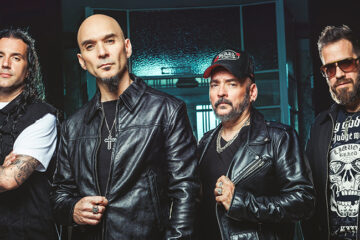
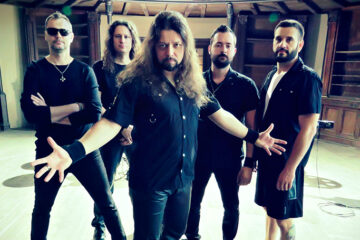
La posición de Epica en el olimpo del power metal sinfónico no ha hecho más que mejorar con los años así como su reputación. Un trabajo constante en la dinámica de disco-gira siendo en cada ocasión el material que ofrecen de notable nivel ha hecho que ganaran fans y prestigio. Aspiral es su noveno disco, un trabajo que, una vez escuchado, nos da que no hará más que incrementar lo comentado. Para saber más nos pusimos en contacto con la misma Simone Simons.
Castellano
Hola Simone, aquí estamos de nuevo. Hace unos meses charlamos sobre tu disco en solitario.
Sí, lo recuerdo.
Nuevo lanzamiento de EPICA noveno en la carrera de la banda. No sé cómo lo ves, pero para mí, parece el disco que sigue a Omega. Sé que hay lanzamientos en directo, Alchemy Project… Pero Alchemy Project quizás algunos fans puedan verlo como una especie de experimento. ¿Qué te parece?
Sí, creo que Alchemy Project después de Omega fue una especie de… terminamos de escribirlo, grabarlo, y luego vino el COVID. Así que después de eso, queríamos llegar a una idea fresca para mantenernos todos ocupados. Fue entonces cuando quisimos hacer el Alchemy Project y trabajar con diferentes artistas y amigos en la industria de la música para, ya sabes, sentirnos inspirados y para llegar a algunas canciones interesantes. Y realmente aprendimos mucho de eso. Una de las cosas que nos gustó fue que el proceso de grabación era diferente porque la sección rítmica, el bajo, la guitarra y la batería grabaron sus temas tocando juntos. Al estilo de la vieja escuela, como se hacía antes. Y eso hizo que el álbum fuera más crudo en cierto modo. Eso es también lo que queríamos. Por supuesto, todo el mundo busca la perfección, pero a veces se puede ir un poco por la borda. Queríamos volver a lo básico y hacer algo que no hubiéramos hecho antes. Es lo que hicimos también con Aspiral, porque tuvo un efecto muy positivo en las canciones y también en nosotros como grupo, estuvimos más conectados en el proceso de composición y grabación.
Organizamos campamentos de composición, como ya hicimos con Omega. Volvimos a alquilar una casa. Todo el mundo tenía su propia habitación y podía montar un estudio y trabajar en todas las canciones. Al mismo tiempo podía trabajar en equipo en esas canciones y nuestro productor estaba allí. Fue realmente una gran manera de sentirnos inspirados unos por otros y de enviarnos o tener una respuesta creativa en cuestión de segundos.
Es una interacción diferente cuando estás en la misma habitación que si alguien está en casa por la noche escuchando las pistas y pensando, bueno, ¿qué puedo hacer con estas ideas vocales? o incluso arreglando riffs de guitarra, jugando con la estructura de la canción. Si estás todos en la misma habitación, tienes un feedback inmediato y puedes llegar a un resultado totalmente diferente.
Así que volvimos a hacerlo para Aspiral. Estuvimos tres semanas escribiendo en esa casa, todos juntos. Desayunábamos juntos, cenábamos juntos y nos dedicamos a escribir, a trabajar en las canciones de la mañana a la noche. Había noches en las que no podía ir a dormir hasta la una de la mañana porque Isaac seguía tocando la guitarra porque se sentía inspirado. Y ya sabes, cuando está en modo de trabajo, entonces no se detiene. Se acuesta tarde y se levanta temprano. Así que era casi como estar en una residencia universitaria donde todo el mundo está a lo suyo o una escuela de música donde todo el mundo estaba tocando música todo el tiempo.

Obviamente esto es una consecuencia del COVID, más bandas me han contado de alguna manera lo mismo para los nuevos discos que han sacado.
Sí, es decir, no vivimos en el mismo país. Sólo hay tres miembros de la banda que todavía viven en Holanda y el resto se trasladó, Isaac es belga. Él vive en Bélgica y Mark se mudó a Sicilia. Yo vivo en Alemania. Así que, ya sabes, antes de Omega, solíamos componer cada uno en su casa, en sus estudios caseros y subíamos los archivos a internet, luego podíamos trabajar en ellos cuando tuviéramos tiempo y nos sintiéramos inspirados. Pero ahora, realmente despejamos nuestras agendas de conciertos tanto como pudimos para permanecer en ese flujo creativo y realmente centrarnos en escribir la música sin interrupciones de salir de gira. Y eso nos encanta.
Aprendimos después de Omega que es realmente bueno para Epica hacerlo así. Las canciones están más acabadas. Están más completas así. Y además para nosotros como banda es muy divertido estar juntos en ese ambiente de composición y no estar, por supuesto, estamos mucho juntos en la gira pero nuestro objetivo principal era la música.
Háblame un poco del tema de Aspiral, porque creo que se inspira en una escultura creada en 1965 por un artista polaco. ¿Puedes explicarme un poco más este concepto y la idea de trabajar con ello?
Sí, Rob era un gran fan del artista. Yo aún no conocía a Stanislav Sulkowski, pero Rob me dijo que viera el documental en Netflix y realmente me encantó. En ese momento estábamos de gira en América con Sabaton. Rob me dijo que si quería podía echar un vistazo a las esculturas en la vida real porque él está en contacto con las personas que heredaron las esculturas y todavía las tienen expuestas en su casa en los alrededores de su casa de Los Ángeles. Y pensé, sí, me encanta!. Me encantaría verlo en la vida real y conocer a la gente que hizo el documental. Me pareció muy interesante. Y Sulkowski me pareció muy carismático y sus esculturas muy singulares. Así lo hicimos y fue un encuentro encantador. Rob me dijo que tal vez en el futuro Epica podría verse escribiendo canciones inspiradas en el arte.
Así que cuando estábamos trabajando para Epica número nueve, así es como se ha llamado antes de saber que se iba a llamar Aspiral, cada miembro de la banda tenía algunas canciones en mente para, ya sabes, ser canciones potenciales en el álbum. Rob también tenía una canción que se llamaba Aspiral y en la que se inspiró en el arte. Entonces yo también empecé a escribir las letras sobre lo que trata este arte. Y es sobre la gente, ya sabes, después de la guerra, tratando de construir la sociedad, a partir de cero, y en cierto modo, es como una reencarnación. Es un renacimiento. Es un nuevo comienzo. Es intentar resurgir de las cenizas.
Me encantó ese tema porque también se puede ver desde una perspectiva personal, porque todo el mundo tiene un momento en su vida en el que cambia de rumbo, o en el que toma una dirección diferente y tiene que reconstruir lo que tiene. Por desgracia, en muchos países sigue habiendo guerras. Y además de eso, están las catástrofes naturales, los incendios, las inundaciones, los terremotos. Ocurre tan a menudo que la gente pierde todo lo que tiene y tiene que empezar de nuevo. Y eso me encanta como concepto.
Parece que no es la mejor era de la humanidad…
No. Y creo que a través de la música somos un poco el espejo de la sociedad. Vertemos muchas de nuestras experiencias personales, nuestras opiniones, nuestros pensamientos y preocupaciones, pero también esperanza. Queremos transmitir un mensaje de esperanza de que podemos reconstruirnos juntos como sociedad, como comunidad. La escena del metal sigue siendo fuerte y es una comunidad encantadora en la que la gente se conecta entre sí y llega a conocerse a través de los altibajos de la vida. Y eso es lo que la música hace por mucha gente, yo incluida.
Interpretamos una canción de Aspiral también ahora durante Symphonic Synergy. Y cada vez que escucho esta canción y la canto, se me pone la piel de gallina. Me encanta. La letra se me ocurrió una noche. No podía dormir. Me desperté, creo que a las cuatro de la mañana. Y pensé, tengo inspiración para el segundo estribillo, porque la canción en sí tiene una estructura interesante. Es un poco como una balada. Pensé que quería escribir una letra diferente para el segundo estribillo. Y eso es bastante inusual. Pero tenía esas melodías en mi cabeza y no podía dormir. Creo que cogí mi teléfono y empecé a escribir la letra para el segundo estribillo.
Es nuestro noveno álbum. Así que también incluimos eso en el arte y para nosotros como banda tener este hito. El nueve también se asocia con el coraje, el liderazgo. Y sí, es una especie de número mágico. Así que quisimos incluirlo también en la ilustración, donde se ve el disco solar que lleva, tenemos diferentes versiones de la ilustración. Pero esos nueve brazos representan el noveno álbum, que estamos juntos sosteniendo la luz, manteniendo viva la esperanza y que tenemos que hacerlo juntos. Eso es también lo que hicimos como banda para este álbum. Trabajamos juntos más intensamente que nunca, porque teníamos los campos de composición, pero también estuvimos mucho tiempo juntos en el estudio. Con la llegada de los miembros junior de Epica… Mark se convirtió en padre, tuvo una hija y vive en Sicilia. Yo tengo un hijo que vive en Alemania. Requiere organización para reunir a todos, aparte de las giras. Pero sentimos que el álbum realmente necesitaba eso, que estemos juntos, que seamos un equipo y que realmente nos centramos en la música. Y con cada álbum, sólo queremos obtener el mejor resultado.
Mencionas esta canción, «Aspiral». Estoy de acuerdo, es muy emotiva y una de las canciones que creo que puede conmover especialmente a los fans. Pero hablando de canciones, creo que una de las cosas de las que hay que hablar son las tres nuevas canciones de A New Age Dawns, “Darkness Dies in Light”, “Metanoia” y “The Grand Saga of Existence”. Cada una con su propia personalidad, pero canciones conectadas y musicalmente muy complejas. ¿Qué opinas de ellas? Porque escuchando las canciones en los últimos días, quizás se podría hacer un show completo sólo con canciones de A New Age Dawns en el futuro. Es una idea…
Es una buena idea. Creo que te la voy a robar jajajaj. Se lo voy a decir a Mark. Quería concluir esa serie porque ahora tienes las partes 7, 8 y 9, y es nuestro noveno álbum. Es como cerrar el círculo. Es la conclusión de la saga A New Age Dawns que él empezó. ¿Cuándo fue el primer A New Age Dawns? ¿Fue en Kingdom of Heaven? Si no me equivoco… Tenemos tantas canciones ahora jajaja. Es difícil recordarlo todo. Pero sí, tenemos nueve canciones de A New Age Dawns. Me pregunto si encajarían en un setlist de canciones. También bromeamos sobre hacer una vez en un concierto Kingdom of Heaven one, two, three, porque entonces ya tienes 30 minutos de música. Podríamos hacer los tres Kingdom of Heavens, pero uno de ellos es un New Age Dawns. Tengo que investigar un poco… (NOTA – Googlea para recordar).
No, ahora lo veo. Sí, no es Kingdom of Heaven. Hay The Last Crusade, Mother of Light, Kingdom of Oblivion, Resign to Surrender, y luego está Kingdom of Heaven. Sí, es Kingdom of Heaven. Tenía razón, pero eso es en Design Universe. Ahora hay tres más, así que es una locura. Sí. Sí, a veces tengo que investigar yo misma sobre Epica. Bueno, es mucho. Toda una discografía. 23… 24 años de Epica ya. El año que viene será nuestro 25 aniversario.
Otra que me llama la atención por cómo cantas es “Obsidian Heart”. Es una canción muy emotiva y cantas muy alto. ¿Qué puedes decir de ésta?
Sí, bueno, la canción en sí… La música fue escrita por Rob y el título provisional de la canción era “Into the Madness” y fue una de las últimas canciones que se añadieron al conjunto. Me encantó el ambiente de la canción. Es muy oscura, muy lúgubre. me encantó empezar a escribirle letra. Es curioso que a menudo, en las canciones que escribe Rob, el título provisional se mantiene como el título real, lo que ocurrió con “Rivers” y con “Aspiral”.
Yo también quería quedarme con el título de trabajo, pero para la canción “Into the Madness”, pensé, no, voy a cambiar el título, pero voy a incluirlo en la línea vocal del estribillo. “Obsidian Heart” también habla básicamente de la propia piedra. La obsidiana, por supuesto, es negra y se podría pensar que un corazón negro es como un corazón lleno de pensamientos oscuros, de melancolía, pero la obsidiana en cierto modo es una piedra muy poderosa que te protege de todos esos pensamientos negativos y limpia tu energía. Creo que es una especie de alargamiento de, por ejemplo, “Storm of Sorrow” y también “Rivers”, donde cuando pasas por una mala racha en la vida, tienes que intentar mantener la cabeza fuera del agua, ya sabes, no ahogarte en la tristeza.
Y con “Obsidian Heart”, se trata de permitirte sentir la tristeza, pero no dejar que se apodere de ti, ya sabes, que en cierto modo, cuando pierdes a alguien, alguien que muere cuando una relación termina o pierdes a un amigo o estás en una relación difícil como familiares extraños, pasas por un proceso de duelo que en algún momento tienes que pararlo. Y eso es un poco de lo que trata “Obsidian Heart”.
Es como decir que he terminado con la tristeza, que ahora puedo seguir adelante, ya sabes, es una de mis canciones favoritas. Me encantan los riffs de guitarra realmente bajos y la línea vocal estaba ahí porque Rob la tenía en la maqueta donde se podían oír las notas altas y él decía: «¡¡¡en la locura!!!, así es como deberías empezar». Le dije que sí, y empiezo a escribir las letras enseguida. Me encanta. Cantaba desde todo mi cuerpo y el estudio fue un trabajo muy duro.
English
Here we are for a new EPICA release number nine in the band’s career. Just a few months ago we were talkin for your solo album.
Yes, I remember.
And I don’t know about your feelings about it, but for me, it seems that Aspiral the new one since Omega. I know there’s a bunch of live releases, the Alchemy Project… But the Alchemy Project maybe some fans can see as a kind of experiment with an excellent final result. What do you think?
Yeah, I think that the Alchemy Project after Omega was kind of a, we finished writing it, recording it, and then COVID came. So after that, we wanted to come up with a cool idea to keep us all busy. And that’s when we wanted to do the Alchemy Project And work with different artists and friends in the music industry to, you know, feel inspired and to come up with some cool songs. And we really learned a lot from that. One of the things we enjoyed was that the recording process was different because the rhythm section, the bass,guitar, and the drums were recording their tracks playing together. So kind of in an old school way, you know, how they did it back in the day. And that made the album more raw in a way. And that’s also what we wanted it to. Of course, everybody strives for perfection, but sometimes it can go a little overboard. And we wanted to kind of go back to basics and do something we haven’t done before. And that’s what we also did for Aspiral because it had such a positive effect on the songs and also for us as a band to be more connected in the writing and recording process.
We also had writing camps and we did that already for Omega. And we rented a house again. Everybody had their own room and could set up a studio and work on all the songs. And everybody could work together in teams on their songs and our producer was there. And that was just really a great way for us to feel inspired by each other and to send each other or to have like a creative answer within seconds.
You know, it’s a different interaction when you’re in the same room than if somebody is at home in the evening listening to the tracks and thinking, okay, what can I do with these vocal ideas or even, you know, arranging guitar riffs, playing around with the structure of the song. And if you’re all in the same room, you have immediate feedback and you can come to a totally different result.
So we did that again for Aspiral. We had three writing weeks in this house where we all stayed together. We had breakfast together, dinner together, and we were just writing, working on the songs from morning till evening. And I had nights where I couldn’t go to sleep for one in the morning because Isaac was still jamming his guitar because he was feeling inspired. And you know, when he’s in work mode, then he doesn’t stop. He goes to bed late and wakes up early. So it was almost like being in a university dorm where everybody or a music school where everybody was playing music all the time.
Obviously this is a consequence of COVID more bands explain to me in some way the same for new records.
Yeah, I mean, we don’t live in the same country. There’s only three epic band members that still live in Holland and the rest moved or Isaac is Belgian. He lives in Belgium and Mark moved to Sicily. I live in Germany. So it is, you know, before Omega, we were often just writing everybody at home in their home studios and, you know, uploading the files and then we could work on it whenever we would have time and feel inspired. But like this, we really cleared our schedules from shows as much as we could to stay in that creative flow and really focus on writing the music without interruptions of going on tour. And we really love that.
You know, we learned after Omega that that’s really good for Epica to do it like this. The songs just are more finished. They are complete like that. And plus for us as a band, it’s really fun to also be together in that writing constellation and not being, of course, we are together a lot on tour. But this was not our primary focus was music.
Tell me a little bit about the theme of Aspire because I think it is inspired by a sculpture created in 1965 for a Polish artist. Can you explain a little bit more about this concept and the idea to work with this?
Yeah, Rob was a huge fan of the artist. And I didn’t know Stanislav Sulkowski yet, but Rob told me to watch the documentary on Netflix and I really loved it and at that time we were on tour in America with Sabaton. Rob told me that if I want to, I could have a look at the sculpturesin real life because he’s in touch with the people that inherited the sculptures and still have them displayed in their house in the vicinity of Los Angeles. And I thought, yeah, I love that. I would love to see it in real life and meet the people that made the documentary. I found it very interesting. And I found Sulkowski very charismatic and his sculptures very unique. And so we did that and it was a lovely meeting. Rob told me that maybe, you know, in the future for Epica or something else, he could see himself writing songs inspired by art.
And when we were working for Epica number nine, that’s how it’s been called, before knowing that it was going to be called Aspiral, every band member had some songs lined up to, you know, to be potential songs on the album. And Rob also had one song which was called Aspiral and where he was inspired by the art. And so I then also started to write the lyrics about what the art piece is about. And it’s about people, you know, post-war, trying to build up society, starting from scratch, you know, and in a way, it’s like a reincarnation. It’s a rebirth. It’s a fresh start. It’s trying to rise from the ashes.
I really loved that theme because you can also kind of put it in a personal perspective because everybody once in their life has a point where they turn the tide, you know, or where they go into a different direction and they have to kind of rebuild what they have. And unfortunately, in many countries, war is still happening. And besides that, it’s also the natural calamities that are taking place, the fires, the floods, earthquakes. It happens so often that people, you know, lose everything they have and they have to start again. And I really love that.
It seems it’s not the best era of humanity right now.
No. And I think through music we are a little bit a mirror of society. We pour in a lot of our own personal experiences, our opinions, our thoughts and worries, but also hope. We do want to also carry a message of hope that, you know, we can rebuild together as a society, as a community. The metal scene is still going strong and it’s a lovely community where people connect with each other and get to know each other through ups and downs in life. And that’s what music does for a lot of people, for myself included.
So we performed a song from Aspiral also now during the Symphonic Synergy. And every time I hear this song and I’m singing the song, I just get goosebumps. I love it so much. And the lyrics came to me also one night. I just couldn’t sleep. I woke up, I think at four in the morning. And I thought, I have inspiration for the second chorus, because the song itself has kind of an interesting structure. It’s a little bit like a ballad. And I thought I want to write a different lyric for the second chorus. And that’s quite unusual. But I just had those melodies in my head and I couldn’t sleep. And I thought, okay, I think I took my phone and I started writing down the lyrics for the second chorus.
Yeah, and it’s our ninth album. So we do also include that in the artwork and for us as a band having this milestone. And nine is also associated with courage, leadership. And yeah, it’s kind of a magical number. So we wanted to include that also in the artwork where you see the sun disc that is kind of carried, or we have different versions of the artwork. But that nine arms stands for the ninth album that we are together holding the light, keeping hope alive and that we need to do it together. And that’s also what we did as a band for this album. We worked together more intensely than ever before, because we had the writing camps, but also we were in the studio together a lot. And with each new arrival of Epica Jr., Mark now became a father and he had a daughter and he lives in Sicily. I have a son that lives in Germany. It’s an organization to get everybody together, apart from the touring. But we felt that the album really needs that, us to be together, to be a team and to really focus on the music. And with each album, we just want to get the best result.
You mention this song, Aspiral. I agree, it’s very emotional with one of the songs that I think can touch especially the fans. But talking about songs, I think one of the things to talk about is the new three songs of A New Age Dawns, “Darkness Dies in Light”, “Metanoia” and “The Grand Saga of Existence”. Each one with their own personality, but connected and musically very complex songs. What are your thoughts about these? Because listening to the songs in the last days, maybe you can do a full show only with A New Age Dawns songs in the future. That’s an idea…
That’s a good idea. I’m gonna steal that jajajaj. I’m gonna tell that to Mark. He wanted to conclude that series because now you have 789, it’s our ninth album. It’s like a full circle thing. It’s a completion of A New Age Dawns saga that he started. When was the first new age Downs? Was it in the Kingdom of Heaven? I think, if I’m not mistaken. We have so many songs now jaj. It’s tricky to remember all of it. But yeah, we have nine new age Downs songs. I wonder if they would fit together on a set list. We also joked about doing once in a show Kingdom of Heaven one, two, three, because then you’re already have 30 minutes of music. We could do the three Kingdom of Heavens, but one of them is a new age Downs. I have to kind of do some research myself. (NOTE-she Google to remember)
No, I see it now. Yeah, it’s not Kingdom of Heaven. There’s The Last Crusade, Mother of Light, Kingdom of Oblivion, Resign to Surrender, and then there’s Kingdom of Heaven. Yeah, it is Kingdom of Heaven. I was right, but that’s on Design Universe and then Design Universe. Now there are three more, so that’s crazy. Yeah. Yeah, I need to sometimes do research myself for the Epica. Well, the Epica is a lot. It was quite a discography. 23 years, 24 years of Epica already. Next year will be our 25th anniversary.
Another one that takes my attention for the way you are singing is “Obsidian Heart”. It’s a very emotional song and you sing very high. What can you say about this one?
Yeah, well, the song itself, the music was written by Rob and the working title of the song was “Into the Madness” and it was one of the last songs that was added to the pile. I loved the vibe of the song. It’s very dark, very gloomy and I loved to start to write lyrics for it. It’s funny that often in the songs that Rob writes, the working title remains like the actual title that happened with Rivers and with Aspiral.
I also wanted to just keep the working title, but for the song “Into the Madness”, I thought, no, I’m going to change the title, but I’m going to include it into the vocal line of the chorus. “Obsidian Heart” is basically also talking about the stone itself. Obsidian, of course, it’s black and you could think a black heart is like a heart full of dark thoughts, of melancholy, but Obsidian in a way is a very powerful stone that kind of protects you from all those negative thoughts and negativity and it kind of cleanses your energy. I thought it’s really kind of a little bit an elongation of, for example, Storm of Sorrow and also Rivers where when you are going through a tough patch in life, you have to try to keep in Rivers head above water, you know, don’t drown in the sorrow.
And with Obsidian Heart, it’s about allowing yourself to feel the sadness, but not letting it take over, you know, that you kind of, when you lose somebody, somebody that dies when the relationship ends or you lose a friend or you’re in a difficult relationship like families, strange family members, that you go through a grieving process that at some point, it’s done, you have to stop it. And that’s a little bit what Obsidian Heart is about.
I’m also, it’s also sing or in the lyrics, like I’m done with the sadness, like now I can move on, you know, and it’s one of my favorite tracks. I just love the really low guitar riffs and the vocal line was there because Rob had it in the demo track where you could hear the top notes and he’s like, into the madness!!, that’s how you should start. I’m like, yes, I start writing the lyrics right away. I love it. I was singing from my toes, you know, and the studio was like, very hard work.